







Question: Answer the questions in last PPT using all PPT slides 8.1 What is Employment Law? - Laws and regulations that govern the management/employee relationship. -
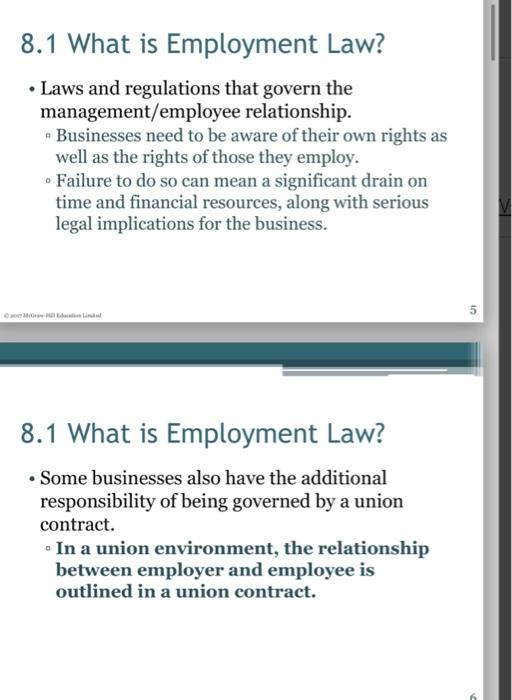
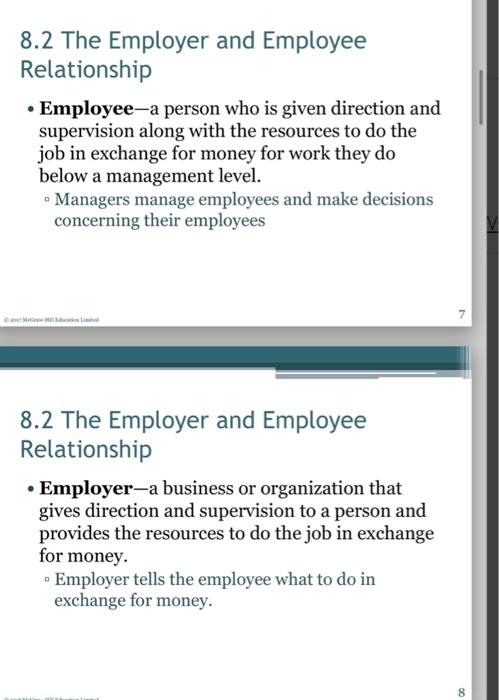
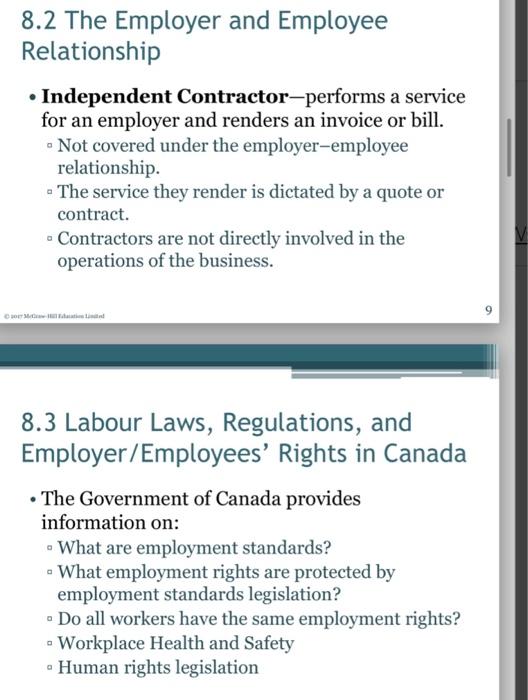
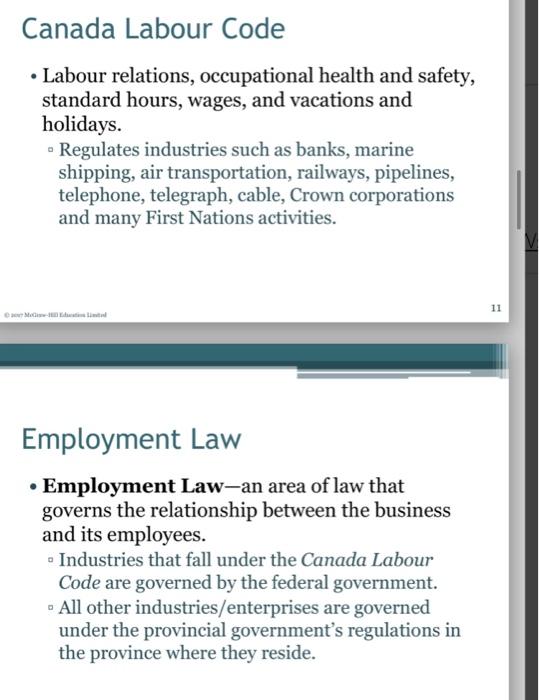
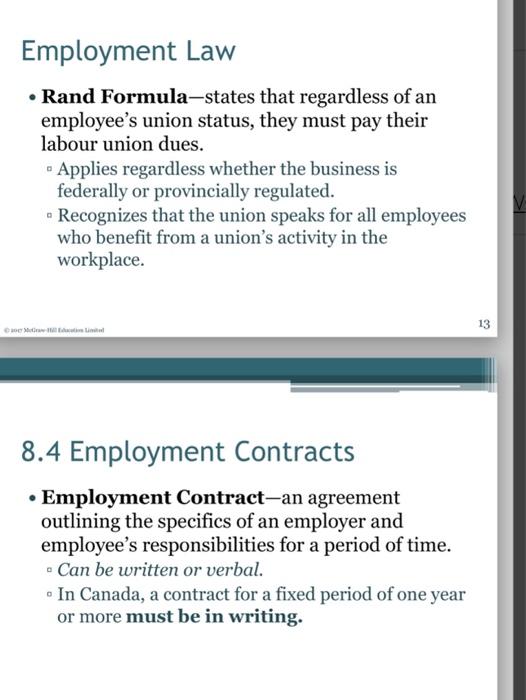
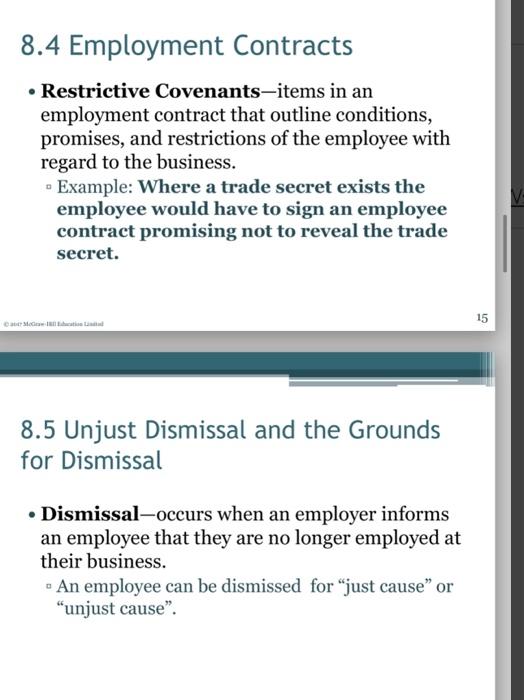
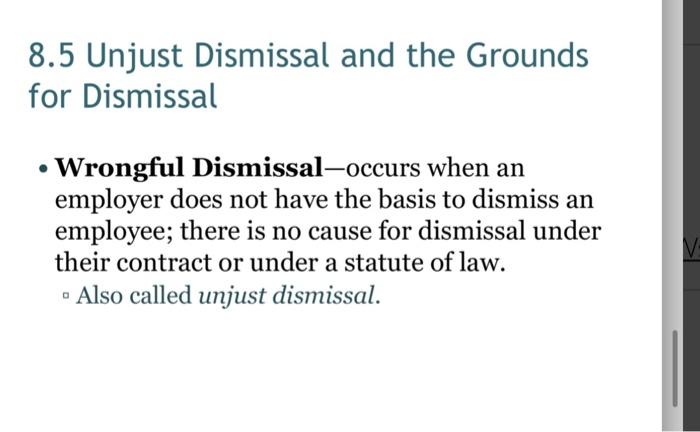
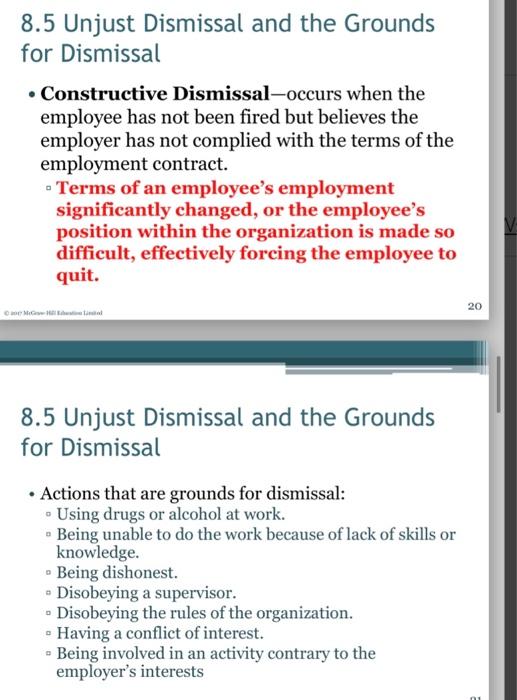
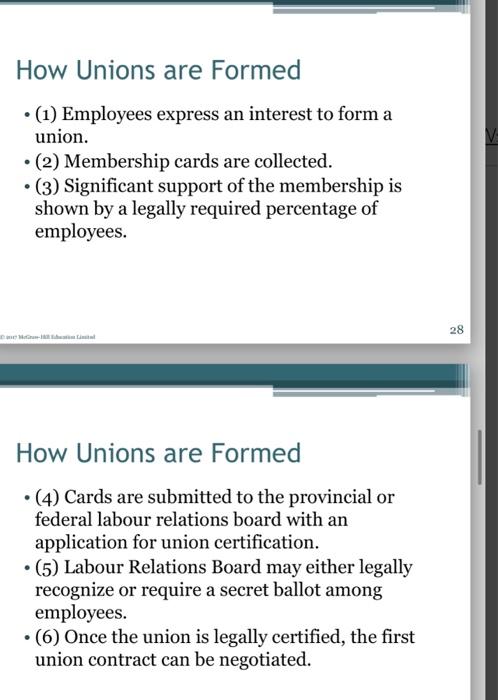
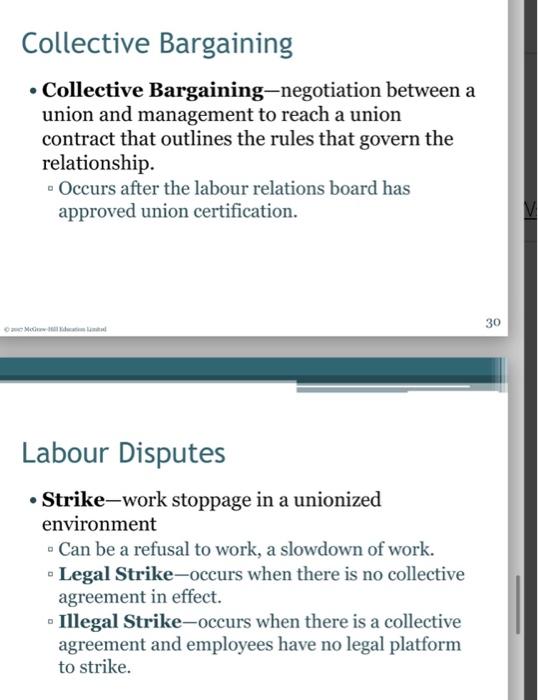
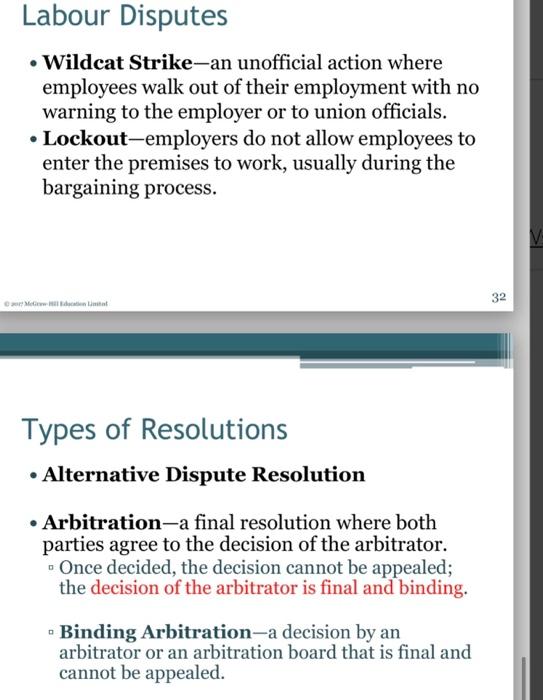
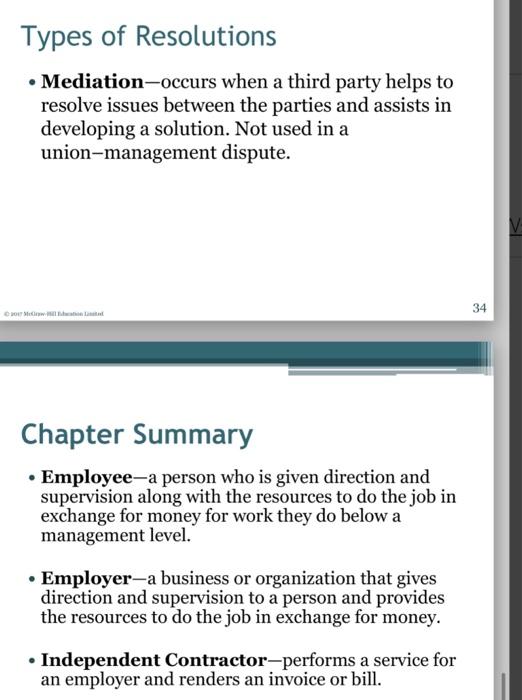
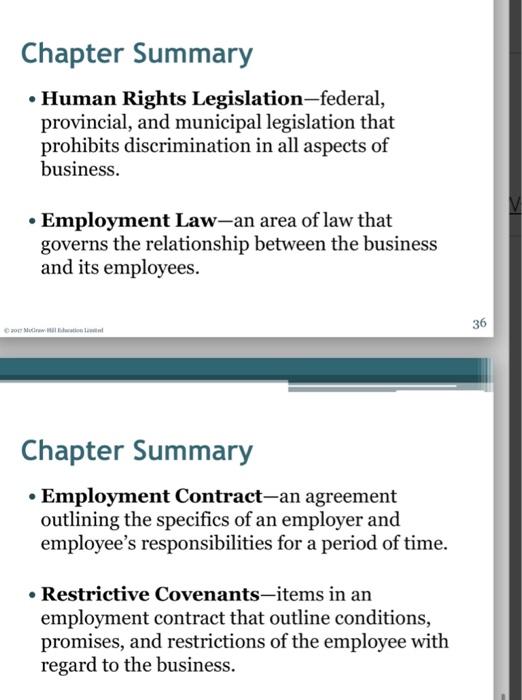
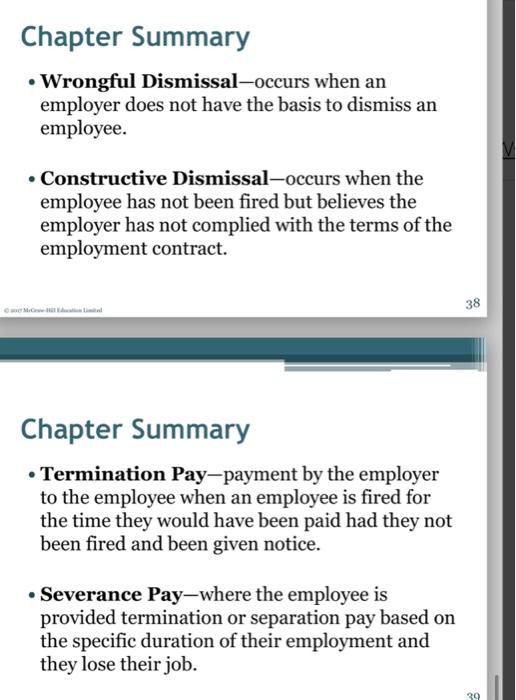
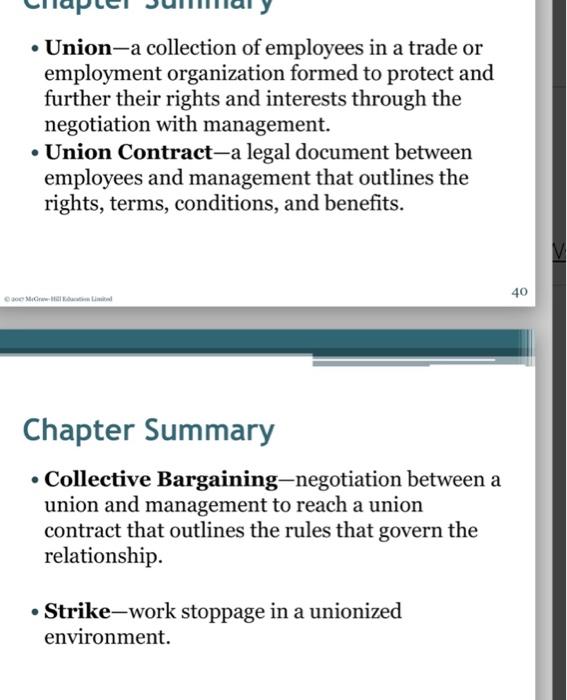
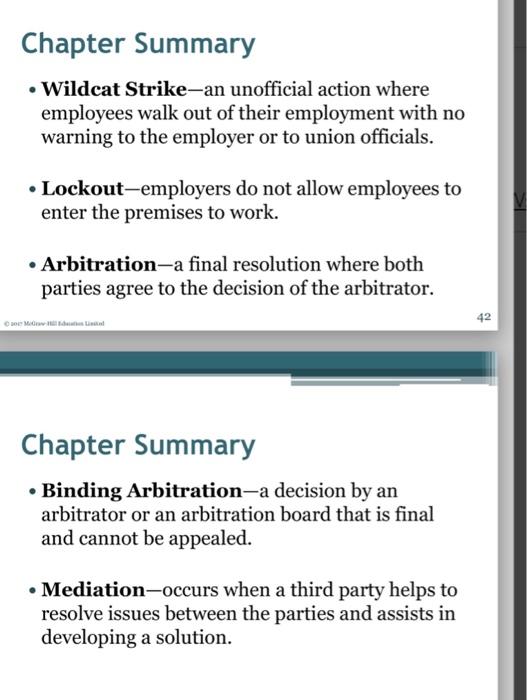
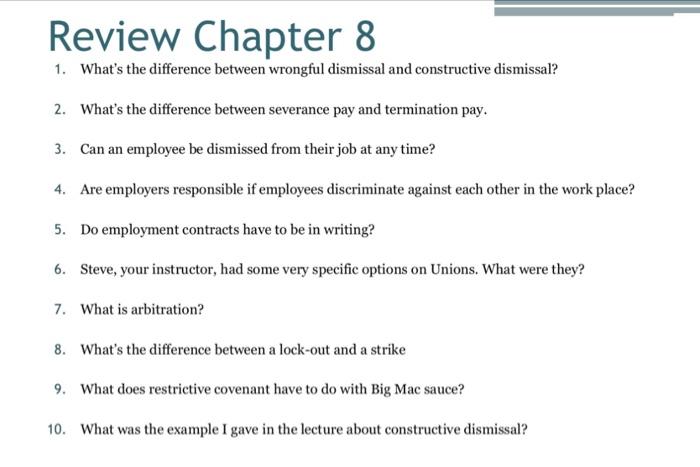
8.1 What is Employment Law? - Laws and regulations that govern the management/employee relationship. - Businesses need to be aware of their own rights as well as the rights of those they employ. - Failure to do so can mean a significant drain on time and financial resources, along with serious legal implications for the business. 8.1 What is Employment Law? - Some businesses also have the additional responsibility of being governed by a union contract. - In a union environment, the relationship between employer and employee is outlined in a union contract. 8.2 The Employer and Employee Relationship - Employee-a person who is given direction and supervision along with the resources to do the job in exchange for money for work they do below a management level. - Managers manage employees and make decisions concerning their employees 8.2 The Employer and Employee Relationship - Employer-a business or organization that gives direction and supervision to a person and provides the resources to do the job in exchange for money. - Employer tells the employee what to do in exchange for money. 8.2 The Employer and Employee Relationship - Independent Contractor-performs a service for an employer and renders an invoice or bill. - Not covered under the employer-employee relationship. - The service they render is dictated by a quote or contract. - Contractors are not directly involved in the operations of the business. 8.3 Labour Laws, Regulations, and Employer/Employees' Rights in Canada - The Government of Canada provides information on: - What are employment standards? - What employment rights are protected by employment standards legislation? - Do all workers have the same employment rights? - Workplace Health and Safety - Human rights legislation Canada Labour Code - Labour relations, occupational health and safety, standard hours, wages, and vacations and holidays. - Regulates industries such as banks, marine shipping, air transportation, railways, pipelines, telephone, telegraph, cable, Crown corporations and many First Nations activities. Employment Law - Employment Law-an area of law that governs the relationship between the business and its employees. - Industries that fall under the Canada Labour Code are governed by the federal government. - All other industries/enterprises are governed under the provincial government's regulations in the province where they reside. Employment Law - Rand Formula-states that regardless of an employee's union status, they must pay their labour union dues. - Applies regardless whether the business is federally or provincially regulated. - Recognizes that the union speaks for all employees who benefit from a union's activity in the workplace. 8.4 Employment Contracts - Employment Contract-an agreement outlining the specifics of an employer and employee's responsibilities for a period of time. - Can be written or verbal. - In Canada, a contract for a fixed period of one year or more must be in writing. 8.4 Employment Contracts - Restrictive Covenants-items in an employment contract that outline conditions, promises, and restrictions of the employee with regard to the business. - Example: Where a trade secret exists the employee would have to sign an employee contract promising not to reveal the trade secret. 8.5 Unjust Dismissal and the Grounds for Dismissal - Dismissal-occurs when an employer informs an employee that they are no longer employed at their business. - An employee can be dismissed for "just cause" or "unjust cause". 8.5 Unjust Dismissal and the Grounds for Dismissal - Wrongful Dismissal-occurs when an employer does not have the basis to dismiss an employee; there is no cause for dismissal under their contract or under a statute of law. - Also called unjust dismissal. 8.5 Unjust Dismissal and the Grounds for Dismissal - Constructive Dismissal-occurs when the employee has not been fired but believes the employer has not complied with the terms of the employment contract. - Terms of an employee's employment significantly changed, or the employee's position within the organization is made so difficult, effectively forcing the employee to quit. 20 8.5 Unjust Dismissal and the Grounds for Dismissal - Actions that are grounds for dismissal: - Using drugs or alcohol at work. - Being unable to do the work because of lack of skills or knowledge. - Being dishonest. - Disobeying a supervisor. - Disobeying the rules of the organization. - Having a conflict of interest. - Being involved in an activity contrary to the employer's interests Grounds for Dismissal - An employer can fire an employee for just causes without notice or with pay instead of notice - If the employer does not give notice, the employee is entitled to receive pay for the time they would have been paid had they not been fired and had been given notice. Termination of employment Grounds for Dismissal - Termination Pay-payment by the employer to the employee when an employee is fired for the time they would have been paid had they not been fired and been given notice. - Occurs when an employer does not give dismissal notice. Grounds for Dismissal - Severance Pay-where the employee is provided termination or separation pay based on the specific duration of their employment and they lose their job. - Calculated by the employee's salary multiplied by the number of weeks/years worked up to a specified number of weeks/years. 8.6 Unions: Collective Bargaining and Labour Disputes - Union-a collection of employees in a trade or employment organization formed to protect and further their rights and interests through the negotiation with management. - The focus is on the negotiation of the terms of the employment relationship in the form of a union contract. 8.6 Unions: Collective Bargaining and Labour Disputes - Union Contract or Collective Agreement-a legal document between employees and management that outlines the rights, terms, conditions, and benefits that all employees of that union can expect for a specific period of time. How Unions are Formed - (1) Employees express an interest to form a union. - (2) Membership cards are collected. - (3) Significant support of the membership is shown by a legally required percentage of employees. How Unions are Formed - (4) Cards are submitted to the provincial or federal labour relations board with an application for union certification. - (5) Labour Relations Board may either legally recognize or require a secret ballot among employees. - (6) Once the union is legally certified, the first union contract can be negotiated. Collective Bargaining - Collective Bargaining-negotiation between a union and management to reach a union contract that outlines the rules that govern the relationship. - Occurs after the labour relations board has approved union certification. Labour Disputes - Strike-work stoppage in a unionized environment - Can be a refusal to work, a slowdown of work. - Legal Strike-occurs when there is no collective agreement in effect. - Illegal Strike-occurs when there is a collective agreement and employees have no legal platform to strike. Labour Disputes -Wildcat Strike-an unofficial action where employees walk out of their employment with no warning to the employer or to union officials. - Lockout-employers do not allow employees to enter the premises to work, usually during the bargaining process. Types of Resolutions - Alternative Dispute Resolution - Arbitration-a final resolution where both parties agree to the decision of the arbitrator. - Once decided, the decision cannot be appealed; the decision of the arbitrator is final and binding. - Binding Arbitration-a decision by an arbitrator or an arbitration board that is final and cannot be appealed. Types of Resolutions - Mediation-occurs when a third party helps to resolve issues between the parties and assists in developing a solution. Not used in a union-management dispute. Chapter Summary - Employee-a person who is given direction and supervision along with the resources to do the job in exchange for money for work they do below a management level. - Employer-a business or organization that gives direction and supervision to a person and provides the resources to do the job in exchange for money. - Independent Contractor-performs a service for an employer and renders an invoice or bill. Chapter Summary - Human Rights Legislation-federal, provincial, and municipal legislation that prohibits discrimination in all aspects of business. - Employment Law-an area of law that governs the relationship between the business and its employees. Chapter Summary - Employment Contract-an agreement outlining the specifics of an employer and employee's responsibilities for a period of time. - Restrictive Covenants-items in an employment contract that outline conditions, promises, and restrictions of the employee with regard to the business. Chapter Summary -Wrongful Dismissal-occurs when an employer does not have the basis to dismiss an employee. - Constructive Dismissal-occurs when the employee has not been fired but believes the employer has not complied with the terms of the employment contract. 38 Chapter Summary - Termination Pay-payment by the employer to the employee when an employee is fired for the time they would have been paid had they not been fired and been given notice. - Severance Pay-where the employee is provided termination or separation pay based on the specific duration of their employment and they lose their job. - Union-a collection of employees in a trade or employment organization formed to protect and further their rights and interests through the negotiation with management. - Union Contract-a legal document between employees and management that outlines the rights, terms, conditions, and benefits. Chapter Summary - Collective Bargaining-negotiation between a union and management to reach a union contract that outlines the rules that govern the relationship. - Strike-work stoppage in a unionized environment. Chapter Summary -Wildcat Strike-an unofficial action where employees walk out of their employment with no warning to the employer or to union officials. - Lockout-employers do not allow employees to enter the premises to work. - Arbitration-a final resolution where both parties agree to the decision of the arbitrator. Chapter Summary - Binding Arbitration-a decision by an arbitrator or an arbitration board that is final and cannot be appealed. - Mediation-occurs when a third party helps to resolve issues between the parties and assists in developing a solution. Review Chapter 8 1. What's the difference between wrongful dismissal and constructive dismissal? 2. What's the difference between severance pay and termination pay. 3. Can an employee be dismissed from their job at any time? 4. Are employers responsible if employees discriminate against each other in the work place? 5. Do employment contracts have to be in writing? 6. Steve, your instructor, had some very specific options on Unions. What were they? 7. What is arbitration? 8. What's the difference between a lock-out and a strike 9. What does restrictive covenant have to do with Big Mac sauce? 10. What was the example I gave in the lecture about constructive dismissal
Step by Step Solution
There are 3 Steps involved in it

Get step-by-step solutions from verified subject matter experts
 Study Help