







Question: answer these questions by reading this case study The Casino Gambling Industry in the United States: Expansion and Competition The overall gaming industry consists of
answer these questions by reading this case study 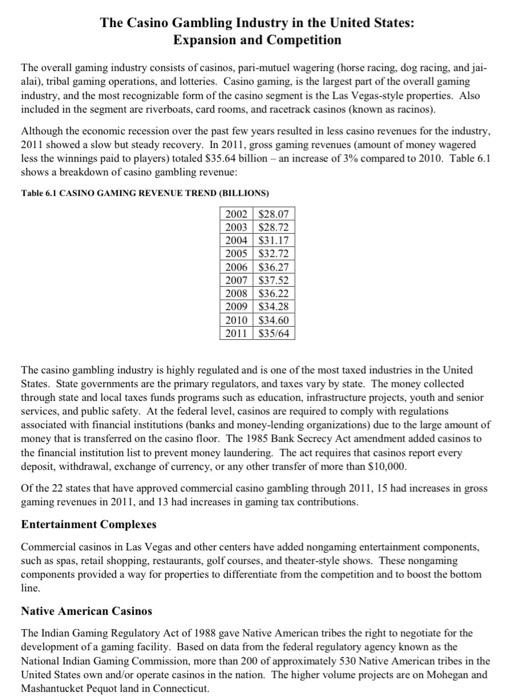
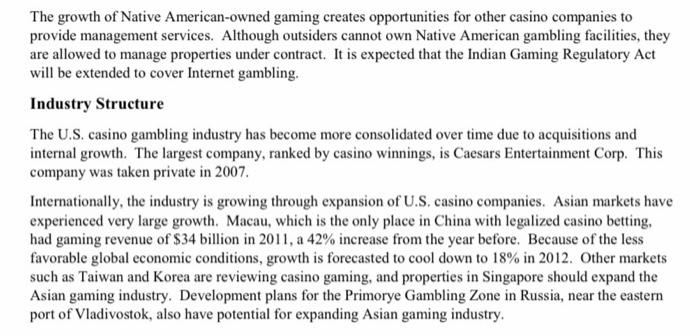
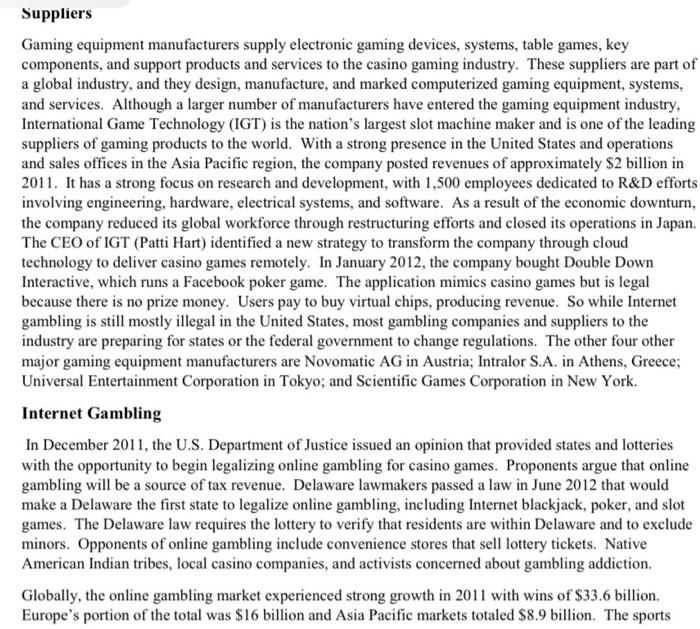
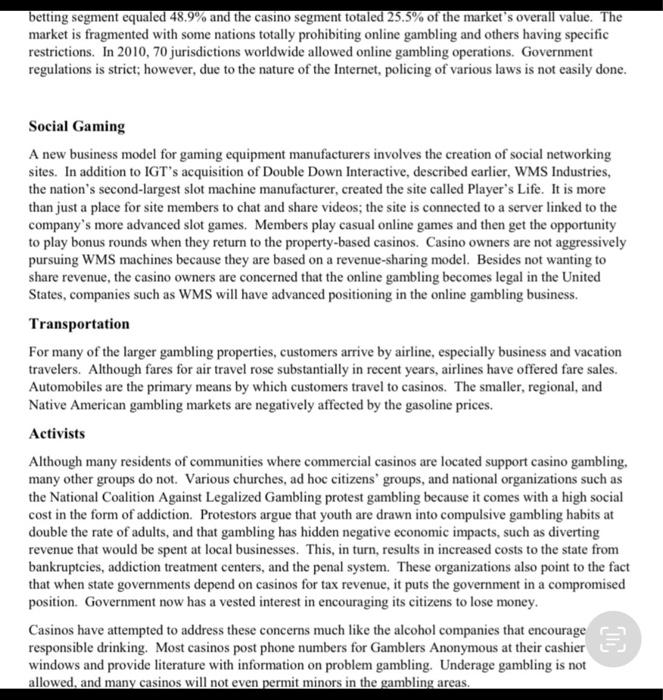
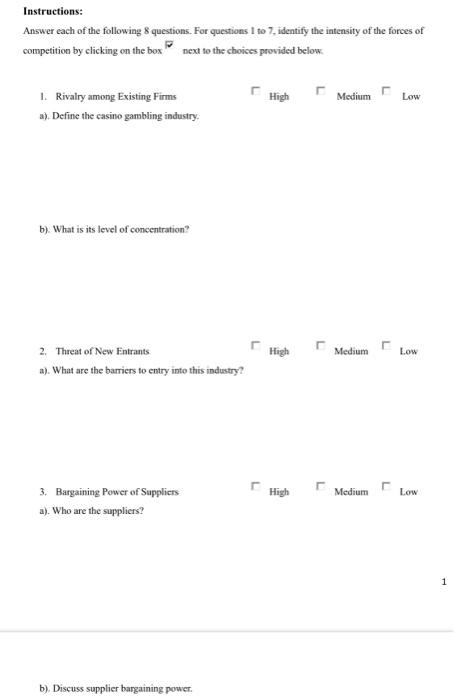
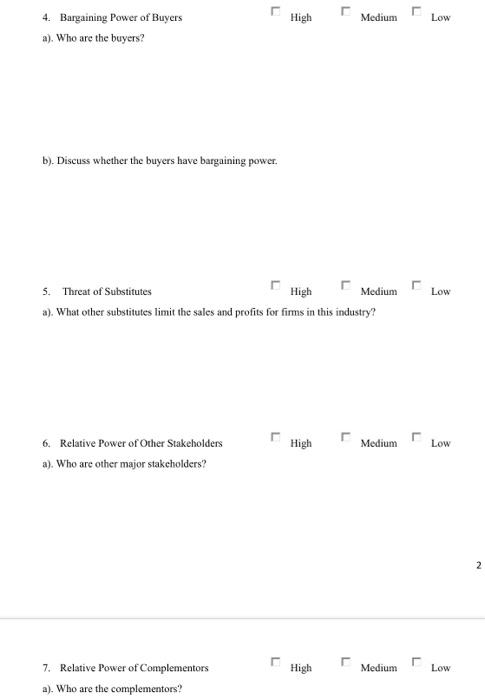
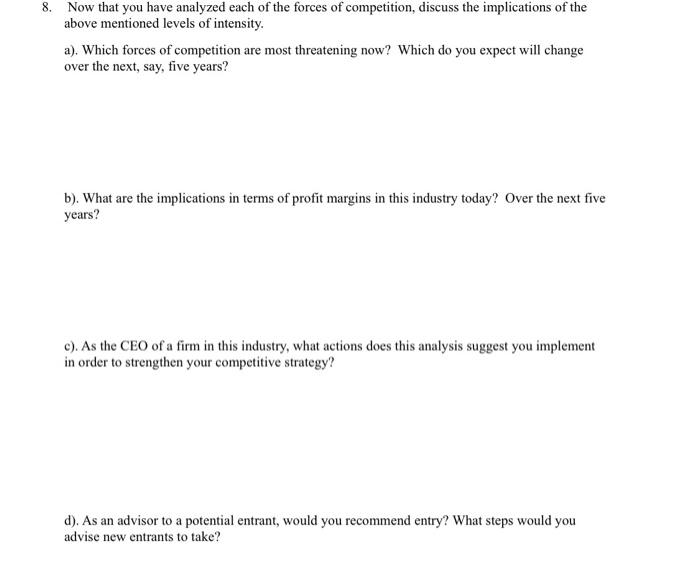
The Casino Gambling Industry in the United States: Expansion and Competition The overall gaming industry consists of casinos, pari-mutuel wagering (horse racing, dog racing, and jai- alai), tribal gaming operations, and lotteries. Casino gaming, is the largest part of the overall gaming industry, and the most recognizable form of the casino segment is the Las Vegas-style properties. Also included in the segment are riverboats, card rooms, and racetrack casinos (known as racinos). Although the economic recession over the past few years resulted in less casino revenues for the industry, 2011 showed a slow but steady recovery. In 2011, gross gaming revenues (amount of money wagered less the winnings paid to players) totaled $35.64 billion - an increase of 3% compared to 2010. Table 6.1 shows a breakdown of casino gambling revenue: Table 6.1 CASINO GAMING REVENUE TREND (BILLIONS) 2002 $28.07 2003 $28.72 2004 $31.17 2005 S32.72 2006 $36.27 2007 $37.52 2008 $36.22 2009 $34.28 2010 $34.60 2011 S35/64 The casino gambling industry is highly regulated and is one of the most taxed industries in the United States. State governments are the primary regulators, and taxes vary by state. The money collected through state and local taxes funds programs such as education, infrastructure projects, youth and senior services, and public safety. At the federal level, casinos are required to comply with regulations associated with financial institutions (banks and money-lending organizations due to the large amount of money that is transferred on the casino floor. The 1985 Bank Secrecy Act amendment added casinos to the financial institution list to prevent money laundering. The act requires that casinos report every deposit, withdrawal, exchange of currency, or any other transfer of more than $10,000. Of the 22 states that have approved commercial casino gambling through 2011, 15 had increases in gross gaming revenues in 2011 and 13 had increases in gaming tax contributions. Entertainment Complexes Commercial casinos in Las Vegas and other centers have added nongaming entertainment components, such as spas, retail shopping, restaurants, golf courses, and theater-style shows. These nongaming components provided a way for properties to differentiate from the competition and to boost the bottom line. Native American Casinos The Indian Gaming Regulatory Act of 1988 gave Native American tribes the right to negotiate for the development of a gaming facility. Based on data from the federal regulatory agency known as the National Indian Gaming Commission, more than 200 of approximately 530 Native American tribes in the United States own and/or operate casinos in the nation. The higher volume projects are on Mohegan and Mashantucket Pequot land in Connecticut The growth of Native American-owned gaming creates opportunities for other casino companies to provide management services. Although outsiders cannot own Native American gambling facilities, they are allowed to manage properties under contract. It is expected that the Indian Gaming Regulatory Act will be extended to cover Internet gambling. Industry Structure The U.S. casino gambling industry has become more consolidated over time due to acquisitions and internal growth. The largest company, ranked by casino winnings, is Caesars Entertainment Corp. This company was taken private in 2007. Internationally, the industry is growing through expansion of U.S. casino companies. Asian markets have experienced very large growth. Macau, which is the only place in China with legalized casino betting, had gaming revenue of $34 billion in 2011, a 42% increase from the year before. Because of the less favorable global economic conditions, growth is forecasted to cool down to 18% in 2012. Other markets 6 such as Taiwan and Korea are reviewing casino gaming, and properties in Singapore should expand the Asian gaming industry. Development plans for the Primorye Gambling Zone in Russia, near the eastern port of Vladivostok, also have potential for expanding Asian gaming industry. Suppliers Gaming equipment manufacturers supply electronic gaming devices, systems, table games, key components, and support products and services to the casino gaming industry. These suppliers are part of a global industry, and they design, manufacture, and marked computerized gaming equipment, systems, and services. Although a larger number of manufacturers have entered the gaming equipment industry, International Game Technology (IGT) is the nation's largest slot machine maker and is one of the leading suppliers of gaming products to the world. With a strong presence in the United States and operations and sales offices in the Asia Pacific region, the company posted revenues of approximately $2 billion in 2011. It has a strong focus on research and development, with 1,500 employees dedicated to R&D efforts involving engineering, hardware, electrical systems, and software. As a result of the economic downturn, the company reduced its global workforce through restructuring efforts and closed its operations in Japan. The CEO of IGT (Patti Hart) identified a new strategy to transform the company through cloud technology to deliver casino games remotely. In January 2012, the company bought Double Down Interactive, which runs a Facebook poker game. The application mimics casino games but is legal because there is no prize money. Users pay to buy virtual chips, producing revenue. So while Internet gambling is still mostly illegal in the United States, most gambling companies and suppliers to the industry are preparing for states or the federal government to change regulations. The other four other major gaming equipment manufacturers are Novomatic AG in Austria; Intralor S.A. in Athens, Greece; Universal Entertainment Corporation in Tokyo; and Scientific Games Corporation in New York. Internet Gambling In December 2011, the U.S. Department of Justice issued an opinion that provided states and lotteries with the opportunity to begin legalizing online gambling for casino games. Proponents argue that online gambling will be a source of tax revenue. Delaware lawmakers passed a law in June 2012 that would make a Delaware the first state to legalize online gambling, including Internet blackjack, poker, and slot games. The Delaware law requires the lottery to verify that residents are within Delaware and to exclude minors. Opponents of online gambling include convenience stores that sell lottery tickets. Native American Indian tribes, local casino companies, and activists concerned about gambling addiction. Globally, the online gambling market experienced strong growth in 2011 with wins of $33.6 billion. Europe's portion of the total was $16 billion and Asia Pacific markets totaled $8.9 billion. The sports betting segment equaled 48.9% and the casino segment totaled 25.5% of the market's overall value. The market is fragmented with some nations totally prohibiting online gambling and others having specific restrictions. In 2010, 70 jurisdictions worldwide allowed online gambling operations. Government regulations is strict; however, due to the nature of the Internet, policing of various laws is not easily done. Social Gaming A new business model for gaming equipment manufacturers involves the creation of social networking sites. In addition to IGT's acquisition of Double Down Interactive, described earlier, WMS Industries, the nation's second-largest slot machine manufacturer, created the site called Player's Life. It is more than just a place for site members to chat and share videos; the site is connected to a server linked to the company's more advanced slot games. Members play casual online games and then get the opportunity to play bonus rounds when they return to the property-based casinos. Casino owners are not aggressively pursuing WMS machines because they are based on a revenue-sharing model. Besides not wanting to share revenue, the casino owners are concerned that the online gambling becomes legal in the United States, companies such as WMS will have advanced positioning in the online gambling business, Transportation For many of the larger gambling properties, customers arrive by airline, especially business and vacation travelers. Although fares for air travel rose substantially in recent years, airlines have offered fare sales. Automobiles are the primary means by which customers travel to casinos. The smaller, regional, and Native American gambling markets are negatively affected by the gasoline prices. Activists Although many residents of communities where commercial casinos are located support casino gambling, many other groups do not. Various churches, ad hoc citizens' groups, and national organizations such as the National Coalition Against Legalized Gambling protest gambling because it comes with a high social cost in the form of addiction. Protestors argue that youth are drawn into compulsive gambling habits at double the rate of adults, and that gambling has hidden negative economic impacts, such as diverting revenue that would be spent at local businesses. This, in turn, results in increased costs to the state from bankruptcies, addiction treatment centers, and the penal system. These organizations also point to the fact that when state governments depend on casinos for tax revenue, it puts the government in a compromised position. Government now has a vested interest in encouraging its citizens to lose money. Casinos have attempted to address these concerns much like the alcohol companies that encourage responsible drinking. Most casinos post phone numbers for Gamblers Anonymous at their cashier windows and provide literature with information on problem gambling. Underage gambling is not allowed, and many casinos will not even permit minors in the gambling areas. Instructions: Answer each of the following 8 questions. For questions I to 7. identify the intensity of the forces of competition by clicking on the box next to the choices provided below. High . Medium Low 1. Rivalry among Existing Firms a). Define the casino gambling industry b) What is its level of concentration Medium Low 2. Threat of New Entrants a). What are the barriers to entry into this industry? High Medium Low 3. Bargaining Power of Suppliers a). Who are the suppliers? 1 b) Discuss supplier bargaining power. L High Medium Low 4. Bargaining Power of Buyers a). Who are the buyers? b). Discuss whether the buyers have bargaining power. Low 5. Threat of Substitutes Medium a). What other substitutes limit the sales and profits for firms in this industry? L 7 High Medium Low 6. Relative Power of Other Stakeholders a). Who are other major stakeholders? 2 L 7 High Medium Low 7. Relative Power of Complementors a). Who are the complementors! 8. Now that you have analyzed each of the forces of competition, discuss the implications of the above mentioned levels of intensity. a). Which forces of competition are most threatening now? Which do you expect will change over the next, say, five years? b). What are the implications in terms of profit margins in this industry today? Over the next five years? c). As the CEO of a firm in this industry, what actions does this analysis suggest you implement in order to strengthen your competitive strategy? d). As an advisor to a potential entrant, would you recommend entry? What steps would you advise new entrants to take
Step by Step Solution
There are 3 Steps involved in it
1 Expert Approved Answer
Step: 1 Unlock

Question Has Been Solved by an Expert!
Get step-by-step solutions from verified subject matter experts
Step: 2 Unlock
Step: 3 Unlock
 Study Help