







Question: answer this question urgent and answer all 4 questions not only 1 or 2 and I already submitted this question but experts not reply I
answer this question urgent and answer all 4 questions not only 1 or 2 and I already submitted this question but experts not reply I really disappointed this app service very late response from the othe app
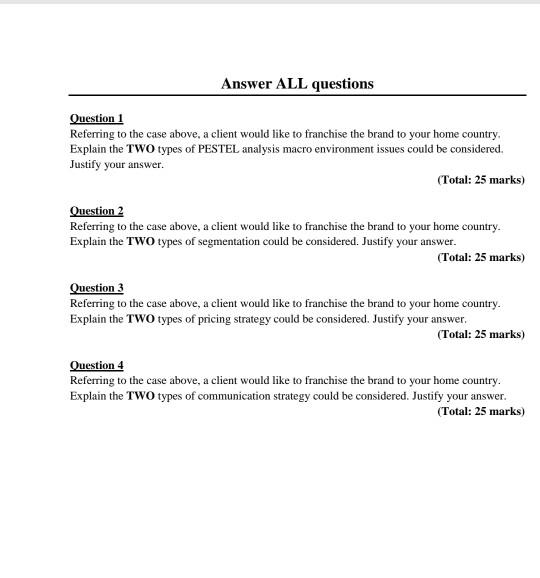
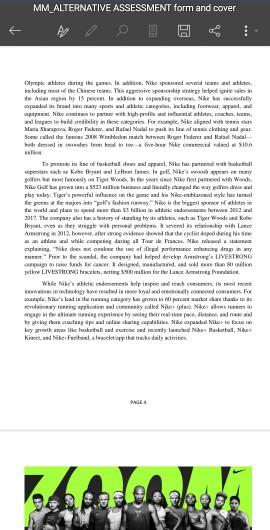
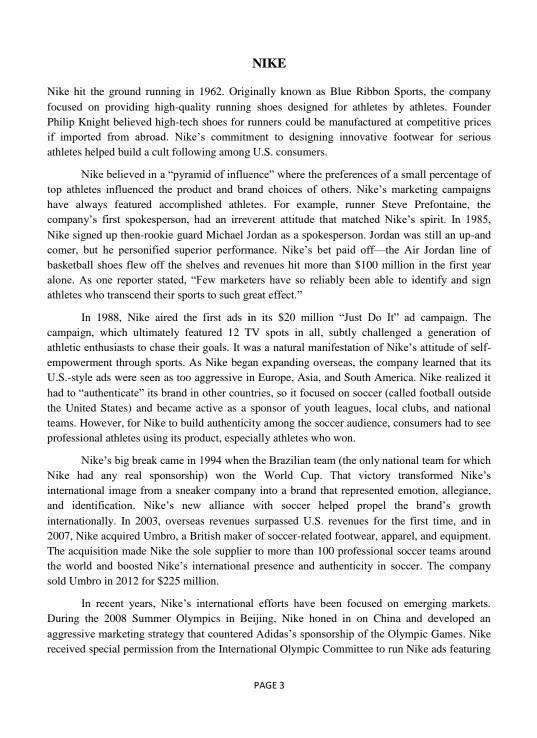
Answer ALL questions Question 1 Referring to the case above, a client would like to franchise the brand to your home country, Explain the TWO types of PESTEL analysis macro environment issues could be considered. Justify your answer. (Total: 25 marks) Question 2 Referring to the case above, a client would like to franchise the brand to your home country. Explain the TWO types of segmentation could be considered. Justify your answer. (Total: 25 marks) Question 3 Referring to the case above, a client would like to franchise the brand to your home country. Explain the TWO types of pricing strategy could be considered. Justify your answer. (Total: 25 marks) Question 4 Referring to the case above, a client would like to franchise the brand to your home country. Explain the TWO types of communication strategy could be considered. Justify your answer. (Total: 25 marks) MM_ALTERNATIVE ASSESSMENT form and cover www.medication ter Speed New paded and savenido a la corpul No parte proteine, coaches, was to build credit in the force. Nie slip with an Meta Starapova, Bar Pakda putas line of a king and par Sen called the bad mahut Federer and all wohl in den befine Nelson pensahe Bell Leonel pal Nike pencerely on the site ini Wadi Site Gama 5323 alicerce and we w.. play by Tsuperwerful and cathe and Nicoletal te he wand plan town in Windows 2002 2017 The company way bacha Tiger Woods and Bryant even they were with A 2012. december al capture Tous ces New oplem. Nie docs we Pentru al helped dep A' LIVESTRONG ci so rick design and women 8 min LIVESTRONG back, comfort Lance Art While where we in die in wwwsing weesyal del R ple. We lead in the systegy bar rompercantikot are that ay marie appeace dle Nike Nike ile in primelying wrap, der goreceptai Nede Nike face key the like buketal and extend my lunched Natal, N. Kind Nike Fotballphons diletries 420.000.00 NIKE Nike hit the ground running in 1962. Originally known as Blue Ribbon Sports, the company focused on providing high-quality running shoes designed for athletes by athletes. Founder Philip Knight believed high-tech shoes for runners could be manufactured at competitive prices if imported from abroad. Nike's commitment to designing innovative footwear for serious athletes helped build a cult following among U.S. consumers. Nike believed in a "pyramid of influence" where the preferences of a small percentage of top athletes influenced the product and brand choices of others. Nike's marketing campaigns have always featured accomplished athletes. For example, runner Steve Prefontaine, the company's first spokesperson, had an irreverent attitude that matched Nike's spirit. In 1985, Nike signed up then-rookie guard Michael Jordan as a spokesperson. Jordan was still an up-and comer, but he personified superior performance. Nike's bet paid off the Air Jordan line of basketball shoes flew off the shelves and revenues hit more than $100 million in the first year alone. As one reporter stated, "Few marketers have so reliably been able to identify and sign athletes who transcend their sports to such great effect." In 1988, Nike aired the first ads in its $20 million "Just Do It" ad campaign. The campaign, which ultimately featured 12 TV spots in all, subtly challenged a generation of athletic enthusiasts to chase their goals. It was a natural manifestation of Nike's attitude of self- empowerment through sports. As Nike began expanding overseas, the company learned that its U.S.-style ads were seen as too aggressive in Europe, Asia, and South America. Nike realized it had to "authenticate" its brand in other countries, so it focused on soccer (called football outside the United States) and became active as a sponsor of youth leagues, local clubs, and national teams. However, for Nike to build authenticity among the soccer audience, consumers had to see professional athletes using its product, especially athletes who won. Nike's big break came in 1994 when the Brazilian team (the only national team for which Nike had any real sponsorship) won the World Cup. That victory transformed Nike's international image from a sneaker company into a brand that represented emotion, allegiance, and identification. Nike's new alliance with soccer helped propel the brand's growth internationally. In 2003, overseas revenues surpassed U.S. revenues for the first time, and in 2007. Nike acquired Umbro, a British maker of soccer-related footwear, apparel, and equipment. The acquisition made Nike the sole supplier to more than 100 professional soccer teams around the world and boosted Nike's international presence and authenticity in soccer. The company sold Umbro in 2012 for $225 million In recent years, Nike's international efforts have been focused on emerging markets. During the 2008 Summer Olympics in Beijing, Nike honed in on China and developed an aggressive marketing strategy that countered Adidas's sponsorship of the Olympic Games Nike received special permission from the International Olympic Committee to run Nike ads featuring PAGE 3Step by Step Solution
There are 3 Steps involved in it
1 Expert Approved Answer
Step: 1 Unlock

Question Has Been Solved by an Expert!
Get step-by-step solutions from verified subject matter experts
Step: 2 Unlock
Step: 3 Unlock
 Study Help