



Question: APPENDIX 3 A Techniques of Logistics System Analysis basic models are examined; more sophisticated techniques of total cost analysis are discussed later in this text.
APPENDIX
Techniques of Logistics System
Analysis
basic models are examined; more sophisticated techniques of total cost analysis are discussed
later in this text. The basic approaches exame for much of the macke concept
discussed thus far and provide a background
this text.
ShortRunStatic Analysis
One general approach to total cost analysis for logistics is known as shortrun analysis.
In a shortrun analysis, a specific point in time or level of production is chosen and costs
are developed for the various logistics cost centers described previously. Multiple shortrun
analyses would be considered and then the system with the lowest overall cost would be
selected, as long as it was consistent with constraints the organization imposed on the logis
tics area. Some authors refer to this shortrun analysis as static analysis.
Essentially, they are saying that this method analyzes costs associated with a logistics
system's various components at one point in time or one output level.
Example
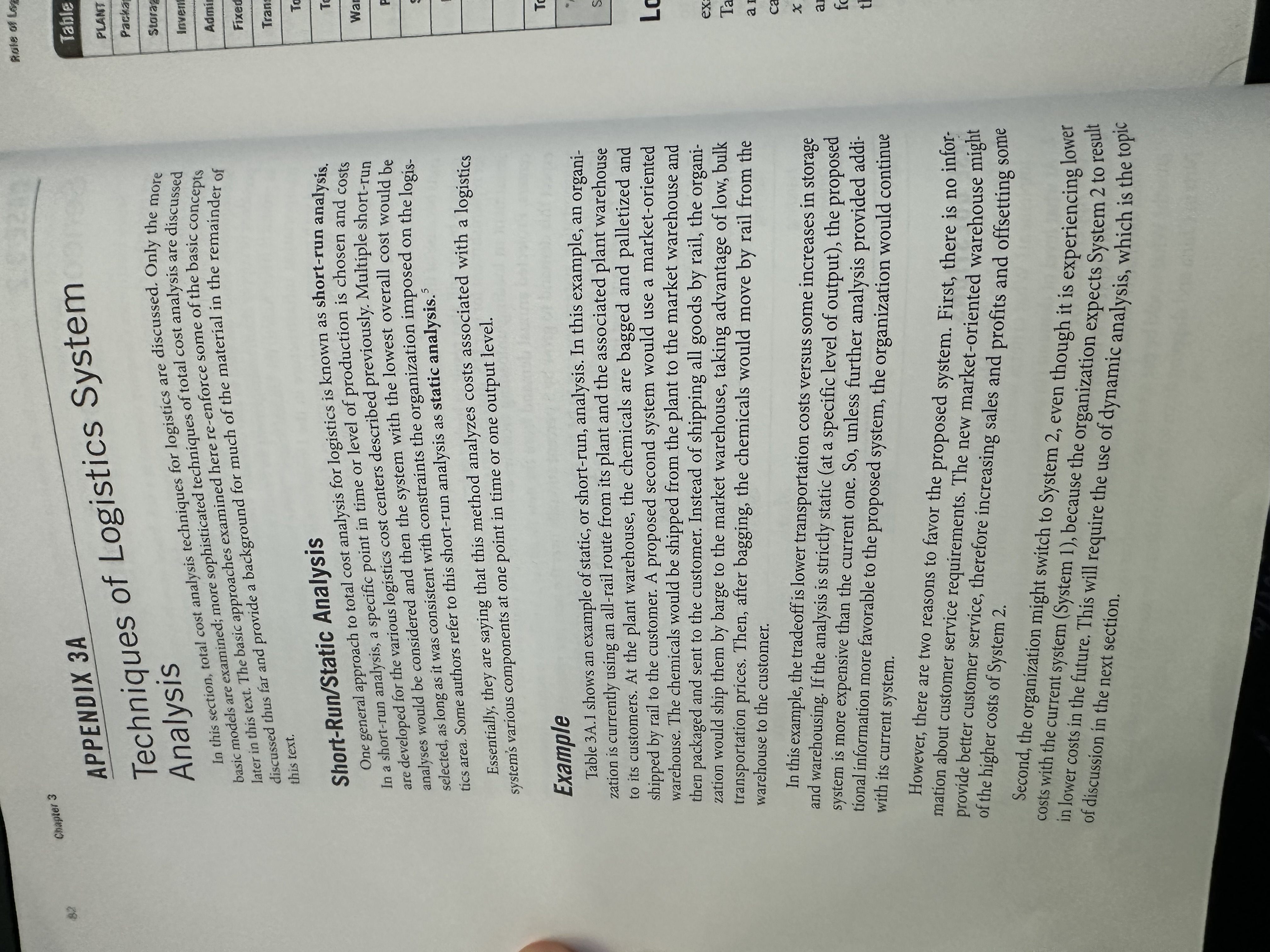
Table A shows an example of static, or shortrun, analysis. In this example, an organi
zation is currently using an allrail route from its plant and the associated plant warehouse
to its customers. At the plant warehouse, the chemicals are bagged and palletized and
shipped by rail to the customer. A proposed second system would use a marketoriented
warehouse. The chemicals would be shipped from the plant to the market warehouse and
then packaged and sent to the customer. Instead of shipping all goods by rail, the organi
zation would ship them by barge to the market warehouse, taking advantage of low, bulk
transportation prices. Then, after bagging, the chemicals would move by rail from the
warehouse to the customer.
In this example, the tradeoff is lower transportation costs versus some increases in storage
and warehousing. If the analysis is strictly static at a specific level of output the proposed
system is more expensive than the current one. So unless further analysis provided addi
tional information more favorable to the proposed system, the organization would continue
with its current system.
However, there are two reasons to favor the proposed system. First, there is no infor
mation about customer service requirements. The new marketoriented warehouse might
provide better customer service, therefore increasing sales and profits and offsetting some
of the higher costs of System
Second, the organization might switch to System even though it is experiencing lower
costs with the current system System because the organization expects System to result
in lower costs in the future. This will require the use of dynamic analysis, which is the topic
Step by Step Solution
There are 3 Steps involved in it
1 Expert Approved Answer
Step: 1 Unlock

Question Has Been Solved by an Expert!
Get step-by-step solutions from verified subject matter experts
Step: 2 Unlock
Step: 3 Unlock