







Question: applying Stokes's theorem to vector fields with singularities. Skip part f For the next problems, consider a uid with density 1 ($,y,z) = ($2+y2 +22)3/2
applying Stokes's theorem to vector fields with singularities. Skip part f
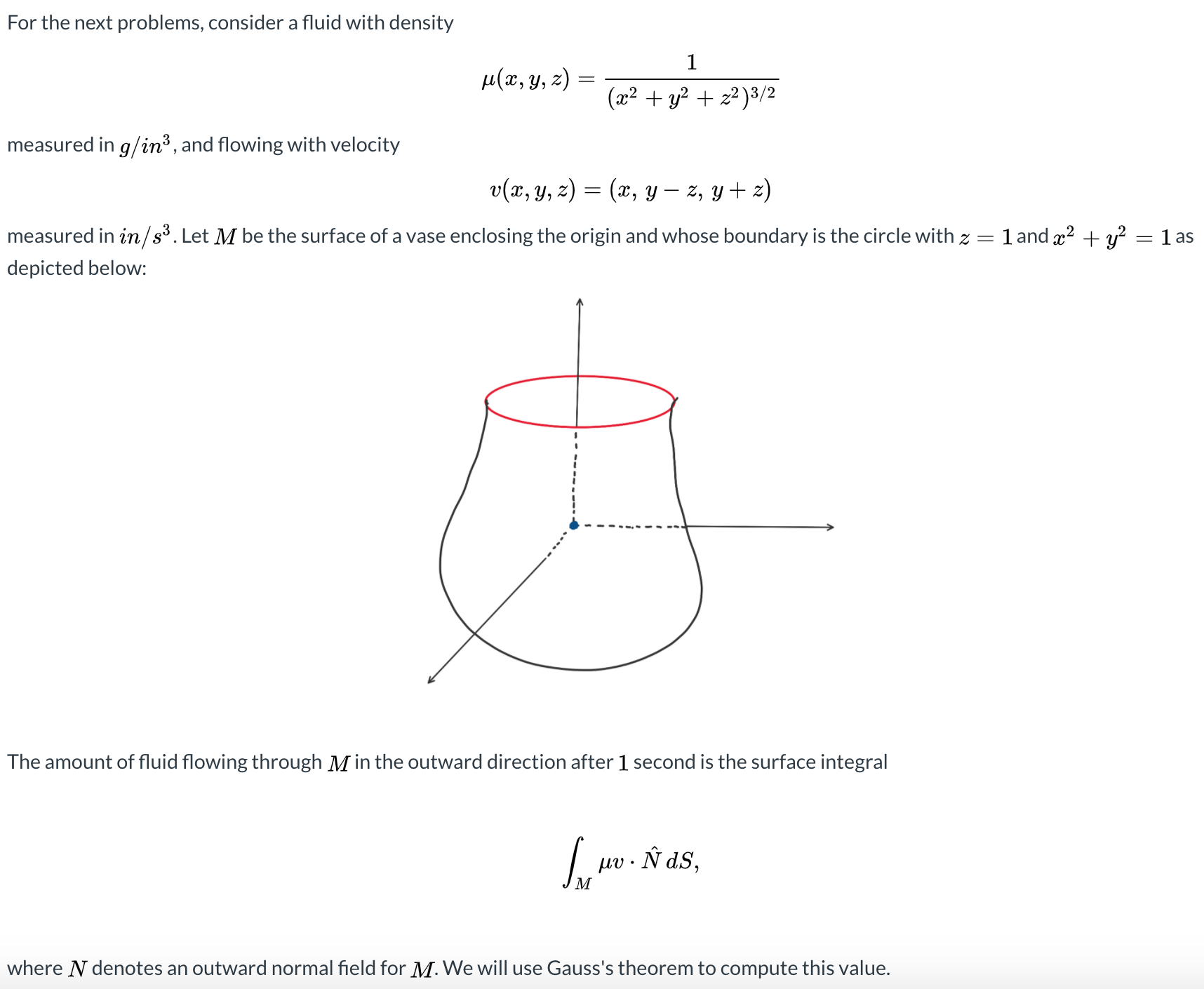
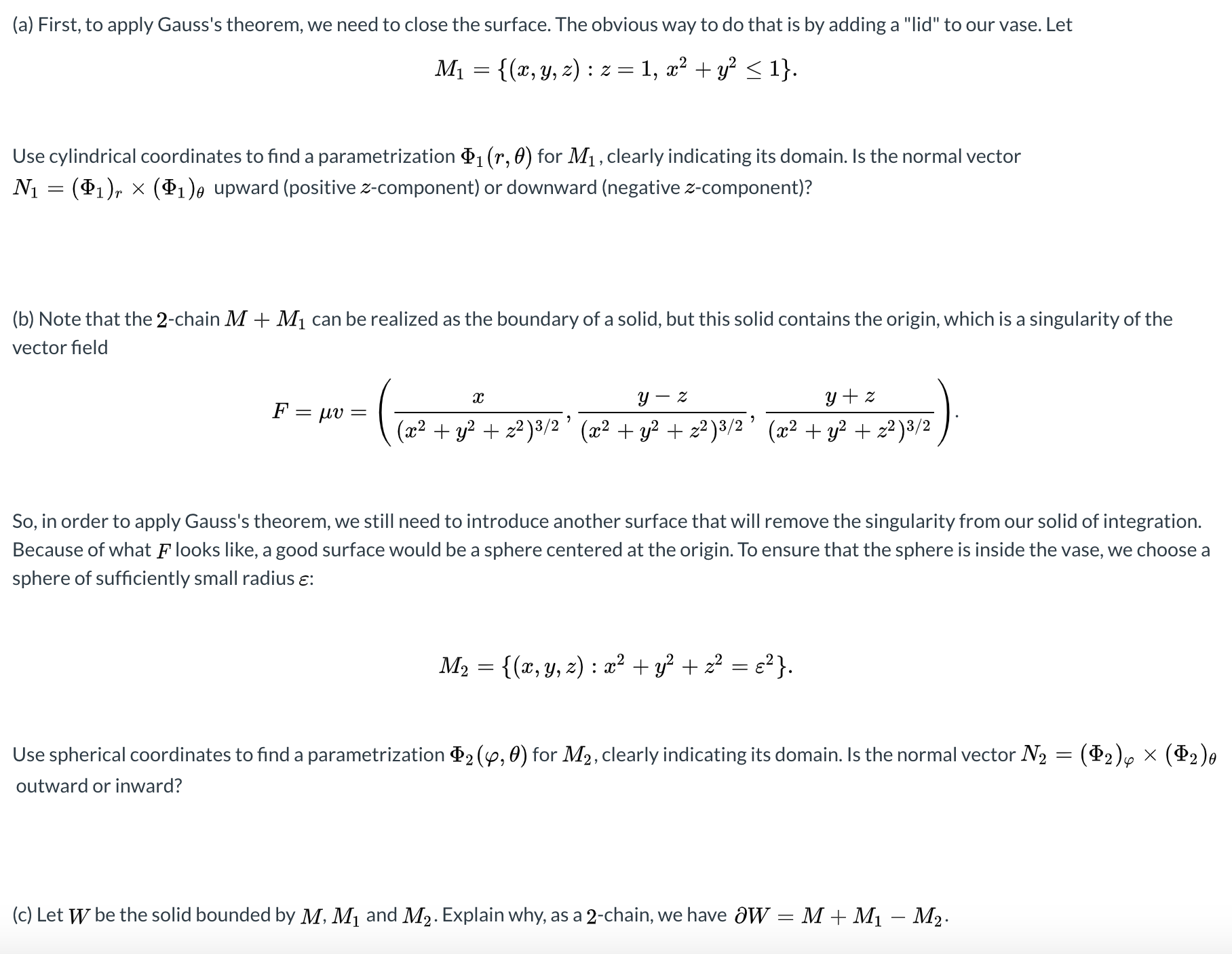
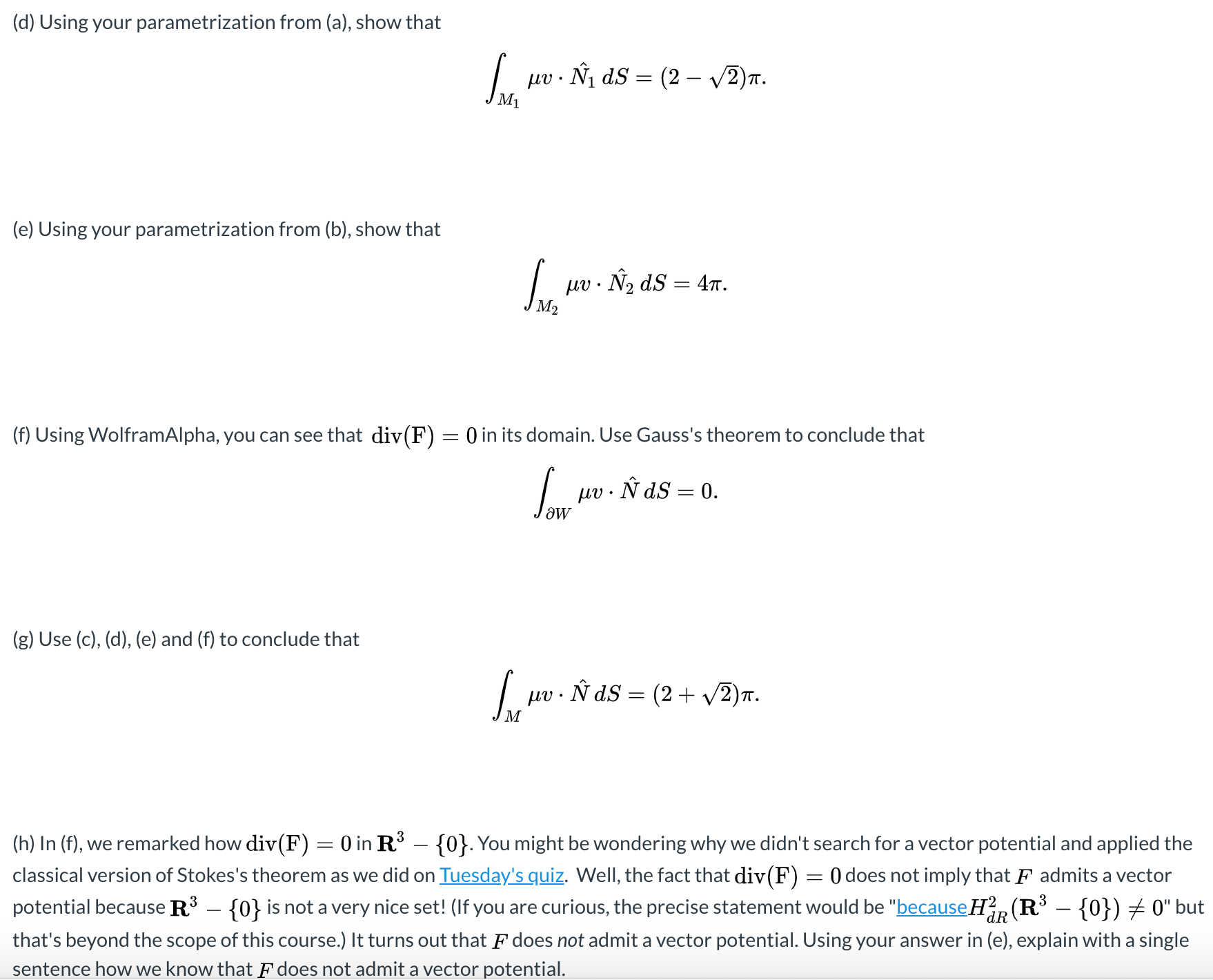
For the next problems, consider a uid with density 1 ($,y,z) = ($2+y2 +22)3/2 measured in g/in3, and owing with velocity U(CB,y,Z) : ($1975: 9+2) measured in in/ss. Let M be the surface of a vase enclosing the origin and whose boundary is the circle with z = 1 and 3:2 + 92 = 1 as depicted below: The amount of uid owing through M in the outward direction after 1 second is the surface integral fadeS, M where N denotes an outward normal eld for M. We will use Gauss's theorem to compute this value. (a) First, to apply Gauss's theorem, we need to close the surface. The obvious way to do that is by adding a "lid" to our vase. Let M1 = {(x, y, z) : z = 1, x2 +
Step by Step Solution
There are 3 Steps involved in it

Get step-by-step solutions from verified subject matter experts
 Study Help