







Question: Ask Copilot have a future in the organization, making it more likely that they will look internally when contemplating their next caree move. Given these
Ask Copilot
have a future in the organization, making it more likely that they will look internally when contemplating their next caree move.
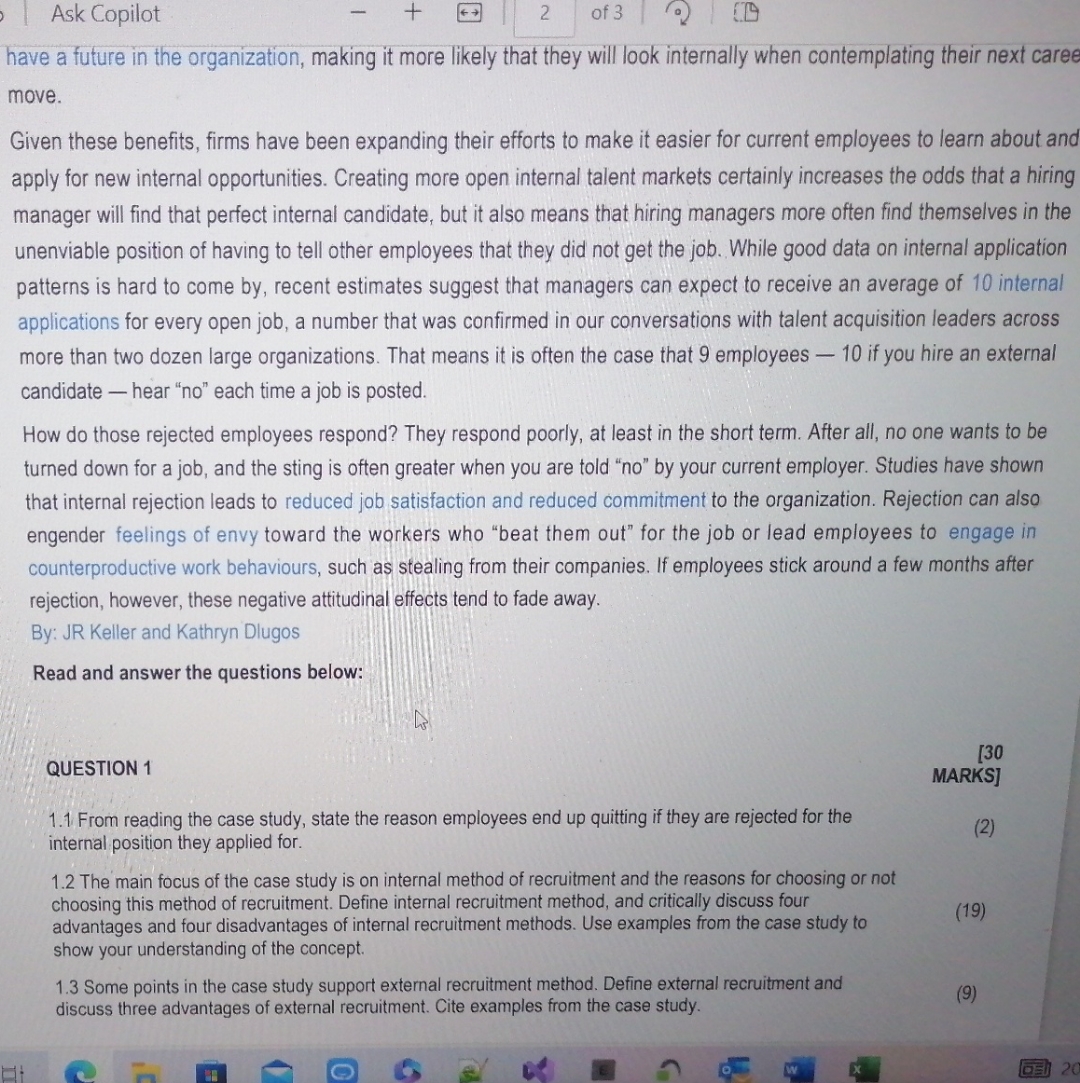
Given these benefits, firms have been expanding their efforts to make it easier for current employees to learn about and apply for new internal opportunities. Creating more open internal talent markets certainly increases the odds that a hiring manager will find that perfect internal candidate, but it also means that hiring managers more often find themselves in the unenviable position of having to tell other employees that they did not get the job. While good data on internal application patterns is hard to come by recent estimates suggest that managers can expect to receive an average of internal applications for every open job, a number that was confirmed in our conversations with talent acquisition leaders across more than two dozen large organizations. That means it is often the case that employees if you hire an external candidate hear no each time a job is posted.
How do those rejected employees respond? They respond poorly, at least in the short term. After all, no one wants to be turned down for a job, and the sting is often greater when you are told no by your current employer. Studies have shown that internal rejection leads to reduced job satisfaction and reduced commitment to the organization. Rejection can also engender feelings of envy toward the workers who "beat them out" for the job or lead employees to engage in counterproductive work behaviours, such as stealing from their companies. If employees stick around a few months after rejection, however, these negative attitudinal effects tend to fade away.
By: JR Keller and Kathryn Dlugos
Read and answer the questions below:
QUESTION
MARKS
From reading the case study, state the reason employees end up quitting if they are rejected for the internal position they applied for.
The main focus of the case study is on internal method of recruitment and the reasons for choosing or not choosing this method of recruitment. Define internal recruitment method, and critically discuss four advantages and four disadvantages of internal recruitment methods. Use examples from the case study to show your understanding of the concept.
Some points in the case study support external recruitment method. Define external recruitment and discuss three advantages of external recruitment. Cite examples from the case study.
Step by Step Solution
There are 3 Steps involved in it
1 Expert Approved Answer
Step: 1 Unlock

Question Has Been Solved by an Expert!
Get step-by-step solutions from verified subject matter experts
Step: 2 Unlock
Step: 3 Unlock
 Study Help