







Question: Assignment #10 1. Explain the difference between nominal variables and real variables and give two examples of each. According to the principle of monetary neutrality,
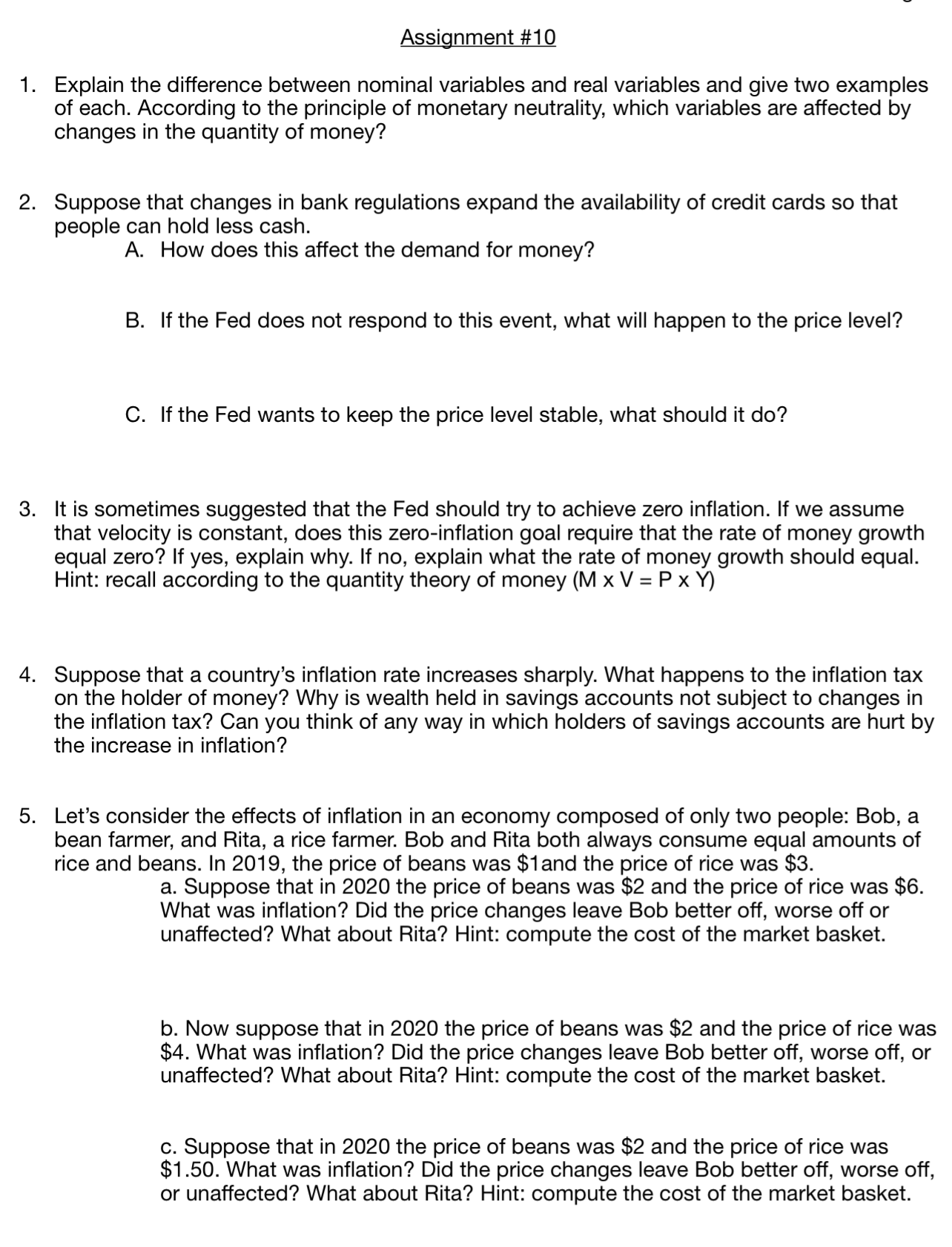
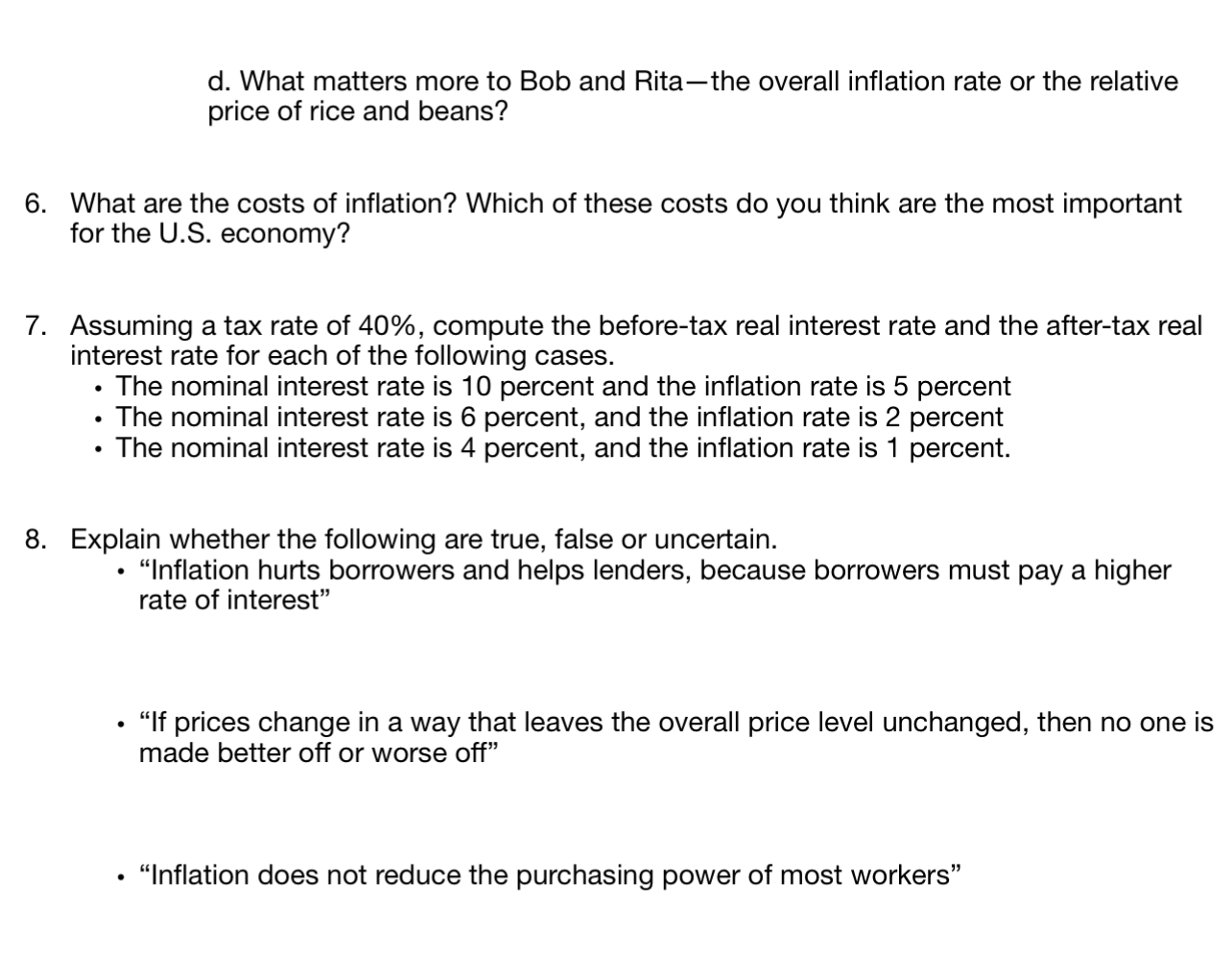
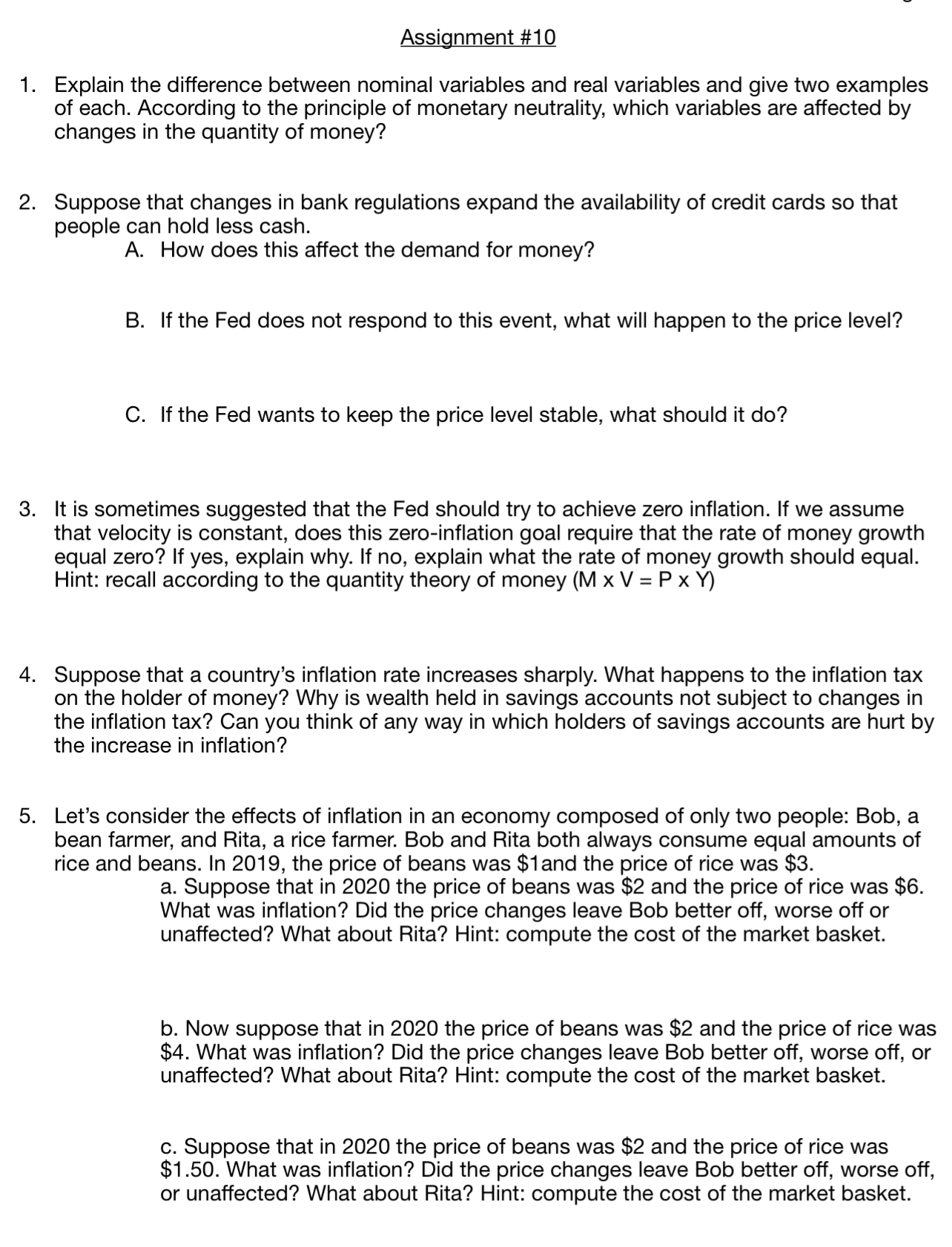
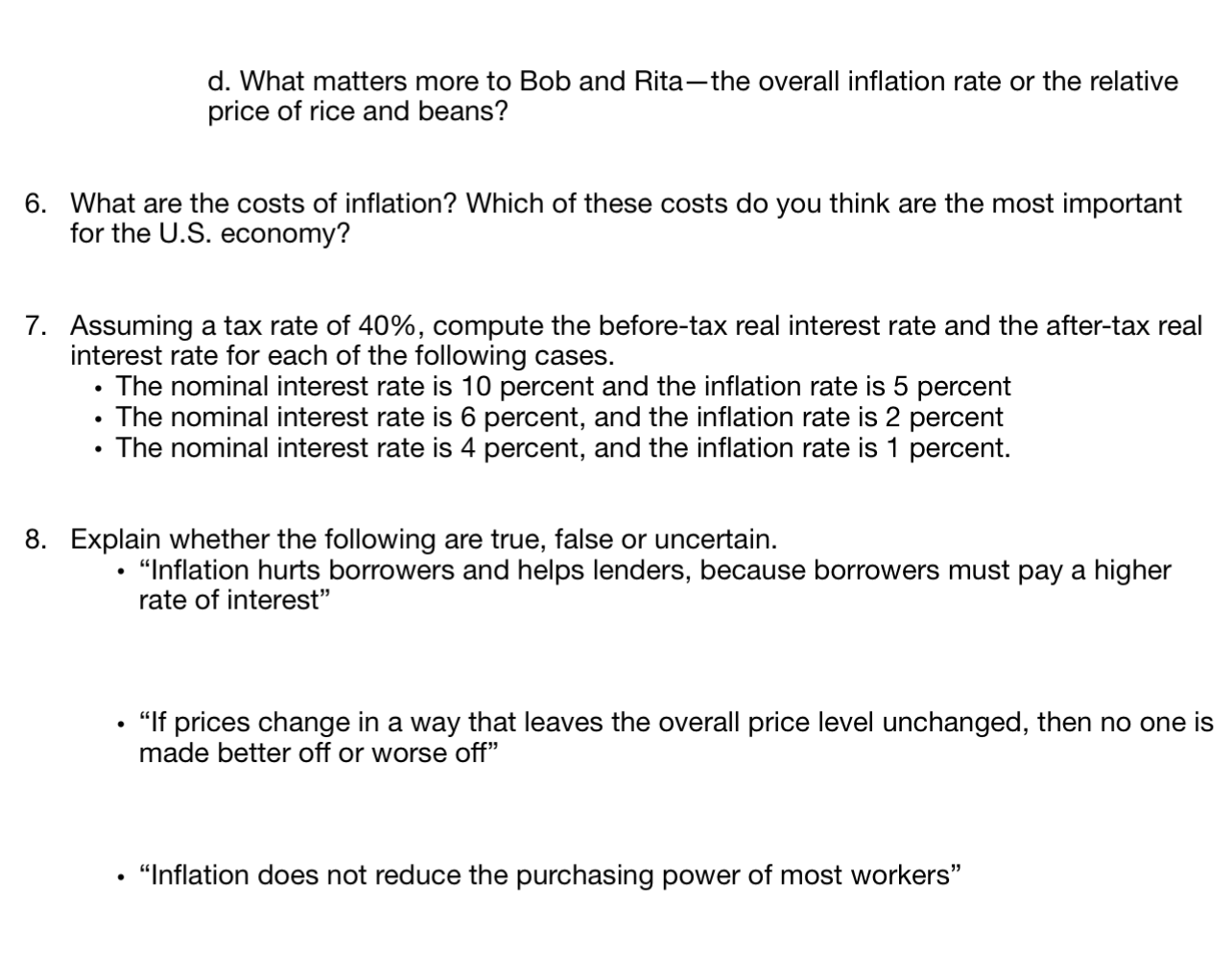
Assignment #10 1. Explain the difference between nominal variables and real variables and give two examples of each. According to the principle of monetary neutrality, which variables are affected by changes in the quantity of money? 2. Suppose that changes in bank regulations expand the availability of credit cards so that people can hold less cash. A. How does this affect the demand for money? B. If the Fed does not respond to this event, what will happen to the price level? C. If the Fed wants to keep the price level stable, what should it do? 3. It is sometimes suggested that the Fed should try to achieve zero inflation. If we assume that velocity is constant, does this zeroinflation goal require that the rate of money growth equal zero? If yes, explain why. If no, explain what the rate of money growth should equal. Hint: recall according to the quantity theory of money (M x V = P x Y) 4. Suppose that a country's inflation rate increases sharply. What happens to the inflation tax on the holder of money? Why is wealth held in savings accounts not subject to changes in the inflation tax? Can you think of any way in which holders of savings accounts are hurt by the increase in inflation? 5. Let's consider the effects of inflation in an economy composed of only two people: Bob, a bean farmer, and Rita, a rice farmer. Bob and Rita both always consume equal amounts of rice and beans. In 2019, the price of beans was $1and the price of rice was $3. a. Suppose that in 2020 the price of beans was $2 and the price of rice was $6. What was inflation? Did the price changes leave Bob better off, worse off or unaffected? What about Rita? Hint: compute the cost of the market basket. b. Now suppose that in 2020 the price of beans was $2 and the price of rice was $4. What was inflation? Did the price changes leave Bob better off, worse off, or unaffected? What about Rita? Hint: compute the cost of the market basket. 0. Suppose that in 2020 the price of beans was $2 and the price of rice was $1.50. What was inflation? Did the price changes leave Bob better off, worse off, or unaffected? What about Rita? Hint: compute the cost of the market basket. d. What matters more to Bob and Ritathe overall inflation rate or the relative price of rice and beans? 6. What are the costs of inflation? Which of these costs do you think are the most important for the U.S. economy? 7. Assuming a tax rate of 40%, compute the beforetax real interest rate and the aftertax real interest rate for each of the following cases. - The nominal interest rate is 10 percent and the inflation rate is 5 percent . The nominal interest rate is 6 percent, and the inflation rate is 2 percent . The nominal interest rate is 4 percent, and the inflation rate is 1 percent. 8. Explain whether the following are true, false or uncertain. - \"Inflation hurts borrowers and helps lenders, because borrowers must pay a higher rate of interest" - \"If prices change in a way that leaves the overall price level unchanged, then no one is made better off or worse off\" - \"Inflation does not reduce the purchasing power of most workers"
Step by Step Solution
There are 3 Steps involved in it

Get step-by-step solutions from verified subject matter experts
 Study Help