





Question: Assignment 2 Case 4 (page 271): Fitbit Inc. in 2017 1. Perform a SWOT analysis for Fitbit (use chapter 4, table 4.2). 2. Use your

Assignment 2 Case 4 (page 271): Fitbit Inc. in 2017

1. Perform a SWOT analysis for Fitbit (use chapter 4, table 4.2). 2. Use your SWOT table to diagnose strategic issues and recommend strategies. Assignment 2 Case 4 (page 271): Fitbit Inc. in
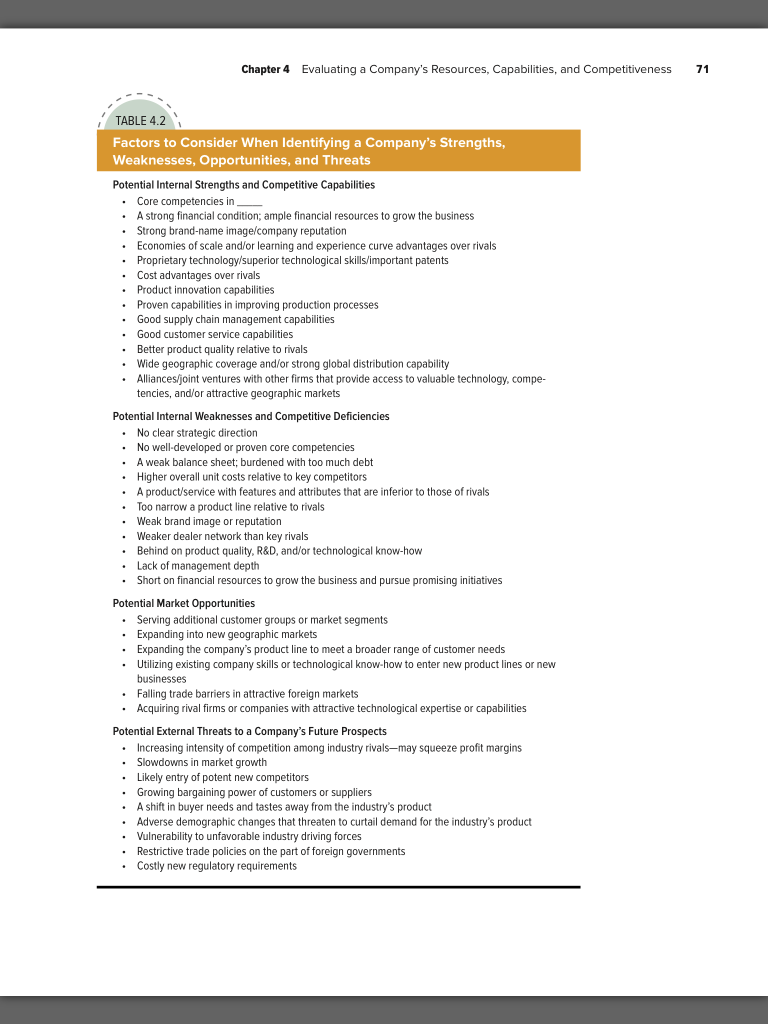
Chapter 4 Evaluating a Company's Resources, Capabilities, and Competitiveness 71 TABLE 4.2 Factors to Consider When Identifying a Company's Strengths, Weaknesses, Opportunities, and Threats Potential Internal Strengths and Competitive Capabilities Core competencies in A strong financial condition; ample financial resources to grow the business Strong brand-name image/company reputation Economies of scale and/or learning and experience curve advantages over rivals Proprietary technology/superior technological skills/important patents . Cost advantages over rivals Product innovation capabilities . Proven capabilities in improving production processes . Good supply chain management capabilities Good customer service capabilities Better product quality relative to rivals Wide geographic coverage and/or strong global distribution capability Alliances/joint ventures with other firms that provide access to valuable technology, compe- tencies, and/or attractive geographic markets Potential Internal Weaknesses and Competitive Deficiencies No clear strategic direction No well-developed or proven core competencies . A weak balance sheet: burdened with too much debt Higher overall unit costs relative to key competitors A product/service with features and attributes that are inferior to those of rivals Too narrow a product line relative to rivals Weak brand image or reputation Weaker dealer network than key rivals Behind on product quality, R&D, and/or technological know-how . Lack of management depth Short on financial resources to grow the business and pursue promising initiatives Potential Market Opportunities Serving additional customer groups or market segments Expanding into new geographic markets Expanding the company's product line to meet a broader range of customer needs Utilizing existing company skills or technological know-how to enter new product lines or new businesses Falling trade barriers in attractive foreign markets Acquiring rival firms or companies with attractive technological expertise or capabilities Potential External Threats to a Company's Future Prospects Increasing intensity of competition among industry rivals-may squeeze profit margins . Slowdowns in market growth Likely entry of potent new competitors Growing bargaining power of customers or suppliers A shift in buyer needs and tastes away from the industry's product Adverse demographic changes that threaten to curtail demand for the industry's product Vulnerability to unfavorable industry driving forces . Restrictive trade policies on the part of foreign governments Costly new regulatory requirements

Step by Step Solution

There are 3 Steps involved in it

1 Expert Approved Answer
Step: 1 Unlock blur-text-image

Question Has Been Solved by an Expert!

Get step-by-step solutions from verified subject matter experts

Step: 2 Unlock
Step: 3 Unlock

Students Have Also Explored These Related General Management Questions!