







Question: Assignment: Chipmill Rechipper Project Analysis Most chips are screened for size prior to pulping to remove the undesirable sizes. Gyratory and drum chip screens normally
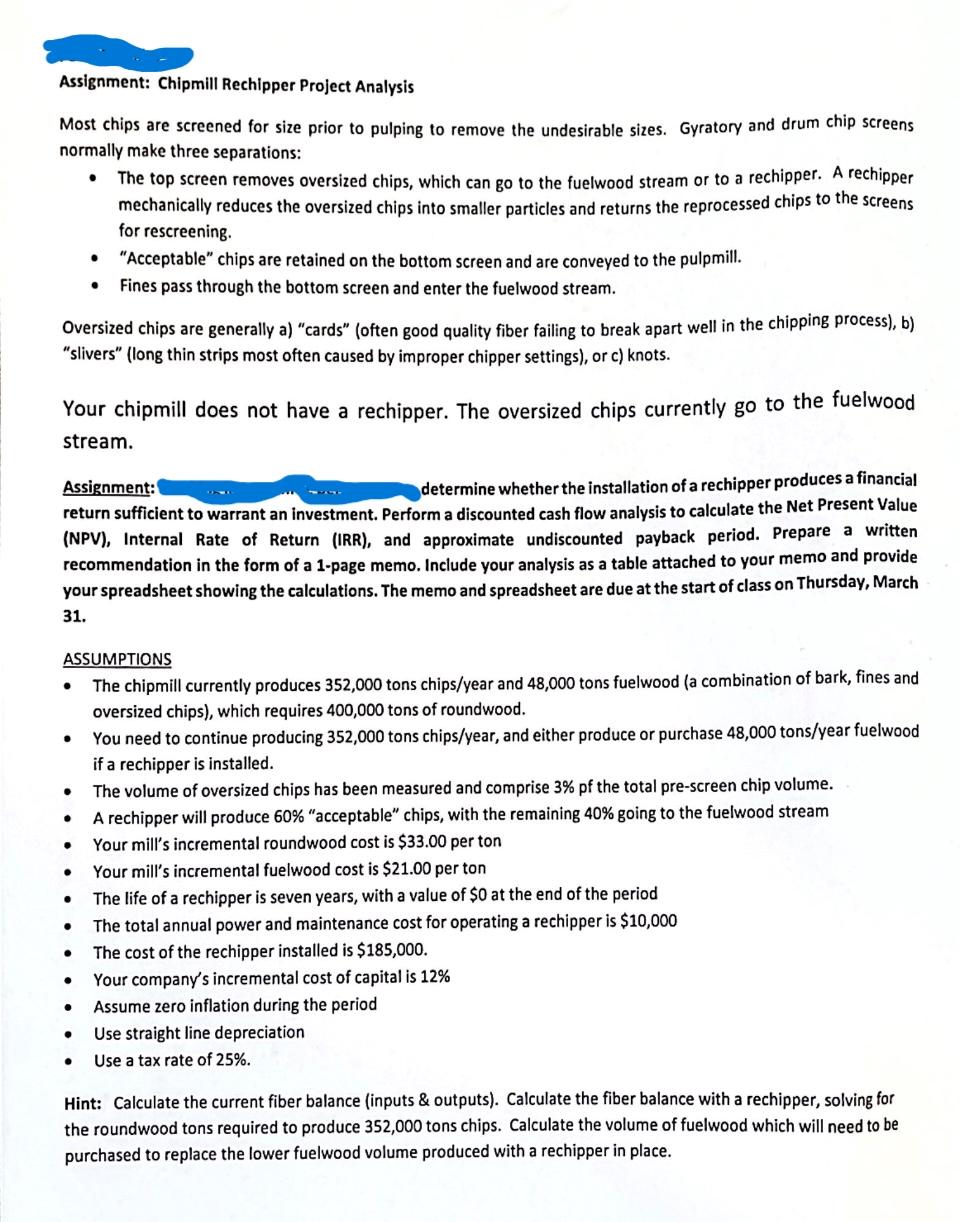
Assignment: Chipmill Rechipper Project Analysis Most chips are screened for size prior to pulping to remove the undesirable sizes. Gyratory and drum chip screens normally make three separations: The top screen removes oversized chips, which can go to the fuelwood stream or to a rechipper. A rechipper mechanically reduces the oversized chips into smaller particles and returns the reprocessed chips to the screens for rescreening "Acceptable chips are retained on the bottom screen and are conveyed to the pulpmill. Fines pass through the bottom screen and enter the fuelwood stream. Oversized chips are generally a) "cards (often good quality fiber failing to break apart well in the chipping process), b) "slivers" (long thin strips most often caused by improper chipper settings), or c) knots. . Your chipmill does not have a rechipper. The oversized chips currently go to the fuelwood stream. Assignment: determine whether the installation of a rechipper produces a financial return sufficient to warrant an investment. Perform a discounted cash flow analysis to calculate the Net Present Value (NPV), Internal Rate of Return (IRR), and approximate undiscounted payback period. Prepare a written recommendation in the form of a 1-page memo. Include your analysis as a table attached to your memo and provide your spreadsheet showing the calculations. The memo and spreadsheet are due at the start of class on Thursday, March 31. . . . ASSUMPTIONS The chipmill currently produces 352,000 tons chips/year and 48,000 tons fuelwood (a combination of bark, fines and oversized chips), which requires 400,000 tons of roundwood. You need to continue producing 352,000 tons chips/year, and either produce or purchase 48,000 tons/year fuelwood if a rechipper is installed. The volume of oversized chips has been measured and comprise 3% pf the total pre-screen chip volume. A rechipper will produce 60% "acceptable" chips, with the remaining 40% going to the fuelwood stream Your mill's incremental roundwood cost is $33.00 per ton Your mill's incremental fuelwood cost is $21.00 per ton The life of a rechipper is seven years, with a value of $0 at the end of the period The total annual power and maintenance cost for operating a rechipper is $10,000 The cost of the rechipper installed is $185,000. Your company's incremental cost of capital is 12% Assume zero inflation during the period Use straight line depreciation Use a tax rate of 25%. . . . . . Hint: Calculate the current fiber balance inputs & outputs). Calculate the fiber balance with a rechipper, solving for the roundwood tons required to produce 352,000 tons chips. Calculate the volume of fuelwood which will need to be purchased to replace the lower fuelwood volume produced with a rechipper in place. Assignment: Chipmill Rechipper Project Analysis Most chips are screened for size prior to pulping to remove the undesirable sizes. Gyratory and drum chip screens normally make three separations: The top screen removes oversized chips, which can go to the fuelwood stream or to a rechipper. A rechipper mechanically reduces the oversized chips into smaller particles and returns the reprocessed chips to the screens for rescreening "Acceptable chips are retained on the bottom screen and are conveyed to the pulpmill. Fines pass through the bottom screen and enter the fuelwood stream. Oversized chips are generally a) "cards (often good quality fiber failing to break apart well in the chipping process), b) "slivers" (long thin strips most often caused by improper chipper settings), or c) knots. . Your chipmill does not have a rechipper. The oversized chips currently go to the fuelwood stream. Assignment: determine whether the installation of a rechipper produces a financial return sufficient to warrant an investment. Perform a discounted cash flow analysis to calculate the Net Present Value (NPV), Internal Rate of Return (IRR), and approximate undiscounted payback period. Prepare a written recommendation in the form of a 1-page memo. Include your analysis as a table attached to your memo and provide your spreadsheet showing the calculations. The memo and spreadsheet are due at the start of class on Thursday, March 31. . . . ASSUMPTIONS The chipmill currently produces 352,000 tons chips/year and 48,000 tons fuelwood (a combination of bark, fines and oversized chips), which requires 400,000 tons of roundwood. You need to continue producing 352,000 tons chips/year, and either produce or purchase 48,000 tons/year fuelwood if a rechipper is installed. The volume of oversized chips has been measured and comprise 3% pf the total pre-screen chip volume. A rechipper will produce 60% "acceptable" chips, with the remaining 40% going to the fuelwood stream Your mill's incremental roundwood cost is $33.00 per ton Your mill's incremental fuelwood cost is $21.00 per ton The life of a rechipper is seven years, with a value of $0 at the end of the period The total annual power and maintenance cost for operating a rechipper is $10,000 The cost of the rechipper installed is $185,000. Your company's incremental cost of capital is 12% Assume zero inflation during the period Use straight line depreciation Use a tax rate of 25%. . . . . . Hint: Calculate the current fiber balance inputs & outputs). Calculate the fiber balance with a rechipper, solving for the roundwood tons required to produce 352,000 tons chips. Calculate the volume of fuelwood which will need to be purchased to replace the lower fuelwood volume produced with a rechipper in place
Step by Step Solution
There are 3 Steps involved in it

Get step-by-step solutions from verified subject matter experts
 Study Help