







Question: Assignment Requirements 1) Create a Context DFD illustrating the overall system, its external entities, and major data flows. 2) Create a level O DFD illustrating
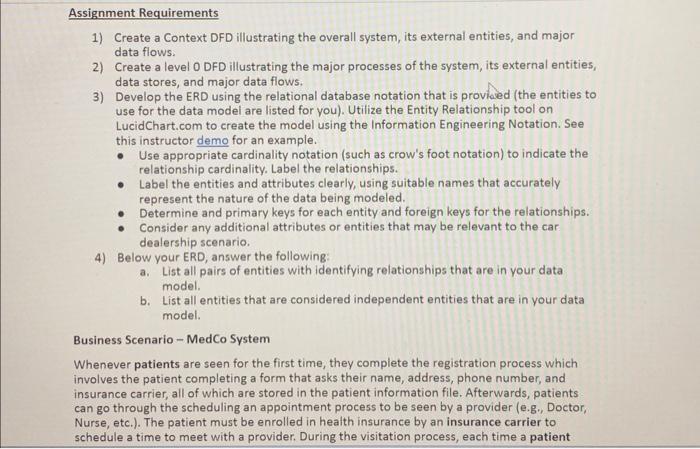
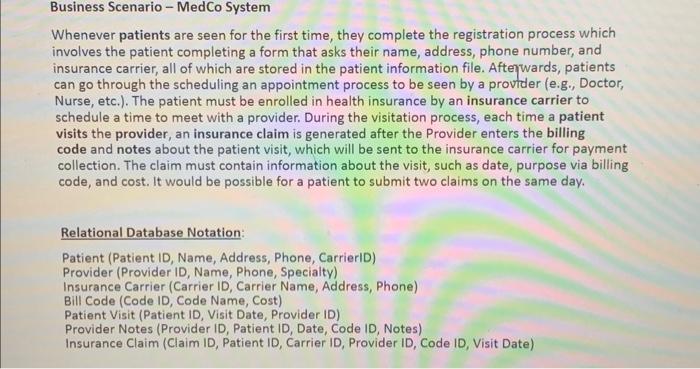
Assignment Requirements 1) Create a Context DFD illustrating the overall system, its external entities, and major data flows. 2) Create a level O DFD illustrating the major processes of the system, its external entities, data stores, and major data flows. 3) Develop the ERD using the relational database notation that is provived (the entities to use for the data model are listed for you). Utilize the Entity Relationship tool on LucidChart.com to create the model using the Information Engineering Notation. See this instructor demo for an example. - Use appropriate cardinality notation (such as crow's foot notation) to indicate the relationship cardinality. Label the relationships. - Label the entities and attributes clearly, using suitable names that accurately represent the nature of the data being modeled. - Determine and primary keys for each entity and foreign keys for the relationships. - Consider any additional attributes or entities that may be relevant to the car. dealership scenario. 4) Below your ERD, answer the following: a. List all pairs of entities with identifying relationships that are in your data model. b. List all entities that are considered independent entities that are in your data model. Business Scenario - MedCo System Whenever patients are seen for the first time, they complete the registration process which involves the patient completing a form that asks their name, address, phone number, and insurance carrier, all of which are stored in the patient information file. Afterwards, patients can go through the scheduling an appointment process to be seen by a provider (e.g., Doctor, Nurse, etc.). The patient must be enrolled in health insurance by an insurance carrier to schedule a time to meet with a provider. During the visitation process, each time a patient Whenever patients are seen for the first time, they complete the registration process which involves the patient completing a form that asks their name, address, phone number, and insurance carrier, all of which are stored in the patient information file. Aftegwards, patients can go through the scheduling an appointment process to be seen by a provtder (e.g., Doctor, Nurse, etc.). The patient must be enrolled in health insurance by an insurance carrier to schedule a time to meet with a provider. During the visitation process, each time a patient visits the provider, an insurance claim is generated after the Provider enters the billing code and notes about the patient visit, which will be sent to the insurance carrier for payment collection. The claim must contain information about the visit, such as date, purpose via billing code, and cost. It would be possible for a patient to submit two claims on the same day. Relational Database Notation: Patient (Patient ID, Name, Address, Phone, CarrierID) Provider (Provider ID, Name, Phone, Specialty) Insurance Carrier (Carrier ID, Carrier Name, Address, Phone) Bill Code (Code ID, Code Name, Cost) Patient Visit (Patient ID, Visit Date, Provider ID) Provider Notes (Provider ID, Patient ID, Date, Code ID, Notes) Insurance Claim (Claim ID, Patient ID, Carrier ID, Provider ID, Code ID, Visit Date) Assignment Requirements 1) Create a Context DFD illustrating the overall system, its external entities, and major data flows. 2) Create a level O DFD illustrating the major processes of the system, its external entities, data stores, and major data flows. 3) Develop the ERD using the relational database notation that is provived (the entities to use for the data model are listed for you). Utilize the Entity Relationship tool on LucidChart.com to create the model using the Information Engineering Notation. See this instructor demo for an example. - Use appropriate cardinality notation (such as crow's foot notation) to indicate the relationship cardinality. Label the relationships. - Label the entities and attributes clearly, using suitable names that accurately represent the nature of the data being modeled. - Determine and primary keys for each entity and foreign keys for the relationships. - Consider any additional attributes or entities that may be relevant to the car. dealership scenario. 4) Below your ERD, answer the following: a. List all pairs of entities with identifying relationships that are in your data model. b. List all entities that are considered independent entities that are in your data model. Business Scenario - MedCo System Whenever patients are seen for the first time, they complete the registration process which involves the patient completing a form that asks their name, address, phone number, and insurance carrier, all of which are stored in the patient information file. Afterwards, patients can go through the scheduling an appointment process to be seen by a provider (e.g., Doctor, Nurse, etc.). The patient must be enrolled in health insurance by an insurance carrier to schedule a time to meet with a provider. During the visitation process, each time a patient Whenever patients are seen for the first time, they complete the registration process which involves the patient completing a form that asks their name, address, phone number, and insurance carrier, all of which are stored in the patient information file. Aftegwards, patients can go through the scheduling an appointment process to be seen by a provtder (e.g., Doctor, Nurse, etc.). The patient must be enrolled in health insurance by an insurance carrier to schedule a time to meet with a provider. During the visitation process, each time a patient visits the provider, an insurance claim is generated after the Provider enters the billing code and notes about the patient visit, which will be sent to the insurance carrier for payment collection. The claim must contain information about the visit, such as date, purpose via billing code, and cost. It would be possible for a patient to submit two claims on the same day. Relational Database Notation: Patient (Patient ID, Name, Address, Phone, CarrierID) Provider (Provider ID, Name, Phone, Specialty) Insurance Carrier (Carrier ID, Carrier Name, Address, Phone) Bill Code (Code ID, Code Name, Cost) Patient Visit (Patient ID, Visit Date, Provider ID) Provider Notes (Provider ID, Patient ID, Date, Code ID, Notes) Insurance Claim (Claim ID, Patient ID, Carrier ID, Provider ID, Code ID, Visit Date)
Step by Step Solution
There are 3 Steps involved in it

Get step-by-step solutions from verified subject matter experts
 Study Help