Question: Assignment Research the Brexit referendum, as it relates to globalization. Based on your research and the content covered within this PowerPoint, along with your prior
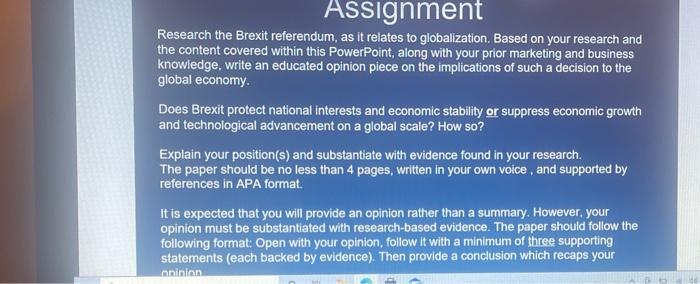
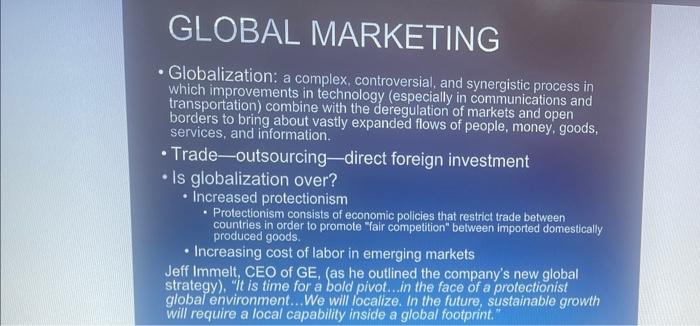
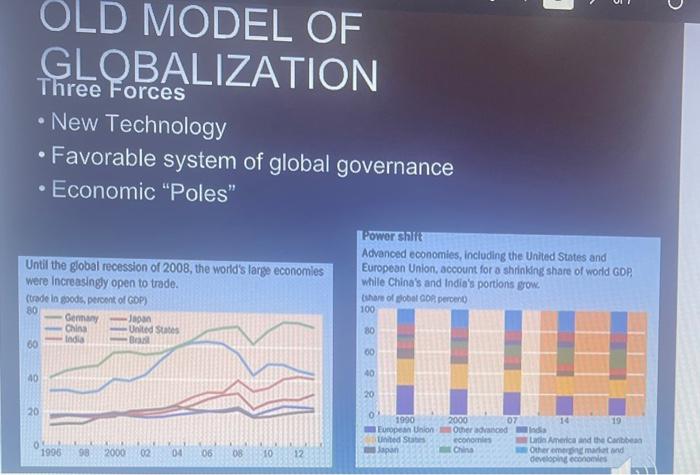
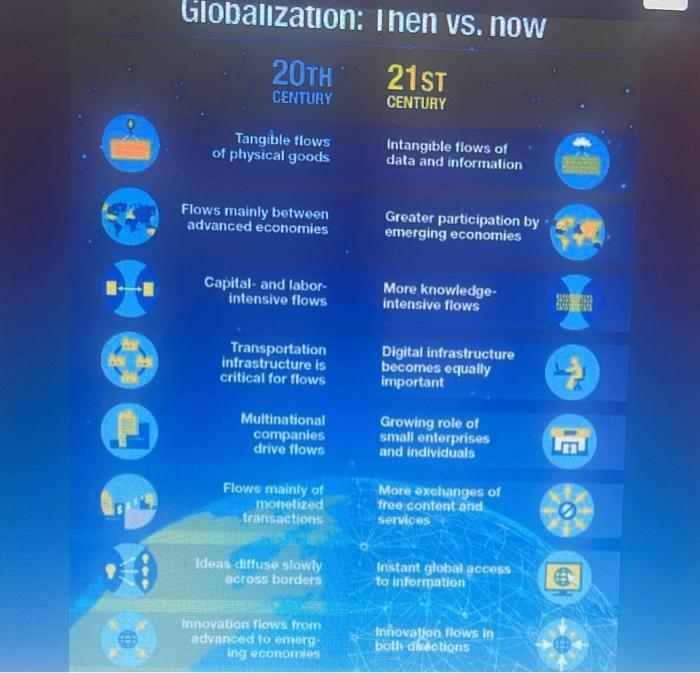
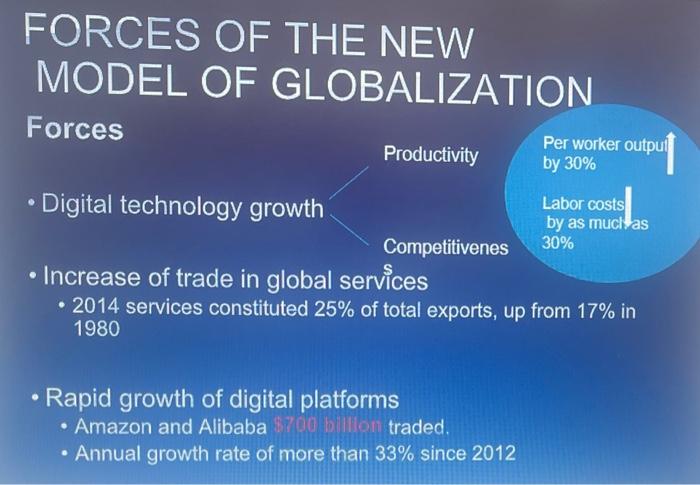
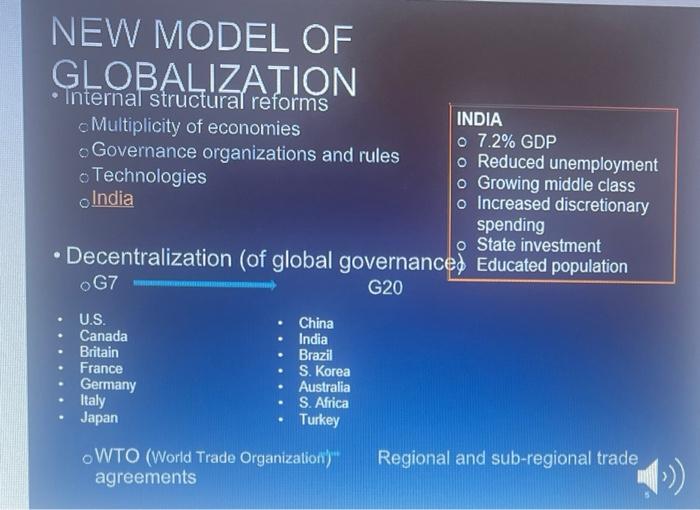
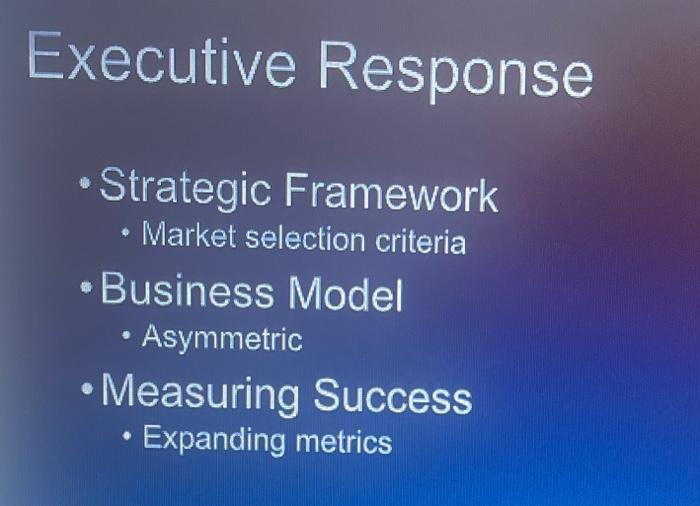
Assignment Research the Brexit referendum, as it relates to globalization. Based on your research and the content covered within this PowerPoint, along with your prior marketing and business knowledge, write an educated opinion piece on the implications of such a decision to the global economy. Does Brexit protect national interests and economic stability or suppress economic growth and technological advancement on a global scale? How so? Explain your position(s) and substantiate with evidence found in your research. The paper should be no less than 4 pages, written in your own voice, and supported by references in APA format. It is expected that you will provide an opinion rather than a summary. However, your opinion must be substantiated with research-based evidence. The paper should follow the following format: Open with your opinion, follow it with a minimum of three supporting statements (each backed by evidence). Then provide a conclusion which recaps your anininn GLOBAL MARKETING Globalization: a complex, controversial, and synergistic process in which improvements in technology (especially in communications and transportation) combine with the deregulation of markets and open borders to bring about vastly expanded flows of people, money, goods, services, and information. Trade-outsourcing-direct foreign investment Is globalization over? Increased protectionism Protectionism consists of economic policies that restrict trade between countries in order to promote "fair competition between imported domestically produced goods. Increasing cost of labor in emerging markets Jeff Immelt, CEO of GE, (as he outlined the company's new global strategy), "It is time for a bold pivot...in the face of a protectionist global environment... We will localize. In the future, sustainable growth will require a local capability inside a global footprint. OLD MODEL OF GLOBALIZATION Three Forces New Technology Favorable system of global governance Economic "Poles" Until the global recession of 2008, the world's large economies were increasingly open to trade. (trade in goods, percent of GOP) 80 Germany Japan China United States India B Power shirt Advanced economies, including the United States and European Union, account for a shrinking share of world GDP while China's and India's portions grow. share of obat Gon percent 100 80 00 00 40 40 20 20 10 19 0 1990 Furopean Union United States Sapa 2000 07 Other advanced economie China 1996 98 2000 02 04 06 08 10 12 Land America and the Caribbean Other part developing economies Globalization: Then vs. now 20TH CENTURY 21ST CENTURY Tangible flows of physical goods Intangible flows of data and information Flows mainly between advanced economies Greater participation by emerging economies Capital- and labor intensive flows More knowledge- intensive flows Transportation infrastructure is critical for flows Digital infrastructure becomes equally important Multinational companies drive flows Growing role of small enterprises and individuals Flows mainly of monetized transactions More exchanges of free content and services Ideas diffuse slowly across borders Instant global access to information innovation flows from advanced to emerg- ing economies Innovation flows in both directions FORCES OF THE NEW MODEL OF GLOBALIZATION Forces Per worker output Productivity by 30% Digital technology growth Labor costs by as much as Competitivenes 30% Increase of trade in global services 2014 services constituted 25% of total exports, up from 17% in 1980 Rapid growth of digital platforms Amazon and Alibaba $700 billion traded. Annual growth rate of more than 33% since 2012 NEW MODEL OF GLOBALIZATION Internal structural reforms INDIA Multiplicity of economies o 7.2% GDP Governance organizations and rules o Reduced unemployment Technologies o Growing middle class India o Increased discretionary spending o State investment Decentralization (of global governanced Educated population oG7 G20 U.S. Canada Britain France Germany Italy Japan China India Brazil S. Korea Australia S. Africa Turkey OWTO (World Trade Organization) agreements Regional and sub-regional trade Executive Response Strategic Framework Market selection criteria Business Model Asymmetric Measuring Success Expanding metrics Assignment Research the Brexit referendum, as it relates to globalization. Based on your research and the content covered within this PowerPoint, along with your prior marketing and business knowledge, write an educated opinion piece on the implications of such a decision to the global economy. Does Brexit protect national interests and economic stability or suppress economic growth and technological advancement on a global scale? How so? Explain your position(s) and substantiate with evidence found in your research. The paper should be no less than 4 pages, written in your own voice, and supported by references in APA format. It is expected that you will provide an opinion rather than a summary. However, your opinion must be substantiated with research-based evidence. The paper should follow the following format: Open with your opinion, follow it with a minimum of three supporting statements (each backed by evidence). Then provide a conclusion which recaps your anininn GLOBAL MARKETING Globalization: a complex, controversial, and synergistic process in which improvements in technology (especially in communications and transportation) combine with the deregulation of markets and open borders to bring about vastly expanded flows of people, money, goods, services, and information. Trade-outsourcing-direct foreign investment Is globalization over? Increased protectionism Protectionism consists of economic policies that restrict trade between countries in order to promote "fair competition between imported domestically produced goods. Increasing cost of labor in emerging markets Jeff Immelt, CEO of GE, (as he outlined the company's new global strategy), "It is time for a bold pivot...in the face of a protectionist global environment... We will localize. In the future, sustainable growth will require a local capability inside a global footprint. OLD MODEL OF GLOBALIZATION Three Forces New Technology Favorable system of global governance Economic "Poles" Until the global recession of 2008, the world's large economies were increasingly open to trade. (trade in goods, percent of GOP) 80 Germany Japan China United States India B Power shirt Advanced economies, including the United States and European Union, account for a shrinking share of world GDP while China's and India's portions grow. share of obat Gon percent 100 80 00 00 40 40 20 20 10 19 0 1990 Furopean Union United States Sapa 2000 07 Other advanced economie China 1996 98 2000 02 04 06 08 10 12 Land America and the Caribbean Other part developing economies Globalization: Then vs. now 20TH CENTURY 21ST CENTURY Tangible flows of physical goods Intangible flows of data and information Flows mainly between advanced economies Greater participation by emerging economies Capital- and labor intensive flows More knowledge- intensive flows Transportation infrastructure is critical for flows Digital infrastructure becomes equally important Multinational companies drive flows Growing role of small enterprises and individuals Flows mainly of monetized transactions More exchanges of free content and services Ideas diffuse slowly across borders Instant global access to information innovation flows from advanced to emerg- ing economies Innovation flows in both directions FORCES OF THE NEW MODEL OF GLOBALIZATION Forces Per worker output Productivity by 30% Digital technology growth Labor costs by as much as Competitivenes 30% Increase of trade in global services 2014 services constituted 25% of total exports, up from 17% in 1980 Rapid growth of digital platforms Amazon and Alibaba $700 billion traded. Annual growth rate of more than 33% since 2012 NEW MODEL OF GLOBALIZATION Internal structural reforms INDIA Multiplicity of economies o 7.2% GDP Governance organizations and rules o Reduced unemployment Technologies o Growing middle class India o Increased discretionary spending o State investment Decentralization (of global governanced Educated population oG7 G20 U.S. Canada Britain France Germany Italy Japan China India Brazil S. Korea Australia S. Africa Turkey OWTO (World Trade Organization) agreements Regional and sub-regional trade Executive Response Strategic Framework Market selection criteria Business Model Asymmetric Measuring Success Expanding metrics









 Study Help