Question: Audit Area #7 - JIT Inventory System - Dynamic Pricing Audit Area: Menu Planning and Pricing Rationale: Small impact and Likely occurrence. This area is
Audit Area #7 - JIT Inventory System - Dynamic Pricing Audit Area: Menu Planning and Pricing Rationale: Small impact and Likely occurrence. This area is critical because Heart Stone's Grill approach to menu development and pricing directly affects both operational efficiency and customer perception. Potential risks associated with JIT systems, such as supply chain disruptions or ingredient shortages, which could compromise menu consistency and customer satisfaction. Additionally, while dynamic pricing allows for responsiveness to market trends and cost fluctuations, it also poses a risk of destabilizing the restaurant's brand if customers perceive pricing as inconsistent or unfair.Please provide a plan for resources, an example of the format would be this: Plan for Resources: The audit team will require 100 hours over 3 weeks. Weeks 1 and 2 will focus on reviewing financial and performance data. Week 3 will be dedicated to stakeholder interviews and final report preparation. The audit team will consist of two members: one financial analyst and one marketing analyst. The manager will allocate 20 hours for planning, supervision, and review. The chief audit executive will dedicate 10 hours for overall audit oversight and reporting. Tools used will include ROI calculators, performance dashboards, and survey results.
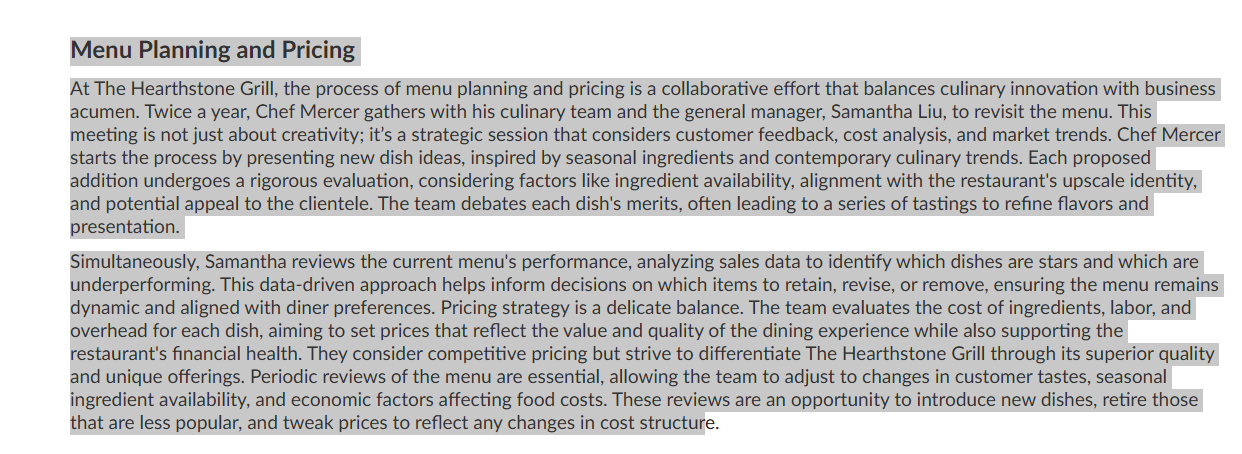
Menu Planning and Pricing At The Hearthstone Grill, the process of menu planning and pricing is a collaborative effort that balances culinary innovation with business acumen. Twice a year, Chef Mercer gathers with his culinary team and the general manager, Samantha Liu, to revisit the menu. This meeting is not just about creativity; it's a strategic session that considers customer feedback, cost analysis, and market trends. Chef Mercer starts the process by presenting new dish ideas, inspired by seasonal ingredients and contemporary culinary trends. Each proposed addition undergoes a rigorous evaluation, considering factors like ingredient availability, alignment with the restaurant's upscale identity, and potential appeal to the clientele. The team debates each dish's merits, often leading to a series of tastings to refine flavors and presentation. Simultaneously, Samantha reviews the current menu's performance, analyzing sales data to identify which dishes are stars and which are underperforming. This data-driven approach helps inform decisions on which items to retain, revise, or remove, ensuring the menu remains dynamic and aligned with diner preferences. Pricing strategy is a delicate balance. The team evaluates the cost of ingredients, labor, and overhead for each dish, aiming to set prices that reflect the value and quality of the dining experience while also supporting the restaurant's financial health. They consider competitive pricing but strive to differentiate The Hearthstone Grill through its superior quality and unique offerings. Periodic reviews of the menu are essential, allowing the team to adjust to changes in customer tastes, seasonal ingredient availability, and economic factors affecting food costs. These reviews are an opportunity to introduce new dishes, retire those that are less popular, and tweak prices to reflect any changes in cost structure









 Study Help