







Question: (b) (5 pts) Dene or explain transitive preferences. In the current example, is the aggre- gation of preferences by pairwise voting (majority rule in each
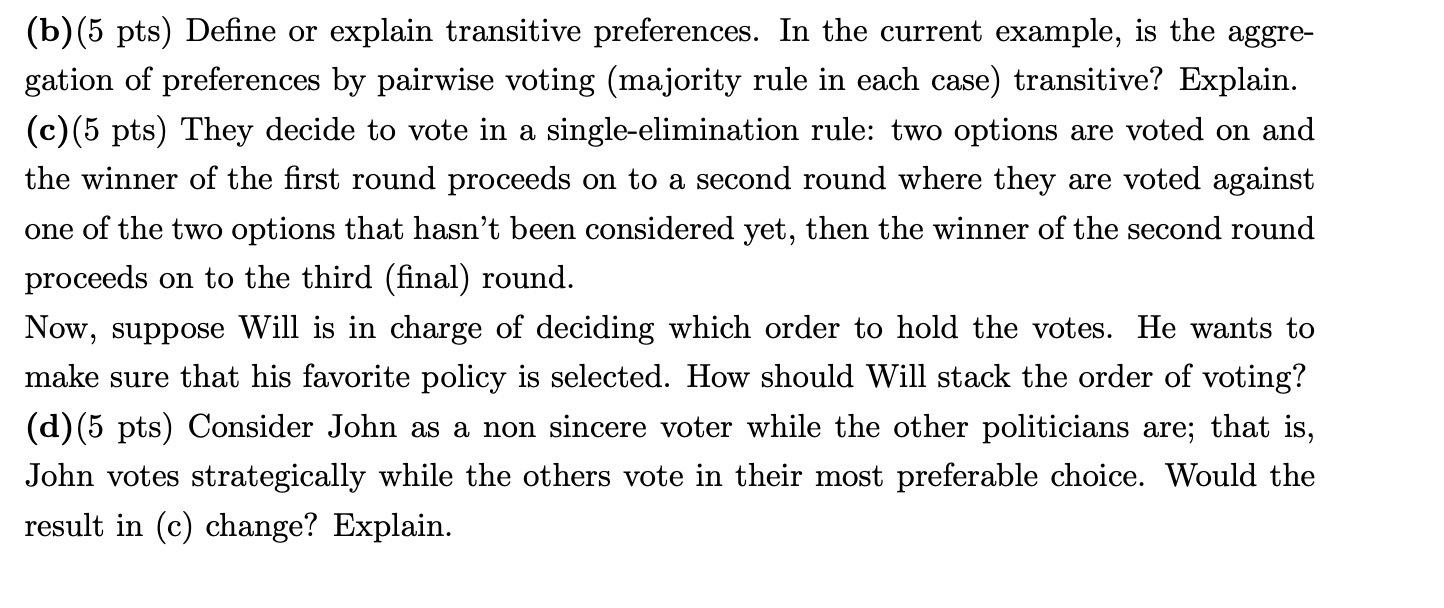
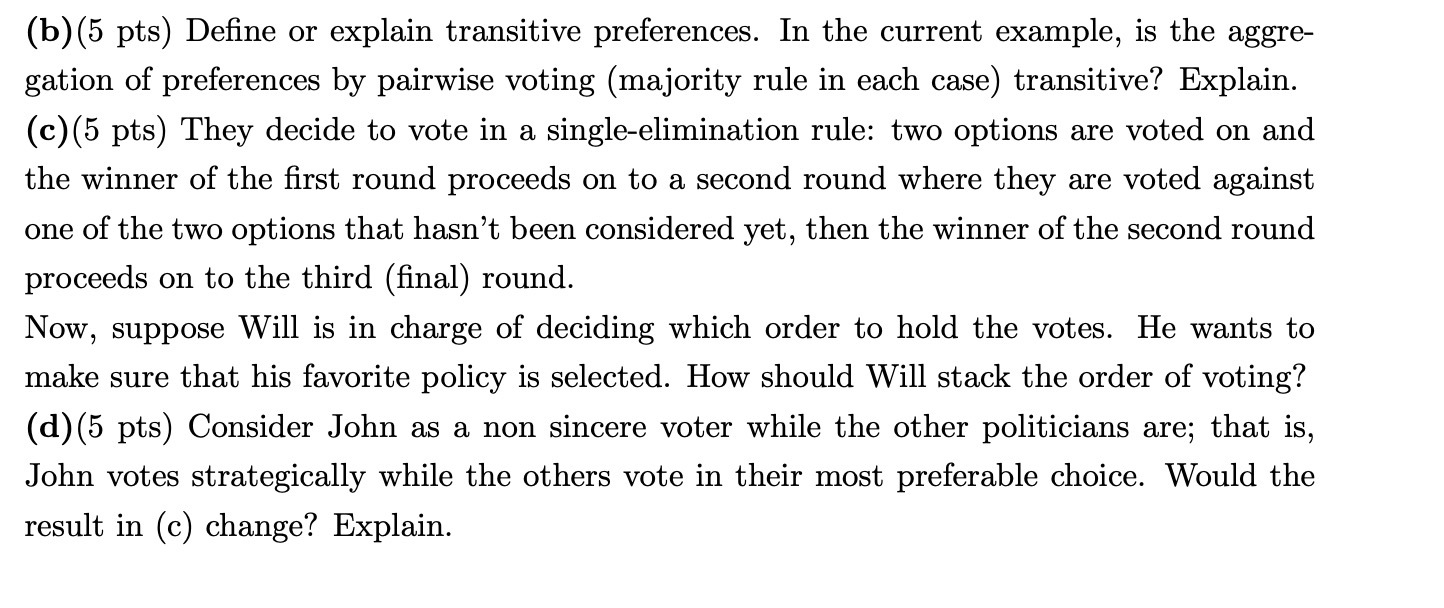
(b) (5 pts) Dene or explain transitive preferences. In the current example, is the aggre- gation of preferences by pairwise voting (majority rule in each case) transitive? Explain. (c)(5 pts) They decide to vote in a singleelimination rule: two options are voted on and the winner of the rst round proceeds on to a second round where they are voted against one of the two options that hasn't been considered yet, then the winner of the second round proceeds on to the third (nal) round. Now, suppose Will is in charge of deciding which order to hold the votes. He wants to make sure that his favorite policy is selected. How should Will stack the order of voting? ((1) (5 pts) Consider John as a non sincere voter while the other politicians are; that is, John votes strategically while the others vote in their most preferable choice. Would the result in (c) change? Explain
Step by Step Solution
There are 3 Steps involved in it

Get step-by-step solutions from verified subject matter experts
 Study Help