







Question: B $6.90 $ 3.10 $3.30 3% 7% - 1% Problem 11-03 An investor with a required return of 11 percent for very risky investments in
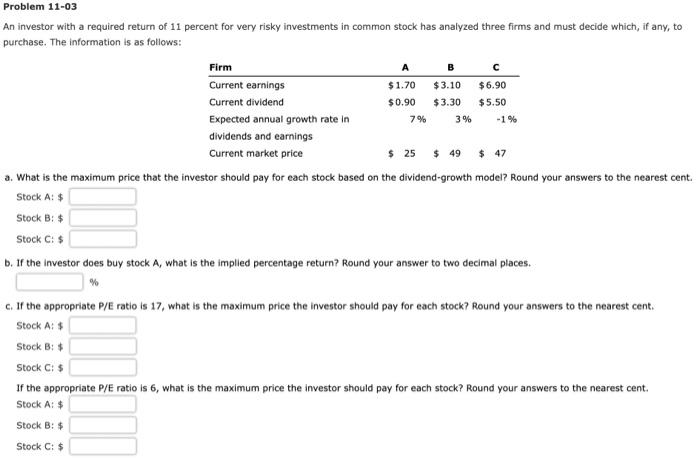
B $6.90 $ 3.10 $3.30 3% 7% - 1% Problem 11-03 An investor with a required return of 11 percent for very risky investments in common stock has analyzed three firms and must decide which, if any, to purchase. The information is as follows: Firm Current earnings $1.70 Current dividend $0.90 $5.50 Expected annual growth rate in dividends and earnings Current market price $ 25 $ 49 $ 47 a. What is the maximum price that the investor should pay for each stock based on the dividend-growth model? Round your answers to the nearest cent. Stock A: $ Stock B: $ Stock C: $ b. If the investor does buy stock A, what is the implied percentage return? Round your answer to two decimal places. c. If the appropriate P/E ratio is 17, what is the maximum price the investor should pay for each stock? Round your answers to the nearest cent. Stock A: $ Stock B: $ Stock C: $ If the appropriate P/E ratio is 6, what is the maximum price the investor should pay for each stock? Round your answers to the nearest cent. Stock A: $ Stock B: $ Stock C: $
Step by Step Solution
There are 3 Steps involved in it

Get step-by-step solutions from verified subject matter experts
 Study Help