



Question: (b) Show that oo (In(x)) 9 In(L) -dx = lim xle(l-p):dx. No XP L-+0o J In(No) (c) When p = 1, for what values of
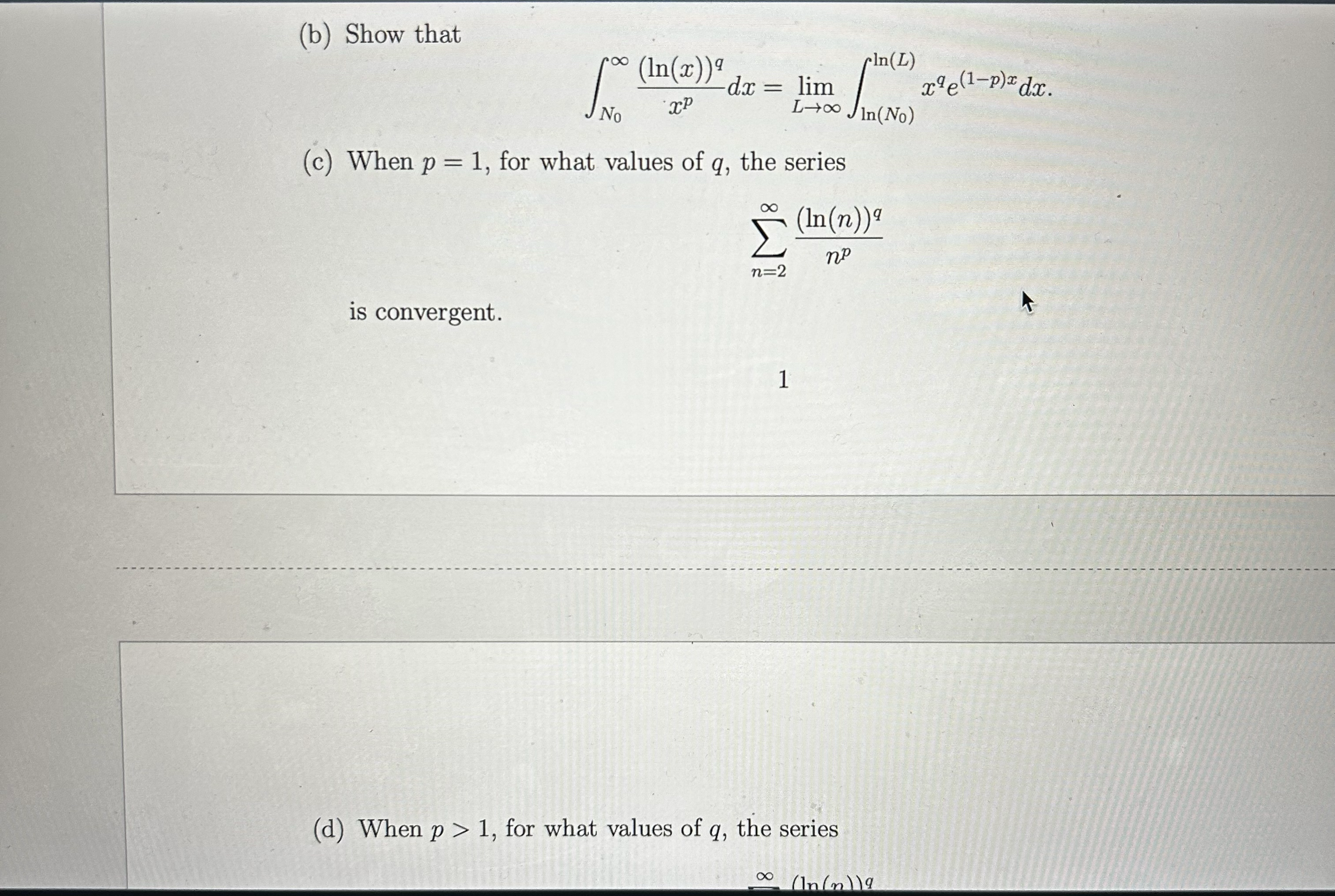
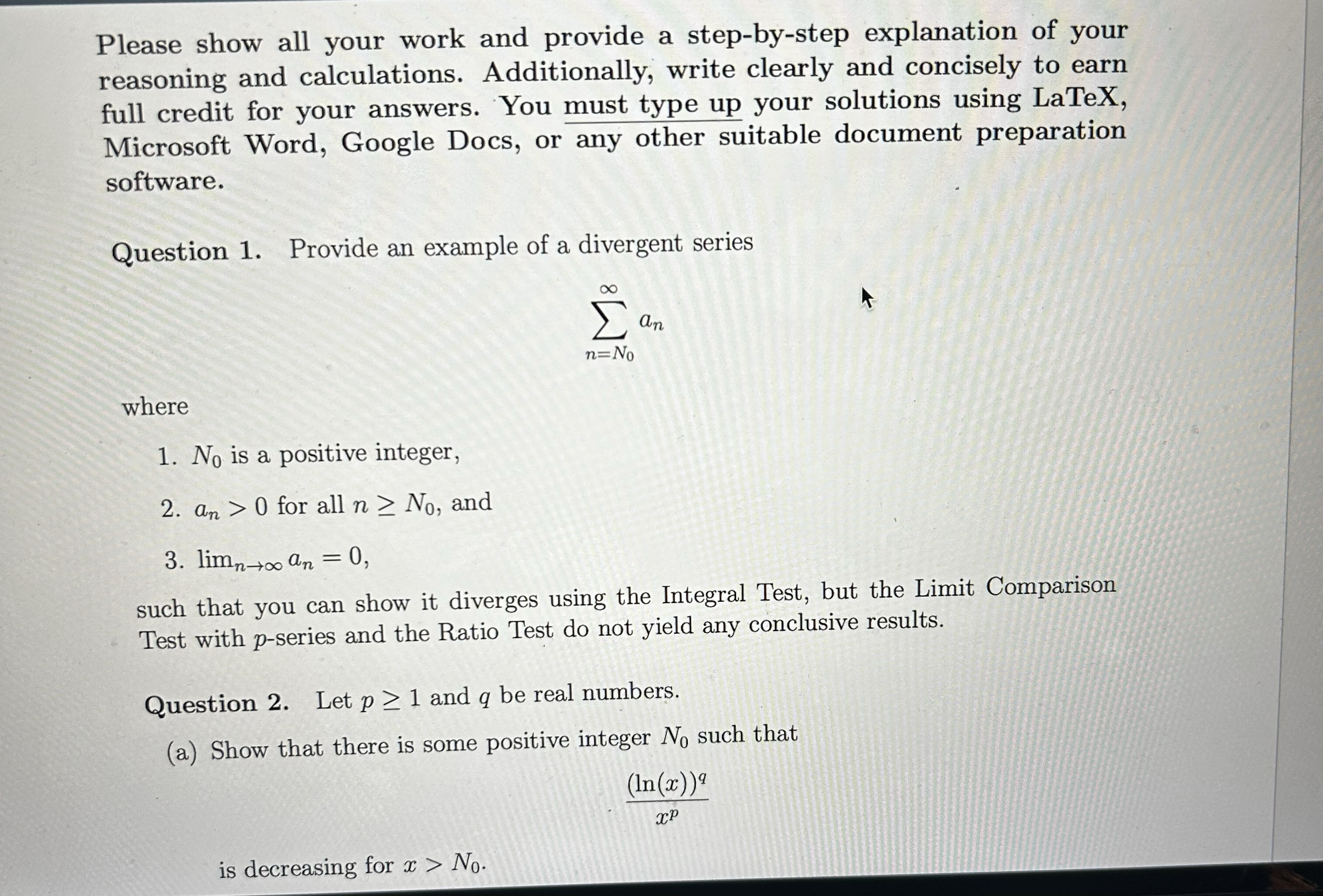
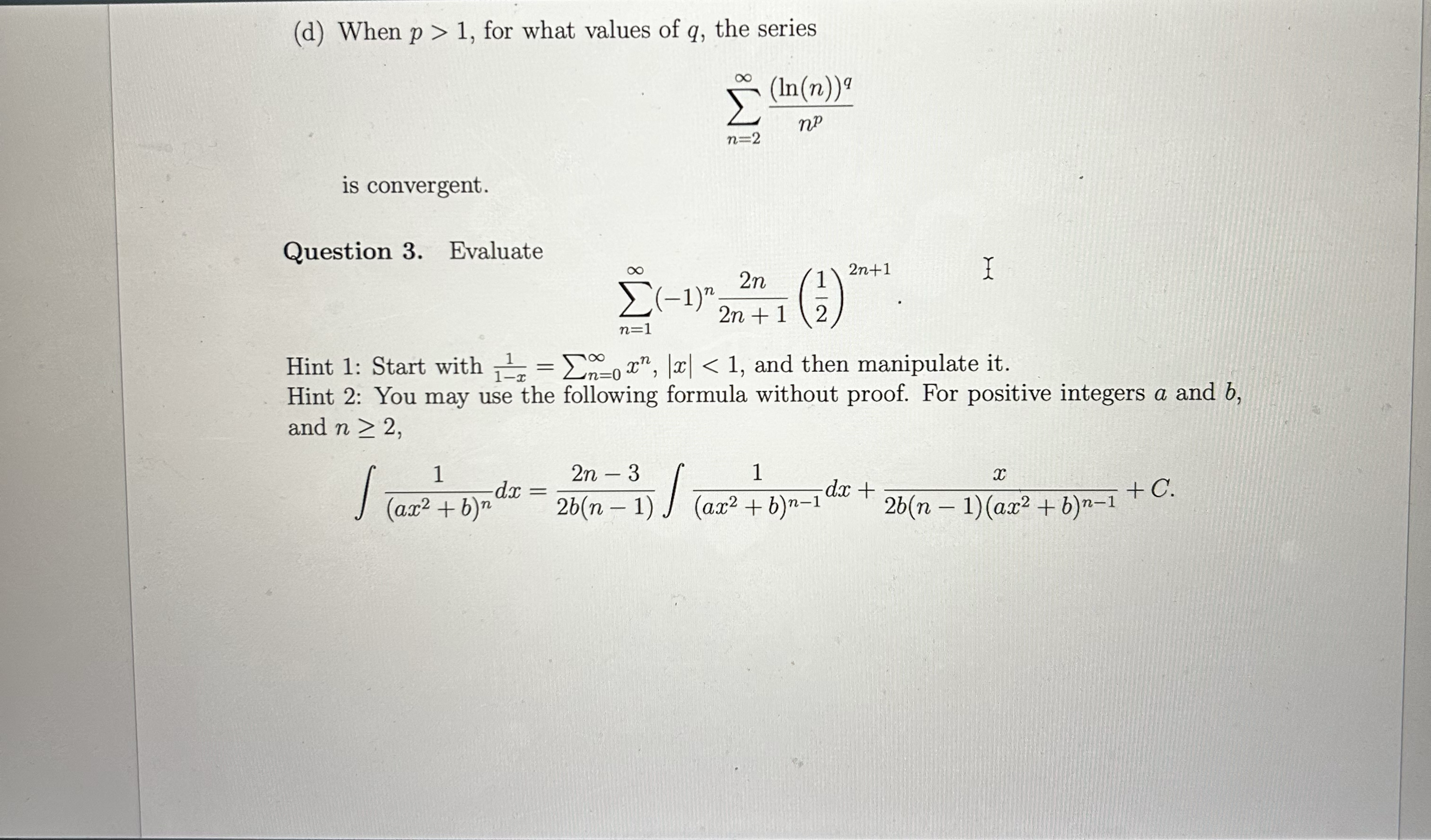
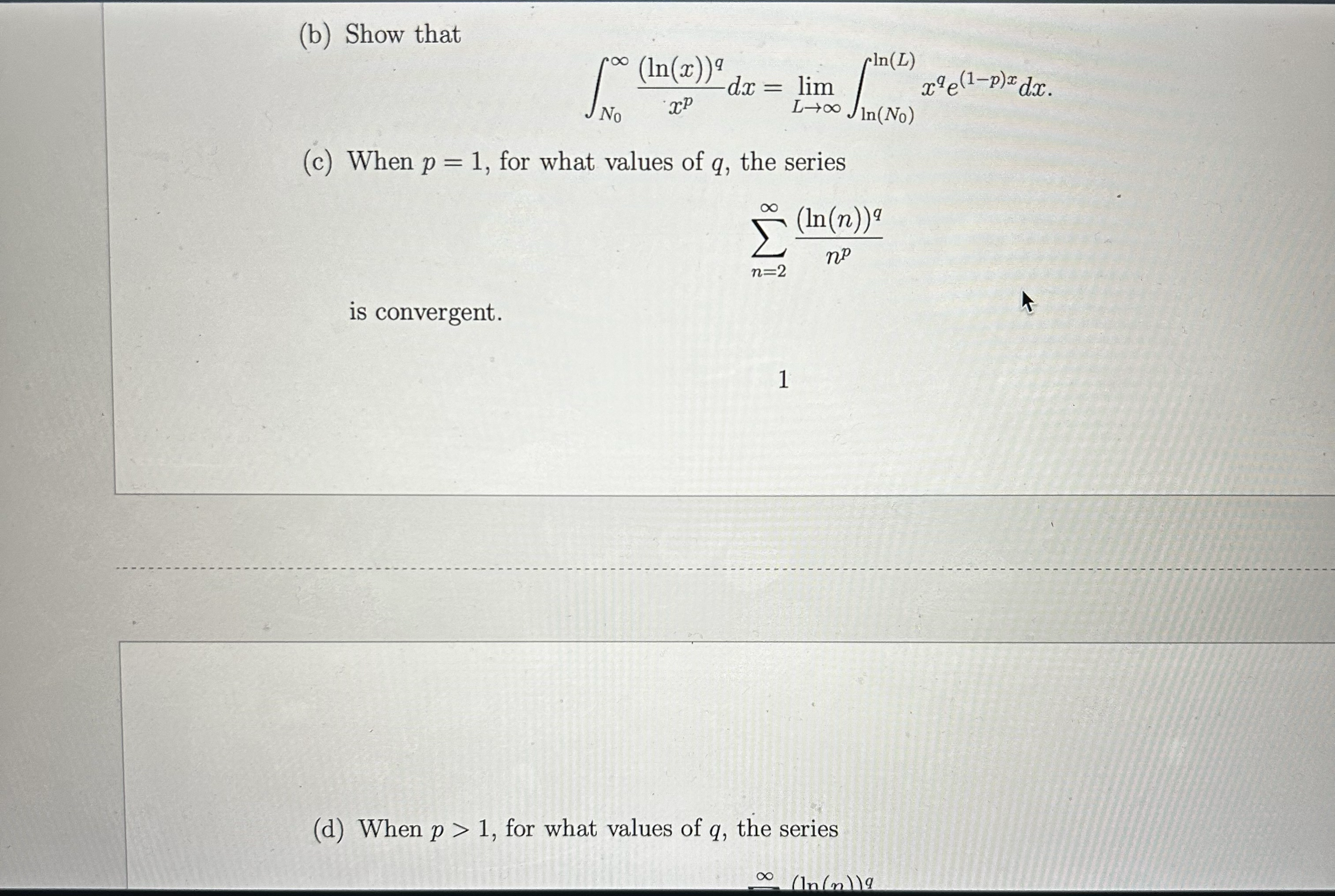
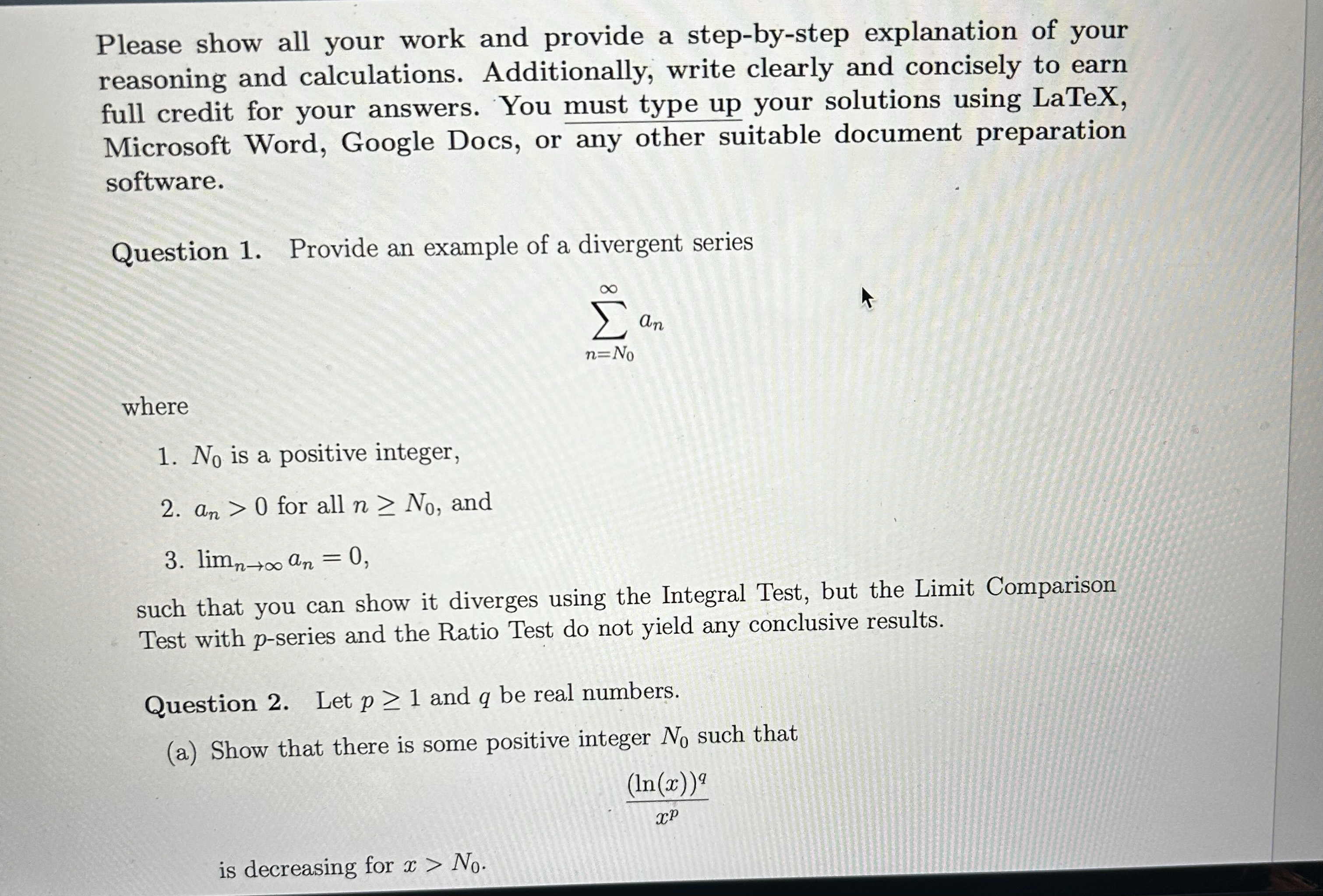
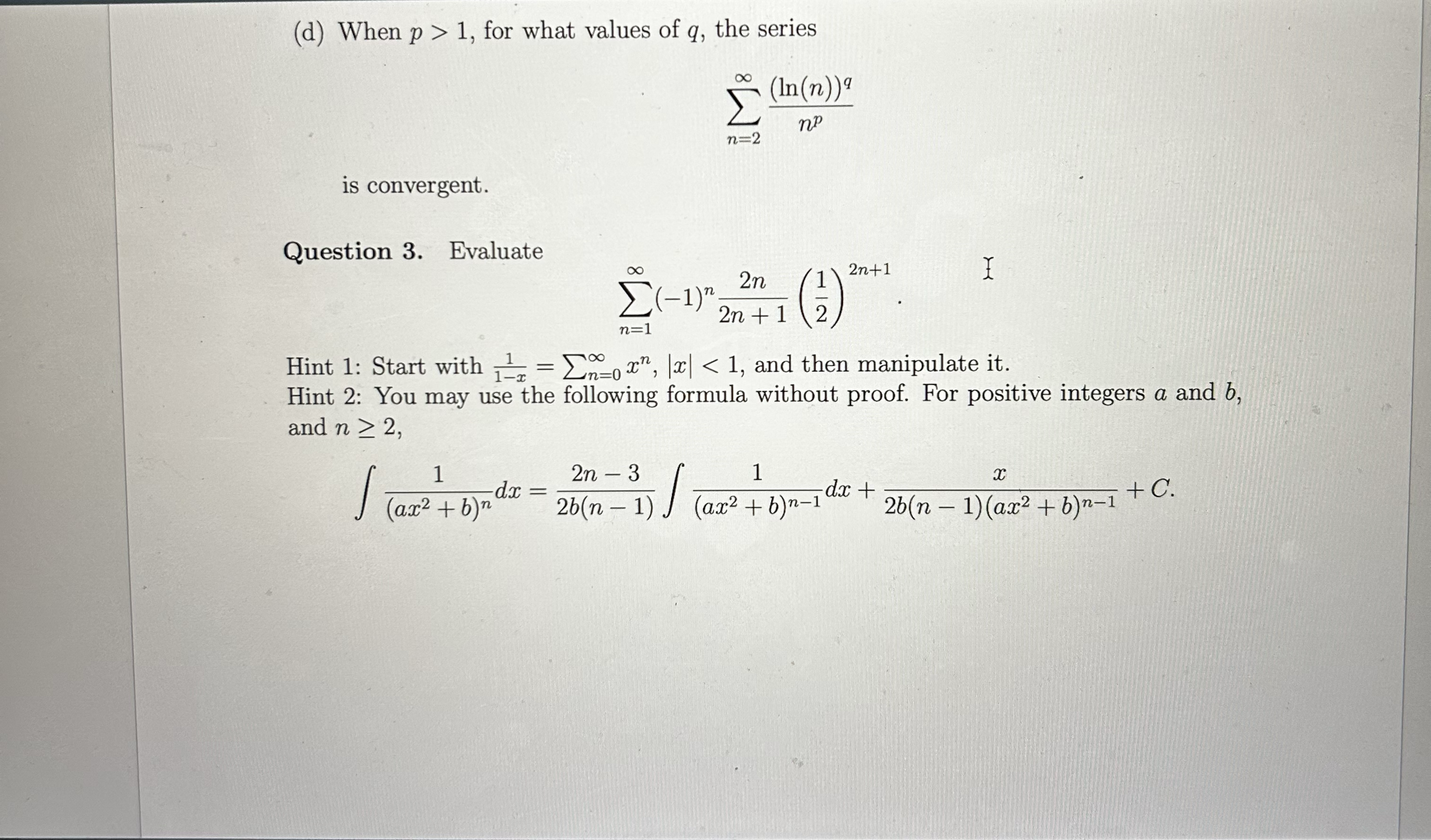
(b) Show that oo (In(x)) 9 In(L) -dx = lim xle(l-p):dx. No XP L-+0o J In(No) (c) When p = 1, for what values of q, the series (In(n)) nP n=2 is convergent. (d) When p > 1, for what values of q, the series 0o ( In ( n ) )qPlease show all your work and provide a step-by-step explanation of your reasoning and calculations. Additionally, write clearly and concisely to earn full credit for your answers. You must type up your solutions using LaTex, Microsoft Word, Google Docs, or any other suitable document preparation software. Question 1. Provide an example of a divergent series I an n=No where 1. No is a positive integer, 2. an > 0 for all n > No, and 3. limn two an = 0, such that you can show it diverges using the Integral Test, but the Limit Comparison Test with p-series and the Ratio Test do not yield any conclusive results. Question 2. Let p 2 1 and q be real numbers. (a) Show that there is some positive integer No such that (In(x) ) CP is decreasing for x > No., Start with1:: = 22:0 3:", |x|
Step by Step Solution
There are 3 Steps involved in it

Get step-by-step solutions from verified subject matter experts