







Question: b. Write down the known information. Population # 1 = Population # 2 = X1 = , m = , 1= X 2 = ,

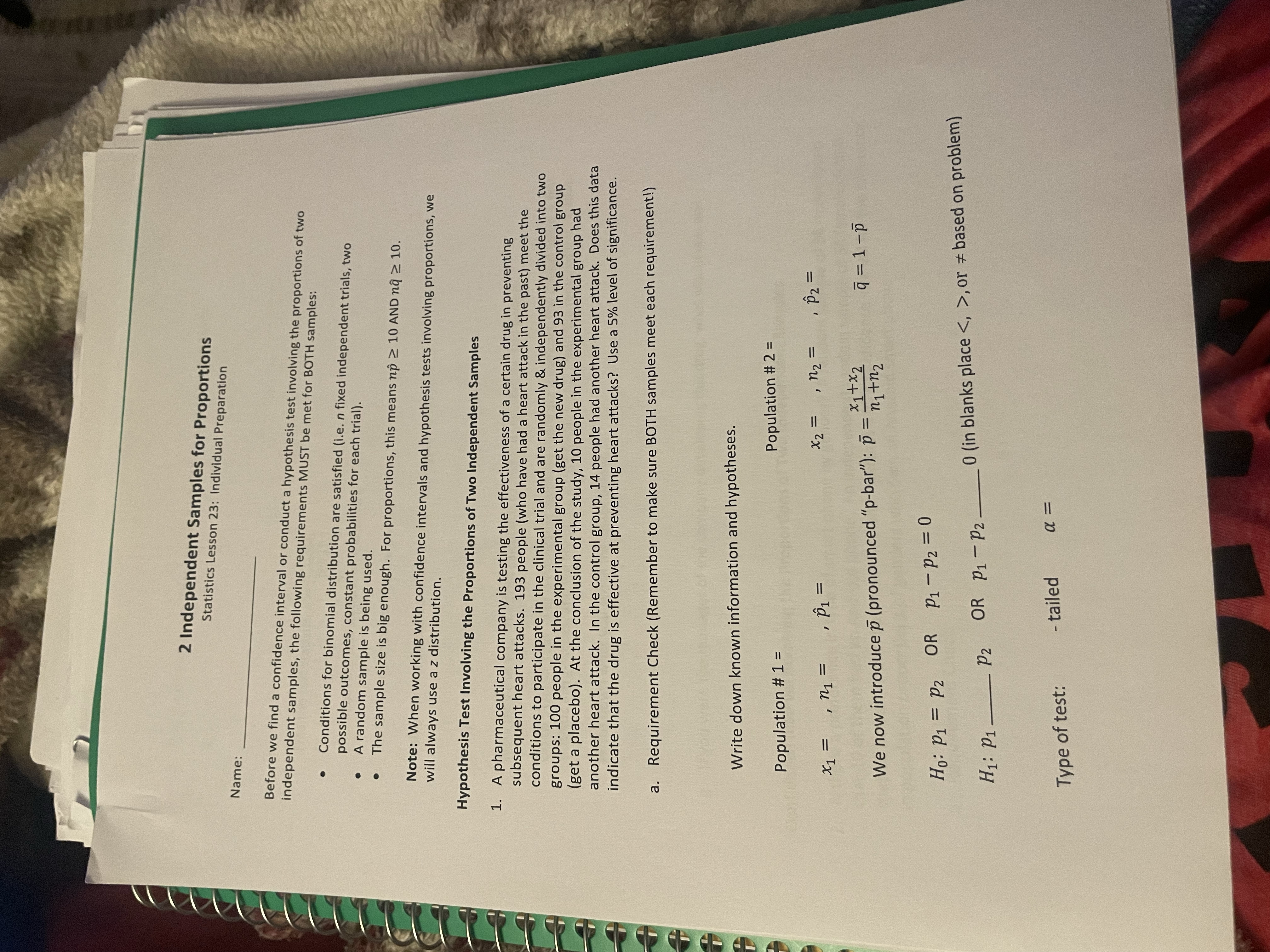
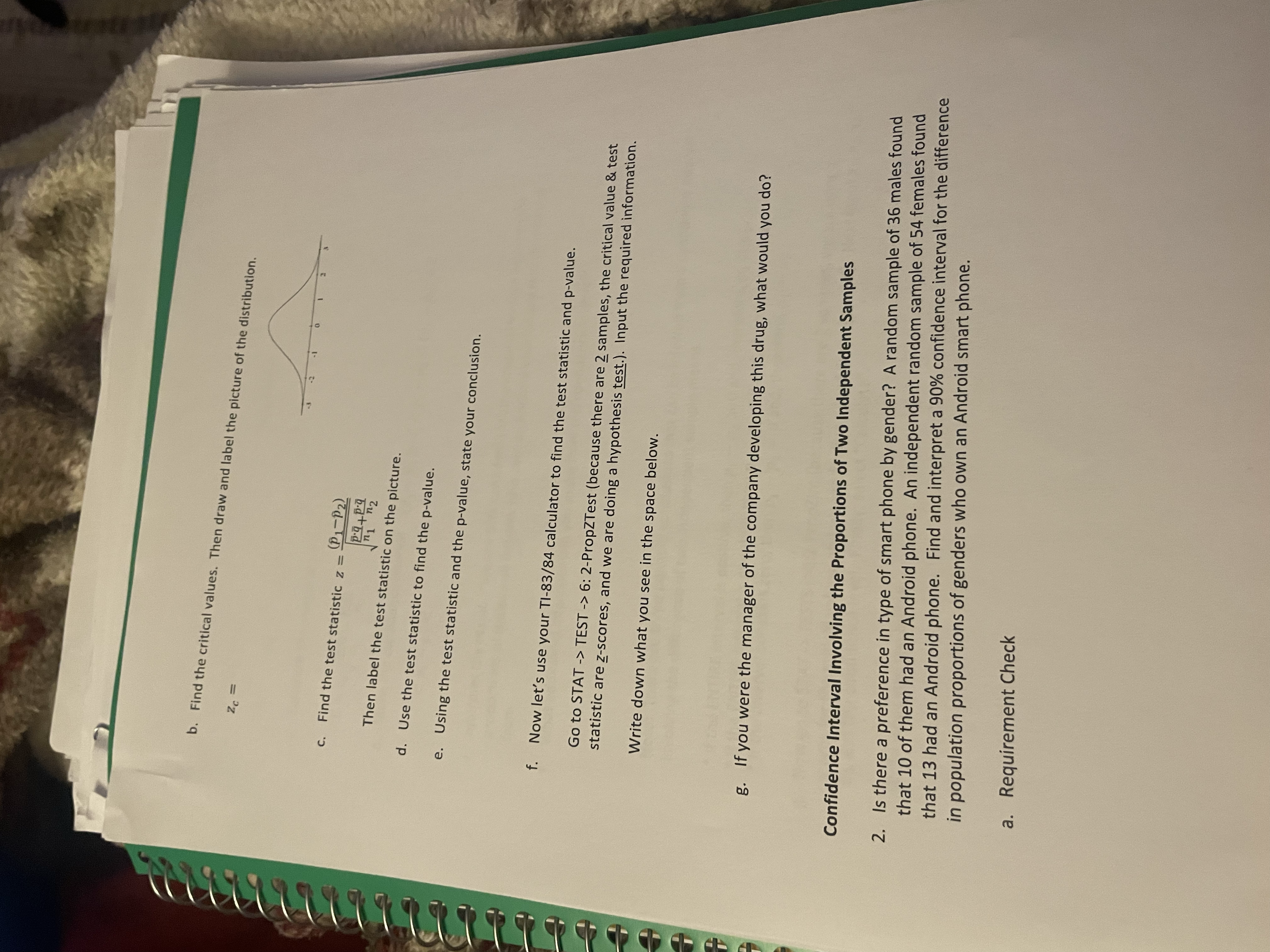

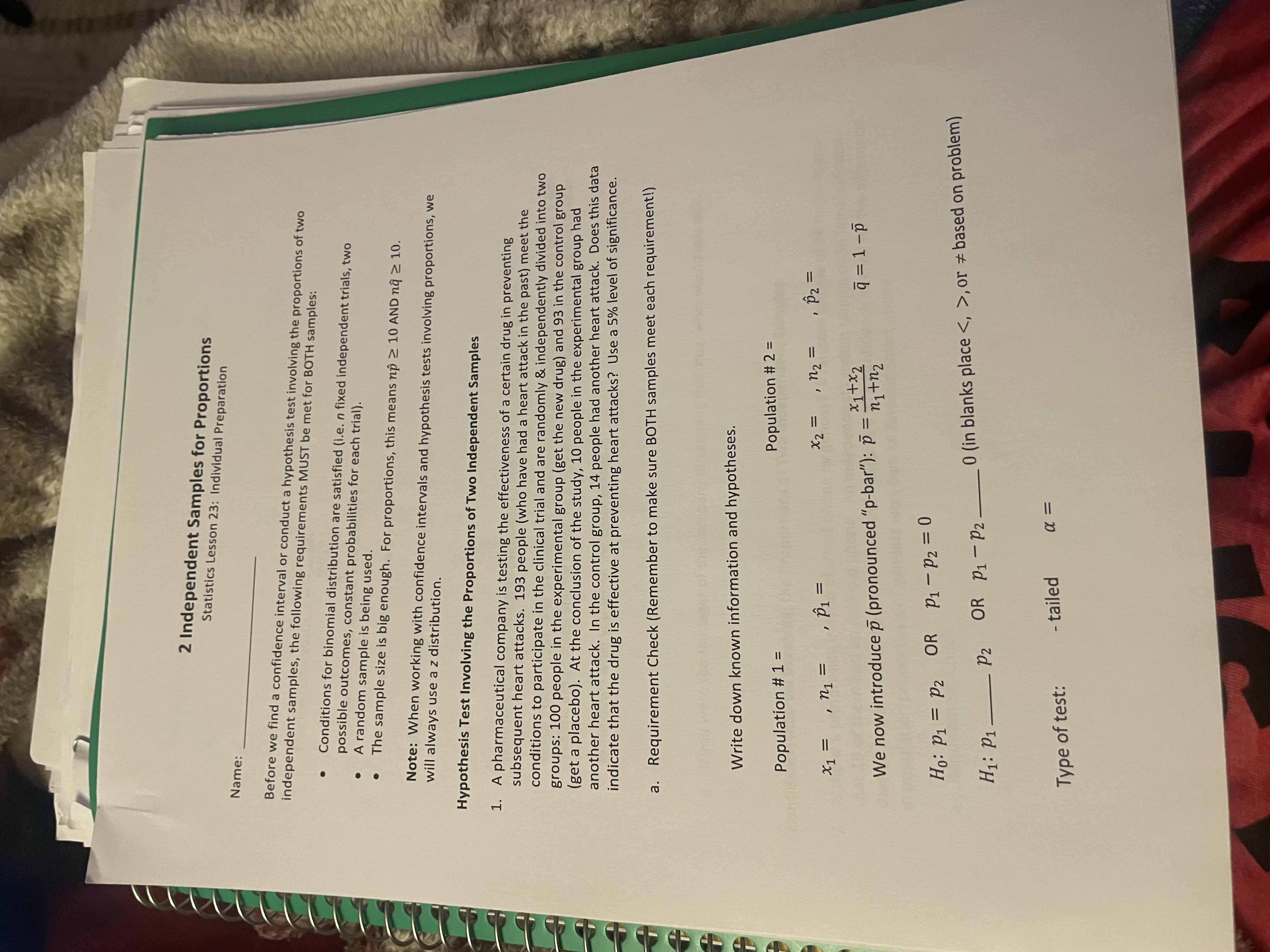
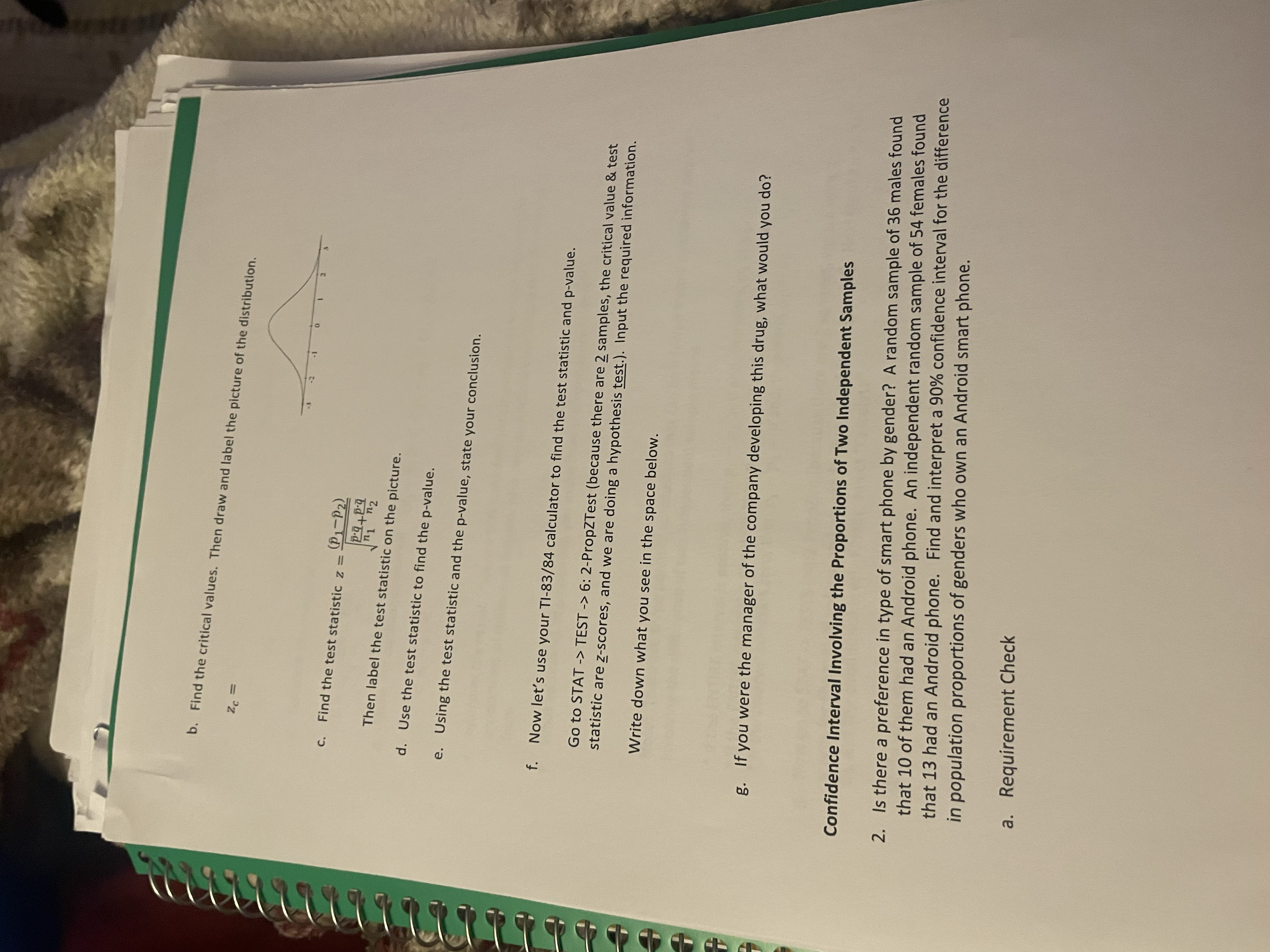
b. Write down the known information. Population # 1 = Population # 2 = X1 = , m = , 1= X 2 = , n2 = , P2 = Calculate the margin of error. P191 4 P292 E = Zon1 n2 d. Make the confidence interval (P1 -P2)- E 0 and, therefore, P1 > Pz. * If the ENTIRE interval is negative, then p1 - P2 TESTS ->6:2-PropZInt (because there are 2 samples, we are using z- scores for the critical values, and we are finding a confidence interval). Next input X1, n1, X2, n2, and the confidence level. Finally, select "Calculate". Write what you see below.2 Independent Samples for Proportions Statistics Lesson 23: Individual Preparation Name: Before we find a confidence interval or conduct a hypothesis test involving the proportions of two independent samples, the following requirements MUST be met for BOTH samples: . Conditions for binomial distribution are satisfied (i.e. n fixed independent trials, two possible outcomes, constant probabilities for each trial). . A random sample is being used. The sample size is big enough. For proportions, this means np 2 10 AND nq 2 10. Note: When working with confidence intervals and hypothesis tests involving proportions, we will always use a z distribution. Hypothesis Test Involving the Proportions of Two Independent Samples 1. A pharmaceutical company is testing the effectiveness of a certain drug in preventing subsequent heart attacks. 193 people (who have had a heart attack in the past) meet the conditions to participate in the clinical trial and are randomly & independently divided into two groups: 100 people in the experimental group (get the new drug) and 93 in the control group (get a placebo). At the conclusion of the study, 10 people in the experimental group had another heart attack. In the control group, 14 people had another heart attack. Does this data indicate that the drug is effective at preventing heart attacks? Use a 5% level of significance. a. Requirement Check (Remember to make sure BOTH samples meet each requirement!) Write down known information and hypotheses. Population # 1 = Population # 2 = X 2 = , n2 = X1 , n1 = , P1 = , P2 = x 1+ x 2 We now introduce p (pronounced "p-bar"): p = q =1-p nitn2 Ho: P1 = P2 OR P1 - P2 = 0 _ 0 (in blanks place , or # based on problem) H1: P1 - P2 OR P1 - P2 - tailed a = Type of test:b. Find the critical values. Then draw and label the picture of the distribution. Zo = c. Find the test statistic z = (P1-P2) P.9 + P.q In1 nz Then label the test statistic on the picture. d. Use the test statistic to find the p-value. e. Using the test statistic and the p-value, state your conclusion. f. Now let's use your TI-83/84 calculator to find the test statistic and p-value. Go to STAT -> TEST -> 6: 2-PropZTest (because there are 2 samples, the critical value & test statistic are z-scores, and we are doing a hypothesis test.). Input the required information. Write down what you see in the space below. g. If you were the manager of the company developing this drug, what would you do? Confidence Interval Involving the Proportions of Two Independent Samples 2. Is there a preference in type of smart phone by gender? A random sample of 36 males found that 10 of them had an Android phone. An independent random sample of 54 females found that 13 had an Android phone. Find and interpret a 90% confidence interval for the difference in population proportions of genders who own an Android smart phone. a. Requirement Check
Step by Step Solution
There are 3 Steps involved in it

Get step-by-step solutions from verified subject matter experts
 Study Help