







Question: Background: If we have two DFAs, M 1 = ( Q 1 , , 1 , q 1 , F 1 ) , which recognizes
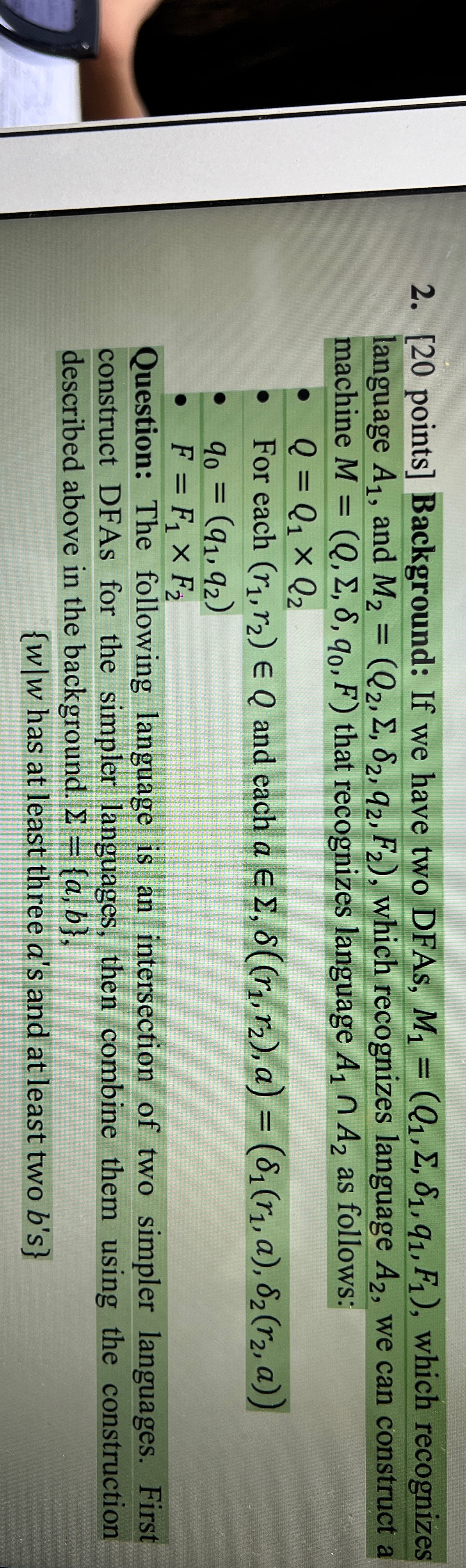
Background: If we have two DFAs, which recognizes language and which recognizes language we can construct a machine that recognizes language as follows:
For each and each ain
Question: The following language is an intersection of two simpler languages. First construct DFAs for the simpler languages, then combine them using the construction described above in the background.
has at least three s and at least two s
Step by Step Solution
There are 3 Steps involved in it
1 Expert Approved Answer
Step: 1 Unlock

Question Has Been Solved by an Expert!
Get step-by-step solutions from verified subject matter experts
Step: 2 Unlock
Step: 3 Unlock
 Study Help