







Question: background info 1. What is the reason for using only the linear regions of the standard curve? Explain why very low or very high absorbance

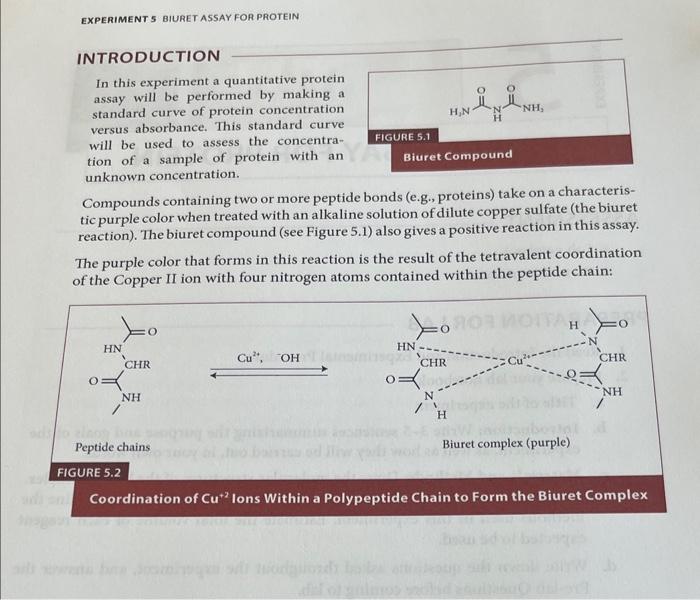
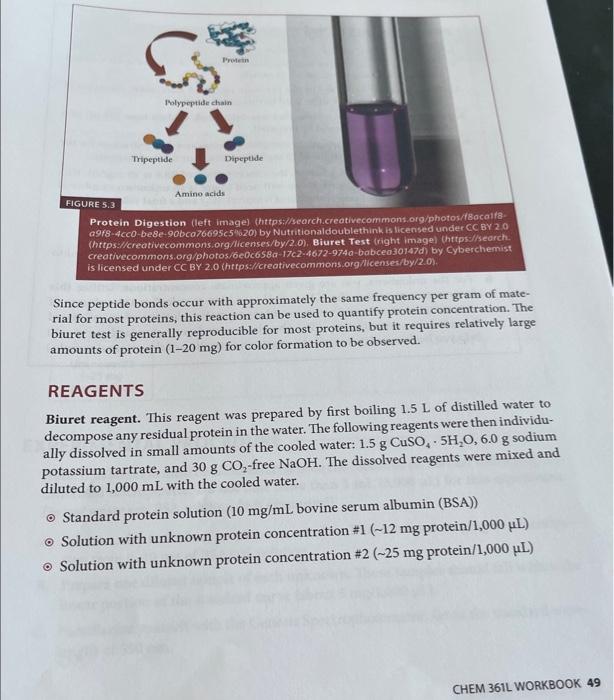
1. What is the reason for using only the linear regions of the standard curve? Explain why very low or very high absorbance values are less dependable. 2. Explain why the color-forming reagent must be present in excess when performing an indirect assay such as the biuret assay. What are the potential results if the color forming reagent is not in excess? Compounds containing two or more peptide bonds (e.g., proteins) take on a characteristic purple color when treated with an alkaline solution of dilute copper sulfate (the biuret reaction). The biuret compound (see Figure 5.1) also gives a positive reaction in this assay. The purple color that forms in this reaction is the result of the tetravalent coordination of the Copper II ion with four nitrogen atoms contained within the peptide chain: Coordination of Cu+2 Ions Within a Polypeptide Chain to Form the Biuret Complex Since peptide bonds occur with approximately the same frequency per gram of material for most proteins, this reaction can be used to quantify protein concentration. The biuret test is generally reproducible for most proteins, but it requires relatively large amounts of protein (1-20 mg ) for color formation to be observed. REAGENTS Biuret reagent. This reagent was prepared by first boiling 1.5L of distilled water to decompose any residual protein in the water. The following reagents were then individually dissolved in small amounts of the cooled water: 1.5gCuSO45H2O,6.0g sodium potassium tartrate, and 30gCO2-free NaOH. The dissolved reagents were mixed and diluted to 1,000mL with the cooled water. Standard protein solution (10mg/mL bovine serum albumin (BSA)) Solution with unknown protein concentration \#1 ( 12mg protein/1,000 L) Solution with unknown protein concentration #2(25mg protein/1,000 L)
Step by Step Solution
There are 3 Steps involved in it

Get step-by-step solutions from verified subject matter experts
 Study Help