







Question: Background When given a network topology, it is important to be able to determine the number of subeets required. In this lab, several scenario topologies
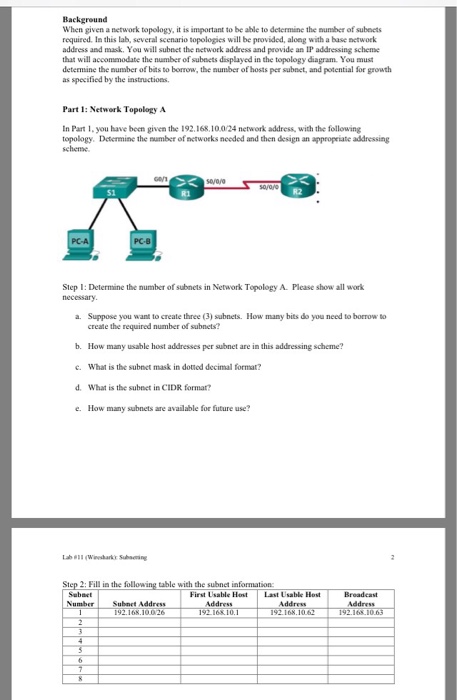
Background When given a network topology, it is important to be able to determine the number of subeets required. In this lab, several scenario topologies will be provided, along with a base network address and mask. You will subnet the network address and provide an IP addressing scheme that will accommodate the number of subeets displayed in the topology diagram. You must determine the number of bits to borrow, the number of hosts per subnet, and potential or growth as specified by the instructions Part 1: Network Topology A In Part 1, you have been given the 192.168.10024 network address, with the following topology. Determine the number of nctworks needed and then design an appropeiate addressing scheme , R1 R2 PC-A PC-B Step I: Determine the number of subnets in Network Topology A. Please show all work necessary Suppose you want to create three (3) subnets. How many bits do you need to borrow to a. create the required number of subnets? b. How many usable host addresses per subnet are in this addressing scheme? c. What is the subnct mask in dotted decimal format? d. What is the subeet in CIDR format? e. How many subnets are available for future use? Step 2: Fill in the table with the subnet information Breadeast HestAddress First Usable HostLast Usable Host Number Subet Address Address
Step by Step Solution
There are 3 Steps involved in it

Get step-by-step solutions from verified subject matter experts
 Study Help