







Question: I hope you to answer question e and fill the table! When given a network topology, it is important to be able to determine the
I hope you to answer question e and fill the table!
When given a network topology, it is important to be able to determine the number of subnets required. In this lab, several scenario topologies will be provided, along with a base network address and mask. You will subnet the network address and provide an IP addressing scheme that will accommodate the number of subnets displayed in the topology diagram. You must determine the number of bits to borrow, the number of hosts per subnet, and potential for growth as specified by the instructions.
Network Topology A
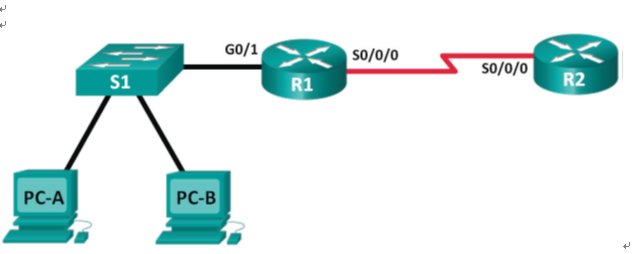
You are given the 192.168.10.0/25 network address to subnet, with the following topology. Determine the number of networks needed and then design an appropriate addressing scheme.
Step 1: Determine the number of subnets in Network Topology A.
a. How many subnets are there? _______2____
b. How many bits should you borrow to create the required number of subnets? ____1_____
c. How many usable host addresses per subnet are in this addressing scheme? ___62_____
d. What is the new subnet mask in dotted decimal format? _____________255.255.255.192/26________
e. How many subnets are available for future use? _______________
Step 2: Record the subnet information.
Fill in the following table with the subnet information
| Subnet Number | Subnet Network Address | Broadcast Address | First Usable Host Address | Last Usable Host Address |
| 0 | ||||
| 1 | ||||
| 2 | ||||
| 3 | ||||
| 4 | ||||
| 5 | ||||
| 6 | ||||
| 7 | ||||
G0/1 so/o/o S1 R1 R2 PC-A PC-B
Step by Step Solution
There are 3 Steps involved in it

Get step-by-step solutions from verified subject matter experts
 Study Help