







Question: Based on the above database schema, express the following queries in relational algebra. Assume set semantics for all operations. Consider the following schema (primary key
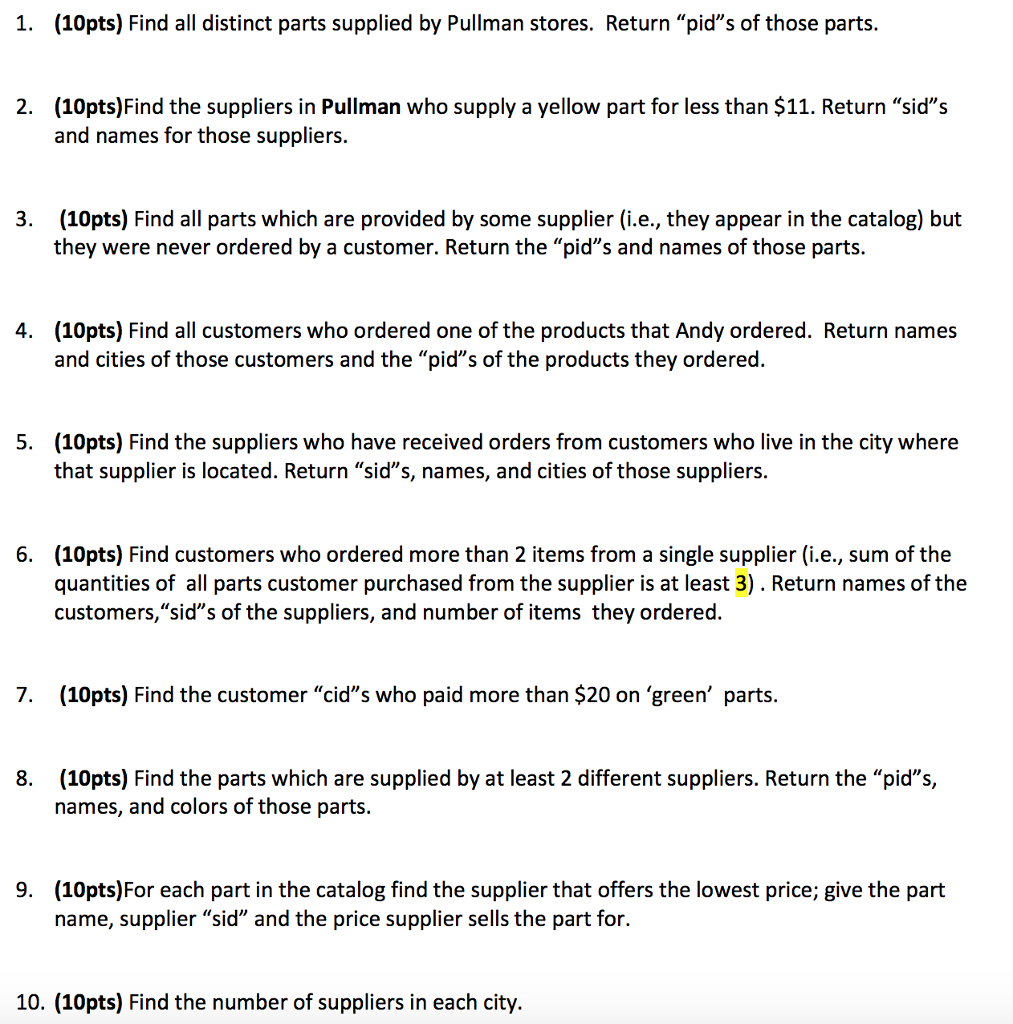
Based on the above database schema, express the following queries in relational algebra. Assume set semantics for all operations.
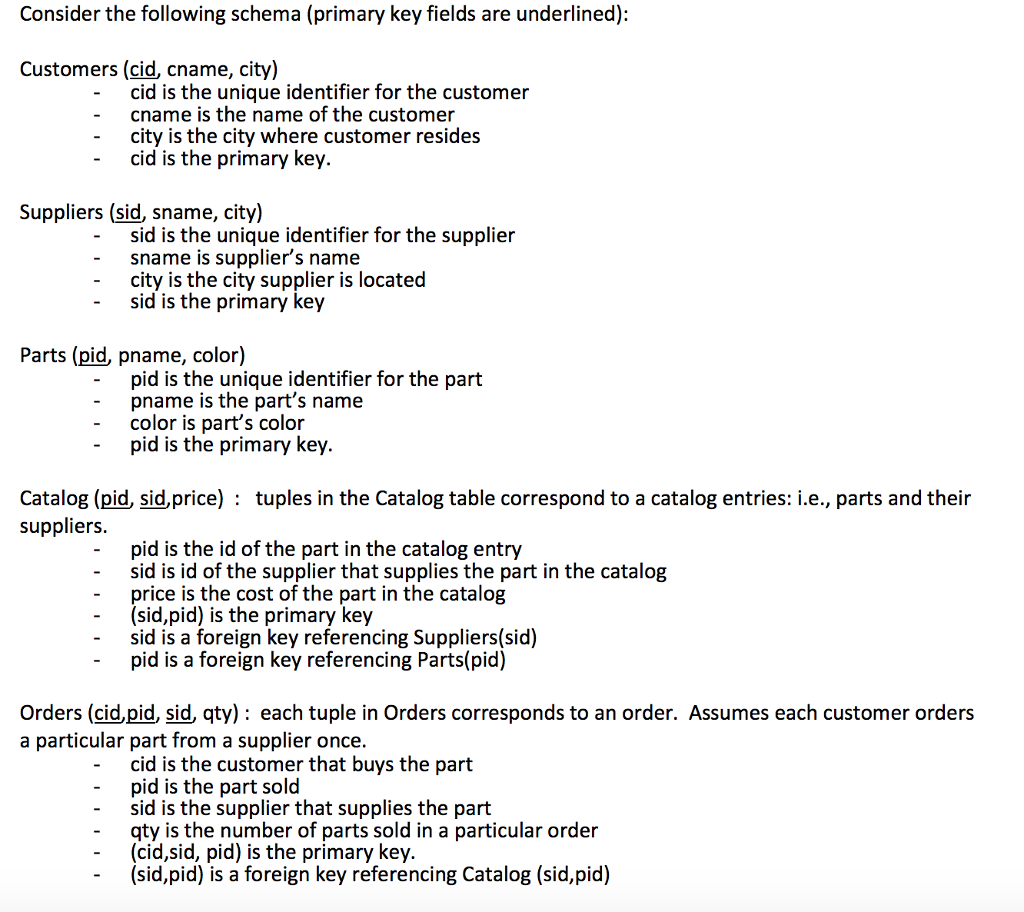
Consider the following schema (primary key fields are underlined) Customers (cid, cname, city) cid is the unique identifier for the customer cname is the name of the customer - city is the city where customer resides cid is the primary key. Suppliers (sid, sname, city) sid is the unique identifier for the supplier sname is supplier's name - city is the city supplier is located sid is the primary key Parts (pid, pname, color) pid is the unique identifier for the part pname is the part's name - color is part's color pid is the primary key. Catalog (pid, sid,price): tuples in the Catalog table correspond to a catalog entries: i.e., parts and their suppliers pid is the id of the part in the catalog entry sid is id of the supplier that supplies the part in the catalog price is the cost of the part in the catalog (sid,pid) is the primary key sid is a foreign key referencing Suppliers(sid) pid is a foreign key referencing Parts(pid) Orders (cid,pid, sid, qty): each tuple in Orders corresponds to an order. Assumes each customer orders a particular part from a supplier once. cid is the customer that buys the part pid is the part sold sid is the supplier that supplies the part qty is the number of parts sold in a particular order (cid,sid, pid) is the primary key. (sid,pid) is a foreign key referencing Catalog (sid,pid) Consider the following schema (primary key fields are underlined) Customers (cid, cname, city) cid is the unique identifier for the customer cname is the name of the customer - city is the city where customer resides cid is the primary key. Suppliers (sid, sname, city) sid is the unique identifier for the supplier sname is supplier's name - city is the city supplier is located sid is the primary key Parts (pid, pname, color) pid is the unique identifier for the part pname is the part's name - color is part's color pid is the primary key. Catalog (pid, sid,price): tuples in the Catalog table correspond to a catalog entries: i.e., parts and their suppliers pid is the id of the part in the catalog entry sid is id of the supplier that supplies the part in the catalog price is the cost of the part in the catalog (sid,pid) is the primary key sid is a foreign key referencing Suppliers(sid) pid is a foreign key referencing Parts(pid) Orders (cid,pid, sid, qty): each tuple in Orders corresponds to an order. Assumes each customer orders a particular part from a supplier once. cid is the customer that buys the part pid is the part sold sid is the supplier that supplies the part qty is the number of parts sold in a particular order (cid,sid, pid) is the primary key. (sid,pid) is a foreign key referencing Catalog (sid,pid)
Step by Step Solution
There are 3 Steps involved in it

Get step-by-step solutions from verified subject matter experts
 Study Help