







Question: Based on the case study above: Question 2 Identify and explain briefly TEN (10) significances Business Process Re-engineering towards digital transformation. (30 marks) Re-engineering the
Based on the case study above:
Question 2 Identify and explain briefly TEN (10) significances Business Process Re-engineering towards digital transformation. (30 marks)
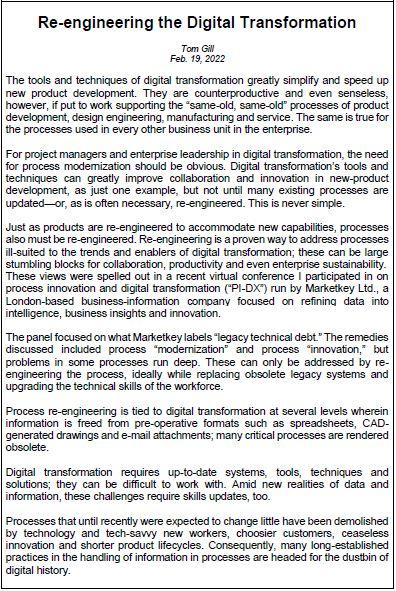
Re-engineering the Digital Transformation The tools and techniques of digital transformation greatly simplify and speed up new product development. They are counterproductive and even senseless, however, if put to work supporting the "same-old, same-old" processes of product development, design engineering, manufacturing and service. The same is true for the processes used in every other business unit in the enterprise. For project managers and enterprise leadership in digital transformation, the need for process modemization should be obvious. Digital transformation's tools and techniques can greatly improve collaboration and innovation in new-product development, as just one example, but not until many existing processes are updated-or, as is often necessary, re-engineered. This is never simple. Just as products are re-engineered to accommodate new capabilities, processes also must be re-engineered. Re-engineering is a proven way to address processes ill-suited to the trends and enablers of digital transformation; these can be large stumbling blocks for collaboration, productivity and even enterprise sustainability. These views were spelled out in a recent virtual conference I participated in on process innovation and digital transformation ("PI-DX") run by Marketkey Ltd., a London-based business-information company focused on refining data into intelligence, business insights and innovation. The panel focused on what Marketkey labels "legacy technical debt." The remedies discussed included process "modernization" and process "innovation," but problems in some processes run deep. These can only be addressed by reengineering the process, ideally while replacing obsolete legacy systems and upgrading the technical skills of the workforce. Process re-engineering is tied to digital transformation at several levels wherein information is freed from pre-operative formats such as spreadsheets, CADgenerated drawings and e-mail attachments; many critical processes are rendered obsolete. Digital transformation requires up-to-date systems, tools, techniques and solutions; they can be difficult to work with. Amid new realities of data and information, these challenges require skills updates, too. Processes that until recently were expected to change little have been demolished by technology and tech-savy new workers, choosier customers, ceaseless innovation and shorter product lifecycles. Consequently, many long-established practices in the handing of information in processes are headed for the dustbin of digital historyStep by Step Solution
There are 3 Steps involved in it
1 Expert Approved Answer
Step: 1 Unlock

Question Has Been Solved by an Expert!
Get step-by-step solutions from verified subject matter experts
Step: 2 Unlock
Step: 3 Unlock
 Study Help