







Question: Based on the information given below, including Figures 1 & 2 and Tables 1 & 2: Question 1) Calculate the relief load for the fire
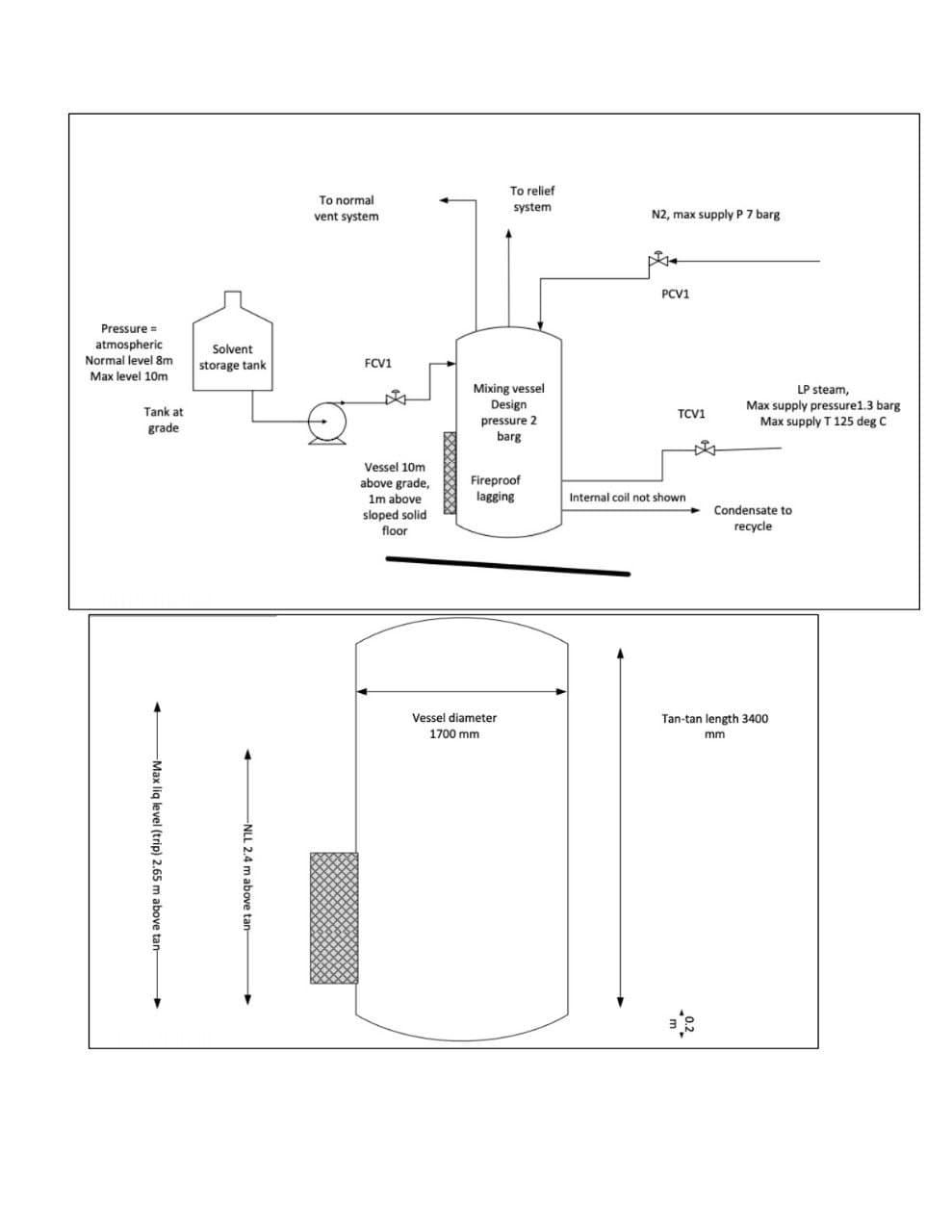
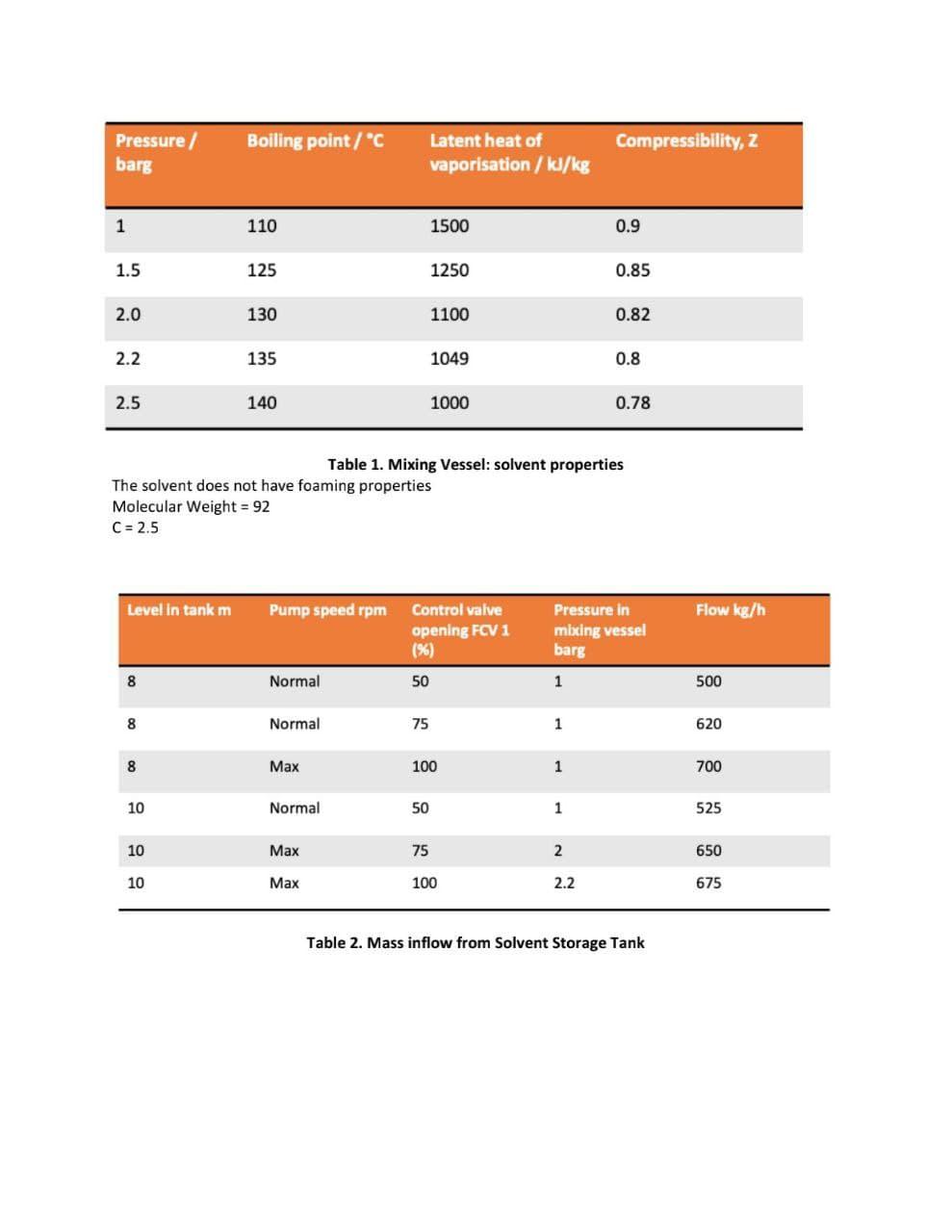
Based on the information given below, including Figures 1 & 2 and Tables 1 & 2: Question 1) Calculate the relief load for the fire case - approximate the vessel wetted surface area by using a cylinder around the dished ends. Question 2) Choose the most appropriate value for the mass influx case from the solvent tank and explain why heat input from the coil is NOT a relief case, with reasons. Question 3) Calculate the relief valve area for the fire case (assume Kd (de-rated) for the relief valve = 0.88) To normal vent system To relief system N2, max supply P 7 barg PCV1 Pressure = atmospheric Normal level 8m Max level 10m Solvent storage tank FCV1 Mixing vessel Design pressure 2 barg Tank at grade LP steam, Max supply pressure 1.3 barg Max supply T 125 deg C TCVI Vessel 10m above grade, 1m above sloped solid floor Fireproof lagging Internal coil not shown Condensate to recycle Vessel diameter 1700 mm Tan-tan length 3400 mm -Max li level (trip) 2.65 m above tan- -NLL 2.4 m above tan *20* Boiling point / C Compressibility, Z Pressure / barg Latent heat of vaporisation /kJ/kg 1 110 1500 0.9 1.5 125 1250 0.85 2.0 130 1100 0.82 2.2 135 1049 0.8 2.5 140 1000 0.78 Table 1. Mixing Vessel: solvent properties The solvent does not have foaming properties Molecular Weight = 92 C = 2.5 Level in tank m Pump speed rpm Flow kg/h Control valve opening FCV 1 (%) Pressure in mixing vessel barg 8 Normal 50 1 500 8 Normal 75 1 620 8 Max 100 1 700 10 Normal 50 1 525 10 Max 75 2 650 10 Max 100 2.2 675 Table 2. Mass inflow from Solvent Storage Tank
Step by Step Solution
There are 3 Steps involved in it

Get step-by-step solutions from verified subject matter experts
 Study Help