







Question: Based on the instruction set document write an assembly program which multiplies two signed numbers (in two's complement system) The multiplier and multiplicand could be
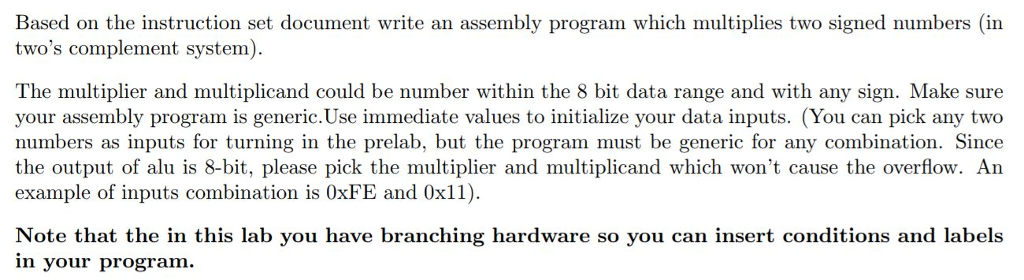
Based on the instruction set document write an assembly program which multiplies two signed numbers (in two's complement system) The multiplier and multiplicand could be number within the 8 bit data range and with any sign. Make sure your assembly program is generic.Use immediate values to initialize your data inputs. (You can pick any two numbers as inputs for turning in the prelab, but the program must be generic for any combination. Since the output of alu is 8-bit, please pick the multiplier and multiplicand which won't cause the overflow. An example of inputs combination is 0xFE and Ox11). Note that the in this lab you have branching hardware so you can insert conditions and labels in your program. Based on the instruction set document write an assembly program which multiplies two signed numbers (in two's complement system) The multiplier and multiplicand could be number within the 8 bit data range and with any sign. Make sure your assembly program is generic.Use immediate values to initialize your data inputs. (You can pick any two numbers as inputs for turning in the prelab, but the program must be generic for any combination. Since the output of alu is 8-bit, please pick the multiplier and multiplicand which won't cause the overflow. An example of inputs combination is 0xFE and Ox11). Note that the in this lab you have branching hardware so you can insert conditions and labels in your program
Step by Step Solution
There are 3 Steps involved in it

Get step-by-step solutions from verified subject matter experts
 Study Help