







Question: Based on this case study kindly answer the following questions in your own words without copy paste illustrates the role of innovation and product develop
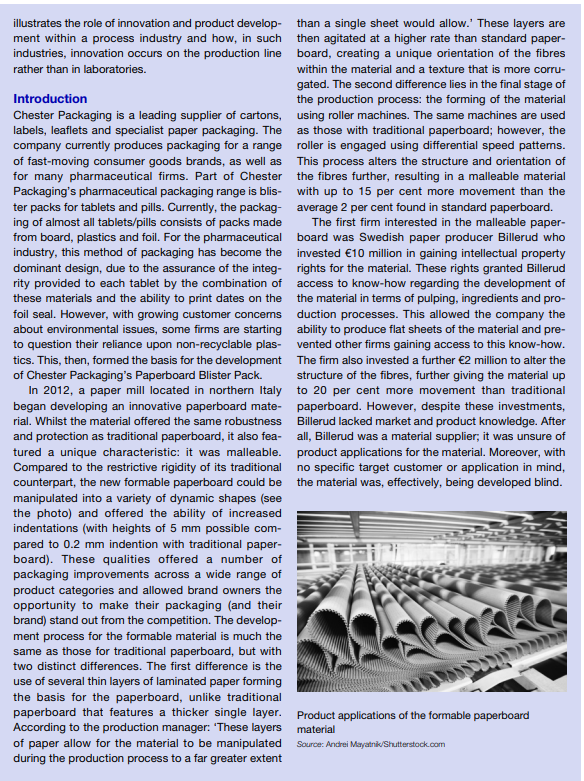
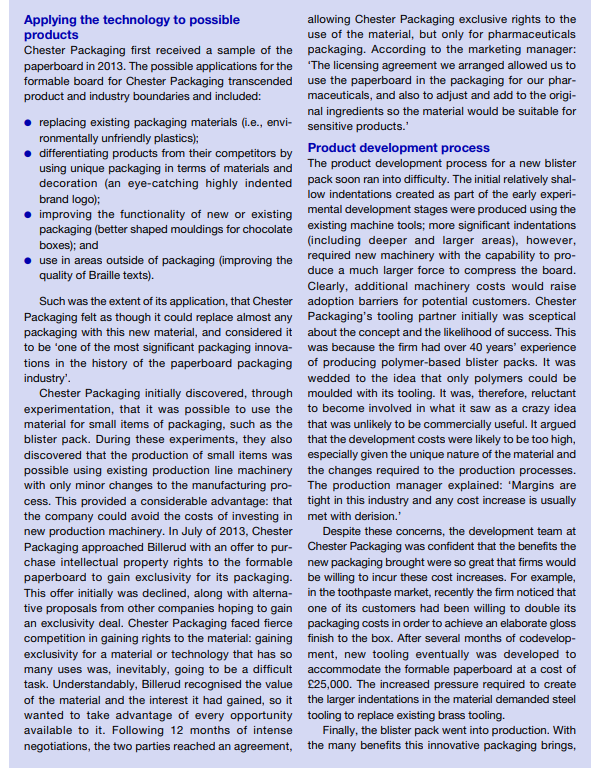
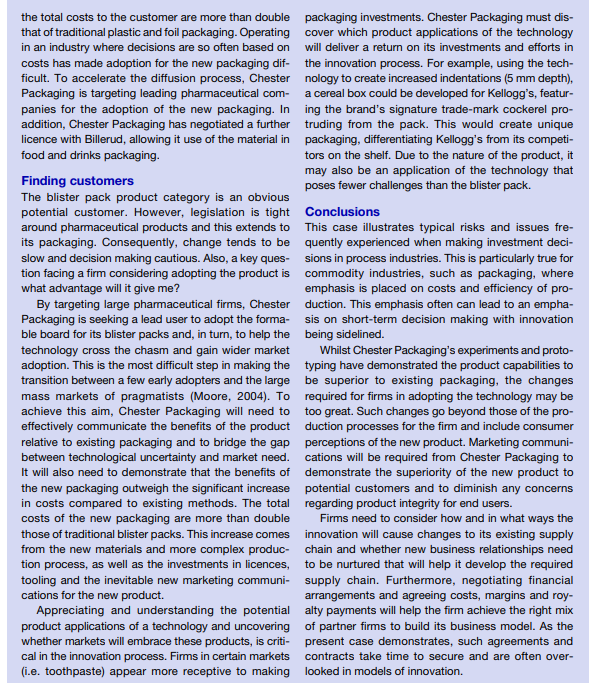
Based on this case study kindly answer the following questions in your own words without copy paste
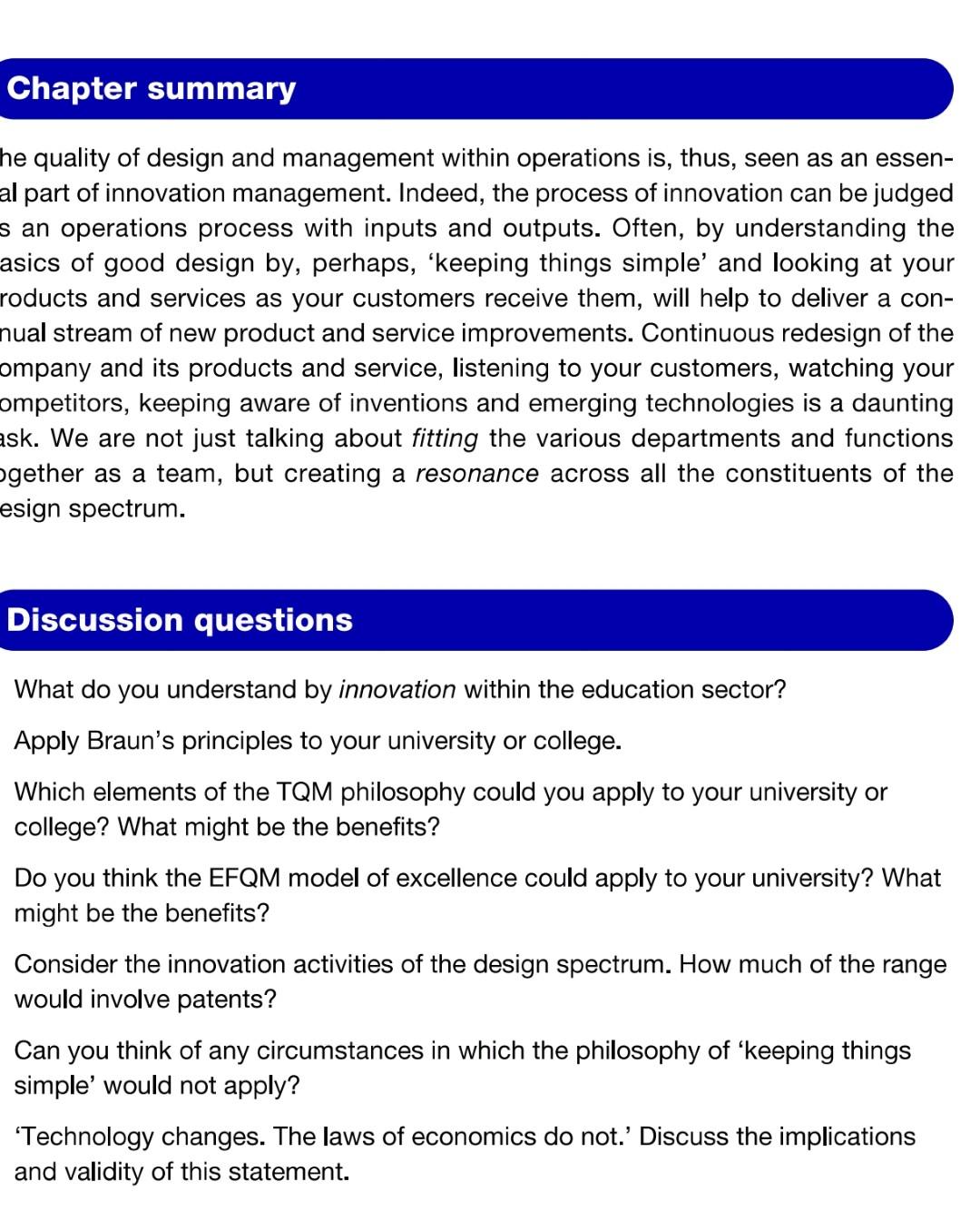
illustrates the role of innovation and product develop than a single sheet would allow.' These layers are ment within a process industry and how, in such then agitated at a higher rate than standard paper- industries, innovation occurs on the production line board, creating a unique orientation of the fibres rather than in laboratories. within the material and a texture that is more corru- gated. The second difference lies in the final stage of Introduction the production process: the forming of the material Chester Packaging is a leading supplier of cartons, using roller machines. The same machines are used labels, leaflets and specialist paper packaging. The as those with traditional paperboard; however, the company currently produces packaging for a range roller is engaged using differential speed pattems. of fast-moving consumer goods brands, as well as This process alters the structure and orientation of for many pharmaceutical firms. Part of Chester the fibres further, resulting in a malleable material Packaging's pharmaceutical packaging range is blis- with up to 15 per cent more movement than the ter packs for tablets and pills. Currently, the packag- average 2 per cent found in standard paperboard. ing of almost all tablets/pills consists of packs made The first firm interested in the malleable paper- from board, plastics and foil. For the pharmaceutical board was Swedish paper producer Billerud who industry, this method of packaging has become the invested 10 million in gaining intellectual property dominant design, due to the assurance of the integ- rights for the material. These rights granted Billerud rity provided to each tablet by the combination of access to know-how regarding the development of these materials and the ability to print dates on the the material in terms of pulping, ingredients and pro- foil seal. However, with growing customer concerns duction processes. This allowed the company the about environmental issues, some firms are starting ability to produce flat sheets of the material and pre- to question their reliance upon non-recyclable plas- vented other firms gaining access to this know-how. tics. This, then, formed the basis for the development The firm also invested a further 2 million to alter the of Chester Packaging's Paperboard Blister Pack structure of the fibres, further giving the material up In 2012, a paper mill located in northern Italy to 20 per cent more movement than traditional began developing an innovative paperboard mate- paperboard. However, despite these investments, rial. Whilst the material offered the same robustness Billerud lacked market and product knowledge. After and protection as traditional paperboard, it also fea- all, Billerud was a material supplier, it was unsure of tured a unique characteristic: it was malleable. product applications for the material. Moreover, with Compared to the restrictive rigidity of its traditional no specific target customer or application in mind, counterpart, the new formable paperboard could be the material was, effectively, being developed blind. manipulated into a variety of dynamic shapes (see the photo) and offered the ability of increased indentations (with heights of 5 mm possible com- pared to 0.2 mm indention with traditional paper- board). These qualities offered a number of packaging improvements across a wide range of product categories and allowed brand owners the opportunity to make their packaging (and their brand) stand out from the competition. The develop- ment process for the formable material is much the same as those for traditional paperboard, but with two distinct differences. The first difference is the use of several thin layers of laminated paper forming the basis for the paperboard, unlike traditional paperboard that features a thicker single layer. Product applications of the formable paperboard According to the production manager: 'These layers material of paper allow for the material to be manipulated during the production process to a far greater extent Source: Andrei Mayatni/Shutterstock.com Applying the technology to possible allowing Chester Packaging exclusive rights to the products use of the material, but only for pharmaceuticals Chester Packaging first received a sample of the packaging. According to the marketing manager: paperboard in 2013. The possible applications for the 'The licensing agreement we arranged allowed us to formable board for Chester Packaging transcended use the paperboard in the packaging for our phar- product and industry boundaries and included: maceuticals, and also to adjust and add to the origi- replacing existing packaging materials (i.e., envi- sensitive products.' nal ingredients so the material would be suitable for ronmentally unfriendly plastics); differentiating products from their competitors by Product development process using unique packaging in terms of materials and The product development process for a new blister decoration (an eye-catching highly indented pack soon ran into difficulty. The initial relatively shal- brand logo): low indentations created as part of the early experi- improving the functionality of new or existing mental development stages were produced using the packaging (better shaped mouldings for chocolate existing machine tools; more significant indentations boxes); and (including deeper and larger areas), however, use in areas outside of packaging (improving the required new machinery with the capability to pro- quality of Braille texts). duce a much larger force to compress the board. Clearly, additional machinery costs would raise Such was the extent of its application, that Chester adoption barriers for potential customers. Chester Packaging felt as though it could replace almost any Packaging's tooling partner initially was sceptical packaging with this new material, and considered it about the concept and the likelihood of success. This to be one of the most significant packaging innova- was because the firm had over 40 years' experience tions in the history of the paperboard packaging of producing polymer-based blister packs. It was industry'. wedded to the idea that only polymers could be Chester Packaging initially discovered, through moulded with its tooling. It was, therefore, reluctant experimentation, that it was possible to use the to become involved in what it saw as a crazy idea material for small items of packaging, such as the that was unlikely to be commercially useful. It argued blister pack. During these experiments, they also that the development costs were likely to be too high, discovered that the production of small items was especially given the unique nature of the material and possible using existing production line machinery the changes required to the production processes. with only minor changes to the manufacturing pro- The production manager explained: 'Margins are cess. This provided a considerable advantage: that tight in this industry and any cost increase is usually the company could avoid the costs of investing in met with derision.' new production machinery. In July of 2013, Chester Despite these concerns, the development team at Packaging approached Billerud with an offer to pur- Chester Packaging was confident that the benefits the chase intellectual property rights to the formable new packaging brought were so great that firms would paperboard to gain exclusivity for its packaging. be willing to incur these cost increases. For example, This offer initially was declined, along with alterna- in the toothpaste market, recently the firm noticed that tive proposals from other companies hoping to gain one of its customers had been willing to double its an exclusivity deal. Chester Packaging faced fierce packaging costs in order to achieve an elaborate gloss competition in gaining rights to the material: gaining finish to the box. After several months of codevelop- exclusivity for a material or technology that has soment, new tooling eventually was developed to many uses was, inevitably, going to be a difficult accommodate the formable paperboard at a cost of task. Understandably, Billerud recognised the value 25,000. The increased pressure required to create of the material and the interest it had gained, so it the larger indentations in the material demanded steel wanted to take advantage of every opportunity tooling to replace existing brass tooling. available to it. Following 12 months of intense Finally, the blister pack went into production. With negotiations, the two parties reached an agreement, the many benefits this innovative packaging brings, the total costs to the customer are more than double packaging investments. Chester Packaging must dis- that of traditional plastic and foil packaging. Operating cover which product applications of the technology in an industry where decisions are so often based on will deliver a return on its investments and efforts in costs has made adoption for the new packaging dif- the innovation process. For example, using the tech- ficult. To accelerate the diffusion process, Chester nology to create increased indentations (5 mm depth), Packaging is targeting leading pharmaceutical com- a cereal box could be developed for Kellogg's, featur- panies for the adoption of the new packaging. In ing the brand's signature trade-mark cockerel pro- addition, Chester Packaging has negotiated a further truding from the pack. This would create unique licence with Billerud, allowing it use of the material in packaging, differentiating Kellogg's from its competi- food and drinks packaging. tors on the shelf. Due to the nature of the product, it may also be an application of the technology that Finding customers poses fewer challenges than the blister pack. The blister pack product category is an obvious potential customer. However, legislation is tight Conclusions around pharmaceutical products and this extends to This case illustrates typical risks and issues fre- its packaging. Consequently, change tends to be quently experienced when making investment deci- slow and decision making cautious. Also, a key ques- sions in process industries. This is particularly true for tion facing a firm considering adopting the product is commodity industries, such as packaging, where what advantage will it give me? emphasis is placed on costs and efficiency of pro- By targeting large pharmaceutical firms, Chester duction. This emphasis often can lead to an empha- Packaging is seeking a lead user to adopt the forma- sis on short-term decision making with innovation ble board for its blister packs and, in turn, to help the being sidelined. technology cross the chasm and gain wider market Whilst Chester Packaging's experiments and proto- adoption. This is the most difficult step in making the typing have demonstrated the product capabilities to transition between a few early adopters and the large be superior to existing packaging, the changes mass markets of pragmatists (Moore, 2004). To required for firms in adopting the technology may be achieve this aim, Chester Packaging will need to too great. Such changes go beyond those of the pro- effectively communicate the benefits of the product duction processes for the firm and include consumer relative to existing packaging and to bridge the gap perceptions of the new product. Marketing communi- between technological uncertainty and market need. cations will be required from Chester Packaging to It will also need to demonstrate that the benefits of demonstrate the superiority of the new product to the new packaging outweigh the significant increase potential customers and to diminish any concerns in costs compared to existing methods. The total regarding product integrity for end users. costs of the new packaging are more than double Firms need to consider how and in what ways the those of traditional blister packs. This increase comes innovation will cause changes to its existing supply from the new materials and more complex produc- chain and whether new business relationships need tion process, as well as the investments in licences, to be nurtured that will help it develop the required tooling and the inevitable new marketing communi- supply chain. Furthermore, negotiating financial cations for the new product. arrangements and agreeing costs, margins and roy- Appreciating and understanding the potential alty payments will help the firm achieve the right mix product applications of a technology and uncovering of partner firms to build its business model. As the whether markets will embrace these products, is criti- present case demonstrates, such agreements and cal in the innovation process. Firms in certain markets contracts take time to secure and are often over- (i.e. toothpaste) appear more receptive to making looked in models of innovation. Chapter summary he quality of design and management within operations is, thus, seen as an essen- al part of innovation management. Indeed, the process of innovation can be judged s an operations process with inputs and outputs. Often, by understanding the asics of good design by, perhaps, keeping things simple' and looking at your roducts and services as your customers receive them, will help to deliver a con- nual stream of new product and service improvements. Continuous redesign of the ompany and its products and service, listening to your customers, watching your ompetitors, keeping aware of inventions and emerging technologies is a daunting ask. We are not just talking about fitting the various departments and functions ogether as a team, but creating a resonance across all the constituents of the esign spectrum. Discussion questions What do you understand by innovation within the education sector? Apply Braun's principles to your university or college. Which elements of the TQM philosophy could you apply to your university or college? What might be the benefits? Do you think the EFQM model of excellence could apply to your university? What might be the benefits? Consider the innovation activities of the design spectrum. How much of the range would involve patents? Can you I think of any circumstances in which the philosophy of 'keeping things simple' would not apply? 'Technology changes. The laws of economics do not.' Discuss the implications and validity of this statement
Step by Step Solution
There are 3 Steps involved in it
1 Expert Approved Answer
Step: 1 Unlock

Question Has Been Solved by an Expert!
Get step-by-step solutions from verified subject matter experts
Step: 2 Unlock
Step: 3 Unlock
 Study Help