Question: Basic Principles for Memory Skills Improvement remembers only about 20% of what it has learned. Why is that? When you learn new things, new connections,
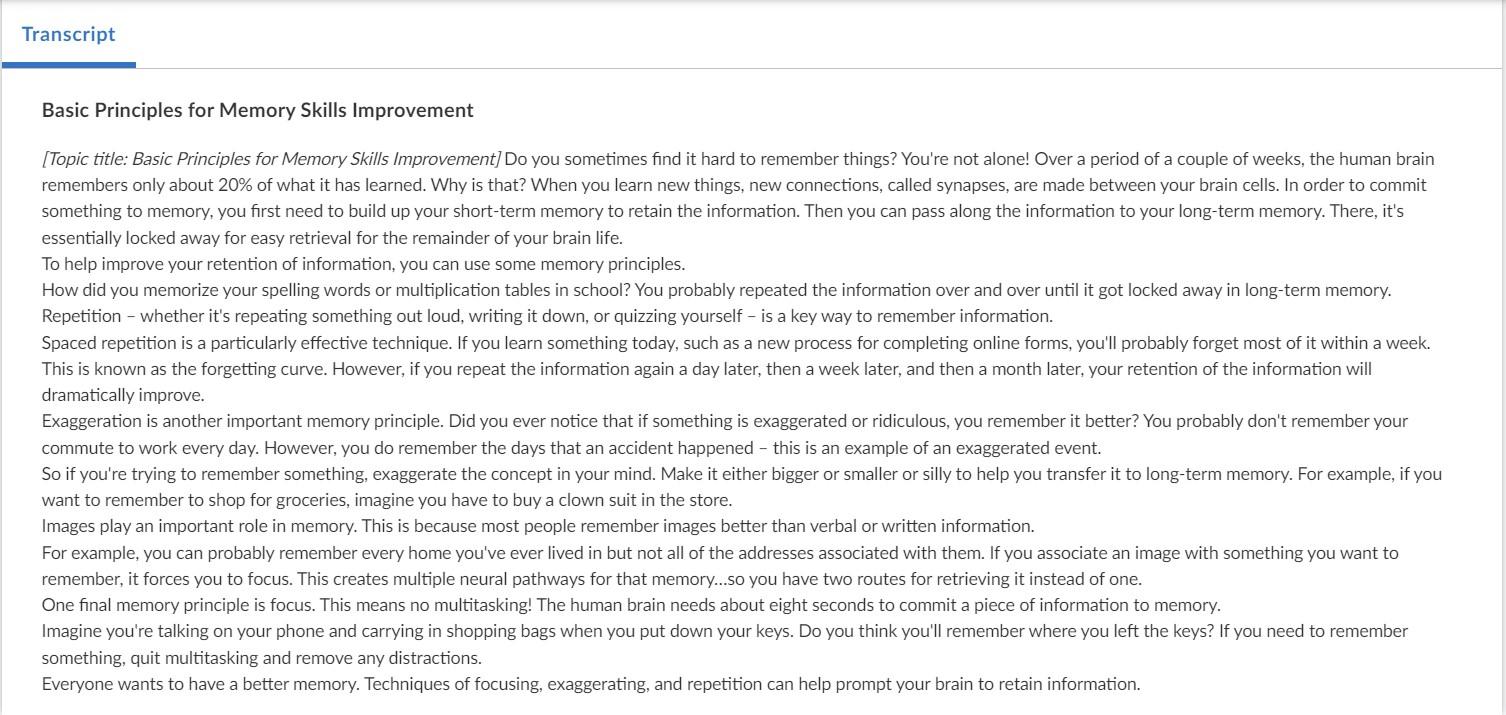
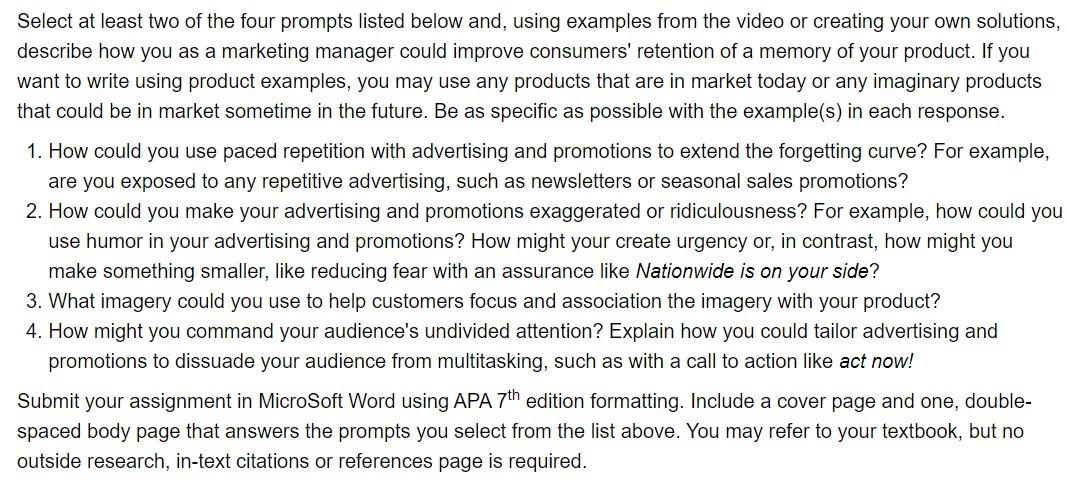
Basic Principles for Memory Skills Improvement remembers only about 20% of what it has learned. Why is that? When you learn new things, new connections, called synapses, are made between your brain cells. In order to commit something to memory, you first need to build up your short-term memory to retain the information. Then you can pass along the information to your long therm essentially locked away for easy retrieval for the remainder of your brain life. To help improve your retention of information, you can use some memory principles. How did you memorize your spelling words or multiplication tables in school? You probably repeated the information over and over until it got locked away in long-term memory. Repetition - whether it's repeating something out loud, writing it down, or quizzing yourself - is a key way to remember information. Spaced repetition is a particularly effective technique. If you learn something today, such as a new process for completing online forms, you'll probably forget most of it within a week. This is known as the forgetting curve. However, if you repeat the information again a day later, then a week later, and then a month later, your retention of the information wint dramatically improve. Exaggeration is another important memory principle. Did you ever notice that if something is exaggerated or ridiculous, you remember it better? You probably don't remember your commute to work every day. However, you do remember the days that an accident happened - this is an example of an exaggerated event. So if you're trying to remember something, exaggerate the concept in your mind. Make it either bigger or smaller or silly to help you transfer it to long-term memory want to remember to shop for groceries, imagine you have to buy a clown suit in the store. Images play an important role in memory. This is because most people remember images better than verbal or written information. For example, you can probably remember every home you've ever lived in but not all of the addresses associated with them. If you associate an image with something you want to remember, it forces you to focus. This creates multiple neural pathways for that memory...so you have two routes for retrieving it instead of one. One final memory principle is focus. This means no multitasking! The human brain needs about eight seconds to commit a piece of information to memory. Imagine you're talking on your phone and carrying in shopping bags when you put down your keys. Do you think you'll remember where you left the keys? If you need to remember something, quit multitasking and remove any distractions. Everyone wants to have a better memory. Techniques of focusing, exaggerating, and repetition can help prompt your brain to retain information. Select at least two of the four prompts listed below and, using examples from the video or creating your own solutions, describe how you as a marketing manager could improve consumers' retention of a memory of your product. If you want to write using product examples, you may use any products that are in market today or any imaginary products that could be in market sometime in the future. Be as specific as possible with the example(s) in each response. 1. How could you use paced repetition with advertising and promotions to extend the forgetting curve? For example, are you exposed to any repetitive advertising, such as newsletters or seasonal sales promotions? 2. How could you make your advertising and promotions exaggerated or ridiculousness? For example, how could you use humor in your advertising and promotions? How might your create urgency or, in contrast, how might you make something smaller, like reducing fear with an assurance like Nationwide is on your side? 3. What imagery could you use to help customers focus and association the imagery with your product? 4. How might you command your audience's undivided attention? Explain how you could tailor advertising and promotions to dissuade your audience from multitasking, such as with a call to action like act now! Submit your assignment in MicroSoft Word using APA 7th edition formatting. Include a cover page and one, doublespaced body page that answers the prompts you select from the list above. You may refer to your textbook, but no outside research, in-text citations or references page is required. Basic Principles for Memory Skills Improvement remembers only about 20% of what it has learned. Why is that? When you learn new things, new connections, called synapses, are made between your brain cells. In order to commit something to memory, you first need to build up your short-term memory to retain the information. Then you can pass along the information to your long therm essentially locked away for easy retrieval for the remainder of your brain life. To help improve your retention of information, you can use some memory principles. How did you memorize your spelling words or multiplication tables in school? You probably repeated the information over and over until it got locked away in long-term memory. Repetition - whether it's repeating something out loud, writing it down, or quizzing yourself - is a key way to remember information. Spaced repetition is a particularly effective technique. If you learn something today, such as a new process for completing online forms, you'll probably forget most of it within a week. This is known as the forgetting curve. However, if you repeat the information again a day later, then a week later, and then a month later, your retention of the information wint dramatically improve. Exaggeration is another important memory principle. Did you ever notice that if something is exaggerated or ridiculous, you remember it better? You probably don't remember your commute to work every day. However, you do remember the days that an accident happened - this is an example of an exaggerated event. So if you're trying to remember something, exaggerate the concept in your mind. Make it either bigger or smaller or silly to help you transfer it to long-term memory want to remember to shop for groceries, imagine you have to buy a clown suit in the store. Images play an important role in memory. This is because most people remember images better than verbal or written information. For example, you can probably remember every home you've ever lived in but not all of the addresses associated with them. If you associate an image with something you want to remember, it forces you to focus. This creates multiple neural pathways for that memory...so you have two routes for retrieving it instead of one. One final memory principle is focus. This means no multitasking! The human brain needs about eight seconds to commit a piece of information to memory. Imagine you're talking on your phone and carrying in shopping bags when you put down your keys. Do you think you'll remember where you left the keys? If you need to remember something, quit multitasking and remove any distractions. Everyone wants to have a better memory. Techniques of focusing, exaggerating, and repetition can help prompt your brain to retain information. Select at least two of the four prompts listed below and, using examples from the video or creating your own solutions, describe how you as a marketing manager could improve consumers' retention of a memory of your product. If you want to write using product examples, you may use any products that are in market today or any imaginary products that could be in market sometime in the future. Be as specific as possible with the example(s) in each response. 1. How could you use paced repetition with advertising and promotions to extend the forgetting curve? For example, are you exposed to any repetitive advertising, such as newsletters or seasonal sales promotions? 2. How could you make your advertising and promotions exaggerated or ridiculousness? For example, how could you use humor in your advertising and promotions? How might your create urgency or, in contrast, how might you make something smaller, like reducing fear with an assurance like Nationwide is on your side? 3. What imagery could you use to help customers focus and association the imagery with your product? 4. How might you command your audience's undivided attention? Explain how you could tailor advertising and promotions to dissuade your audience from multitasking, such as with a call to action like act now! Submit your assignment in MicroSoft Word using APA 7th edition formatting. Include a cover page and one, doublespaced body page that answers the prompts you select from the list above. You may refer to your textbook, but no outside research, in-text citations or references page is required









 Study Help