







Question: Below is a Python module that runs without error: from typing import Dict, List def magic(things: Dict(int, int], other: List) -> str: other = other
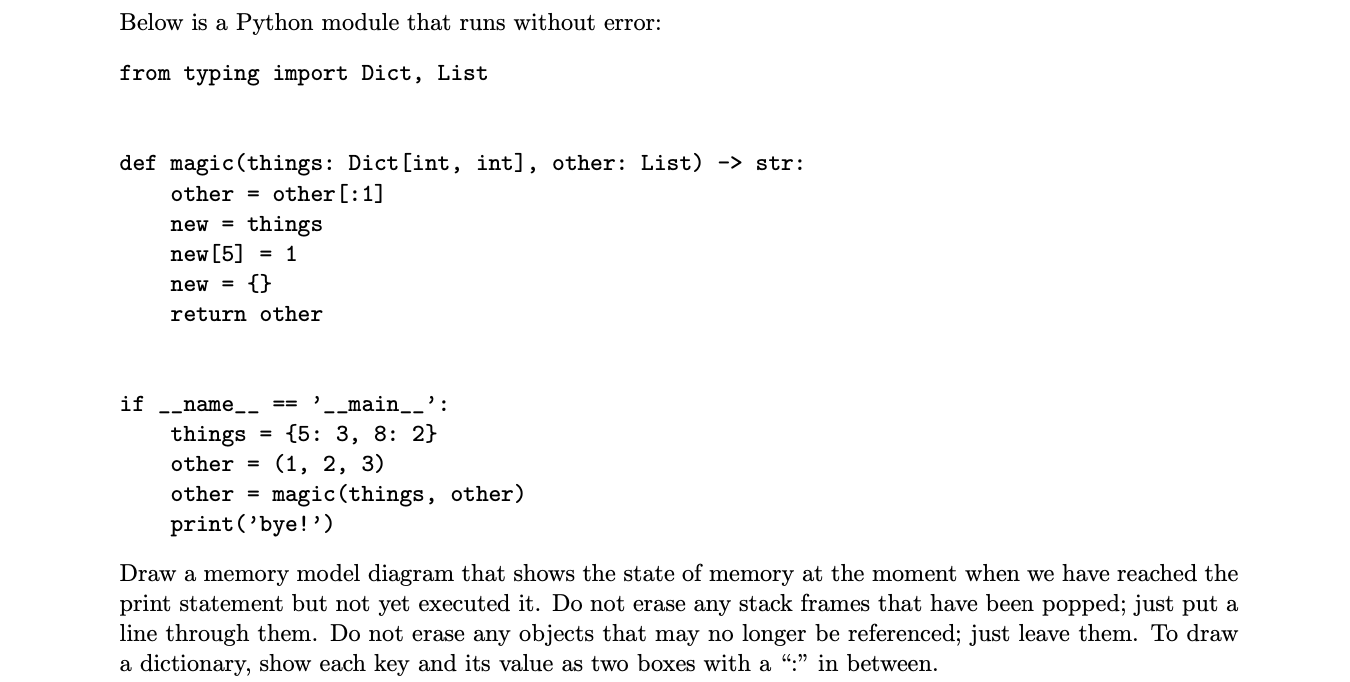
Below is a Python module that runs without error: from typing import Dict, List def magic(things: Dict(int, int], other: List) -> str: other = other [:1] new = things new [5] 1 {} return other = new = > if __name_- __main__': things {5: 3, 8: 2} other = (1, 2, 3) other = magic(things, other) print('bye!') Draw a memory model diagram that shows the state of memory at the moment when we have reached the print statement but not yet executed it. Do not erase any stack frames that have been popped; just put a line through them. Do not erase any objects that may no longer be referenced; just leave them. To draw a dictionary, show each key and its value as two boxes with a "." in between. Below is a Python module that runs without error: from typing import Dict, List def magic(things: Dict(int, int], other: List) -> str: other = other [:1] new = things new [5] 1 {} return other = new = > if __name_- __main__': things {5: 3, 8: 2} other = (1, 2, 3) other = magic(things, other) print('bye!') Draw a memory model diagram that shows the state of memory at the moment when we have reached the print statement but not yet executed it. Do not erase any stack frames that have been popped; just put a line through them. Do not erase any objects that may no longer be referenced; just leave them. To draw a dictionary, show each key and its value as two boxes with a "." in between
Step by Step Solution
There are 3 Steps involved in it

Get step-by-step solutions from verified subject matter experts
 Study Help