



Question: Bill has decided to contribute to a savings program. He can open a traditional 401(k) or a Roth 401(k). He has determined that he can
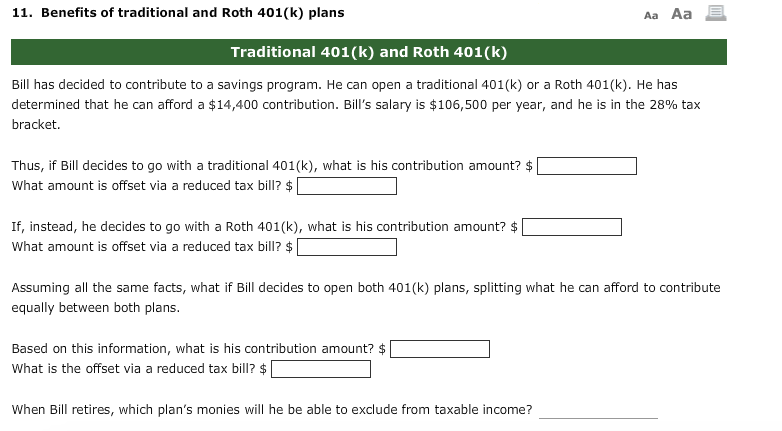
Bill has decided to contribute to a savings program. He can open a traditional 401(k) or a Roth 401(k). He has determined that he can afford a $14, 400 contribution. Bill's salary is $106, 500 per year and he is in the 28% tax bracket. Thus, if Bill decides to go with a traditional 401(k), what is his contribution amount? $ What amount is offset via a reduced tax bill? $ If, instead, he decides to go with a Roth 401(k), what is his contribution amount? $ What amount is offset via a reduced tax bill? $ Assuming all the same facts, what if Bill decides to open both 401(k) plans, splitting what he can afford to contribute equally between both plans. Based on this information, what is his contribution amount? $ What is the offset via a reduced tax bill? $ When Bill retires, which plan's monies will he be able to exclude from taxable income?_____
Step by Step Solution
There are 3 Steps involved in it

Get step-by-step solutions from verified subject matter experts