







Question: Biochemistry II. Homework/Multiple Choice. Please help answer with clear explanations. The oxidation of glyceraldehyde 3-phosphate to 1,3-bisphosphoglycerate, catalyzed by glyceraldehyde 3-phosphate dehydrogenase, proceeds with an
Biochemistry II. Homework/Multiple Choice. Please help answer with clear explanations.
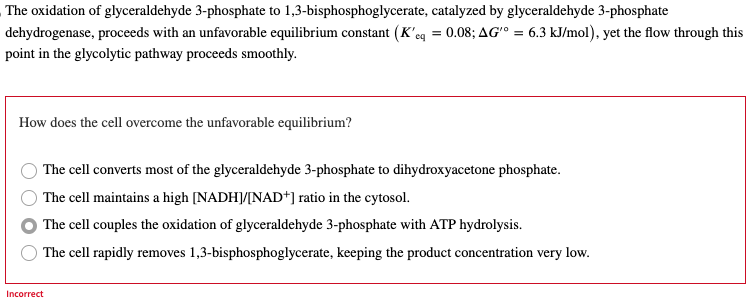
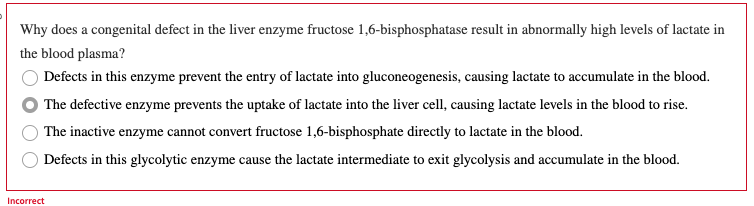
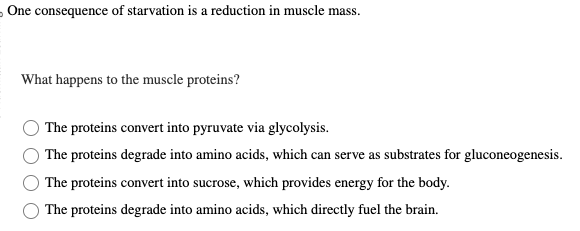
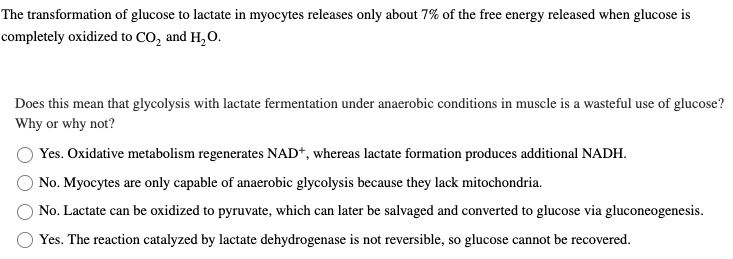
The oxidation of glyceraldehyde 3-phosphate to 1,3-bisphosphoglycerate, catalyzed by glyceraldehyde 3-phosphate dehydrogenase, proceeds with an unfavorable equilibrium constant (Keq=0.08;G=6.3kJ/mol), yet the flow through this point in the glycolytic pathway proceeds smoothly. How does the cell overcome the unfavorable equilibrium? The cell converts most of the glyceraldehyde 3-phosphate to dihydroxyacetone phosphate. The cell maintains a high [NADH]/[NAD +]ratio in the cytosol. The cell couples the oxidation of glyceraldehyde 3-phosphate with ATP hydrolysis. The cell rapidly removes 1,3-bisphosphoglycerate, keeping the product concentration very low. Why does a congenital defect in the liver enzyme fructose 1,6-bisphosphatase result in abnormally high levels of lactate in he blood plasma? Defects in this enzyme prevent the entry of lactate into gluconeogenesis, causing lactate to accumulate in the blood. The defective enzyme prevents the uptake of lactate into the liver cell, causing lactate levels in the blood to rise. The inactive enzyme cannot convert fructose 1,6-bisphosphate directly to lactate in the blood. Defects in this glycolytic enzyme cause the lactate intermediate to exit glycolysis and accumulate in the blood. One consequence of starvation is a reduction in muscle mass. What happens to the muscle proteins? The proteins convert into pyruvate via glycolysis. The proteins degrade into amino acids, which can serve as substrates for gluconeogenesis. The proteins convert into sucrose, which provides energy for the body. The proteins degrade into amino acids, which directly fuel the brain. The transformation of glucose to lactate in myocytes releases only about 7% of the free energy released when glucose is ompletely oxidized to CO2 and H2O. Does this mean that glycolysis with lactate fermentation under anaerobic conditions in muscle is a wasteful use of glucose? Why or why not? Yes. Oxidative metabolism regenerates NAD+, whereas lactate formation produces additional NADH. No. Myocytes are only capable of anaerobic glycolysis because they lack mitochondria. No. Lactate can be oxidized to pyruvate, which can later be salvaged and converted to glucose via gluconeogenesis. Yes. The reaction catalyzed by lactate dehydrogenase is not reversible, so glucose cannot be recovered
Step by Step Solution
There are 3 Steps involved in it

Get step-by-step solutions from verified subject matter experts
 Study Help