







Question: Block ( A ) in ( Figure 1 ) has mass 1 . 0 0 kg , and block ( B
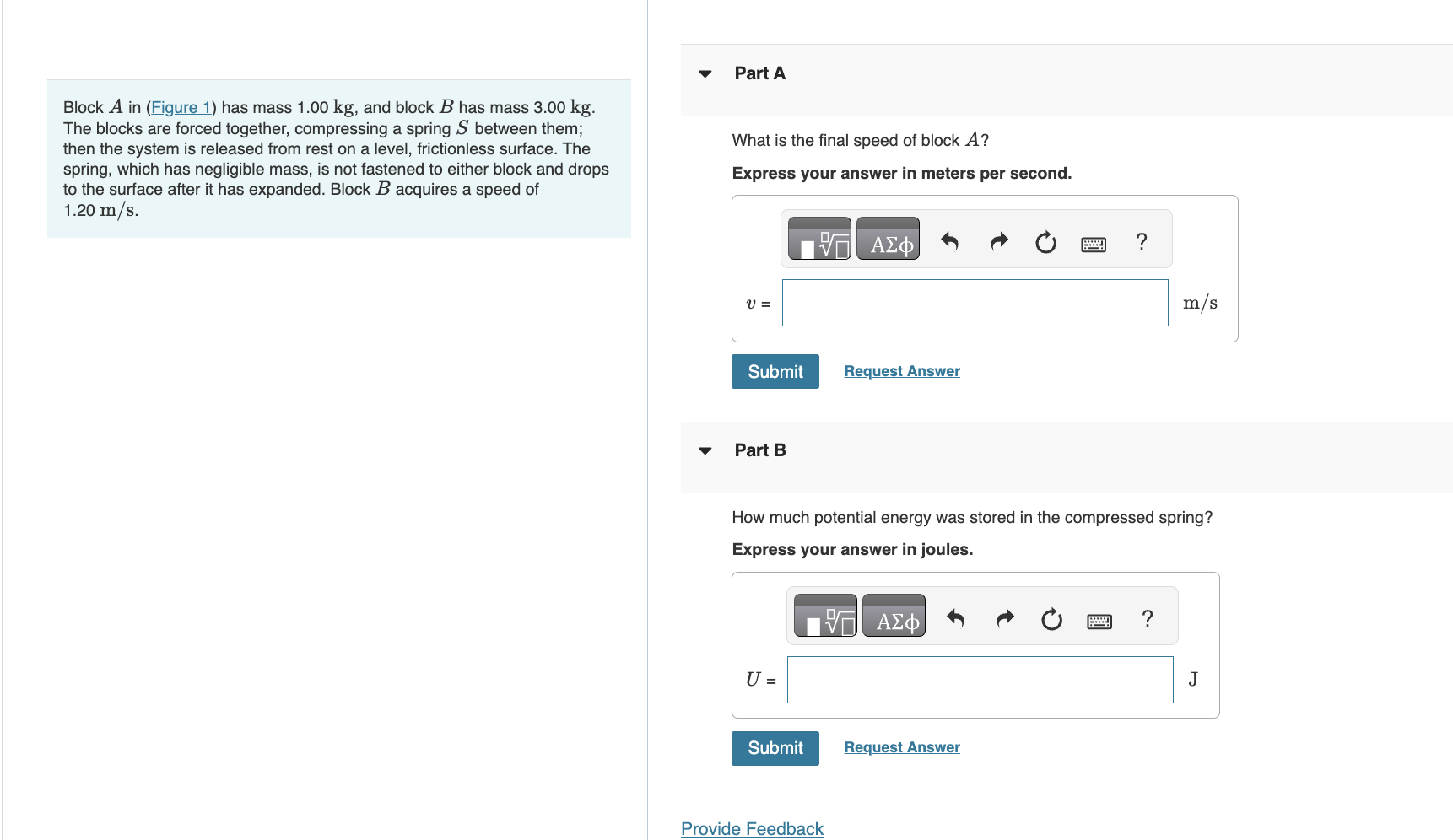
Block A in Figure has mass kg and block B has mass kg The blocks are forced together, compressing a spring S between them; then the system is released from rest on a level, frictionless surface. The spring, which has negligible mass, is not fastened to either block and drops to the surface after it has expanded. Block B acquires a speed of mathrm~mmathrms
Part A
What is the final speed of block A
Express your answer in meters per second.
vquad mathrmmmathrms
Request Answer
Part B
How much potential energy was stored in the compressed spring?
Express your answer in joules.
U
Request Answer Figure
of
Step by Step Solution
There are 3 Steps involved in it
1 Expert Approved Answer
Step: 1 Unlock

Question Has Been Solved by an Expert!
Get step-by-step solutions from verified subject matter experts
Step: 2 Unlock
Step: 3 Unlock
 Study Help