







Question: How to solve this question? I need a process to get answer. there are some hint for the question. Feedback for Part 2) As the
How to solve this question? I need a process to get answer. there are some hint for the question.
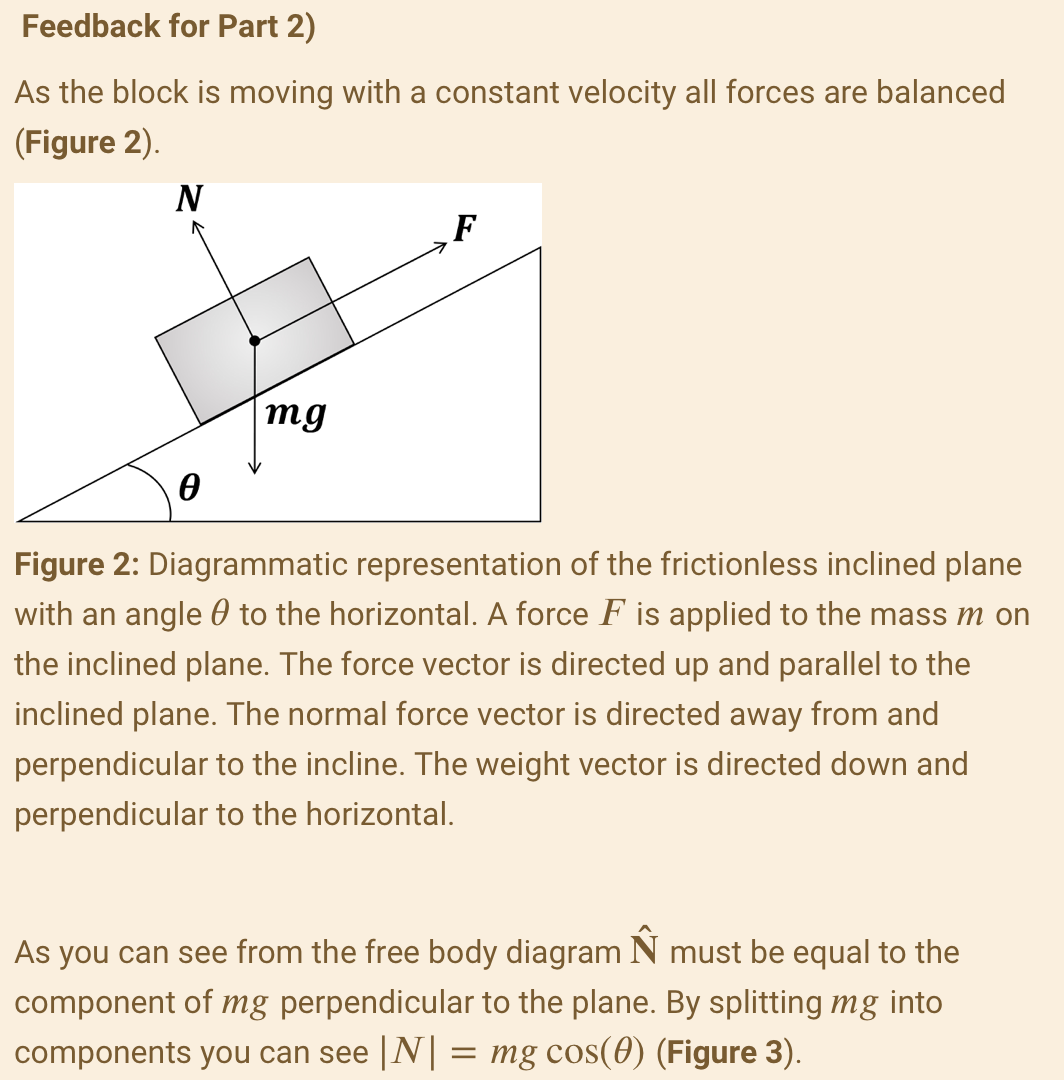
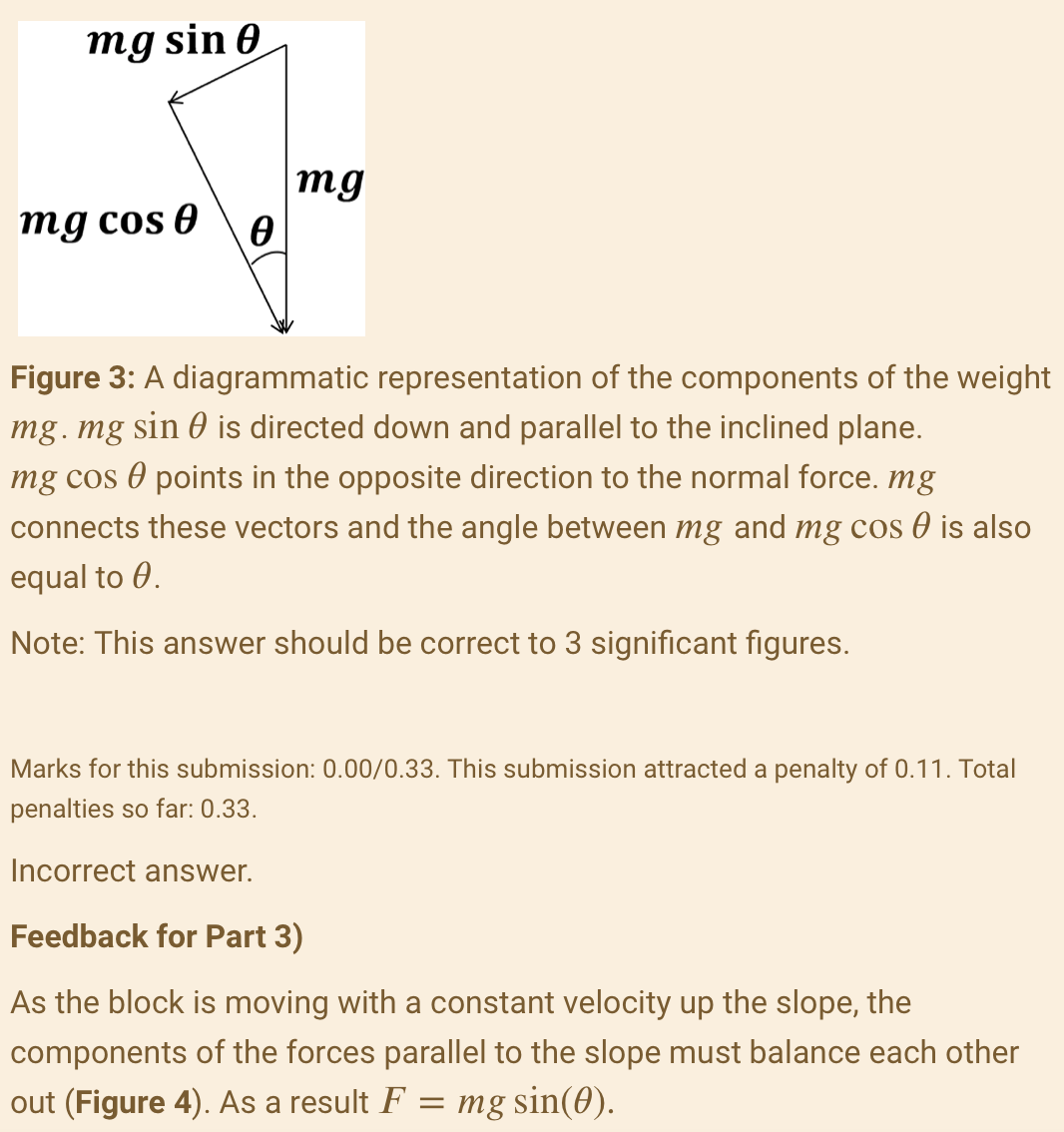
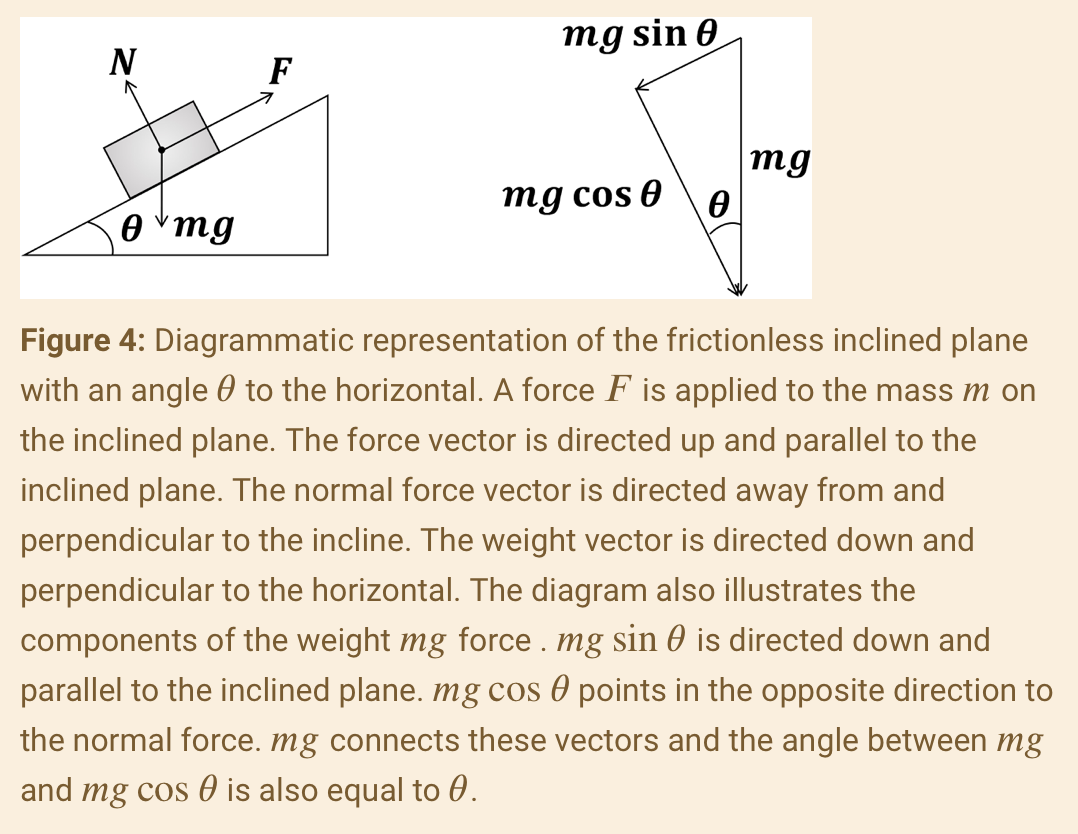
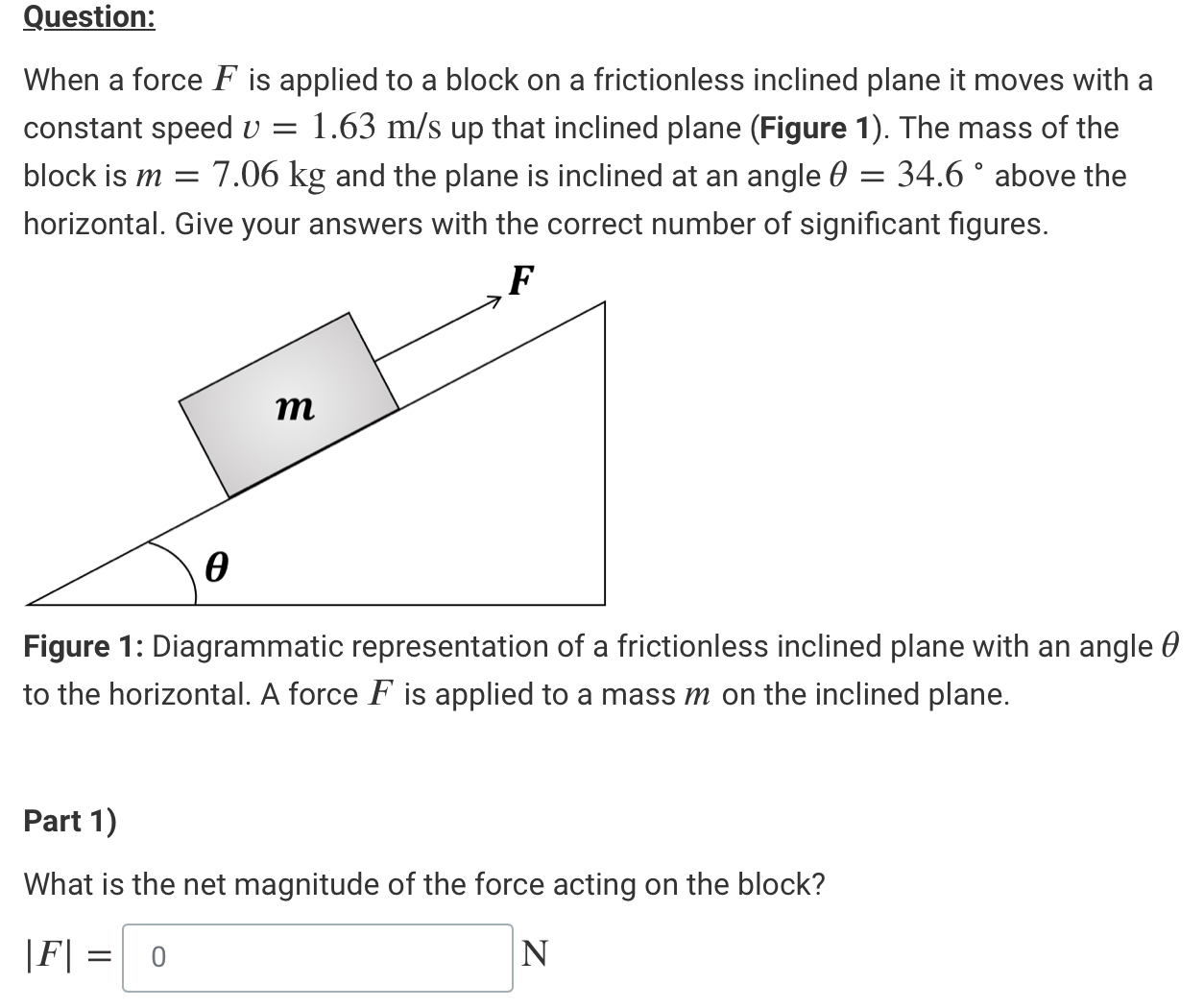
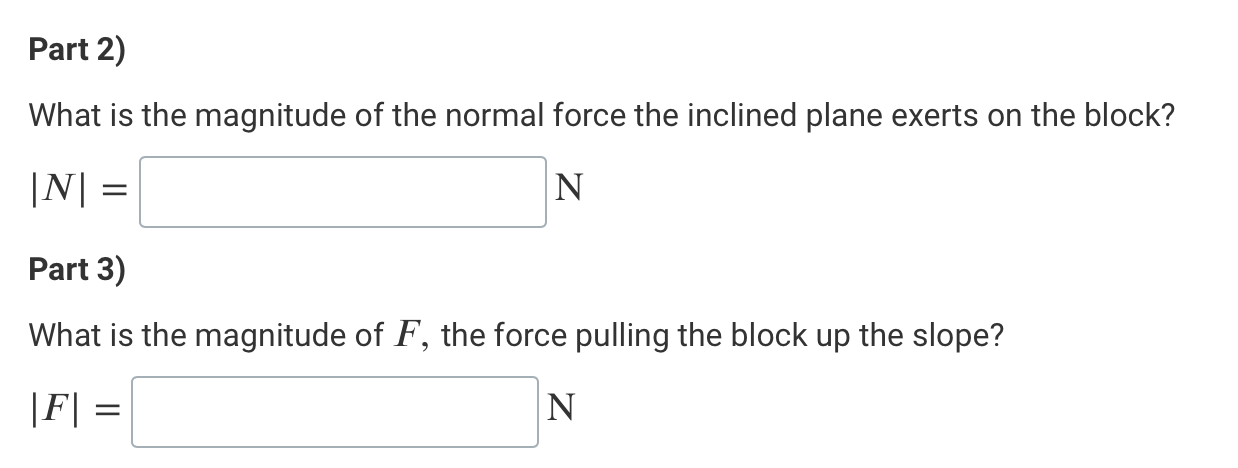
Feedback for Part 2) As the block is moving with a constant velocity all forces are balanced (Figure 2). N 9 A Figure 2: Diagrammatic representation of the frictionless inclined plane with an angle 6 to the horizontal. A force F is applied to the mass m on the inclined plane. The force vector is directed up and parallel to the inclined plane. The normal force vector is directed away from and perpendicular to the incline. The weight vector is directed down and perpendicular to the horizontal. As you can see from the free body diagram l must be equal to the component of mg perpendicular to the plane. By splitting mg into components you can see |N| = mg (308(6) (Figure 3). Figure 3: A diagrammatic representation of the components of the weight mg. mg Sin 6 is directed down and parallel to the inclined plane. mg COS 6 points in the opposite direction to the normal force. mg connects these vectors and the angle between mg and mg COS 9 is also equal to 6. Note: This answer should be correct to 3 signicant gures. Marks for this submission: 0.00/033. This submission attracted a penalty of 0.11 . Total penalties so far: 0.33. Incorrect answer. Feedback for Part 3) As the block is moving with a constant velocity up the slope, the components of the forces parallel to the slope must balance each other out (Figure 4). As a result F = mg Sin(9). Figure 4: Diagrammatic representation of the frictionless inclined plane with an angle 6 to the horizontal. A force F is applied to the mass m on the inclined plane. The force vector is directed up and parallel to the inclined plane. The normal force vector is directed away from and perpendicular to the incline. The weight vector is directed down and perpendicular to the horizontal. The diagram also illustrates the components of the weight mg force . mg Sin 6 is directed down and parallel to the inclined plane. mg COS 6 points in the opposite direction to the normal force. mg connects these vectors and the angle between mg and mg COS 6 is also equal to 6. Question: When a force F is applied to a block on a frictionless inclined plane it moves with a constant speed v = 1.63 m/s up that inclined plane (Figure 1). The mass of the block is m = 7.06 kg and the plane is inclined at an angle 0 = 34.6 . above the horizontal. Give your answers with the correct number of significant figures. m Figure 1: Diagrammatic representation of a frictionless inclined plane with an angle 0 to the horizontal. A force F is applied to a mass m on the inclined plane. Part 1) What is the net magnitude of the force acting on the block? IF| = 0 NPart 2) What is the magnitude of the normal force the inclined plane exerts on the block? Part 3) What is the magnitude of F, the force pulling the block up the slope
Step by Step Solution
There are 3 Steps involved in it

Get step-by-step solutions from verified subject matter experts
 Study Help