







Question: Bond Risks In class, I often wrote an equation like this on the board: r = RRF + inflation + DR + LR + Volatility
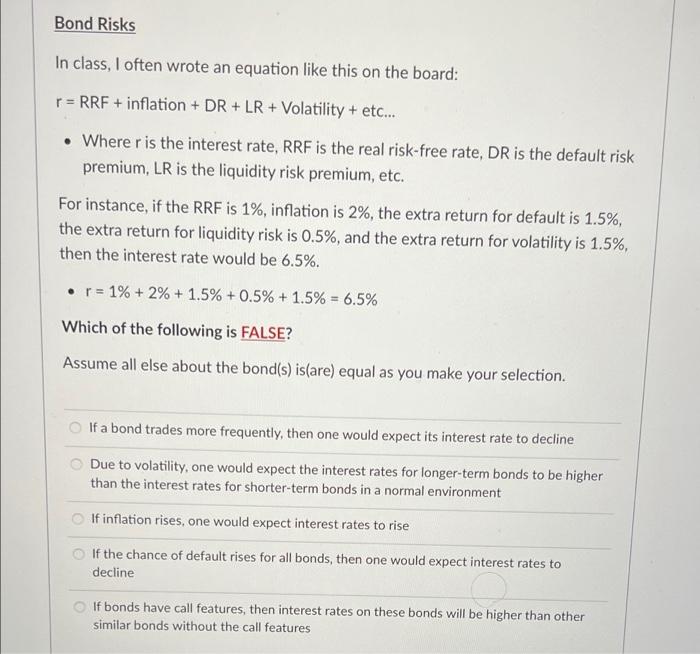
Bond Risks In class, I often wrote an equation like this on the board: r = RRF + inflation + DR + LR + Volatility + etc... Where r is the interest rate, RRF is the real risk-free rate, DR is the default risk premium, LR is the liquidity risk premium, etc. For instance, if the RRF is 1%, inflation is 2%, the extra return for default is 1.5%, the extra return for liquidity risk is 0.5%, and the extra return for volatility is 1.5%, then the interest rate would be 6.5%. . r= 1% + 2% + 1.5% +0.5% +1.5% = 6.5% Which of the following is FALSE? Assume all else about the bond(s) is(are) equal as you make your selection. If a bond trades more frequently, then one would expect its interest rate to decline Due to volatility, one would expect the interest rates for longer-term bonds to be higher than the interest rates for shorter-term bonds in a normal environment If inflation rises, one would expect interest rates to rise If the chance of default rises for all bonds, then one would expect interest rates to decline If bonds have call features, then interest rates on these bonds will be higher than other similar bonds without the call features
Step by Step Solution
There are 3 Steps involved in it

Get step-by-step solutions from verified subject matter experts
 Study Help