Question: Brainstorm one systematic or policy solution for this employee relations matter. Explain your rationale and limit your response to 4 sentences. Dominion Memorial Hospital is
Brainstorm one systematic or policy solution for this employee relations matter. Explain your rationale and limit your response to 4 sentences.
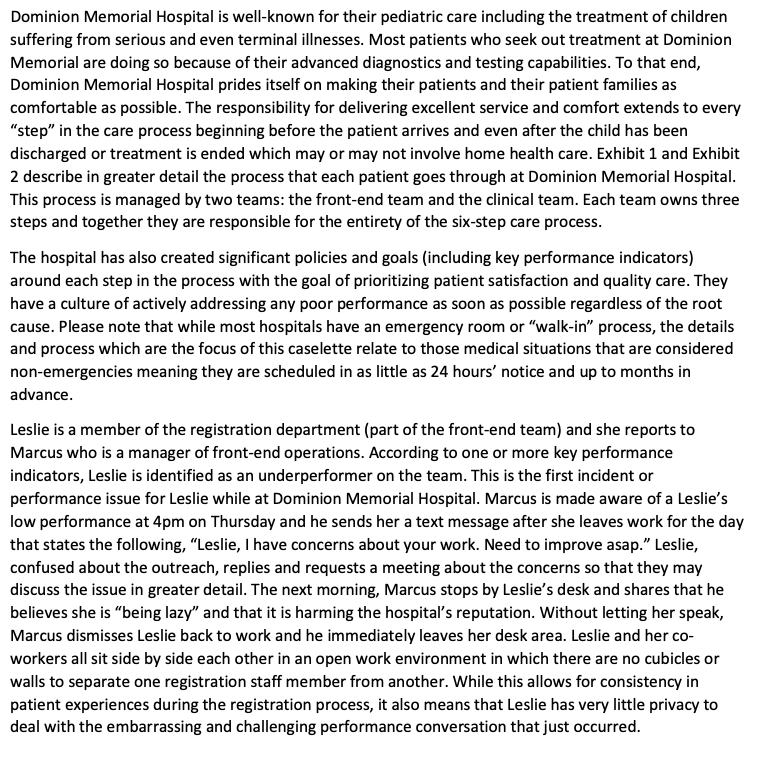
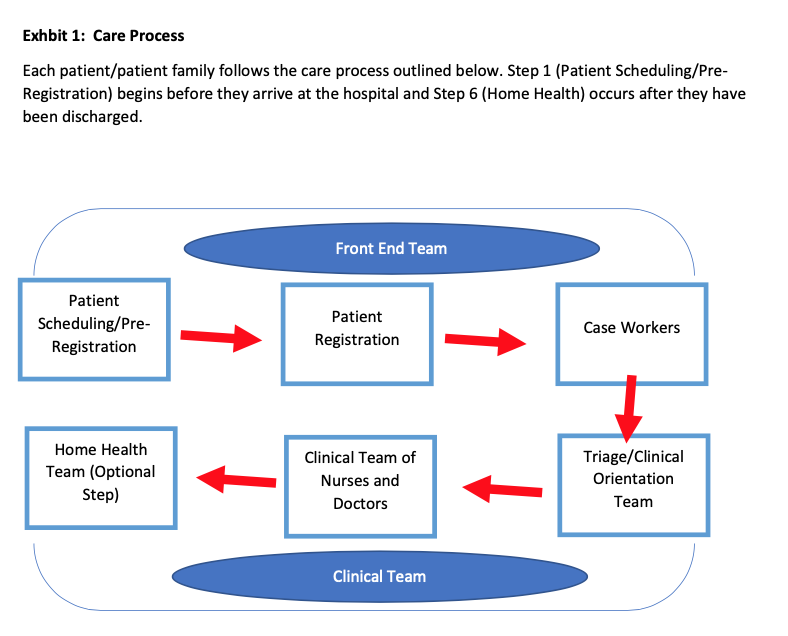
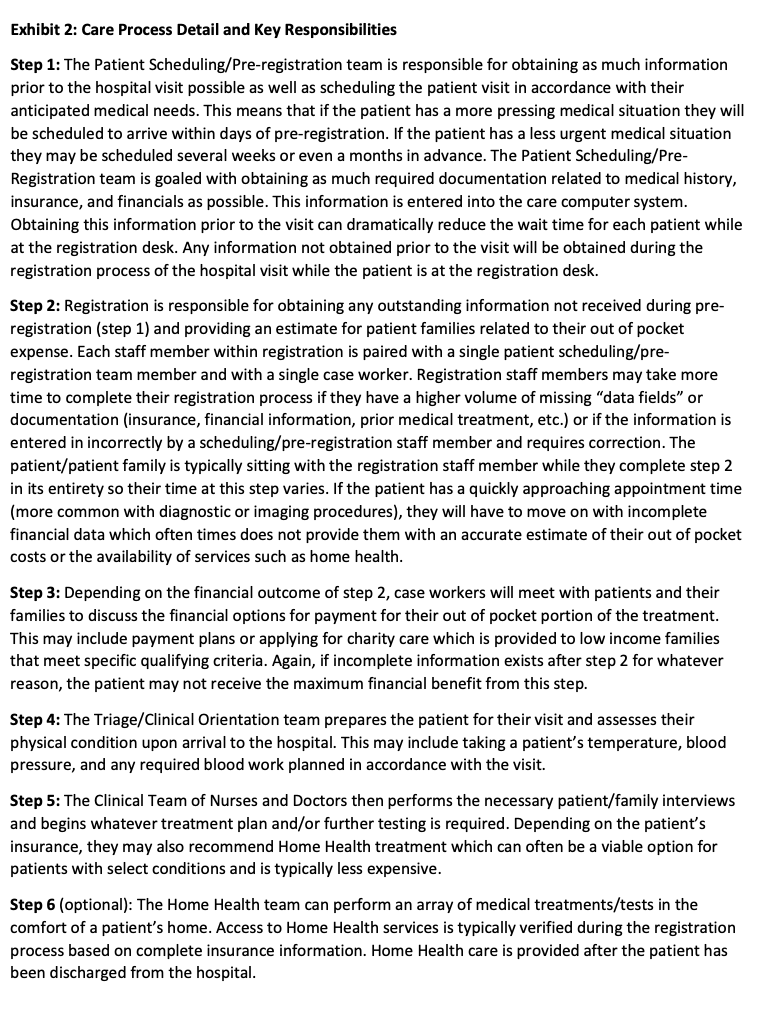
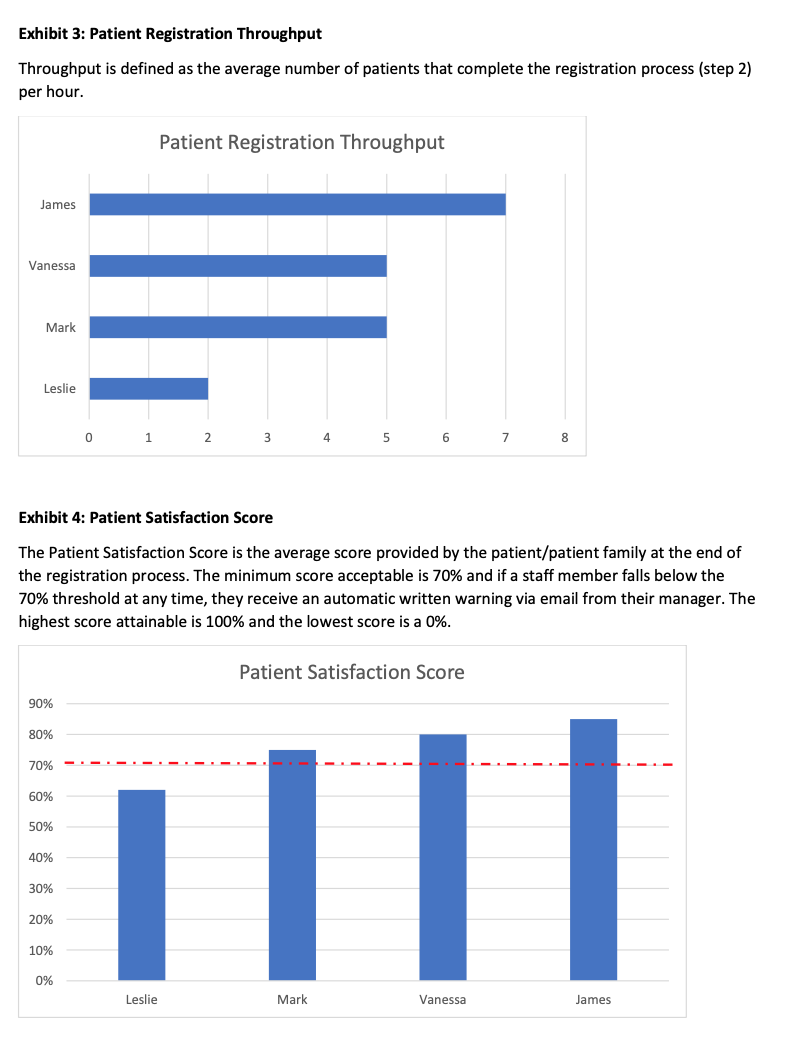
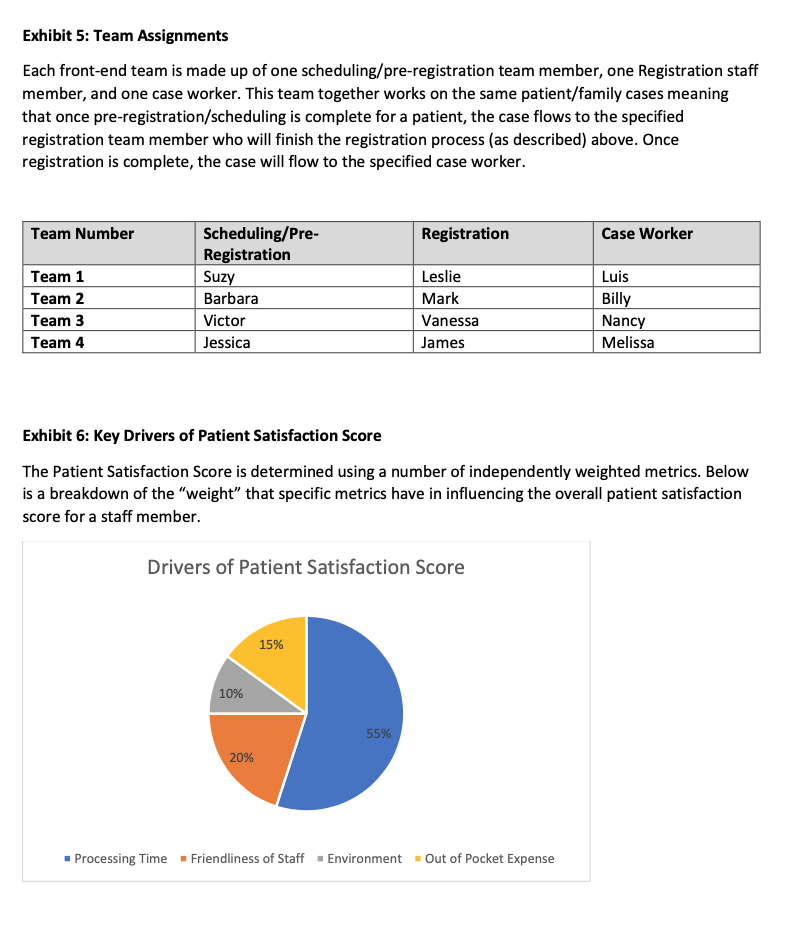
Dominion Memorial Hospital is well-known for their pediatric care including the treatment of children suffering from serious and even terminal illnesses. Most patients who seek out treatment at Dominion Memorial are doing so because of their advanced diagnostics and testing capabilities. To that end, Dominion Memorial Hospital prides itself on making their patients and their patient families as comfortable as possible. The responsibility for delivering excellent service and comfort extends to every "step in the care process beginning before the patient arrives and even after the child has been discharged or treatment is ended which may or may not involve home health care. Exhibit 1 and Exhibit 2 describe in greater detail the process that each patient goes through at Dominion Memorial Hospital. This process is managed by two teams: the front-end team and the clinical team. Each team owns three steps and together they are responsible for the entirety of the six-step care process. The hospital has also created significant policies and goals (including key performance indicators) around each step in the process with the goal of prioritizing patient satisfaction and quality care. They have a culture of actively addressing any poor performance as soon as possible regardless of the root cause. Please note that while most hospitals have an emergency room or "walk-in" process, the details and process which are the focus of this caselette relate to those medical situations that are considered non-emergencies meaning they are scheduled in as little as 24 hours' notice and up to months in advance. Leslie is a member of the registration department (part of the front-end team) and she reports to Marcus who is a manager of front-end operations. According to one or more key performance indicators, Leslie is identified as an underperformer on the team. This is the first incident or performance issue for Leslie while at Dominion Memorial Hospital. Marcus is made aware of a Leslie's low performance at 4pm on Thursday and he sends her a text message after she leaves work for the day that states the following, Leslie, I have concerns about your work. Need to improve asap. Leslie, confused about the outreach, replies and requests a meeting about the concerns so that they may discuss the issue in greater detail. The next morning, Marcus stops by Leslie's desk and shares that he believes she is being lazy" and that it is harming the hospital's reputation. Without letting her speak, Marcus dismisses Leslie back to work and he immediately leaves her desk area. Leslie and her co- workers all sit side by side each other in an open work environment in which there are no cubicles or walls to separate one registration staff member from another. While this allows for consistency in patient experiences during the registration process, it also means that Leslie has very little privacy to deal with the embarrassing and challenging performance conversation that just occurred. Exhbit 1: Care Process Each patient/patient family follows the care process outlined below. Step 1 (Patient Scheduling/Pre- Registration) begins before they arrive at the hospital and Step 6 (Home Health) occurs after they have been discharged. Front End Team Patient Scheduling/Pre- Registration Patient Registration Case Workers Home Health Team (Optional Step) Clinical Team of Nurses and Doctors Triage/Clinical Orientation Team Clinical Team Exhibit 2: Care Process Detail and Key Responsibilities Step 1: The Patient Scheduling/Pre-registration team is responsible for obtaining as much information prior to the hospital visit possible as well as scheduling the patient visit in accordance with their anticipated medical needs. This means that if the patient has a more pressing medical situation they will be scheduled to arrive within days of pre-registration. If the patient has a less urgent medical situation they may be scheduled several weeks or even a months in advance. The Patient Scheduling/Pre- Registration team is goaled with obtaining as much required documentation related to medical history, insurance, and financials as possible. This information is entered into the care computer system. Obtaining this information prior to the visit can dramatically reduce the wait time for each patient while at the registration desk. Any information not obtained prior to the visit will be obtained during the registration process of the hospital visit while the patient is at the registration desk. Step 2: Registration is responsible for obtaining any outstanding information not received during pre- registration (step 1) and providing an estimate for patient families related to their out of pocket expense. Each staff member within registration is paired with a single patient scheduling/pre- registration team member and with a single case worker. Registration staff members may take more time to complete their registration process if they have a higher volume of missing "data fields" or documentation (insurance, financial information, prior medical treatment, etc.) or if the information is entered in incorrectly by a scheduling/pre-registration staff member and requires correction. The patient/patient family is typically sitting with the registration staff member while they complete step 2 in its entirety so their time at this step varies. If the patient has a quickly approaching appointment time (more common with diagnostic or imaging procedures), they will have to move on with incomplete financial data which often times does not provide them with an accurate estimate of their out of pocket costs or the availability of services such as home health. Step 3: Depending on the financial outcome of step 2, case workers will meet with patients and their families to discuss the financial options for payment for their out of pocket portion of the treatment. This may include payment plans or applying for charity care which is provided to low income families that meet specific qualifying criteria. Again, if incomplete information exists after step 2 for whatever reason, the patient may not receive the maximum financial benefit from this step. Step 4: The Triage/Clinical Orientation team prepares the patient for their visit and assesses their physical condition upon arrival to the hospital. This may include taking a patient's temperature, blood pressure, and any required blood work planned in accordance with the visit. Step 5: The Clinical Team of Nurses and Doctors then performs the necessary patient/family interviews and begins whatever treatment plan and/or further testing is required. Depending on the patient's insurance, they may also recommend Home Health treatment which can often be a viable option for patients with select conditions and is typically less expensive. Step 6 (optional): The Home Health team can perform an array of medical treatments/tests in the comfort of a patient's home. Access to Home Health services is typically verified during the registration process based on complete insurance information. Home Health care is provided after the patient has been discharged from the hospital. Exhibit 3: Patient Registration Throughput Throughput is defined as the average number of patients that complete the registration process (step 2) per hour. Patient Registration Throughput James Vanessa Mark Leslie 0 1 2 3 4 5 6 7 8 Exhibit 4: Patient Satisfaction Score The Patient Satisfaction Score is the average score provided by the patient/patient family at the end of the registration process. The minimum score acceptable is 70% and if a staff member falls below the 70% threshold at any time, they receive an automatic written warning via email from their manager. The highest score attainable is 100% and the lowest score is a 0%. Patient Satisfaction Score 90% 80% 70% 60% 50% 40% 111 30% 20% 10% 0% Leslie Mark Vanessa James Exhibit 5: Team Assignments Each front-end team is made up of one scheduling/pre-registration team member, one Registration staff member, and one case worker. This team together works on the same patient/family cases meaning that once pre-registration/scheduling is complete for a patient, the case flows to the specified registration team member who will finish the registration process (as described) above. Once registration is complete, the case will flow to the specified case worker. Team Number Registration Case Worker Scheduling/Pre- Registration Suzy Team 1 Team 2 Team 3 Team 4 Barbara Victor Jessica Leslie Mark Vanessa James Luis Billy Nancy Melissa Exhibit 6: Key Drivers of Patient Satisfaction Score The Patient Satisfaction Score is determined using a number of independently weighted metrics. Below is a breakdown of the "weight" that specific metrics have in influencing the overall patient satisfaction score for a staff member. Drivers of Patient Satisfaction Score 15% 10% 55% 20% Processing Time Friendliness of Staff Environment - Out of Pocket Expense









 Study Help