







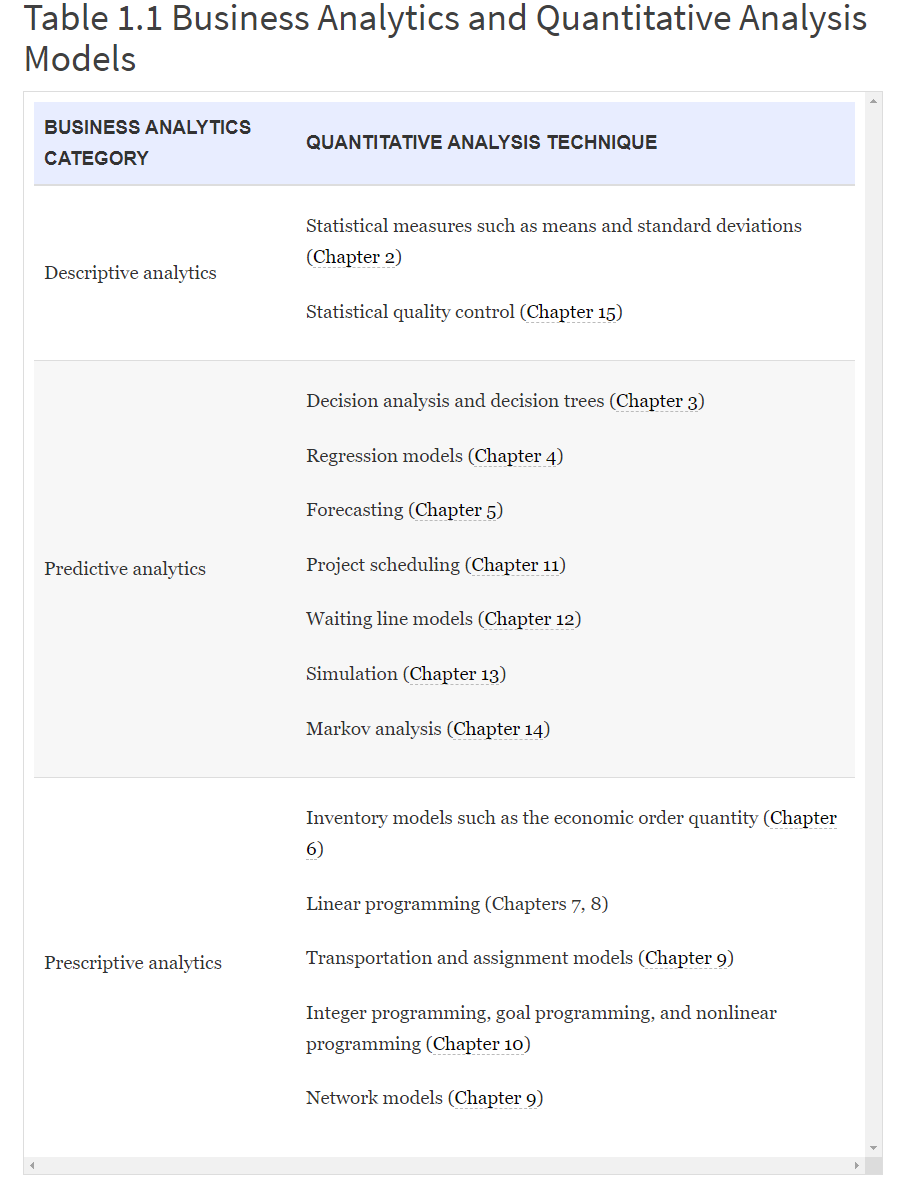
Question: Business analytics is often broken into three categories: descriptive, predictive, and prescriptive. Table 1.1 in the textbook provides different quantitative analysis techniques for each of
Business analytics is often broken into three categories: descriptive, predictive, and prescriptive. Table 1.1 in the textbook provides different quantitative analysis techniques for each of these categories. Select one of the techniques, briefly explain it and then provide a real-world industry application (i.e., aviation sector, healthcare, manufacturing, etc.) where decision makers adopted that technique to help solve their problems.
Step by Step Solution
There are 3 Steps involved in it
1 Expert Approved Answer
Step: 1 Unlock

Question Has Been Solved by an Expert!
Get step-by-step solutions from verified subject matter experts
Step: 2 Unlock
Step: 3 Unlock
 Study Help