Question: Business Section A Directions: In this section statement TN going to read a passage with ten statements attached to it. Each formation given in one
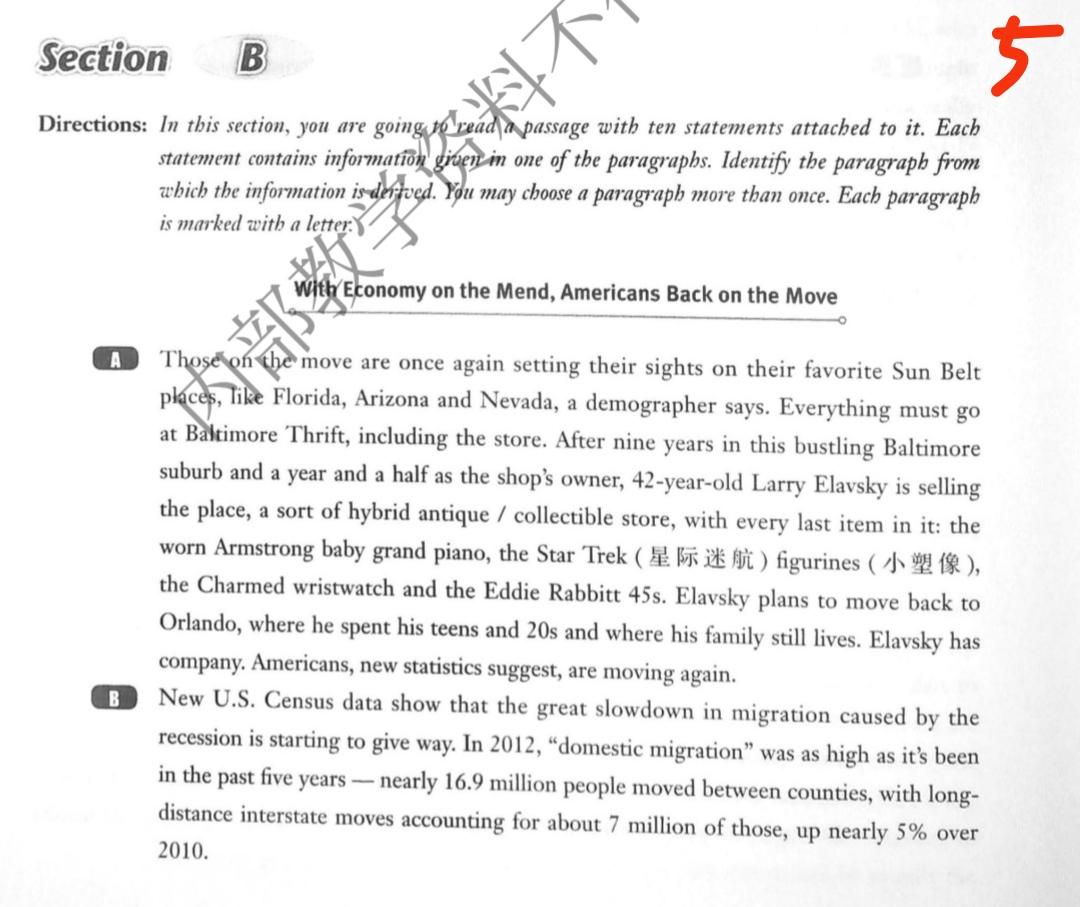
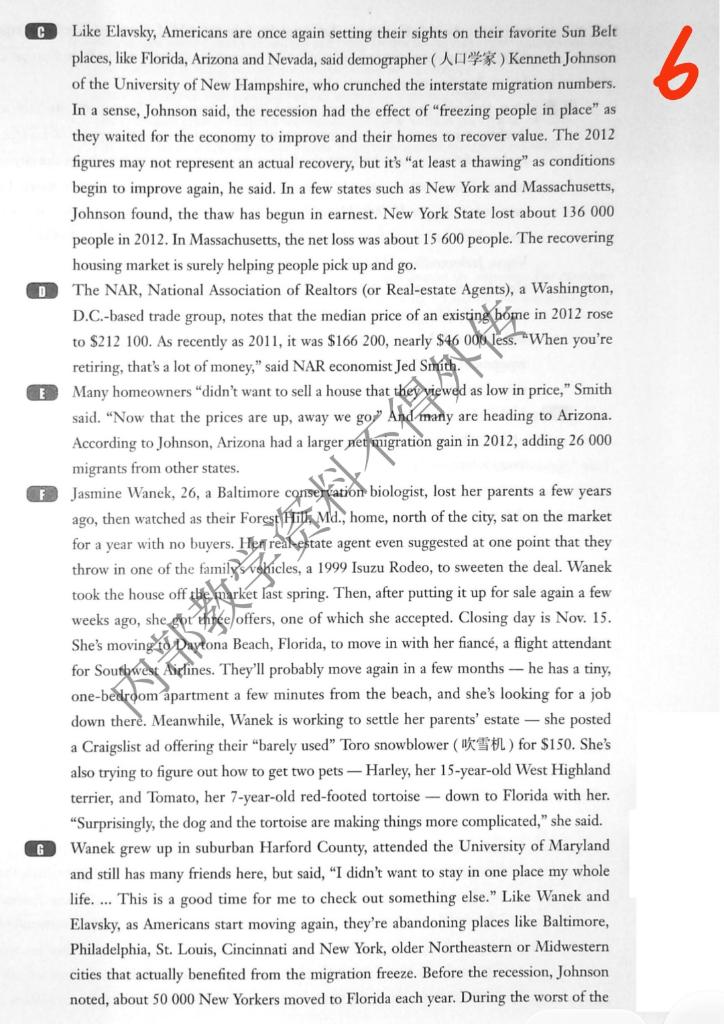
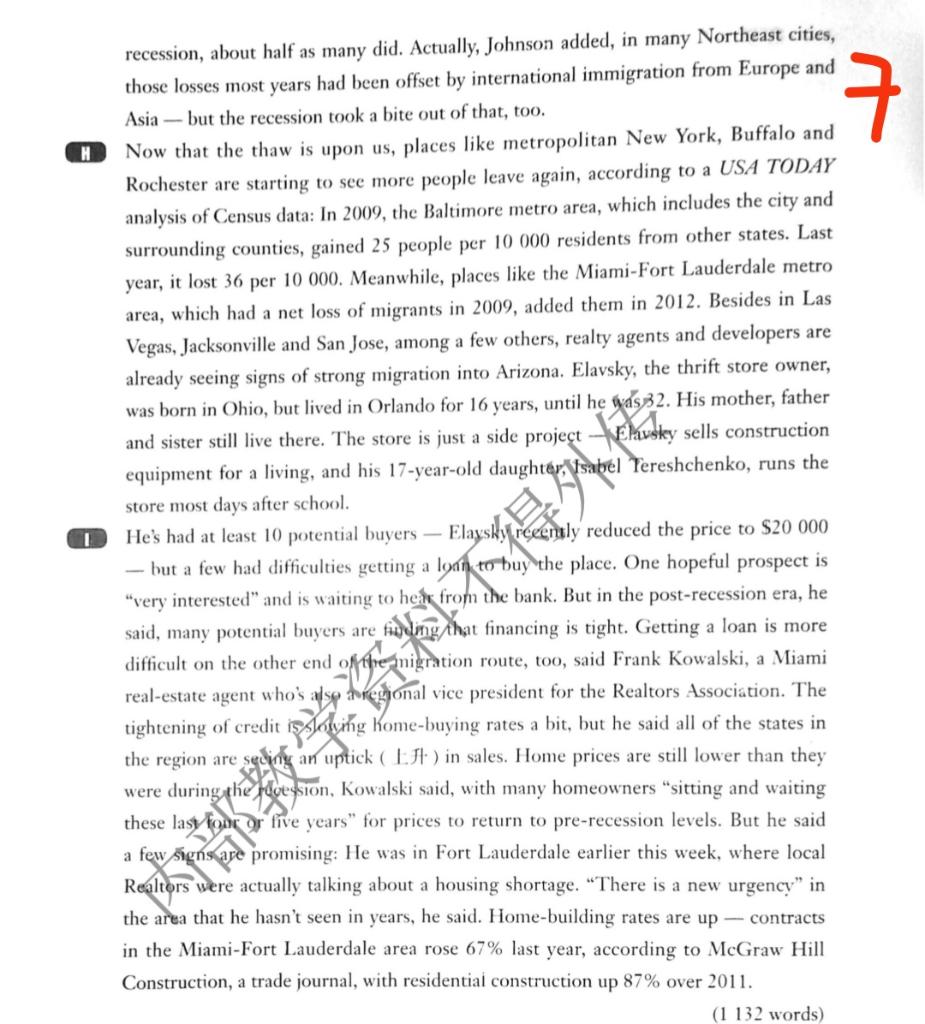
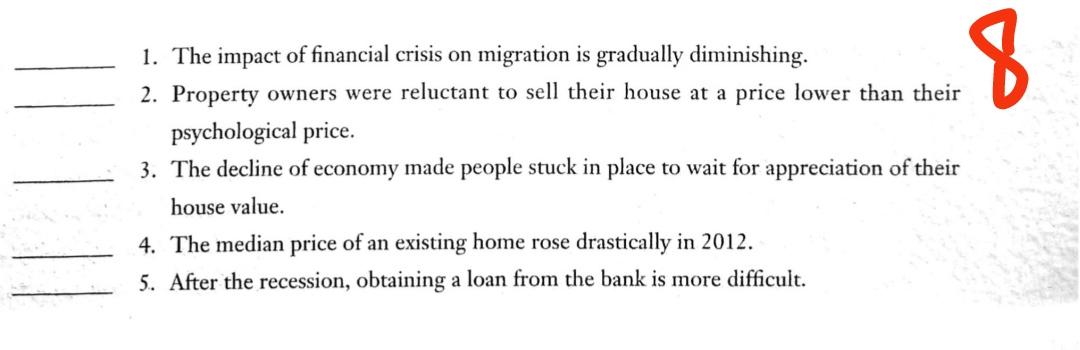
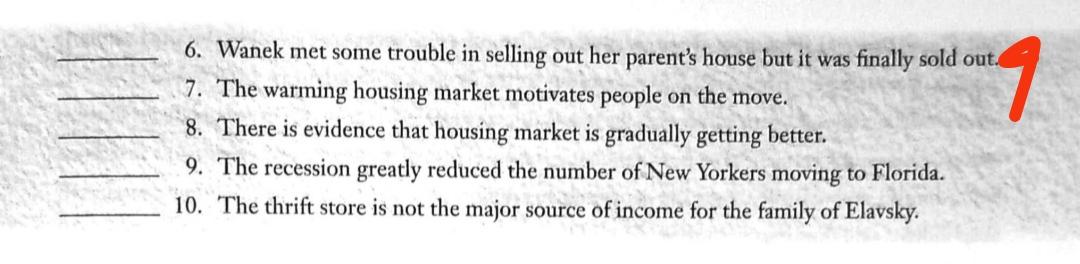
Business Section A Directions: In this section statement TN going to read a passage with ten statements attached to it. Each formation given in one of the paragraphs. Identify the paragraph from which the formation is derived. You may choose a paragraph more than once. Each paragraph is marked with a letter. The Sharing Economy: A Whole New Way of Living A From accommodation to cars, the Internet is turning us from consumers into providers and challenging established business models. We talk to Martin Varsavsky, founder of Fon the largest Wi-Fi company in the world and profile two more pioneers, from TaskRabbit.com and BlaBlaCar.com. In 2006, serial entrepreneur and investor Martn Varsavsky-inspired by a conviction that he could cloak the world in free Wi- Fi by encouraging people to share their home connections - founded in Madrid. The company is now the largest Wi-Fi network in the world, with almost 12m hot spots in more than 100 countries. B "My general thinking at the time was that we live in a world in which benefits are only ## dEconomics acquired through economic growth and the endless consumption of resources, and that there have to be other ways that are of more benefit to people," he says. "Why should' everyone have their own car when most of the time they are not using them? Think of a harbor full of boats. How frequently do those boats go out?" Today, it has been argued that the sharing economy which is perhaps best defined as a way of sweating underutilized assets, by building communities around them and turning consumers into providers has the potential to reboot businesses across most economic categories. Indeed, Forbes magazine recently estimated that total revenues for the sector could top $3.5 billion this year, with growth exceeding 25%. However, when setting up Fon, Varsavsky became convinced that people needed a nudge (Hz) or financial incentive before they'd happily share their assets. C "In the case of Wi-Fi, we came up with the concept that if you share a little Wi-Fi at home, you can roam the world for free," he says. "That's a small loss and a huge gain. And now (years later) we see that in all those situations where you have a small loss and a big gain, the sharing economy makes sense Yet while makes sense, at least intellectually, it's when you start to examine the legalities around the ownership of assets that the sharing economy starts to run into trouble, argues the 53-year-old, who was born in Buenos Aires. It turns out ownership is not as clear cut as many of us might expect. "You think something is yours to share until somebody says, 'Hey! It's not really. yours at all," says Varsavsky citing the terms and conditions around "owning" Wi-Fi and the copyright of books d music as examples. The fast-growing peer peer (P2P) holiday lodgings market is another case in point. There are claims its success is gnawing away at the incumbent hotel sector's profit margins and even starting to have an impact on property prices. The hotel industry. has begun to fight back, primarily, it seems, through behind the scenes lobbying of regulators and politicians. On 20 May, New York officials ruled that a man who rented out part of his NYC apartment for three days on Airbnb (With more than 10 million nights booked worldwide, Airbnb is the world leader in travel rentals.) the sharing economy's. most high-profile success story to date should pay $2 400 for violating the city's illegal hotel law. Airbnb says it is committed to fighting the ruling. The P2P holiday rentals marketplace is hitting roadblocks in Europe, too: the authorities in Amsterdam and Berlin, for example, are reportedly considering laws that will make it tougher for companies such as Airbnb and its European rivals House Trip, Wimdu and 9 flats to operate. "The sharing economy can create winners and losers, and property owners are winners and hotel owners are losers (in this case)," says Varsavsky. "Sometimes those who gain are atomized and gain little individually, while those who hurt, hurt a lot, and then organize very well. Those are the forces against sharing." The response of sharing economy companies encountering obstacles of this sort should be to rally the 112 forces that stand to gain while making the case, wherever possible, that the forces of disruption can be good for "traditional" businesses too, he says. "In the case of hotel stays versus apartment stays, there have been studies done that have shown there's a market that hotels don't address very well. And that is the market of families with children, for whom hotel stays can be very expensive. So Airbnb fills a niche of families who travel and their presence is actually accretive (1) to the city. For example, the city of Paris studied this and concluded that Airbnb was a good thing, because it's bringing even more people to Paris overall, and the economy was doing better, while hotels were not really getting hurt." G Similarly, when Varsavsky launched Fon, it ran into determined opposition from telecoms businesses, which said that the company's vision of shared Wi-Fi was against their terms of service. "What we showed with Fon was that you would only share with those who share back," he says. "We actually created a new incentive for people to sign up for DSL or broadband connections, which was to sign up at home, to roam the world. This became so true that T-Mobile, Deutsche Telekom and BT all became shareholders in Fon." Sharing economy companies who faihto convince the established players that they add value are likely to become unstck, adds Varavsky. "With (P2P file-sharing services) Napster Kazaa, when people started sharing songs in a way where there was no value for the record labels or copyright holders, they fought them like crazy and closed them down. The sharing of music had to come up with a concept more like Spotify, which makes use of the same P2P technology that Kazaa used to use, butit left money aside to pay the record labels - so the model became legal and now H success." When asked where he thinks the sharing economy will go next, Varsavsky picks an unexpected area: fertility. "For a long time fertility has been helped by people who have been sharing their sperm or eggs, in order to make reproduction possible for others. But it's been done in a very restrictive way so far. I think, as the average age of people having children goes up, fertility is an area which will see a great deal of change, because of the ability to obtain embryos, eggs, sperm, surrogacy (f)- all of those are examples of people doing something for someone else. People don't think of fertility as part of the sharing economy, but I do. Life must come from life." Another area set to boom, he predicts, is the sharing of expensive equipment for gardening, DIY and even farming. "These are all things that are bought, used extremely little and are likely to be shared. Social platforms will play a big role in this and open up all these categories, because people can just say, 'I need this' and there's an instant audience. All these sharing economy sites have log-ins with Facebook, Twitter and Google, which removes the friction, enabling us to make more rational use of our assets. That's one of (1 181 words) the reasons why the sharing economy is here to stay." 0 MN 3 1. The sharing of costly equipment will be flourishing. 2. Legal measures in some European countries will impede the development of travel rental companies. 3. Our role in the business world is transformed by Internet, posing a challenge to traditional business patterns. 4. In term of cost, apartment appeals more families with children. 5. Varsavsky initially met resistance from traditional business players but persuaded to cooperate in Fon. 6. The prospect of sharing economy is great but people have to be motivated to do so. 7. The issue of ownership is a challenge for the promotion of sharing economy. 8. Varsavsky's forecast of sectors to be invaded by sharing economy is surprising. 9. The challenged hotel industry takes measures to oppose the development of sharing economy by secretly persuading the authorities. 10. The service provided by Airbnb can benefit the whole economy. Section B 5 Directions: In this section, you are going to read a passage with ten statements attached to it. Each statement contains information given in one of the paragraphs. Identify the paragraph from which the information is derived. You may choose a paragraph more than once. Each paragraph is marked with a letter With Economy on the Mend, Americans Back on the Move A Those the move are once again setting their sights on their favorite Sun Belt places, like Florida, Arizona and Nevada, a demographer says. Everything must go at Baltimore Thrift, including the store. After nine years in this bustling Baltimore suburb and a year and a half as the shop's owner, 42-year-old Larry Elavsky is selling the place, a sort of hybrid antique / collectible store, with every last item in it: the worn Armstrong baby grand piano, the Star Trek () figurines (1), the Charmed wristwatch and the Eddie Rabbitt 45s. Elavsky plans to move back to Orlando, where he spent his teens and 20s and where his family still lives. Elavsky has company. Americans, new statistics suggest, are moving again. B New U.S. Census data show that the great slowdown in migration caused by the recession is starting to give way. In 2012, "domestic migration" was as high as it's been in the past five years - nearly 16.9 million people moved between counties, with long- distance interstate moves accounting for about 7 million of those, up nearly 5% over 2010. Like Elavsky, Americans are once again setting their sights on their favorite Sun Belt places, like Florida, Arizona and Nevada, said demographer (A) Kenneth Johnson of the University of New Hampshire, who crunched the interstate migration numbers. In a sense, Johnson said, the recession had the effect of "freezing people in place" as they waited for the economy to improve and their homes to recover value. The 2012 figures may not represent an actual recovery, but it's "at least a thawing" as conditions begin to improve again, he said. In a few states such as New York and Massachusetts, Johnson found, the thaw has begun in earnest. New York State lost about 136 000 people in 2012. In Massachusetts, the net loss was about 15 600 people. The recovering housing market is surely helping people pick up and go. D The NAR, National Association of Realtors (or Real-estate Agents), a Washington, D.C.-based trade group, notes that the median price of an existing home in 2012 rose to $212 100. As recently as 2011, it was $166 200, nearly $46 000 less. When you're retiring, that's a lot of money," said NAR economist Jed Smith. Many homeowners "didn't want to sell a house that they said. "Now that the prices are up, away we go. E viewed as low in price," Smith many are heading to Arizona. According to Johnson, Arizona had a larger net migration gain in 2012, adding 26 000 migrants from other states. F Jasmine Wanek, 26, a Baltimore conservation biologist, lost her parents a few years ago, then watched as their Forest Hi Md., home, north of the city, sat on the market for a year with no buyers. Her real estate agent even suggested at one point that they throw in one of the familys vehicles, a 1999 Isuzu Rodeo, to sweeten the deal. Wanek took the house off the market last spring. Then, after putting it up for sale again a few weeks ago, she got three offers, one of which she accepted. Closing day is Nov. 15. She's moving to Daytona Beach, Florida, to move in with her fianc, a flight attendant for Southwest Airlines. They'll probably move again in a few months - he has a tiny, one-bedroom apartment a few minutes from the beach, and she's looking for a job down there. Meanwhile, Wanek is working to settle her parents' estate she posted a Craigslist ad offering their "barely used" Toro snowblower (L) for $150. She's also trying to figure out how to get two pets - Harley, her 15-year-old West Highland terrier, and Tomato, her 7-year-old red-footed tortoise down to Florida with her. "Surprisingly, the dog and the tortoise are making things more complicated," she said. Wanek grew up in suburban Harford County, attended the University of Maryland and still has many friends here, but said, "I didn't want to stay in one place my whole life.... This is a good time for me to check out something else." Like Wanek and. Elavsky, as Americans start moving again, they're abandoning places like Baltimore, Philadelphia, St. Louis, Cincinnati and New York, older Northeastern or Midwestern cities that actually benefited from the migration freeze. Before the recession, Johnson noted, about 50 000 New Yorkers moved to Florida each year. During the worst of the G HALLIKS 6 recession, about half as many did. Actually, Johnson added, in many Northeast cities, those losses most years had been offset by international immigration from Europe and Asia but the recession took a bite out of that, too. yord, before and H Rochester are starting to see more people leave again, according to a USA TODAY analysis of Census data: In 2009, the Baltimore metro area, which includes the city and surrounding counties, gained 25 people per 10 000 residents from other states. Last year, it lost 36 per 10 000. Meanwhile, places like the Miami-Fort Lauderdale metro area, which had a net loss of migrants in 2009, added them in 2012. Besides in Las Vegas, Jacksonville and San Jose, among a few others, realty agents and developers are already seeing signs of strong migration into Arizona. Elavsky, the thrift store owner, was born in Ohio, but lived in Orlando for 16 years, until he was 32. His mother, father and sister still live there. The store is just a side project Elavskey sells construction equipment for a living, and his 17-year-old daughter, Isabel Tereshchenko, runs the store most days after school. 1 He's had at least 10 potential buyers - Elaysky recently reduced the price to $20 000 - but a few had difficulties getting a loan to buy the place. One hopeful prospect is "very interested" and is waiting to hear from the bank. But in the post-recession era, he said, many potential buyers are finding that financing is tight. Getting a loan is more difficult on the other end of the migration route, too, said Frank Kowalski, a Miami real-estate agent who's also regional vice president for the Realtors Association. The tightening of credit ising the region are seein were during the these last home-buying rates a bit, but he said all of the states in an uptick (1J) in sales. Home prices are still lower than they cession, Kowalski said, with many homeowners "sitting and waiting or five years" for prices to return to pre-recession levels. But he said a few signs are promising: He was in Fort Lauderdale earlier this week, where local Realtors were actually talking about a housing shortage. "There is a new urgency" in the area that he hasn't seen in years, he said. Home-building rates are up- contracts in the Miami-Fort Lauderdale area rose 67% last year, according to McGraw Hill Construction, a trade journal, with residential construction up 87% over 2011. (1 132 words) 1. The impact of financial crisis on migration is gradually diminishing. 2. Property owners were reluctant to sell their house at a price lower than their psychological price. 3. The decline of economy made people stuck in place to wait for appreciation of their house value. 4. The median price of an existing home rose drastically in 2012. 5. After the recession, obtaining a loan from the bank is more difficult. 8 6. Wanek met some trouble in selling out her parent's house but it was finally sold out. "9 7. The warming housing market motivates people on the move. 8. There is evidence that housing market is gradually getting better. 9. The recession greatly reduced the number of New Yorkers moving to Florida. 10. The thrift store is not the major source of income for the family of Elavsky









 Study Help