Question: business & society this is the study case ( please answer based on this study case) this is the first question ( 5marks) second question
business & society
this is the study case ( please answer based on this study case)
this is the first question ( 5marks)
second question (5marks)
last question (5marks)
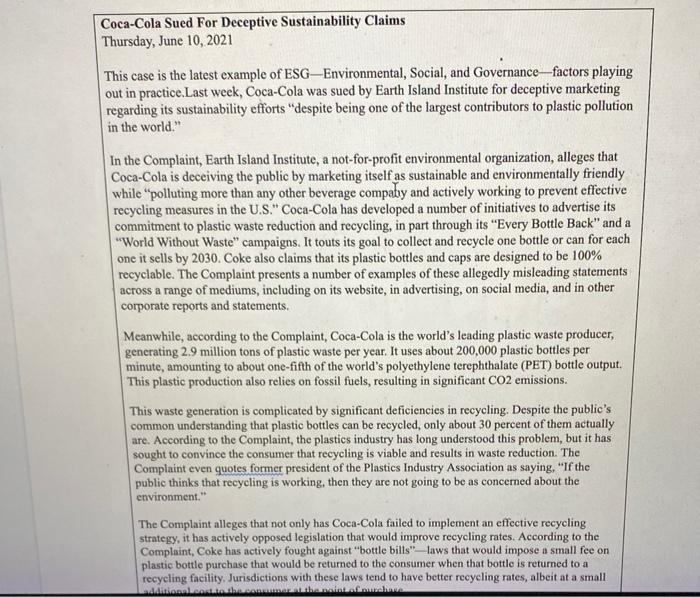
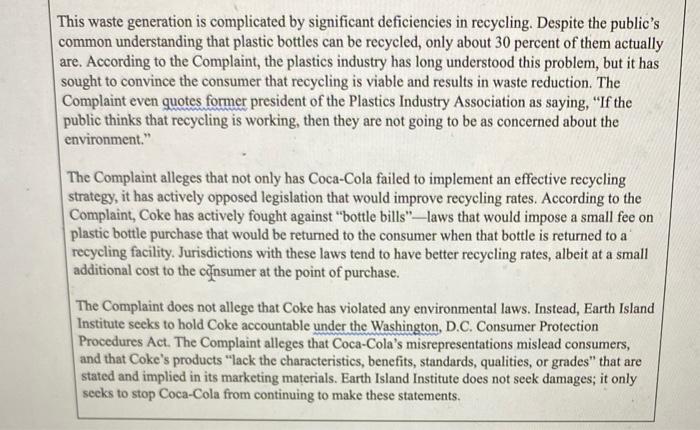
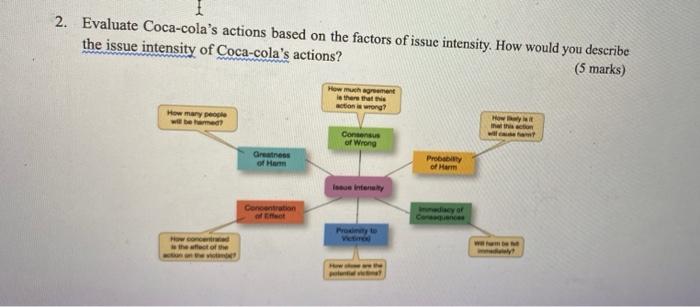
Coca-Cola Sued For Deceptive Sustainability Claims Thursday, June 10, 2021 This case is the latest example of ESG-Environmental, Social, and Governance-factors playing out in practice.Last week, Coca-Cola was sued by Earth Island Institute for deceptive marketing regarding its sustainability efforts "despite being one of the largest contributors to plastic pollution in the world." In the Complaint, Earth Island Institute, a not-for-profit environmental organization, alleges that Coca-Cola is deceiving the public by marketing itself as sustainable and environmentally friendly while "polluting more than any other beverage compaty and actively working to prevent effective recycling measures in the U.S." Coca-Cola has developed a number of initiatives to advertise its commitment to plastic waste reduction and recycling, in part through its "Every Bottle Back" and a "World Without Waste" campaigns. It touts its goal to collect and recycle one bottle or can for each one it sells by 2030. Coke also claims that its plastic bottles and caps are designed to be 100% recyclable. The Complaint presents a number of examples of these allegedly misleading statements across a range of mediums, including on its website, in advertising, on social media, and in other corporate reports and statements. Meanwhile, according to the Complaint, Coca-Cola is the world's leading plastic waste producer, generating 2.9 million tons of plastic waste per year. It uses about 200,000 plastic bottles per minute, amounting to about one-fifth of the world's polyethylene terephthalate (PET) bottle output. This plastic production also relies on fossil fuels, resulting in significant CO2 emissions. This waste generation is complicated by significant deficiencies in recycling. Despite the public's common understanding that plastic bottles can be recycled, only about 30 percent of them actually are. According to the Complaint, the plastics industry has long understood this problem, but it has sought to convince the consumer that recycling is viable and results in waste reduction. The Complaint even quotes former president of the Plastics Industry Association as saying, "If the public thinks that recycling is working, then they are not going to be as concerned about the environment." The Complaint alleges that not only has Coca-Cola failed to implement an effective recycling strategy, it has actively opposed legislation that would improve recycling rates. According to the Complaint, Coke has actively fought against "bottle bills"-laws that would impose a small fee on plastic bottle purchase that would be returned to the consumer when that bottle is returned to a recycling facility. Jurisdictions with these laws tend to have better recycling rates, albeit at a small Addition in the mai... v This waste generation is complicated by significant deficiencies in recycling. Despite the public's common understanding that plastic bottles can be recycled, only about 30 percent of them actually are. According to the Complaint, the plastics industry has long understood this problem, but it has sought to convince the consumer that recycling is viable and results in waste reduction. The Complaint even quotes former president of the Plastics Industry Association as saying, "If the public thinks that recycling is working, then they are not going to be as concerned about the environment." The Complaint alleges that not only has Coca-Cola failed to implement an effective recycling strategy, it has actively opposed legislation that would improve recycling rates. According to the Complaint, Coke has actively fought against bottle bills"-laws that would impose a small fee on plastic bottle purchase that would be returned to the consumer when that bottle is returned to a recycling facility. Jurisdictions with these laws tend to have better recycling rates, albeit at a small additional cost to the censumer at the point of purchase. The Complaint does not allege that Coke has violated any environmental laws. Instead, Earth Island Institute seeks to hold Coke accountable under the Washington, D.C. Consumer Protection Procedures Act. The Complaint alleges that Coca-Cola's misrepresentations mislead consumers, and that Coke's products lack the characteristics, benefits, standards, qualities, or grades" that are stated and implied in its marketing materials. Earth Island Institute does not seek damages; it only seeks to stop Coca-Cola from continuing to make these statements. Questions: 1. List down FIVE stakeholders that were affected by the above issue. Explain how these stakeholders being affected. (5 marks) 2. Evaluate Coca-cola's actions based on the factors of issue intensity. How would you describe the issue intensity of Coca-cola's actions? (5 marks) How much gromne le there that on is wrong? How many people will be How that com Consensus of Wrong Greatness of Harm Pro of Harm Innenten Concentration offet day or How con the foot of the we 3. Moving forward, what do you think Coca-cola should do for its sustainability effort










 Study Help