







Question: Please answer based on the reading provided only 1. Describe the key resources, capabilities, and competitive strengths and weaknesses of HTC. 2. Discuss the sustainability
Please answer based on the reading provided only
1. Describe the key resources, capabilities, and competitive strengths and weaknesses of HTC.
2. Discuss the sustainability of HTCs competitive position.
3. Chou and Wang have led HTC transformation from a small player to a top five producer of smart phones. What strategic actions would move HTC into the top three? Specifically:
a.How can HTC differentiate its products as more handset manufacturers enter the Android market?
b.Should HTC abandon the tablet market?
In each instance, discuss why your chosen approach will lead to favorable outcomes.
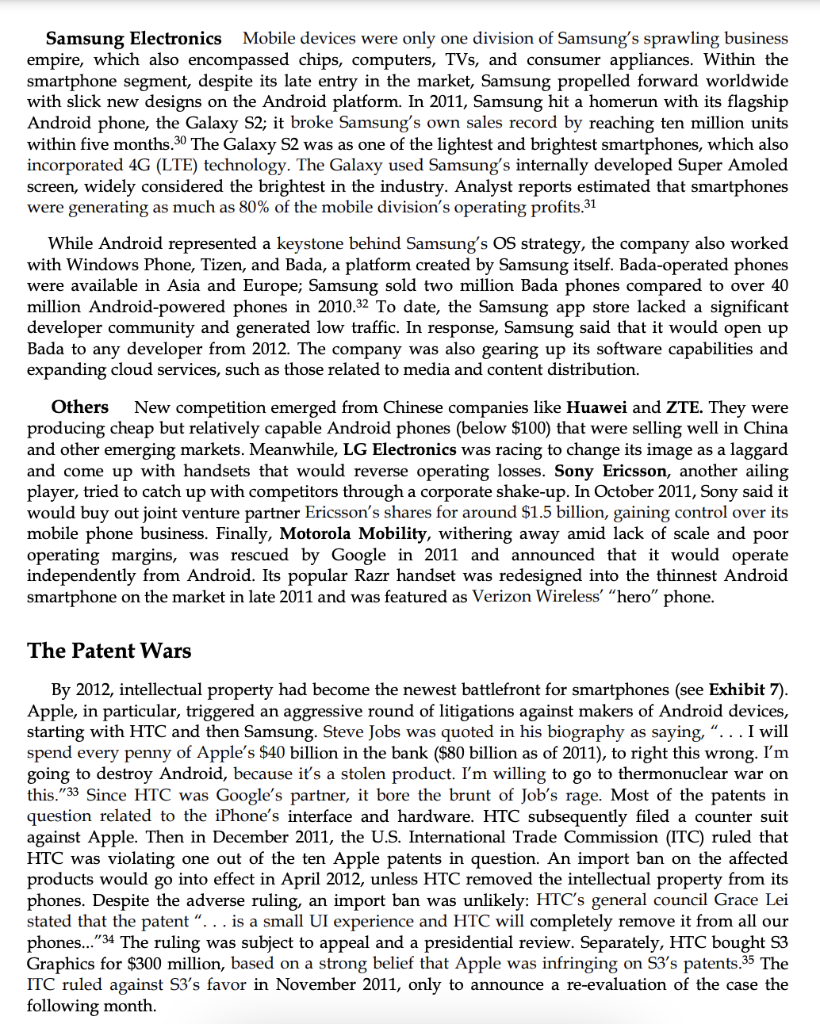
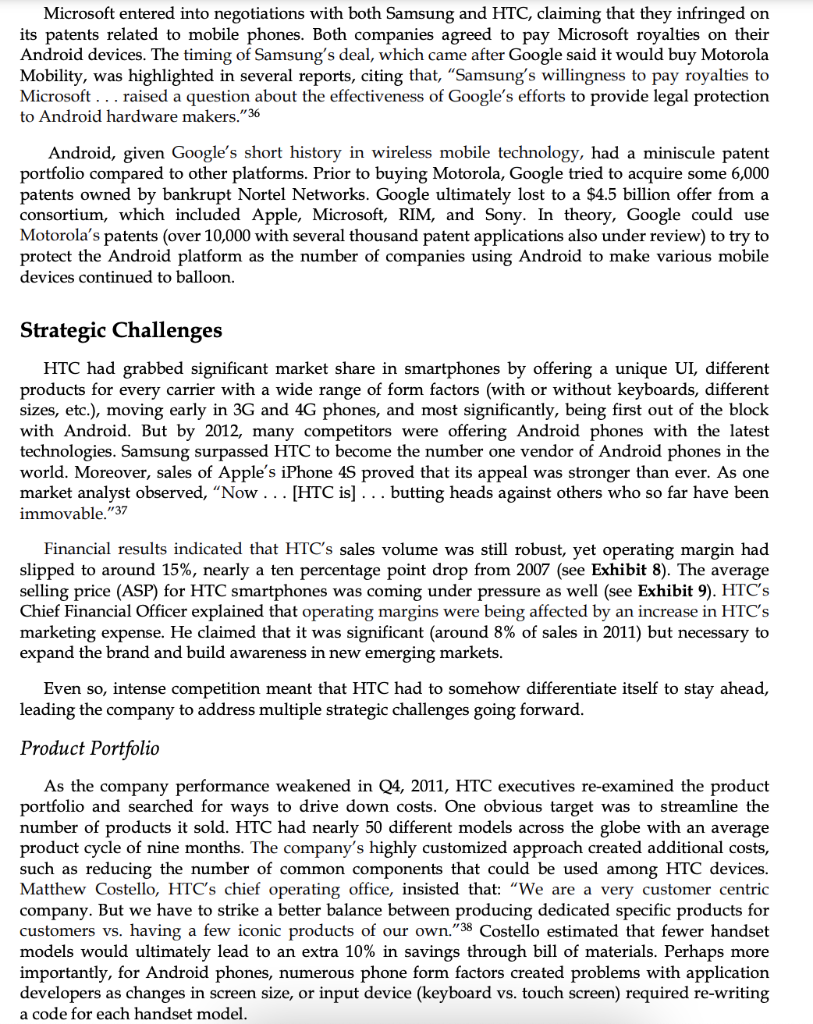
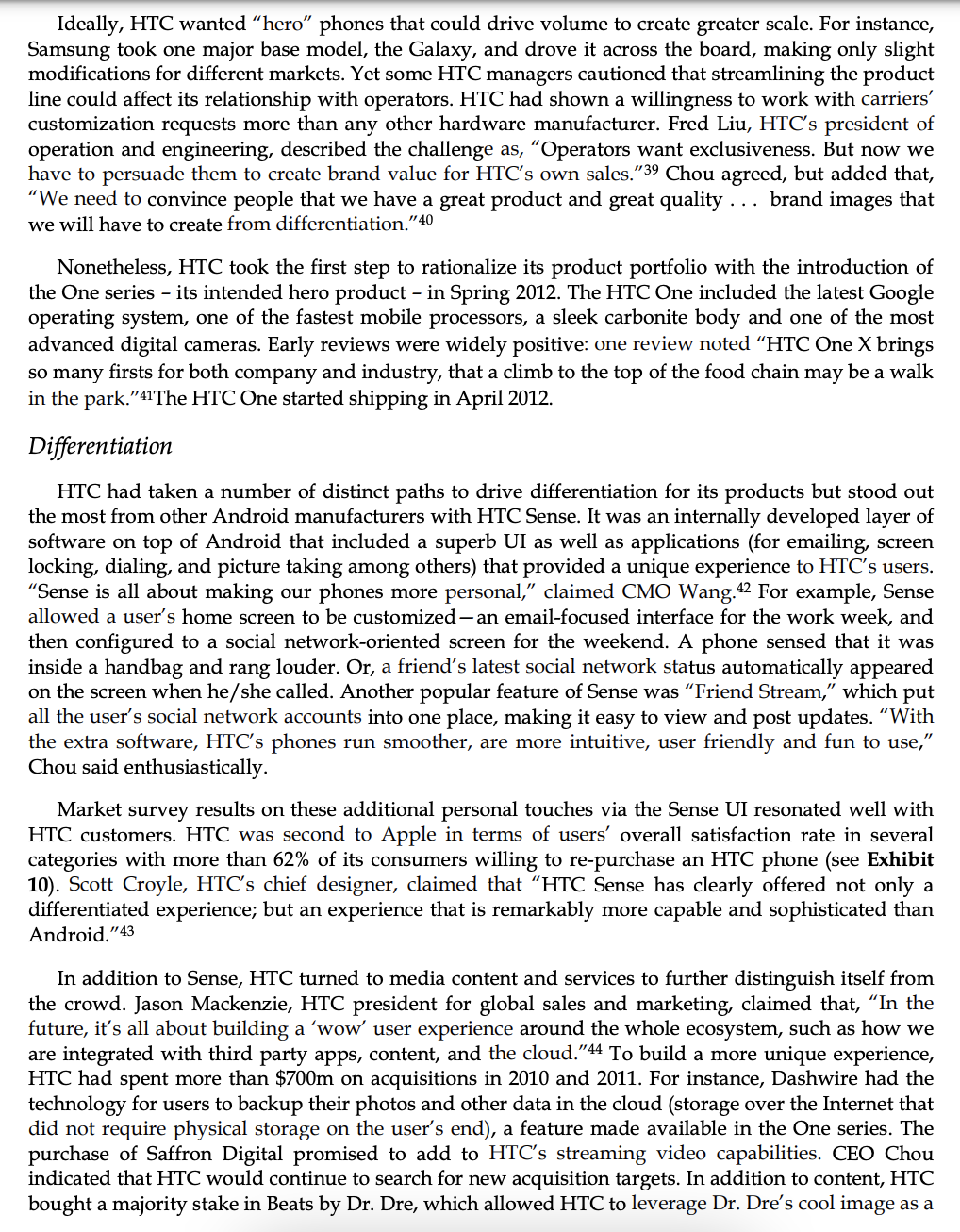
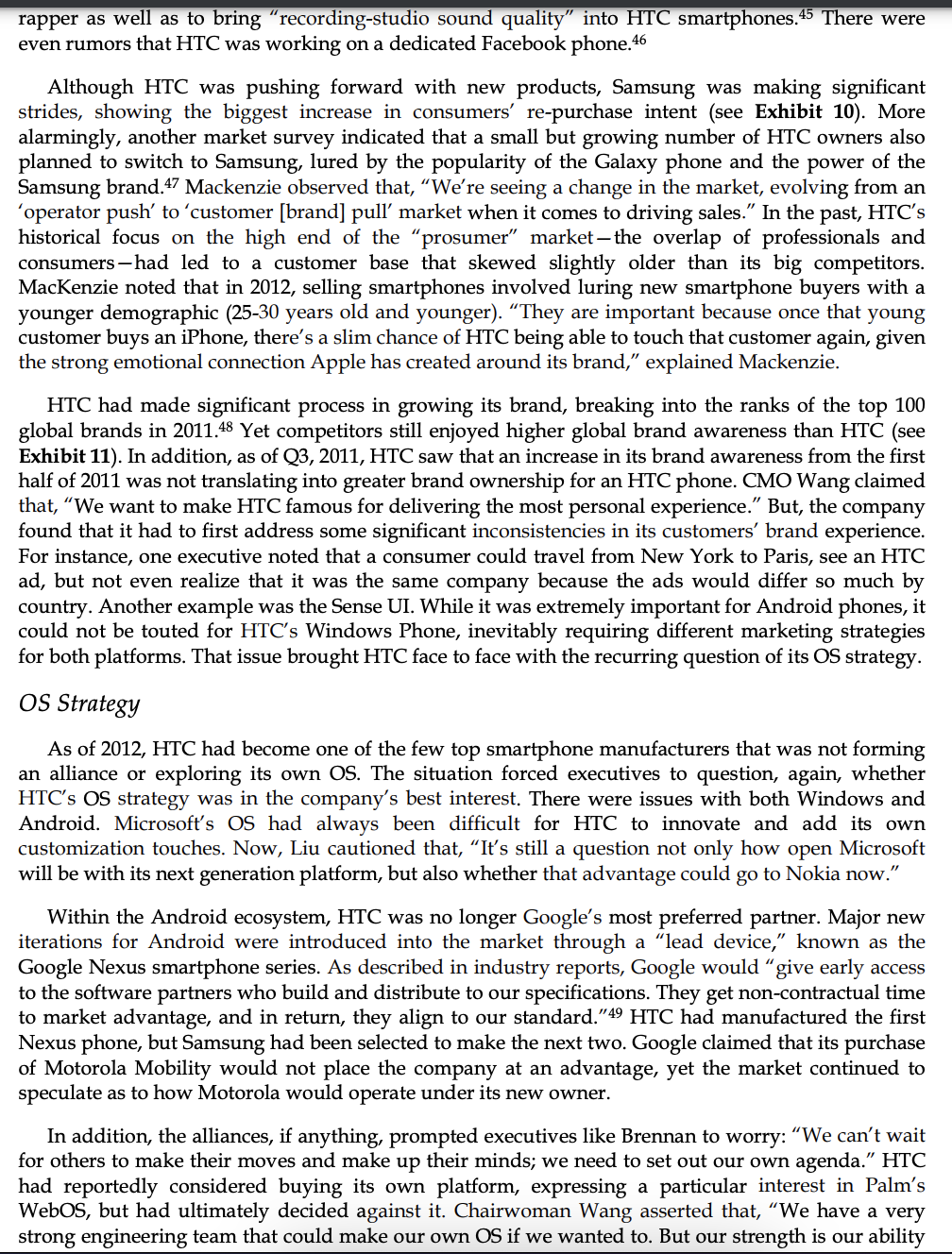
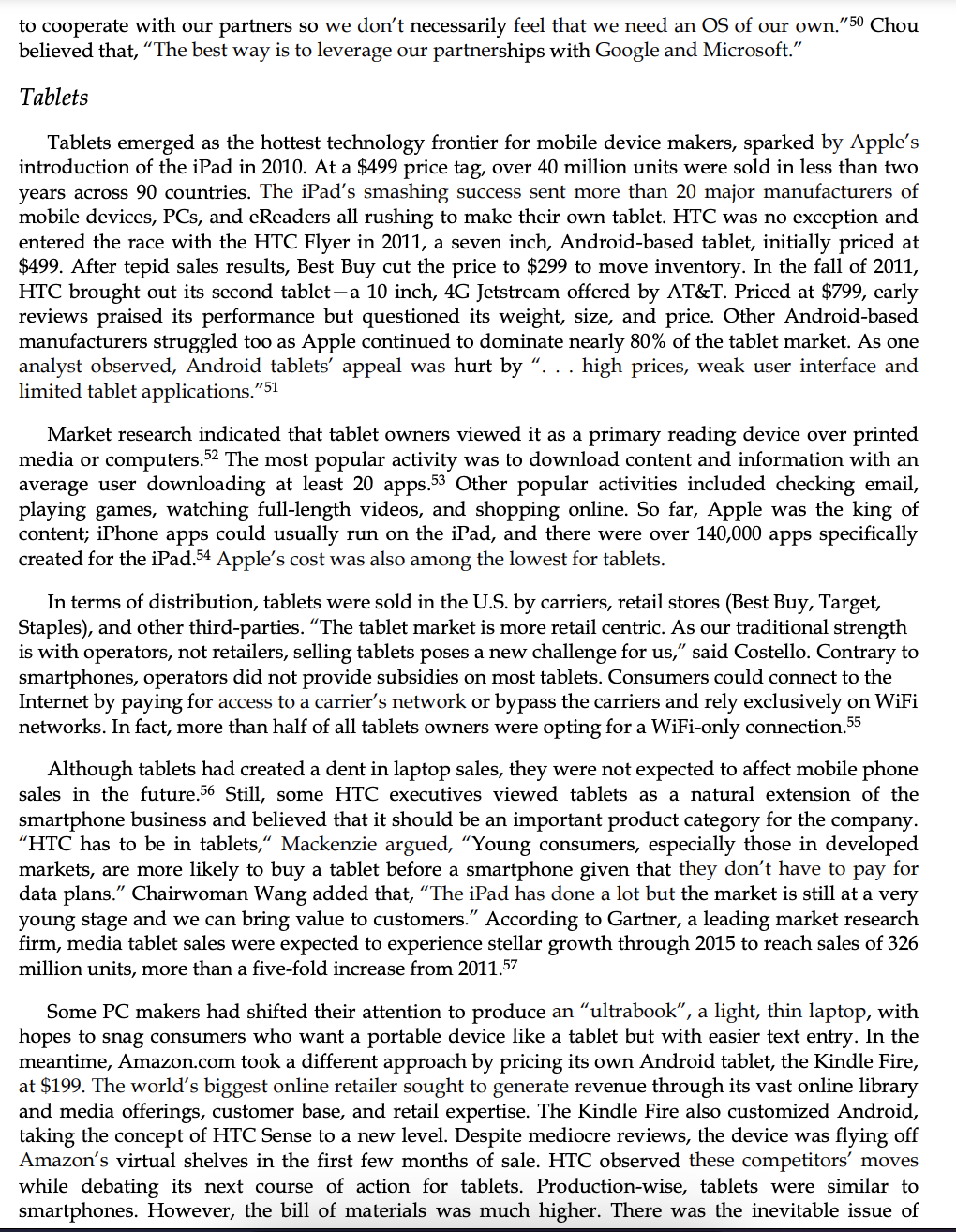
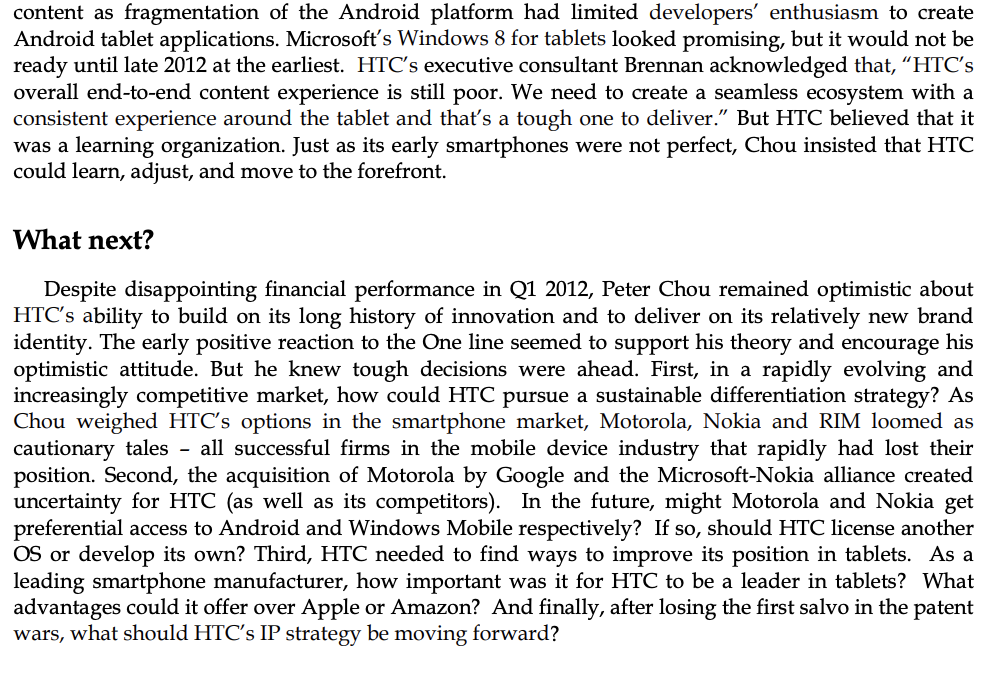
HTC Corp. in 2012 HTC Corp., Asia's second largest handset manufacturer based in Taiwan, was on a roll. By Q3, 2011, it had posted six consecutive quarters of record sales, driven by the popularity of HTC smartphones that ran on Android, Google Inc.'s operating system (OS). Under the slogan, Quietly Brilliant," HTC had entered the ranks of the top five smartphone manufacturers in the world and became one of the top 100 global brands?. Fast Company magazine picked HTC as one of the 50 most innovative companies in 2010, and then GSMA named HTC as the device manufacturer of the year in its global mobile awards in 2011.2 These were all remarkable achievements for a company that was still relatively unknown in the mid-2000s. At the same time, the company faced daunting challenges. HTC was tangled in patent infringement disputes with Apple Inc., which had hurt HTC's share price (see Exhibit 1). In addition, HTC's two main OS suppliers, Google and Microsoft, had allied themselves with competitors. Microsoft and Nokia entered a strategic partnership to put Microsoft's OS on Nokia smartphones while Google planned to buy Motorola's cellphone business for $12.5 billion. In the meantime, Samsung, which was smaller than HTC in smartphones in 2010, had surpassed everyone, becoming the world's largest smartphone company in Q3, 2011.3 Year-over-year growth for smartphones was around 61% in 2011, more than six times faster than the overall mobile phone market.4 Yet in Q1, 2012 HTC announced a 35% year-on-year drop in revenue that fueled a 70% decline in operating income. The continued success of the iPhone and intense competition in the Android camp, especially from Samsung, was taking a toll. Finally, Apple had taken the industry by storm with the iPad. Virtually every smartphone manufacturer had seen the need to enter the tablet market, but so far, none - including HTC - had made any significant headway. For the highly competitive CEO of HTC, Peter Chou, growing slower than the industry and seeing little progress in tablets was unacceptable. Chou told his top management team that in 2012, HTC needed to move to the next level. An important step in HTC's rebound was the announcement in February 2012 of the HTC One, a new flagship smartphone line, which received very favorable early reviews. Chou was confident that the new, greatly improved product line would get HTC back on track. However, big questions remained: how should HTC differentiate itself going forward? What would be the best strategic move for HTC, following the Microsoft and Google deals? How should HTC compete in tablets and mitigate the intellectual property wars? Chou knew that tough decisions lay ahead. History HTC was founded in May 1997 by HT Cho and Cher Wang in a windowless office located in Taoyuan County, Taiwan. Cho, a soft-spoken engineer with a solid reputation for his keen attention to details and quality, hailed from Digital Equipment Corp. (DEC), a former industry leader in minicomputers. His partner, Cher Wang, came from the legendary Wang family in Taiwan. The late Yung-Chiang Wang, Cher's father, became one of the wealthiest businessmen in Taiwan by founding Formosa Plastics Group and turning it into a massive business empire. Cher Wang herself started running her own company, VIA Technologies, in 1984. In fact, Forbes magazine identified her among the top-20 world's most powerful women in 2011.5 From PDAs to Wireless Devices HTC's initial business plan to manufacture notebook computers had a rocky start. One problem led to another, involving high production costs, technical glitches, and a lack of brand recognition. Losses quickly ballooned, prompting Wang to convince Cho to focus instead on handheld, computer- like devices. Wang first came up with the idea in the mid-1990s. She was waiting for a train at a remote station in France. Tired and weary from lugging around her heavy computer equipment, she started to fantasize about a small device that could do everything, from computer-based functions to mobile calls. She claimed that, As a woman, it's very important to carry things light. Everything has to be inside the device." Coincidently, over a luncheon with a general manager at Microsoft, Wang discovered that the software giant had developed Windows CE, a new platform that could run on smaller PC devices. However, it was grappling to gain acceptance in the market. Wang immediately offered to try and make a portable gadget that would operate on Windows CE. Peter Chou, a talented engineer who had also joined HTC from DEC, created a small team to undertake the job. A year later in 1998, Chou's team proudly created the world's first Microsoft pocket-size PC. A major breakthrough then came in 2000 with the iPAQ, a PDA that HTC engineered and designed for Compaq Computer.? Business professionals loved the iPAQ, the first color-screened PDA that ran on Microsoft Windows' CE platform. The success of the device enabled HTC to post its first profit in 2000 and go public two years later on the Taiwanese stock exchange. While PDAs came to represent more than 80% of HTC's total revenues, new product development efforts started to shift towards the mobile telecom market. The company subsequently pursued partnerships with chip suppliers like Qualcomm and Texas Instruments. A valuable opportunity to learn about software came through Handspring, which recruited HTC to help design and make the popular Treo smartphone. In addition, as John Wang, HTC's chief marketing officer, noted, "Microsoft really played a critical role in getting HTC into the doors by breaking down the barriers."8 With former Microsoft CEO Bill Gates praising HTC as the world's best hardware maker, Microsoft worked closely with HTC on new product developments, especially after HTC made a firm commitment to use the Windows platform. HTC and Microsoft's joint efforts led to the XDA, the first Windows-based smartphone, in 2002. It was sold by O2, a European carrier, and stood out for being a handset tailor-made for a network operator. Contract Manufacturing Business HTC's contract manufacturing business in the early 2000s was largely categorized into two main segments. One was the original design manufacturer (ODM) business for branded handset companies. The other segment was producing phones for wireless network operators. While HTC did both, it focused its resources on taking a highly customized approach with mobile operators to set HTC apart from other contract manufacturers. While companies like Nokia rarely customized phones for operators, We helped them (wireless carriers] build a unique value proposition and optimize their service by giving them phones that basically felt like their own products, explained Chou. For instance, one mobile network could request a phone with a black square case and a big keyboard, while a different operator could ask for the same phone in white, with a contour design and a slim keyboard. Certain functions on a handset would be modified as well, based on the operator's target geographic market. Carriers embraced HTC as they gained a greater sense of control over their product portfolio. HTC's willingness to listen to what we [operators) wanted was like a breath of fresh air, recalled Richard Brennan, a former Orange executive who later moved to HTC as a marketing consultant. Because HTC were bending over backwards to deliver, you wanted to make your relationship with HTC work and help the underdog become successful.10 After all, operators wanted phones that would generate low churn rates (number of customers switching to another network) and additional revenue via data services, such as text messaging. Such services generated an additional $5 in average revenue per user for the top rriers in 2005, helping to offset the decline in profit from basic voice services. 11 HTC's business boomed with major operator clients expanding to include British Telecom, Orange, and Vodafone (see Exhibits 2a and 2b). In the United States, HTC forged close relationships with T-Mobile, Sprint and Verizon Wireless, which became HTC's main carrier partners. Profits margins rose as high as 20% compared to the industry's average of around 5% in the mid-2000s. The early commitment to Windows had paid off with HTC shipping over 70% of the world's Windows Mobile Smartphones by 2006. Yet the landscape of the mobile phone industry was rapidly shifting, prompting a change in HTC's overall business strategy. New CEO and the Road to Brand If you really want to capture the value of innovation, you must have a brand identity. -Peter Chou 12 In 2006, HTC found itself at a critical juncture. Other Taiwanese competitors were rapidly catching up in the ODM market. Palm and HP, two of HTC's biggest non-operator customers, actively started to search for different partners that could make their products for less. But market forces were not the only winds driving changes at the company. Peter Chou took over the CEO helm from HT Cho. Chou was an ambitious, energetic general manager who had been groomed to become the next CEO by Cho and Wang. They even sent him to Harvard Business School for the Advanced Management Program in 2006. Chou was obsessed with electronic gadgets, claiming that [I] could go on an entire week without sleep toying with these gadgets."13 Nicknamed Mr. Perfect, Chou was zealous when it came to details. Engineers would enter his office with trepidation, knowing that their boss would pick out any minute design defect within seconds if a handset failed to meet Chou's high standards. With a relentless passion for innovation, Chou incubated a Silicon Valley-like culture within HTC. Engineers were encouraged to openly question and to collaborate with each other, breaking away from a more bureaucratic, hierarchical research structure. As one close observer noted, For Asian manufacturers, that was just completely foreign."14 The new CEO also took pride in running a quick, nimble organization. Andy Rubin, Google's senior vice president of mobile, recalled complaining that a new handset model needed a better physical keyboard to type. Five days later, Chou handed Rubin a modified model with a new backlight and grooves between the keys. I just couldn't believe it," said Rubin. The speed at which he can move I've never experienced it anywhere else."15 Perhaps more importantly, Chou set out a new, bold initiative for HTC-to brand and sell handsets under the company's own name. Chou believed that without some sort of brand, our business, international growth will be limited."16 Chairwoman Cher Wang agreed that branding HTC would help to set it apart from its competitors and gain greater control over the company's future. Several directors on the board disagreed. They worried that operators could view HTC as a competitor, creating a conflict of interest between HTC's own brand sales and customized phones for the operators. Marketing was a major concern, as HTC lacked the scale and budget to launch an aggressive worldwide publicity blitz like the ones Samsung and LG had pursued to gain greater brand recognition. Other managers argued that the risks were too great, given that HTC had flourished while operating quietly behind the scenes as an unknown brand. Yet Chou and Wang were determined to push forward and convinced HTC's board to take a chance. HTC's official brand strategy kicked off in 2007 with HTC branded phones available for sale in Europe and Asia. Through the $15 million acquisition of Dopod, a well-established brand name in Taiwan with a strong presence in Asia, HTC also started selling branded products in China. Average product life cycles were kept to around three quarters, shorter than other competitors, as HTC offered a wide range of handset models in order to gauge consumers' preferences and market reactions. Product Innovation While HTC ramped up its marketing expenditures, Chou and Wang believed that the key to creating a powerful brand was to produce cutting-edge smartphones. New product designers were recruited and an internal research center called Magic Labs was set up to drive innovation, especially in terms of software and product design. In fact, Magic Labs had come up with an exciting new technology - a touch-screen interface. A smartphone featuring this innovation, the HTC Touch, was targeted to launch by mid-2007. Then the unthinkable happened. In January 2007, Apple unveiled the iPhone-equipped with its own touch-screen technology. CMO Wang saw the announcement in his office and his jaw dropped. Next thing he knew, Chou came running excitedly into the lab. This, the CEO insisted, was a great opportunity. He saw Apple creating legitimacy for visual display and all the features associated with touch-screen technology, opening the door for HTC. HTC rushed to ship the first HTC Touch three weeks before the iPhone was released in June. Operators saw the Touch as an opportunity to offer the iPhone alternative, as only AT&T had the exclusive rights to the iPhone in the U.S. HTC's next model, the Touch Diamond, delivered a more solid mobile Internet experience with a quicker processing speed and attractive 3D interface. The product quickly emerged as HTC's hero product of 2008. Positive market responses to the Touch series phone gave HTC confidence to completely exit the traditional contract manufacturing business and keep pursuing its own brand strategy. Reaching Out to Google Amid praise for the Touch Diamond, product reviews inevitably addressed the shortcomings of the Windows Mobile platform. As a Wall Street Journal review noted, [D]espite its [the Diamond's] handsome TouchFLO 3D software and animated icons...this device failed to disguise the frustrating interface of Windows Mobile."17 HTC pondered possible options for its OS strategy, which led the company to swiftly team up with Google to make the world's first handset to run on Android. The concept behind Android was highly appealing-a free, open-source platform with the potential to run on any wireless network. As it stood, licensing payments to Microsoft represented the second- biggest expense category for HTC. From Google's point of view, Rubin said HTC was compelling because There are usually not a lot of people at the top who drive innovation from the top all the way down to the company, said Rubin. "But I saw that in Peter." The first Android handset, known as the G1, was launched in October 2008. It sold more than a million units within the first quarter of sales in two countries as Android came to revolutionize the mobile device industry. The Mobile Device Industry Mobile devices had experienced explosive growth over the previous decade, thanks to technological innovation, increased competition, wider service coverage, and lower prices. While mobile phones represented the most popular mobile device product, the category had extended into different areas as well, including media players, e-readers, and tablets. Within the mobile phone category, basic phones bare-bones, low-cost handsets were considered the first major category that was commercialized by consumers. These were still popular in developing countries for making communications accessible and affordable. In more advanced nations, the industry progressed to feature phones in the late 1990s. Feature phones came in more attractive product designs and integrated user-friendly features such as a slide out keyboard for easy texting. These mid-priced phones were also loaded with popular multimedia functions, such as a digital camera and music player. Product life cycles were short six to nine months as consumers came to perceive mobile phones as a fashion accessory, even a lifestyle statement. A market observer described it as a soup du jour: Today one brand is hot, and tomorrow it's leftover."18 In the United States, the Big Two operators Verizon Wireless and AT&T-collectively owned 66% of the $160 billion market as of Q1, 2011.19 While many operators around the world would sell consumers a SIM card, which could be used any compatible phone, U.S. wireless networks were locked; in essence, a Verizon customer could only use a phone approved by Verizon on Verizon's network. Subsidies played a big role as well, bringing down the consumer price tag by as much as half for a hero product. Operators usually recouped subsidies through service plans, such as binding a consumer to a two-year contract with an early termination fee. In contrast, about half of the European market was unlocked"; a mobile phone could be used on multiple carrier networks. Consumers tended to be more loyal to handset makers, while operators competed on calling price packages and services. Subsidies were not as prominent as in the U.S. Pre- paid payment plans, also known as pay as you go, were very popular outside the U.S., usually offering low-cost plans with no minimum contract term that appealed to a younger demographic. Smartphones While market saturation and price wars had led to weaker profit margins across the industry, smartphones became the most profitable and fastest growing segment within the mobile device industry. Smartphones took off around 2008 as devices that seized full advantage of high-speed mobile Internet access, faster wireless data downloads, and constant connectivity offered by 3G and 4G networks. Better productivity tools, such as push e-mail that delivered mail in real-time, integrated mobile data access and information into an essential part of smartphone users' daily lives. Handsets were modified with larger display screens and higher screen quality to support web-based functions. Such features started to attract retail consumers to smartphones as well, expanding the scope of potential buyers from the market's initial focus on corporate clients. Worldwide, demand was anticipated to surpass one billion units and represent half of the entire mobile phone market by 201520 (see Exhibit 3). In the United States, smartphone usage had already picked up more quickly than other regions in the world with 40% of all mobile phone users owning a smartphone as of July 2011.21 Carriers, which had usually provided subsidies in the $70 to $150 range back in 2008, had helped to motivate customers to buy their first smartphone by offering more generous subsidies.22 They also picked a 'lead device' to subsidize at the higher end (near $250) and channel their marketing and sales efforts behind that handset as part of their operator push business strategy. Other smartphones, especially those in the mid-tier range, were left to fight for whatever was left out of the operators' subsidy budget and attention. One of the main features that set a smartphone apart from a feature phone was the platform. Either proprietary or open-sourced, the platform allowed third-party software developers to create a variety of apps, whether it was for entertainment or business productivity or music. Feature phones, on the other hand, came with a proprietary platform that was usually fixed and could not be upgraded. Smartphones also supported WiFi, which allowed streaming videos or Web browsing. The smartphone market was largely defined by two business approaches (see Exhibit 4). Under the vertical model, a company exerted control over both the hardware and the software. This approach was taken in various degrees by Apple and RIM. The horizontal model, adopted by several handset manufacturers (HTC and Motorola Mobility) was more similar to the PC market; different companies specialized at each level of the value chain. Competition was intense at each level, and players had to deal with multiple licenses that were usually protected by intellectual property rights. Some companies, such as Nokia, had wandered between both approaches at various stages. Meanwhile, all companies were involved in creating their own service platforms. Smartphone Operating Systems and their Ecosystems In 2012, most smartphones were associated with two dominant platforms: Google's Android and Apple's iOS (see Exhibit 5), which both gained significant market share at the expense of Windows Phone, RIM's Blackberry, and Symbian. Apple's iOS With the introduction of the iPhone in 2007, Apple revolutionized the way people used a mobile device. Competitors' smartphones were gauged by how their functions and ease of use measured up to the iPhone, which became the benchmark for the industry. The iPhone's iOS was a proprietary platform based on touch screen technology. As of Q3, 2011, iOS owned 15% of the worldwide smartphone OS market (see Exhibit 5). Sales were growing in emerging markets, driven by price cuts of earlier iPhone models. iOS's growth had also strongly benefitted from Apple's decision to switch from exclusive to multiple carrier arrangements in most countries. Carriers were eager to offer the iPhone as well. Sprint, for example, agreed to pay Apple $15.5 billion over four years for the iPhone; Sprint's CEO Dan Hesse noted that the deal was . ... worth every penny."23 In the U.S., operators offered a subsidized iPhone 4S (16GB) for $199 for a two-year contract; an un- locked, non-subsidized iPhone model could cost $649. The iPhone was known for its expansive content offerings and ecosystem, which included music, documents, ebooks, and photos. In particular, the Apple App Store was a major game changer for unifying a lackluster, highly fragmented market for apps into a central hub. It served as a gateway for third-party developers to write apps and maximize their outreach to consumers. While the majority of apps were either free or cost 99 cents, no app could appear in the Store without Apple's approval. As of September 2011, 18 billion downloads had been made from a selection of over 500,000 apps. To further expand the Apple ecosystem, iCloud was released in 2011. iCloud seamlessly synchronized content stored on users' devices as long as they were Apple devices (Mac books, iPod, iPhone, iPad). Another unique offering was Siri. It turned the iPhone into a virtual personal assistant by sending messages, searching for information, or even playing a song according to a user's voice command. Google's Android Since its debut in 2008, Google's Android had created a storm. It was free and open for customization, allowing device manufacturers to modify Android according to their needs. A consortium of 84 handset makers, chips makers, and operators, known as the Open Handset Alliance, backed the platform. As the number of Android phones exploded, developers saw a market potentially larger than Apple with fewer restrictions. The combination of such factors powered the platform to become the most popular smartphone OS, securing 52% of the worldwide market as of Q3, 2011. Rubin claimed that more than 700,000 Android devices were activated every day 24 Android-powered tablets and notebooks streamed out into the market as well. The Android Market offered over 300,000 apps which were restricted to Google authorized phones, such as those who owned an Android based phone and had a Gmail account. Google lagged behind Apple in terms of the total number of downloaded apps (see Exhibit 4). Android also fell behind in terms of revenues for developers: software developers reportedly generated roughly 10 times more revenues on the iPhone than on Android phones in 2011.25 At the same time, fragmentation emerged as a key concern. Several versions of the OS simultaneously floated around the market. Market research in October 2011 indicated that at least 16 out of 18 Android phones in the U.S. would never get the current version of Android.26 It was ultimately up to handset manufacturers and carriers to pass along the updates to the end-users, but they lacked the incentive to do so once a smartphone was sold. Fragmentation ignited problems for developers who frequently ended up releasing apps that ran on outdated software. Developers fretted about whether their apps could operate on various devices that came in different specs and capabilities. In response, Google indicated that Ice Cream Sandwich," an Android update released in October 2011, was designed to address most of these issues. It was reportedly optimized to run on both tablets and smartphones, and offered a one-size-fits-all approach for different screen sizes. Microsoft's Windows Phone The Seattle-based software giant was engaged in an uphill battle with mobile devices, contrary to the dominance Microsoft enjoyed with PCs. Windows Mobile, the predecessor to Windows Phone, existed in the market for years before iOS or Android came along. But Microsoft's platform faltered as smartphone users actively sought platforms that provided easy web access, and functionality as both a work and a personal entertainment device. The UI was criticized for being clunky, difficult to use, and slow to evolve. The OS also came with a licensing fee-estimated at $8 to $15 per phone. Amid slipping market share and weak support from carriers, a completely revamped platform named Windows Phone debuted in 2010. Reviewers praised the vastly improved UI and tight integration with Microsoft Office, but the platform did not take-off. Then in February 2011, Microsoft announced that Windows Phone would become the future platform for Nokia smartphones. Under the agreement, Microsoft received royalty payments from Nokia; in return, Nokia reportedly would get over $1 billion to market and develop Windows Phones. The agreement was not exclusive and Microsoft continued to work with other handset manufacturers. In terms of apps, Microsoft dropped the $99 developer fee for its app store, Windows Marketplace, and planned to consolidate it with Nokia's Ovi Store. Windows Marketplace featured around 30,000 apps as of late 2011. Industry observers commented that No matter how good Windows Phone 7 gets, it doesn't stand a chance unless it can get more app developers on board."27 RIM's BlackBerry OS RIM was best known for its prized product, the BlackBerry, which was first introduced in 1999. The Canadian company had built a large, loyal business customer base with a stellar reputation for its email service, convenient keyboard, and instant messaging feature. Large corporations willingly paid extra data charges for RIM's secure enterprise communication service, which led to hefty margins for RIM (see Exhibit 6). However, RIM's once dominant market position in the U.S. market eroded dramatically in 2010 and 2011. The OS had been slow to deliver a satisfactory mobile Internet experience. New product delays, weak shipments, layoffs, and service outages across five continents marred RIM's brand image. To offset declining sales, RIM aggressively targeted new markets in countries like India, Argentina, and Brazil where the BlackBerry was still considered a prestigious brand. Yet RIM struggled to impress investors and consumers in 2011, especially after RIM announced that phones operating on its new OS, called QNX, would not be available until the latter half of 2012.28 Ongoing trouble led to the resignation of the company's duel CEOs, and triggered rumors of possible takeovers by Amazon, Microsoft and/or Nokia. The Wall Street Journal reported that RIM was exploring many strategic options, including licensing its new OS to other handset makers, such as Samsung and HTC.29 In terms of apps, RIM's BlackBerry App World reportedly had the fewest downloads among the major app stores. One issue was that previous versions were primarily designed to support email, and thus failed to gain traction with app developers. To boost RIM's app offering, RIM planned to allow users to run Android apps on RIM devices. Others With the Microsoft deal, Symbian was expected to retire from the OS market. Nokia's internally-developed platform had been rapidly losing market share. Palm's WebOS was released in 2009 as Palm's last ditch effort to revive itself. Reviews were encouraging but sales failed to rescue Palm. It ended up with a new owner, Hewlett Packard (HP), for a price tag of $1.2 billion in 2010. In late 2011, HP said that it would release the source code for WebOS and turn it into an open source program, similar to Android. Meanwhile, another open-sourced, free platform, Tizen was announced in 2011. It was backed by Intel and Samsung Electronics and essentially replaced MeeGo, a short- lived platform project pursued by Intel and Nokia. Smartphone Handset Manufacturers Nokia Finland-based Nokia was the world's biggest handset manufacturer by volume with a strong international customer base. Nokia carved out a name for itself in the 1990s through its attractive feature phones. Low-cost phones produced based on only a few standard models also played a big role in helping Nokia achieve economies of scale that were difficult to find elsewhere. Business in the next decade told a different story as the company found itself caught in a downward spiral for missing the initial smartphone revolution. In the U.S., Nokia's unwillingness to work with carriers' customization demands led to unsubsidized, higher-priced phones. Nokia's smartphones operated on Symbian, which was considered archaic compared to its rivals. As a result, Nokia lacked support from software developers and carriers. Amid faltering sales and shrinking margins, a new CEO, Stephen Elop, was appointed in September 2010 (see Exhibit 6). Elop, a former Microsoft executive, cut thousands of jobs and made the radical decision to abandon Symbian and commit to Microsoft's new phone OS. The first Nokia smartphone to run on Microsoft appeared in Q4 2011. While Microsoft and Nokia proclaimed their satisfaction with early sales, Nokia's market share continued to fall rapidly. Samsung Electronics Mobile devices were only one division of Samsung's sprawling business empire, which also encompassed chips, computers, TVs, and consumer appliances. Within the smartphone segment, despite its late entry in the market, Samsung propelled forward worldwide with slick new designs on the Android platform. In 2011, Samsung hit a homerun with its flagship Android phone, the Galaxy S2; it broke Samsung's own sales record by reaching ten million units within five months.30 The Galaxy S2 was as one of the lightest and brightest smartphones, which also incorporated 4G (LTE) technology. The Galaxy used Samsung's internally developed Super Amoled screen, widely considered the brightest in the industry. Analyst reports estimated that smartphones were generating as much as 80% of the mobile division's operating profits.31 While Android represented a keystone behind Samsung's OS strategy, the company also worked with Windows Phone, Tizen, and Bada, a platform created by Samsung itself. Bada-operated phones were available in Asia and Europe; Samsung sold two million Bada phones compared to over 40 million Android-powered phones in 2010.32 To date, the Samsung app store lacked a significant developer community and generated low traffic. In response, Samsung said that it would open up Bada to any developer from 2012. The company was also gearing up its software capabilities and expanding cloud services, such as those related to media and content distribution. Others New competition emerged from Chinese companies like Huawei and ZTE. They were producing cheap but relatively capable Android phones (below $100) that were selling well in China and other emerging markets. Meanwhile, LG Electronics was racing to change its image as a laggard and come up with handsets that would reverse operating losses. Sony Ericsson, another ailing player, tried to catch up with competitors through a corporate shake-up. In October 2011, Sony said it would buy out joint venture partner Ericsson's shares for around $1.5 billion, gaining control over its mobile phone business. Finally, Motorola Mobility, withering away amid lack of scale and poor operating margins, was rescued by Google in 2011 and announced that it would operate independently from Android. Its popular Razr handset was redesigned into the thinnest Android smartphone on the market in late 2011 and was featured as Verizon Wireless' "hero" phone. The Patent Wars By 2012, intellectual property had become the newest battlefront for smartphones (see Exhibit 7). Apple, in particular, triggered an aggressive round of litigations against makers of Android devices, starting with HTC and then Samsung. Steve Jobs was quoted in his biography as saying, ... I will spend every penny of Apple's $40 billion in the bank ($80 billion as of 2011), to right this wrong. I'm going to destroy Android, because it's a stolen product. I'm willing to go to thermonuclear war on this."33 Since HTC was Google's partner, it bore the brunt of Job's rage. Most of the patents in question related to the iPhone's interface and hardware. HTC subsequently filed a counter suit against Apple. Then in December 2011, the U.S. International Trade Commission (ITC) ruled that HTC was violating one out of the ten Apple patents in question. An import ban on the affected products would go into effect in April 2012, unless HTC removed the intellectual property from its phones. Despite the adverse ruling, an import ban was unlikely: HTC's general council Grace Lei stated that the patent "... is a small UI experience and HTC will completely remove it from all our phones..."34 The ruling was subject to appeal and a presidential review. Separately, HTC bought S3 Graphics for $300 million, based on a strong belief that Apple was infringing on S3's patents.35 The ITC ruled against S3's favor in November 2011, only to announce a re-evaluation of the case the following month Microsoft entered into negotiations with both Samsung and HTC, claiming that they infringed on its patents related to mobile phones. Both companies agreed to pay Microsoft royalties on their Android devices. The timing of Samsung's deal, which came after Google said it would buy Motorola Mobility, was highlighted in several reports, citing that, "Samsung's willingness to pay royalties to Microsoft ... raised a question about the effectiveness of Google's efforts to provide legal protection to Android hardware makers."36 Android, given Google's short history in wireless mobile technology, had a miniscule patent portfolio compared to other platforms. Prior to buying Motorola, Google tried to acquire some 6,000 patents owned by bankrupt Nortel Networks. Google ultimately lost to a $4.5 billion offer from a consortium, which included Apple, Microsoft, RIM, and Sony. In theory, Google could use Motorola's patents (over 10,000 with several thousand patent applications also under review) to try to protect the Android platform as the number of companies using Android to make various mobile devices continued to balloon. Strategic Challenges HTC had grabbed significant market share in smartphones by offering a unique UI, different products for every carrier with a wide range of form factors (with or without keyboards, different sizes, etc.), moving early in 36 and 4G phones, and most significantly, being first out of the block with Android. But by 2012, many competitors were offering Android phones with the latest technologies. Samsung surpassed HTC to become the number one vendor of Android phones in the world. Moreover, sales of Apple's iPhone 4S proved that its appeal was stronger than ever. As one market analyst observed, Now ... [HTC is] ... butting heads against others who so far have been immovable."37 Financial results indicated that HTC's sales volume was still robust, yet operating margin had slipped to around 15%, nearly a ten percentage point drop from 2007 (see Exhibit 8). The average selling price (ASP) for HTC smartphones was coming under pressure as well (see Exhibit 9). HTC's Chief Financial Officer explained that operating margins were being affected by an increase in HTC's marketing expense. He claimed that it was significant (around 8% of sales in 2011) but necessary to expand the brand and build awareness in new emerging markets. Even so, intense competition meant that HTC had to somehow differentiate itself to stay ahead, leading the company to address multiple strategic challenges going forward. Product Portfolio As the company performance weakened in 04, 2011, HTC executives re-examined the product portfolio and searched for ways to drive down costs. One obvious target was to streamline the number of products it sold. HTC had nearly 50 different models across the globe with an average product cycle of nine months. The company's highly customized approach created additional costs, such as reducing the number of common components that could be used among HTC devices. Matthew Costello, HTC's chief operating office, insisted that: "We are a very customer centric company. But we have to strike a better balance between producing dedicated specific products for customers vs. having a few iconic products of our own." 38 Costello estimated that fewer handset models would ultimately lead to an extra 10% in savings through bill of materials. Perhaps more importantly, for Android phones, numerous phone form factors created problems with application developers as changes in screen size, or input device (keyboard vs. touch screen) required re-writing a code for each handset model. Ideally, HTC wanted hero phones that could drive volume to create greater scale. For instance, Samsung took one major base model, the Galaxy, and drove it across the board, making only slight modifications for different markets. Yet some HTC managers cautioned that streamlining the product line could affect its relationship with operators. HTC had shown a willingness to work with carriers' customization requests more than any other hardware manufacturer. Fred Liu, HTC's president of operation and engineering, described the challenge as, Operators want exclusiveness. But now we have to persuade them to create brand value for HTC's own sales."39 Chou agreed, but added that, We need to convince people that we have a great product and great quality ... brand images that we will have to create from differentiation." 40 Nonetheless, HTC took the first step to rationalize its product portfolio with the introduction of the One series - its intended hero product - in Spring 2012. The HTC One included the latest Google operating system, one of the fastest mobile processors, a sleek carbonite body and one of the most advanced digital cameras. Early reviews were widely positive: one review noted HTC One X brings so many firsts for both company and industry, that a climb to the top of the food chain may be a walk in the park."41The HTC One started shipping in April 2012. Differentiation HTC had taken a number of distinct paths to drive differentiation for its products but stood out the most from other Android manufacturers with HTC Sense. It was an internally developed layer of software on top of Android that included a superb UI as well as applications (for emailing, screen locking, dialing, and picture taking among others) that provided a unique experience to HTC's users. Sense is all about making our phones more personal, claimed CMO Wang.42 For example, Sense allowed a user's home screen to be customized - an email-focused interface for the work week, and then configured to a social network-oriented screen for the weekend. A phone sensed that it was inside a handbag and rang louder. Or, a friend's latest social network status automatically appeared on the screen when he/she called. Another popular feature of Sense was Friend Stream, which put all the user's social network accounts into one place, making it easy to view and post updates. With the extra software, HTC's phones run smoother, are more intuitive, user friendly and fun to use, Chou said enthusiastically. Market survey results on these additional personal touches via the Sense UI resonated well with HTC customers. HTC was second to Apple in terms of users' overall satisfaction rate in several categories with more than 62% of its consumers willing to re-purchase an HTC phone (see Exhibit 10). Scott Croyle, HTC's chief designer, claimed that HTC Sense has clearly offered not only a differentiated experience; but an experience that is remarkably more capable and sophisticated than Android."43 In addition to Sense, HTC turned to media content and services to further distinguish itself from the crowd. Jason Mackenzie, HTC president for global sales and marketing, claimed that, In the future, it's all about building a 'wow' user experience around the whole ecosystem, such as how we are integrated with third party apps, content, and the cloud."44 To build a more unique experience, HTC had spent more than $700m on acquisitions in 2010 and 2011. For instance, Dashwire had the technology for users to backup their photos and other data in the cloud (storage over the Internet that did not require physical storage on the user's end), a feature made available in the One series. The purchase of Saffron Digital promised to add to HTC's streaming video capabilities. CEO Chou indicated that HTC would continue to search for new acquisition targets. In addition to content, HTC bought a majority stake in Beats by Dr. Dre, which allowed HTC to leverage Dr. Dre's cool image as a rapper as well as to bring recording-studio sound quality" into HTC smartphones.45 There were even rumors that HTC was working on a dedicated Facebook phone.46 Although HTC was pushing forward with new products, Samsung was making significant strides, showing the biggest increase in consumers' re-purchase intent (see Exhibit 10). More alarmingly, another market survey indicated that a small but growing number of HTC owners also planned to switch to Samsung, lured by the popularity of the Galaxy phone and the power of the Samsung brand.47 Mackenzie observed that, We're seeing a change in the market, evolving from an 'operator push' tocustomer (brand) pull market when it comes to driving sales. In the past, HTC's historical focus on the high end of the prosumer market the overlap of professionals and consumers had led to a customer base that skewed slightly older than its big competitors. MacKenzie noted that in 2012, selling smartphones involved luring new smartphone buyers with a younger demographic (25-30 years old and younger). They are important because once that young customer buys an iPhone, there's a slim chance of HTC being able to touch that customer again, given the strong emotional connection Apple has created around its brand, explained Mackenzie. HTC had made significant process in growing its brand, breaking into the ranks of the top 100 global brands in 2011.48 Yet competitors still enjoyed higher global brand awareness than HTC (see Exhibit 11). In addition, as of Q3, 2011, HTC saw that an increase in its brand awareness from the first half of 2011 was not translating into greater brand ownership for an HTC phone. CMO Wang claimed that, We want to make HTC famous for delivering the most personal experience." But, the company found that it had to first address some significant inconsistencies in its customers' brand experience. For instance, one executive noted that a consumer could travel from New York to Paris, see an HTC ad, but not even realize that it was the same company because the ads would differ so much by country. Another example was the Sense UI. While it was extremely important for Android phones, it could not be touted for HTC's Windows Phone, inevitably requiring different marketing strategies for both platforms. That issue brought HTC face to face with the recurring question of its OS strategy. OS Strategy As of 2012, HTC had become one of the few top smartphone manufacturers that was not forming an alliance or exploring its own OS. The situation forced executives to question, again, whether HTC's OS strategy was in the company's best interest. There were issues with both Windows and Android. Microsoft's OS had always been difficult for HTC to innovate and add its own customization touches. Now, Liu cautioned that, It's still a question not only how open Microsoft will be with its next generation platform, but also whether that advantage could go to Nokia now. Within the Android ecosystem, HTC was no longer Google's most preferred partner. Major new iterations for Android were introduced into the market through a lead device, known as the Google Nexus smartphone series. As described in industry reports, Google would "give early access to the software partners who build and distribute to our specifications. They get non-contractual time to market advantage, and in return, they align to our standard."49 HTC had manufactured the first Nexus phone, but Samsung had been selected to make the next two. Google claimed that its purchase of Motorola Mobility would not place the company at an advantage, yet the market continued to speculate as to how Motorola would operate under its new owner. In addition, the alliances, if anything, prompted executives like Brennan to worry: We can't wait for others to make their moves and make up their minds; we need to set out our own agenda. HTC had reportedly considered buying its own platform, expressing a particular interest in Palm's WebOS, but had ultimately decided against it. Chairwoman Wang asserted that, We have a very strong engineering team that could make our own OS if we wanted to. But our strength is our ability "50 Chou to cooperate with our partners so we don't necessarily feel that we need an OS of our own. believed that, The best way is to leverage our partnerships with Google and Microsoft." Tablets Tablets emerged as the hottest technology frontier for mobile device makers, sparked by Apple's introduction of the iPad in 2010. At a $499 price tag, over 40 million units were sold in less than two years across 90 countries. The iPad's smashing success sent more than 20 major manufacturers of mobile devices, PCs, and eReaders all rushing to make their own tablet. HTC was no exception and entered the race with the HTC Flyer in 2011, a seven inch, Android-based tablet, initially priced at $499. After tepid sales results, Best Buy cut the price to $299 to move inventory. In the fall of 2011, HTC brought out its second tablet-a 10 inch, 4G Jetstream offered by AT&T. Priced at $799, early reviews praised its performance but questioned its weight, size, and price. Other Android-based manufacturers struggled too as Apple continued to dominate nearly 80% of the tablet market. As one analyst observed, Android tablets' appeal was hurt by . . high prices, weak user interface and limited tablet applications."51 Market research indicated that tablet owners viewed it as a primary reading device over printed media or computers.52 The most popular activity was to download content and information with an average user downloading at least 20 apps.53 Other popular activities included checking email, playing games, watching full-length videos, and shopping online. So far, Apple was the king of content; iPhone apps could usually run on the iPad, and there were over 140,000 apps specifically created for the iPad.54 Apple's cost was also among the lowest for tablets. In terms of distribution, tablets were sold in the U.S. by carriers, retail stores (Best Buy, Target, Staples), and other third-parties. The tablet market is more retail centric. As our traditional strength is with operators, not retailers, selling tablets poses a new challenge for us, said Costello. Contrary to smartphones, operators did not provide subsidies on most tablets. Consumers could connect to the Internet by paying for access to a carrier's network or bypass the carriers and rely exclusively on WiFi networks. In fact, more than half of all tablets owners were opting for a WiFi-only connection.55 Although tablets had created a dent in laptop sales, they were not expected to affect mobile phone sales in the future.56 Still, some HTC executives viewed tablets as a natural extension of the smartphone business and believed that it should be an important product category for the company. HTC has to be in tablets, Mackenzie argued, Young consumers, especially those in developed markets, are more likely to buy a tablet before a smartphone given that they don't have to pay for data plans. Chairwoman Wang added that, The iPad has done a lot but the market is still at a very young stage and we can bring value to customers." According to Gartner, a leading market research firm, media tablet sales were expected to experience stellar growth through 2015 to reach sales of 326 million units, more than a five-fold increase from 2011.57 Some PC makers had shifted their attention to produce an ultrabook, a light, thin laptop, with hopes to snag consumers who want a portable device like a tablet but with easier text entry. In the meantime, Amazon.com took a different approach by pricing its own Android tablet, the Kindle Fire, at $199. The world's biggest online retailer sought to generate revenue through its vast online library and media offerings, customer base, and retail expertise. The Kindle Fire also customized Android, taking the concept of HTC Sense to a new level. Despite mediocre reviews, the device was flying off Amazon's virtual shelves in the first few months of sale. HTC observed these competitors' moves while debating its next course of action for tablets. Production-wise, tablets were similar to smartphones. However, the bill of materials was much higher. There was the inevitable issue of content as fragmentation of the Android platform had limited developers' enthusiasm to create Android tablet applications. Microsoft's Windows 8 for tablets looked promising, but it would not be ready until late 2012 at the earliest. HTC's executive consultant Brennan acknowledged that, HTC's overall end-to-end content experience is still poor. We need to create a seamless ecosystem with a consistent experience around the tablet and that's a tough one to deliver. But HTC believed that it was a learning organization. Just as its early smartphones were not perfect, Chou insisted that HTC could learn, adjust, and move to the forefront. What next? Despite disappointing financial performance in Q1 2012, Peter Chou remained optimistic about HTC's ability to build on its long history of innovation and to deliver on its relatively new brand identity. The early positive reaction to the One line seemed to support his theory and encourage his optimistic attitude. But he knew tough decisions were ahead. First, in a rapidly evolving and increasingly competitive market, how could HTC pursue a sustainable differentiation strategy? As Chou weighed HTC's options in the smartphone market, Motorola, Nokia and RIM loomed as cautionary tales - all successful firms in the mobile device industry that rapidly had lost their position. Second, the acquisition of Motorola by Google and the Microsoft-Nokia alliance created uncertainty for HTC (as well as its competitors). In the future, might Motorola and Nokia get preferential access to Android and Windows Mobile respectively? If so, should HTC license another OS or develop its own? Third, HTC needed to find ways to improve its position in tablets. As a leading smartphone manufacturer, how important was it for HTC to be a leader in tablets? What advantages could it offer over Apple or Amazon? And finally, after losing the first salvo in the patent wars, what should HTC's IP strategy be moving forwardStep by Step Solution
There are 3 Steps involved in it
1 Expert Approved Answer
Step: 1 Unlock

Question Has Been Solved by an Expert!
Get step-by-step solutions from verified subject matter experts
Step: 2 Unlock
Step: 3 Unlock
 Study Help