







Question: by using jamovi answer the given question, give assumption, advantage and disadvantage, give recommendation min 500 words 75 marks jamovi result Engineering faces a serious
by using jamovi answer the given question, give assumption, advantage and disadvantage, give recommendation
min 500 words 75 marks
jamovi result
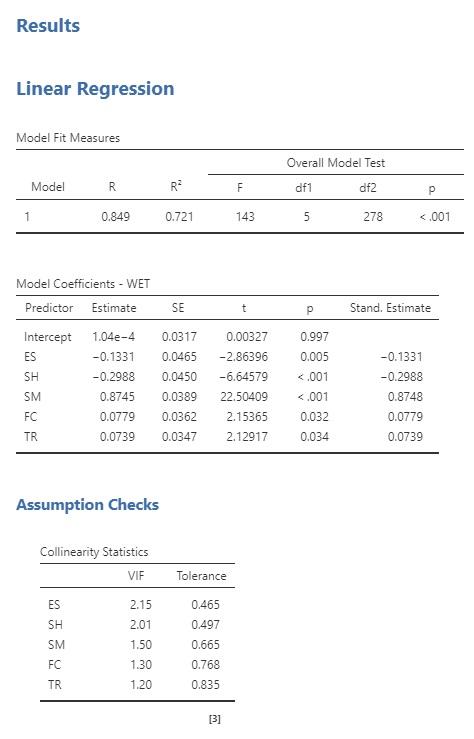
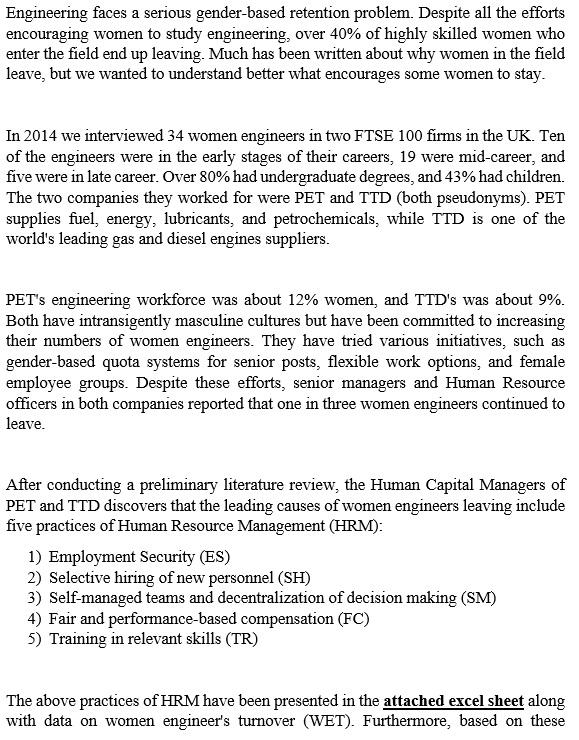
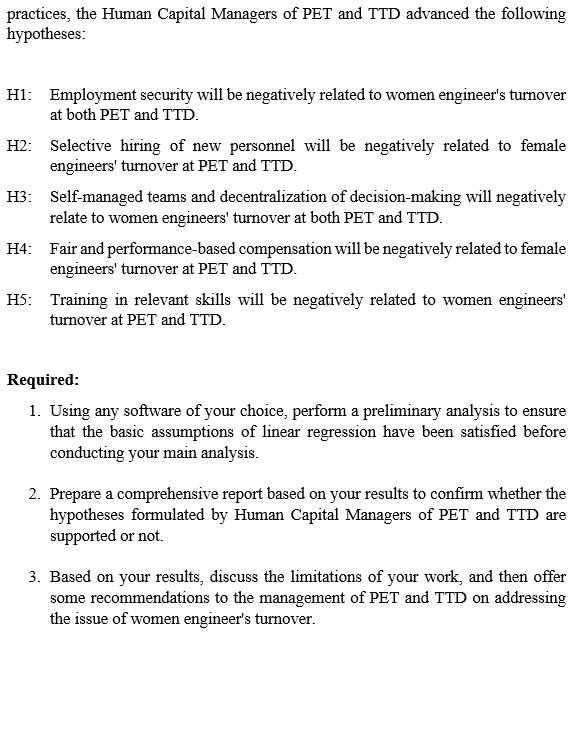
Engineering faces a serious gender-based retention problem. Despite all the efforts encouraging women to study engineering, over 40% of highly skilled women who enter the field end up leaving. Much has been written about why women in the field leave, but we wanted to understand better what encourages some women to stay. In 2014 we interviewed 34 women engineers in two FTSE 100 firms in the UK. Ten of the engineers were in the early stages of their careers, 19 were mid-career, and five were in late career. Over 80% had undergraduate degrees, and 43% had children. The two companies they worked for were PET and TTD (both pseudonyms). PET supplies fuel, energy, lubricants, and petrochemicals, while TTD is one of the world's leading gas and diesel engines suppliers. PET's engineering workforce was about 12% women, and TTD's was about 9%. Both have intransigently masculine cultures but have been committed to increasing their numbers of women engineers. They have tried various initiatives, such as gender-based quota systems for senior posts, flexible work options, and female employee groups. Despite these efforts, senior managers and Human Resource officers in both companies reported that one in three women engineers continued to leave. After conducting a preliminary literature review, the Human Capital Managers of PET and TTD discovers that the leading causes of women engineers leaving include five practices of Human Resource Management (HRM): 1) Employment Security (ES) 2) Selective hiring of new personnel (SH) 3) Self-managed teams and decentralization of decision making (SM) 4) Fair and performance-based compensation (FC) 5) Training in relevant skills (TR) The above practices of HRM have been presented in the attached excel sheet along with data on women engineer's turnover (WET). Furthermore, based on these practices, the Human Capital Managers of PET and TTD advanced the following hypotheses: H1: Employment security will be negatively related to women engineer's turnover at both PET and TTD. H2: Selective hiring of new personnel will be negatively related to female engineers' turnover at PET and TTD. H3: Self-managed teams and decentralization of decision-making will negatively relate to women engineers' turnover at both PET and TTD. H4: Fair and performance-based compensation will be negatively related to female engineers' turnover at PET and TTD. H5: Training in relevant skills will be negatively related to women engineers' turnover at PET and TTD. Required: 1. Using any software of your choice, perform a preliminary analysis to ensure that the basic assumptions of linear regression have been satisfied before conducting your main analysis. 2. Prepare a comprehensive report based on your results to confirm whether the hypotheses formulated by Human Capital Managers of PET and TTD are supported or not. 3. Based on your results, discuss the limitations of your work, and then offer some recommendations to the management of PET and TTD on addressing the issue of women engineer's turnover. Results Linear regression Model Fit Measures Overall Model Test Model R RP F df1 df2 P 1 0.849 0.721 143 5 278 <.001 model coefficients wet predictor estimate se t stand. intercept es sh sm fc tr assumption checks collinearity statistics vif tolerance engineering faces a serious gender-based retention problem. despite all the efforts encouraging women to study over of highly skilled who enter field end up leaving. much has been written about why in leave but we wanted understand better what encourages some stay. interviewed engineers two ftse firms uk. ten were early stages their careers mid-career and five late career. had undergraduate degrees children. companies they worked for pet ttd pseudonyms supplies fuel energy lubricants petrochemicals while is one world leading gas diesel engines suppliers. workforce was both have intransigently masculine cultures committed increasing numbers engineers. tried various initiatives such as quota systems senior posts flexible work options female employee groups. these managers human resource officers reported that three continued leave. after conducting preliminary literature review capital discovers causes leaving include practices management employment security selective hiring new personnel self-managed teams decentralization decision making fair performance-based compensation training relevant skills above hrm presented attached excel sheet along with data on engineer turnover furthermore based advanced following hypotheses: h1: will be negatively related at ttd. h2: h3: decision-making relate h4: h5: required: using any software your choice perform analysis ensure basic assumptions linear regression satisfied before main analysis. prepare comprehensive report results confirm whether hypotheses formulated by are supported or not. discuss limitations then offer recommendations addressing issue turnover. fit measures overall test r rp f df1 df2 p>
Step by Step Solution
There are 3 Steps involved in it

Get step-by-step solutions from verified subject matter experts
 Study Help