







Question: can I get help on this I. Memory Allocation Suppose we have 1000K of memory where the first 100K is reserved. Also suppose that the
can I get help on this
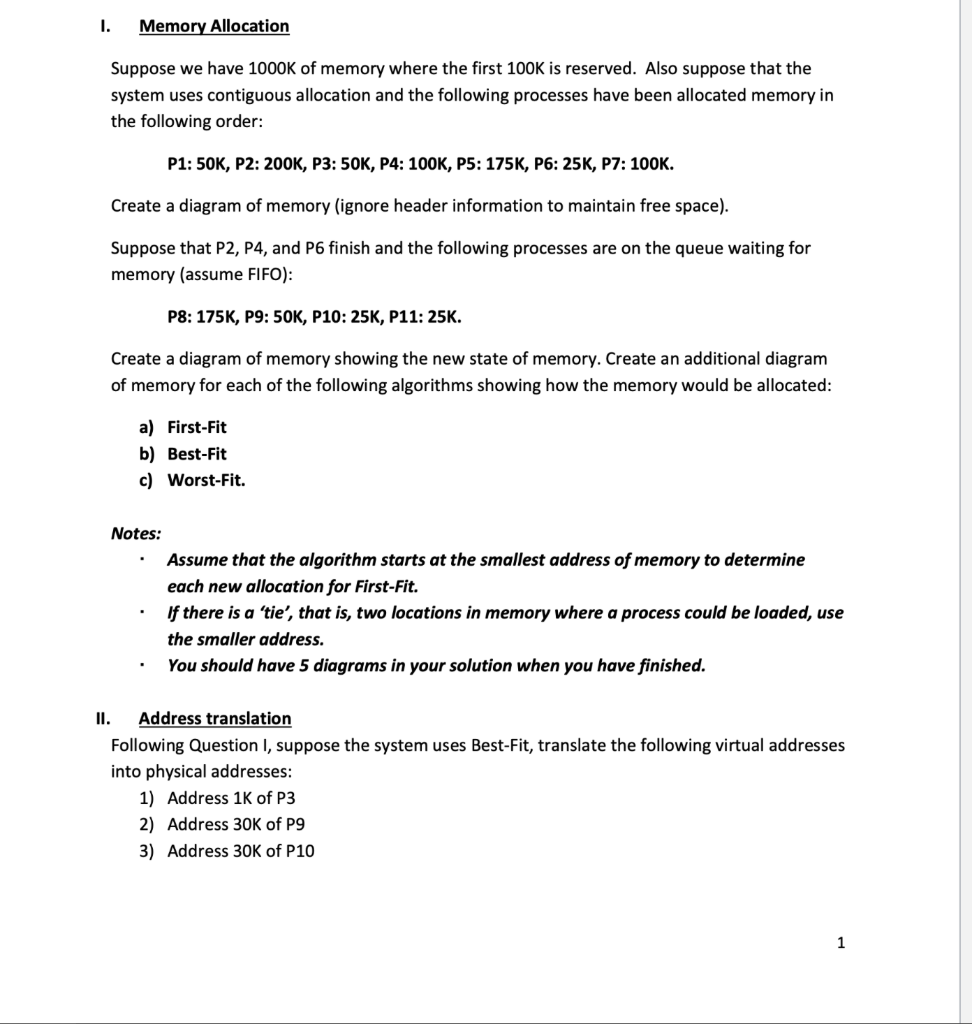
I. Memory Allocation Suppose we have 1000K of memory where the first 100K is reserved. Also suppose that the system uses contiguous allocation and the following processes have been allocated memory in the following order: P1: 50K, P2: 200K, P3: 50K, P4: 100K, P5: 175K, P6: 25K, P7: 100K. Create a diagram of memory (ignore header information to maintain free space). Suppose that P2, P4, and P6 finish and the following processes are on the queue waiting for memory (assume FIFO): P8: 175K, P9: 50K, P10: 25K, P11: 25K. Create a diagram of memory showing the new state of memory. Create an additional diagram of memory for each of the following algorithms showing how the memory would be allocated: a) First-Fit b) Best-Fit c) Worst-Fit. Notes: - Assume that the algorithm starts at the smallest address of memory to determine each new allocation for First-Fit. - If there is a 'tie', that is, two locations in memory where a process could be loaded, use the smaller address. - You should have 5 diagrams in your solution when you have finished. II. Address translation Following Question I, suppose the system uses Best-Fit, translate the following virtual addresses into physical addresses: 1) Address 1K of P3 2) Address 30K of P9 3) Address 30K of P10
Step by Step Solution
There are 3 Steps involved in it

Get step-by-step solutions from verified subject matter experts
 Study Help