







Question: Can I get this in python with the given information below Given information Topics: class, object, instantiation, queue, extending built-ins Problem Statement: The purpose of
Can I get this in python with the given information below
Given information
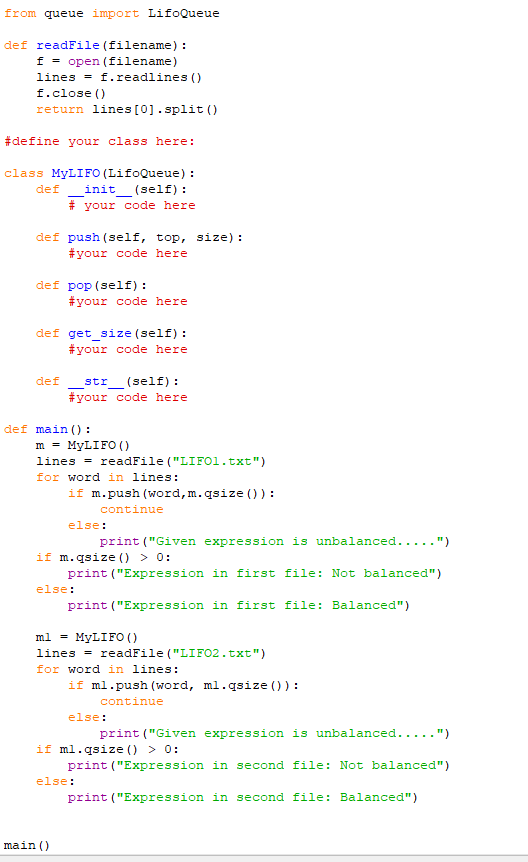
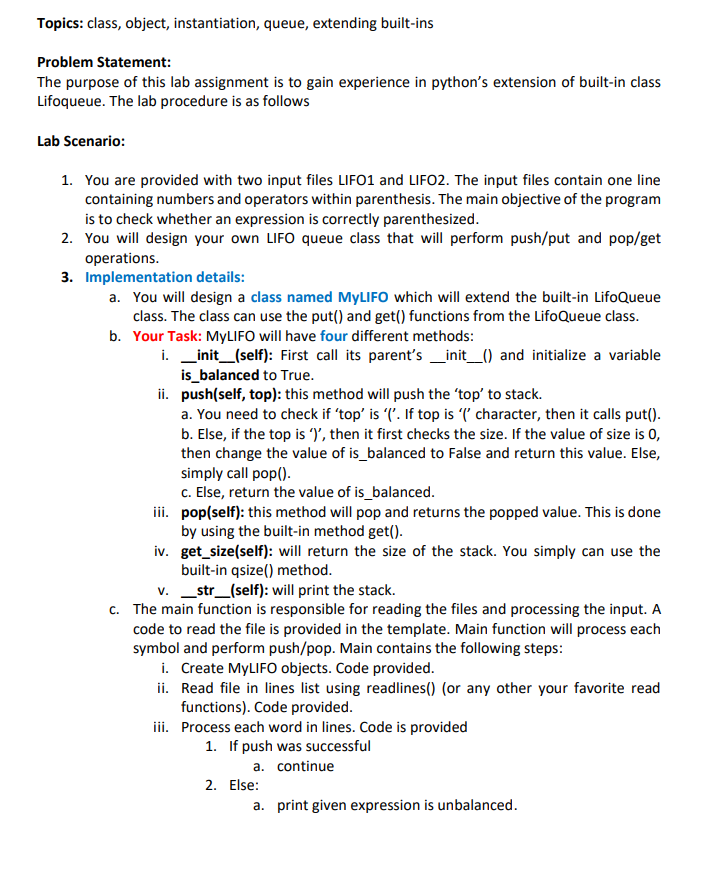
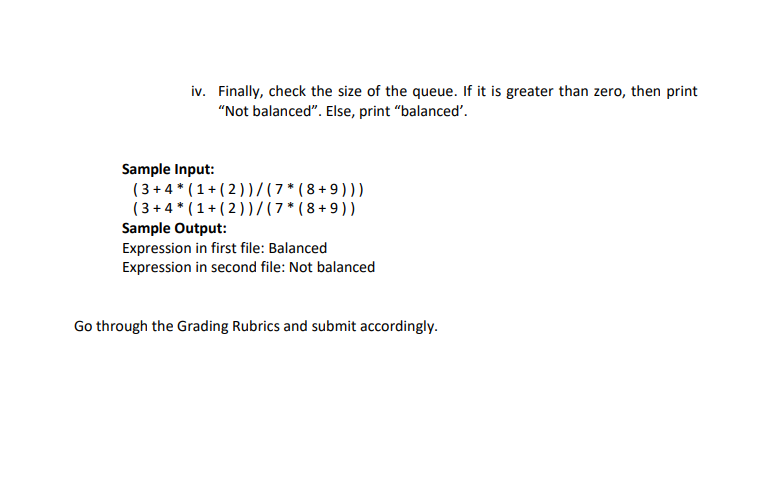
Topics: class, object, instantiation, queue, extending built-ins Problem Statement: The purpose of this lab assignment is to gain experience in python's extension of built-in class Lifoqueue. The lab procedure is as follows Lab Scenario: 1. You are provided with two input files LIF01 and LIFO2. The input files contain one line containing numbers and operators within parenthesis. The main objective of the program is to check whether an expression is correctly parenthesized. 2. You will design your own LIFO queue class that will perform push/put and pop/get operations. 3. Implementation details: a. You will design a class named MyLIFO which will extend the built-in LifoQueue class. The class can use the put() and get() functions from the Lifo Queue class. b. Your Task: MyLIFO will have four different methods: i. _init__(self): First call its parent's _init__() and initialize a variable is_balanced to True. ii. push(self, top): this method will push the 'top' to stack. a. You need to check if 'top' is '('. If top is ' character, then it calls put(). b. Else, if the top is ')', then it first checks the size. If the value of size is 0, then change the value of is_balanced to False and return this value. Else, simply call pop(). c. Else, return the value of is_balanced. iii. pop(self): this method will pop and returns the popped value. This is done by using the built-in method get(). iv. get_size(self): will return the size of the stack. You simply can use the built-in qsize() method. v. _str_(self): will print the stack. C. The main function is responsible for reading the files and processing the input. A code to read the file is provided in the template. Main function will process each symbol and perform push/pop. Main contains the following steps: i. Create MyLIFO objects. Code provided. ii. Read file in lines list using readlines() (or any other your favorite read functions). Code provided. iii. Process each word in lines. Code is provided 1. If push was successful a. continue 2. Else: a. print given expression is unbalanced. iv. Finally, check the size of the queue. If it is greater than zero, then print "Not balanced". Else, print "balanced'. Sample Input: (3+4*(1+(2)/(7*(8+9))) (3+4*(1+(2))/(7* (8 + 9)) Sample Output: Expression in first file: Balanced Expression in second file: Not balanced Go through the Grading Rubrics and submit accordingly. from queue import Lifo Queue def readFile(filename) : f = open(filename) lines = f.readlines () f.close() return lines[0].split() #define your class here: class MyLIFO (Lifoqueue) : def init (self): # your code here def push(self, top, size): #your code here def pop (self): #your code here def get_size (self): #your code here def str (self): #your code here def main(): m = MYLIFO() lines = readFile("LIFO1.txt") for word in lines: if m.push(word, m.qsize()): continue else: print("Given expression is unbalanced. ....") if m.qsize() > 0: print("Expression in first file: Not balanced") else: print ("Expression in first file: Balanced") ml = MyLIFO() lines = readFile("LIFO2.txt") for word in lines: if ml.push(word, ml.qsize()): continue else: print ("Given expression is unbalanced. ....") if ml.qsize() > 0: print ("Expression in second file: Not balanced") else: print ("Expression in second file: Balanced") main()
Step by Step Solution
There are 3 Steps involved in it

Get step-by-step solutions from verified subject matter experts
 Study Help