







Question: Can you guys help me with these? Thank you so much! A reaction mechanism is a sequence of elementary reactions that describe what we believe

Can you guys help me with these? Thank you so much!
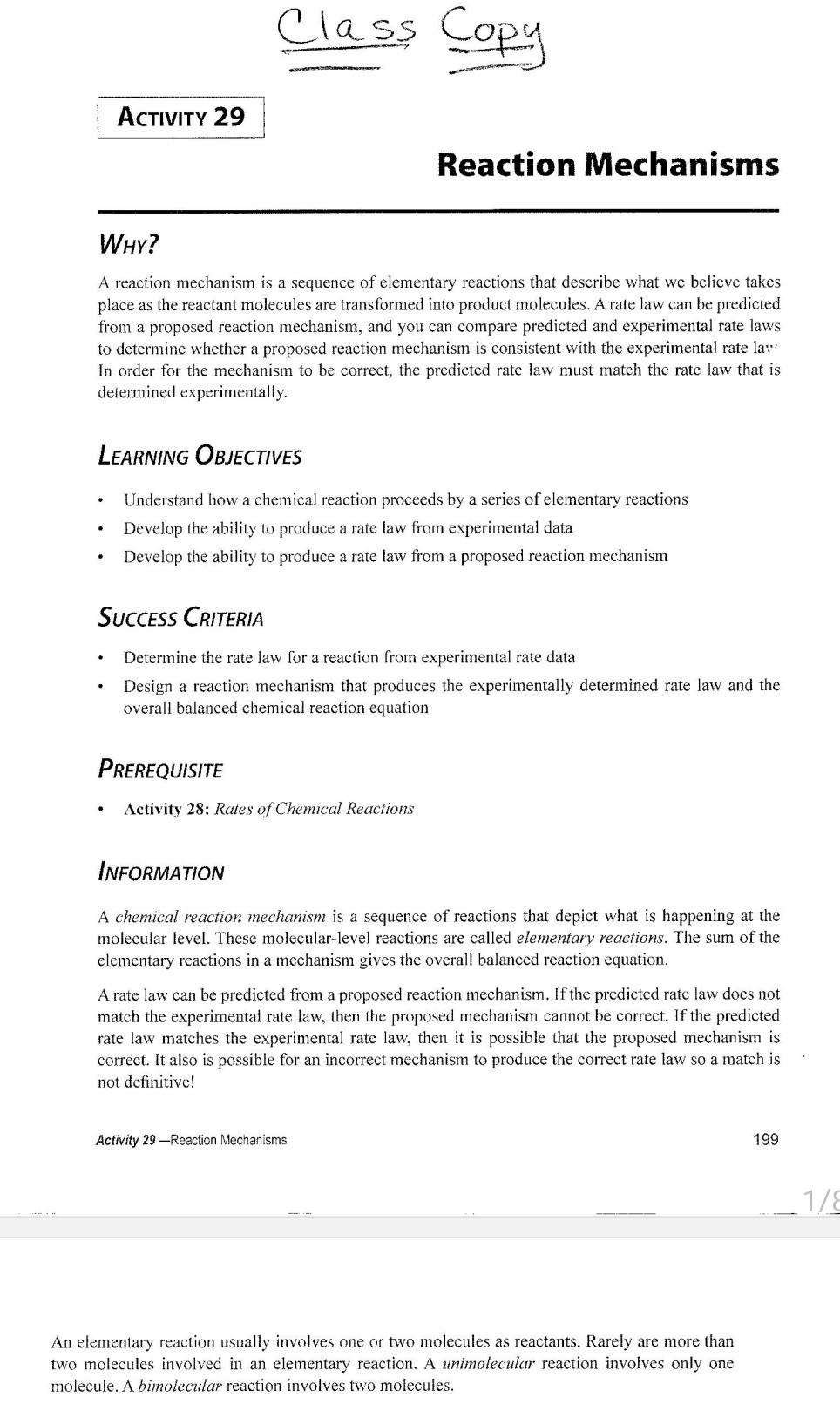
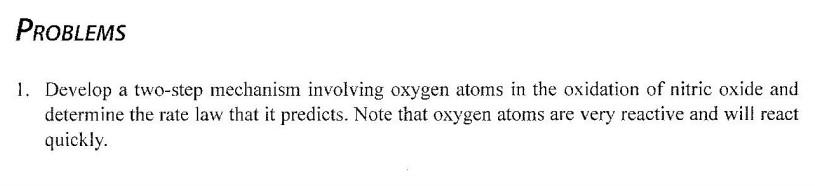
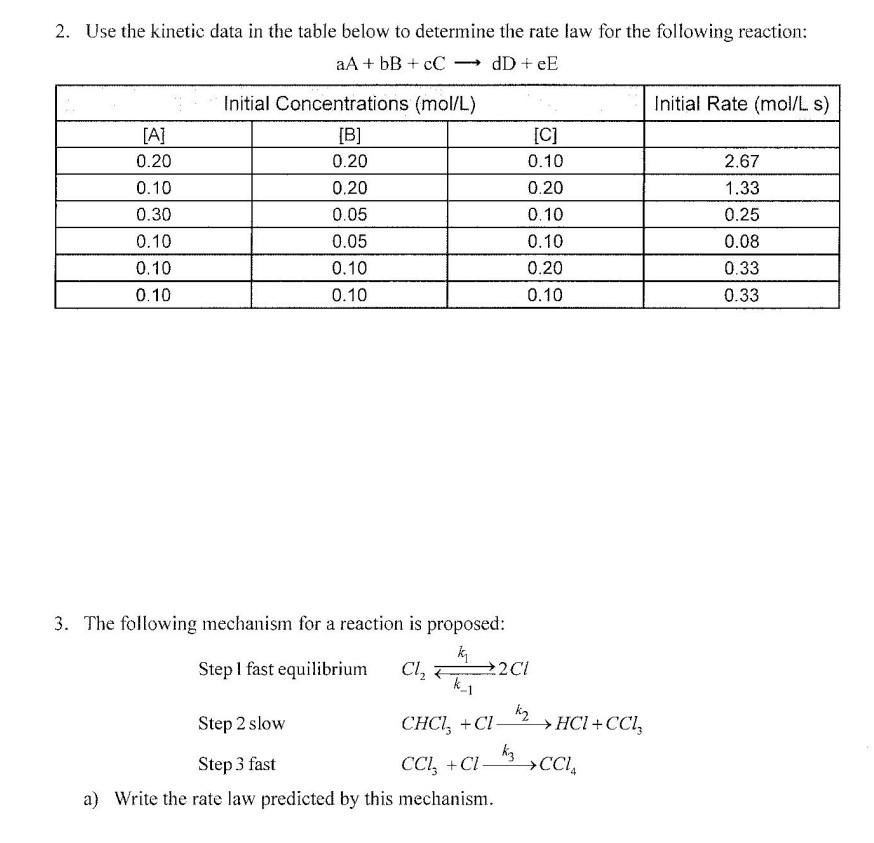
A reaction mechanism is a sequence of elementary reactions that describe what we believe takes place as the reactant molecules are transformed into product molecules. A rate law can be predicted from a proposed reaction mechanism, and you can compare predicted and experimental rate laws to determine whether a proposed reaction mechanism is consistent with the experimental rate law In order for the mechanism to be correct, the predicted rate law must match the rate law that is determined experimentally. LEARNING OBJECTIVES - Understand how a chemical reaction proceeds by a series of elementary reactions - Develop the ability to produce a rate law from experimental data - Develop the ability to produce a rate law from a proposed reaction mechanism SUCCESS CRITERIA - Determine the rate law for a reaction from experimental rate data - Design a reaction mechanism that produces the experimentally determined rate law and the overall balanced chemical reaction equation PREREQUISITE - Activity 28: Rates of Chemical Reactions INFORMATION A chemical reaction mechanism is a sequence of reactions that depict what is happening at the molecular level. These molecular-level reactions are called elementary reactions. The sum of the elementary reactions in a mechanism gives the overall balanced reaction equation. A rate law can be predicted from a proposed reaction mechanism. If the predicted rate law does not match the experimental rate law, then the proposed mechanism cannot be correct. If the predicted rate law matches the experimental rate law, then it is possible that the proposed mechanism is correct. It also is possible for an incorrect mechanism to produce the correct rate law so a match is not definitive! Activity 29 -Reaction Mechanisms 199 An elementary reaction usually involves one or two molecules as reactants. Rarely are more than two molecules involved in an elementary reaction. A unimolecular reaction involves only one molecule. A bimolecular reaction involves two molecules. 1. Develop a two-step mechanism involving oxygen atoms in the oxidation of nitric oxide and determine the rate law that it predicts. Note that oxygen atoms are very reactive and will react quickly. 2. Use the kinetic data in the table below to determine the rate law for the following reaction: aA+bB+cCdD+eE 3. The following mechanism for a reaction is proposed: Step1fastequilibriumStep2slowStep3fastCl2k1k12ClCHCl3+Clk2HCl+CCl3CCl3+Clk3CCl4 a) Write the rate law predicted by this mechanism. b) Show that this mechanism gives the correct overall balanced reaction equation
Step by Step Solution
There are 3 Steps involved in it

Get step-by-step solutions from verified subject matter experts
 Study Help