







Question: Can you help me with how to solve core problem and additional challenge problem? Thank you Lab #11-TODAY'S LAB TOPICS: Command line arguments, strings, string
Can you help me with how to solve core problem and additional challenge problem? Thank you
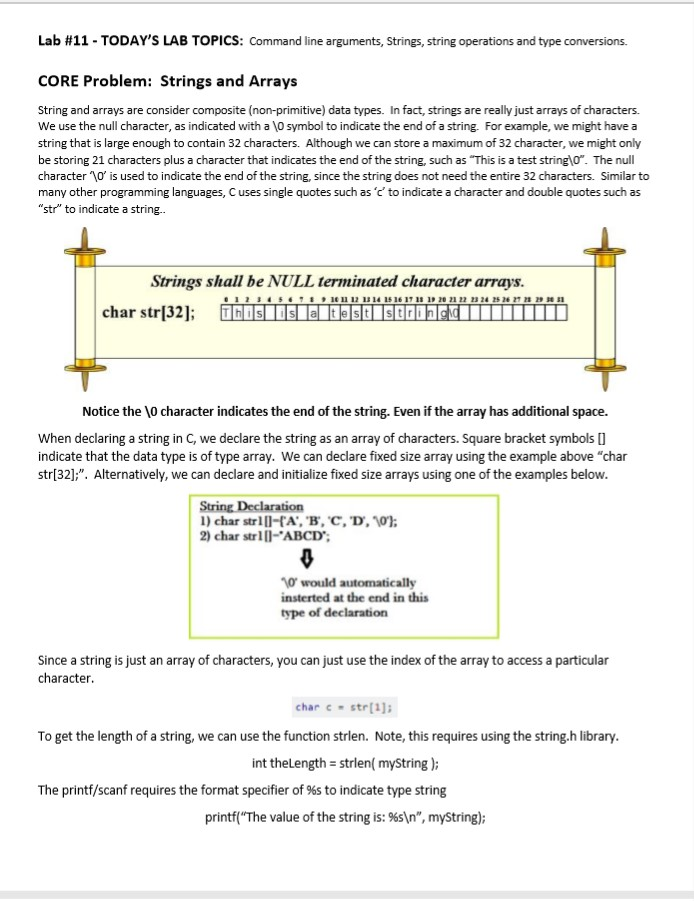
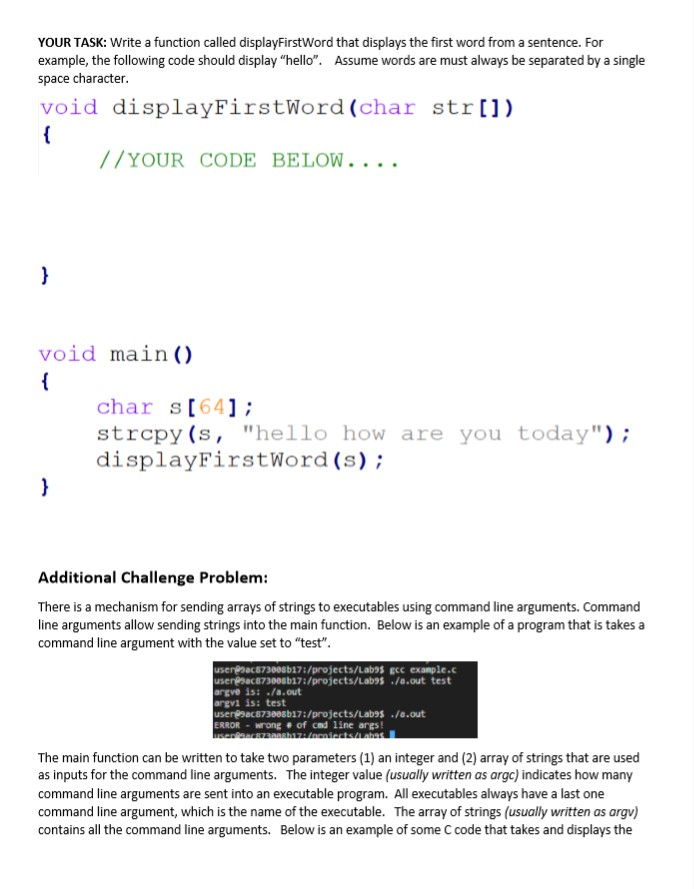
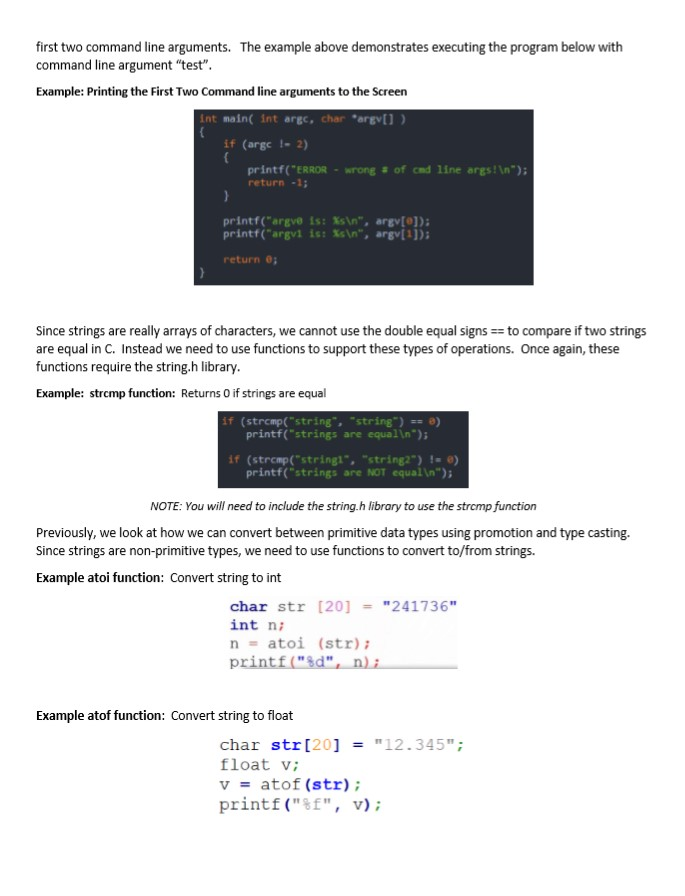
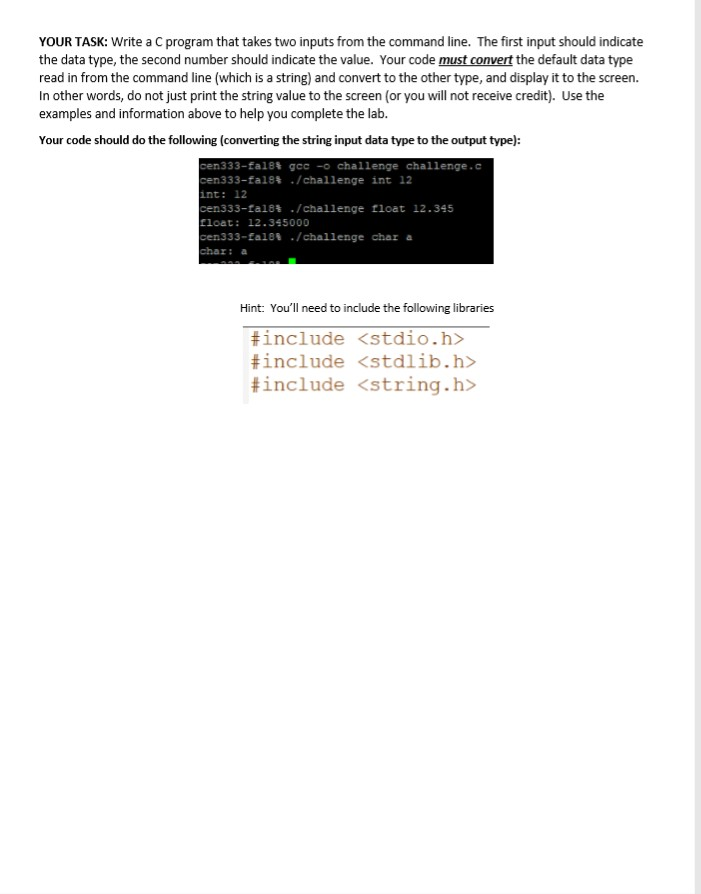
Lab #11-TODAY'S LAB TOPICS: Command line arguments, strings, string operations and type conversions. CORE Problem: Strings and Arrays String and arrays are consider composite (non-primitive) data types. In fact, strings are really just arrays of characters. We use the null character, as indicated with a \0 symbol to indicate the end of a string. For example, we might have a string that is large enough to contain 32 characters. Although we can store a maximum of 32 character, we might only be storing 21 characters plus a character that indicates the end of the string, such as "This is a test stringlo. The null character 10 is used to indicate the end of the string, since the string does not need the entire 32 characters. Similar to many other programming languages, C uses single quotes such as 'c to indicate a character and double quotes such as "str" to indicate a string. Strings shall be NULL terminated character arrays 0 1 2 3 4 5 6 7 # 16111213141516 17 18 19 20 21 22 23 24 25262728 29 char strl32]; Notice the 10 character indicates the end of the string. Even if the array has additional space. When declaring a string in C, we declare the string as an array of characters. Square bracket symbols D indicate that the data type is of type array. We can declare fixed size array using the example above "char str[32]:". Alternatively, we can declare and initialize fixed size arrays using one of the examples below 2) char strlll-ABCD 0 would automatically insterted at the end in this type of declaration Since a string is just an array of characters, you can just use the index of the array to access a particular character char c str[1]i To get the length of a string, we can use the function strlen. Note, this requires using the string.h library int theLength strlen( myString ) The printf/scanf requires the format specifier of %s to indicate type string printf("The value of the string is: %s ", myString); Lab #11-TODAY'S LAB TOPICS: Command line arguments, strings, string operations and type conversions. CORE Problem: Strings and Arrays String and arrays are consider composite (non-primitive) data types. In fact, strings are really just arrays of characters. We use the null character, as indicated with a \0 symbol to indicate the end of a string. For example, we might have a string that is large enough to contain 32 characters. Although we can store a maximum of 32 character, we might only be storing 21 characters plus a character that indicates the end of the string, such as "This is a test stringlo. The null character 10 is used to indicate the end of the string, since the string does not need the entire 32 characters. Similar to many other programming languages, C uses single quotes such as 'c to indicate a character and double quotes such as "str" to indicate a string. Strings shall be NULL terminated character arrays 0 1 2 3 4 5 6 7 # 16111213141516 17 18 19 20 21 22 23 24 25262728 29 char strl32]; Notice the 10 character indicates the end of the string. Even if the array has additional space. When declaring a string in C, we declare the string as an array of characters. Square bracket symbols D indicate that the data type is of type array. We can declare fixed size array using the example above "char str[32]:". Alternatively, we can declare and initialize fixed size arrays using one of the examples below 2) char strlll-ABCD 0 would automatically insterted at the end in this type of declaration Since a string is just an array of characters, you can just use the index of the array to access a particular character char c str[1]i To get the length of a string, we can use the function strlen. Note, this requires using the string.h library int theLength strlen( myString ) The printf/scanf requires the format specifier of %s to indicate type string printf("The value of the string is: %s ", myString)
Step by Step Solution
There are 3 Steps involved in it

Get step-by-step solutions from verified subject matter experts
 Study Help