







Question: Can you please help me answer the questions? Paragraph 1: Besides Black people, who else was discriminated against in the 19 th century? Topic sentence
Can you please help me answer the questions?
- Paragraph 1:
Besides Black people, who else was discriminated against in the 19th century?
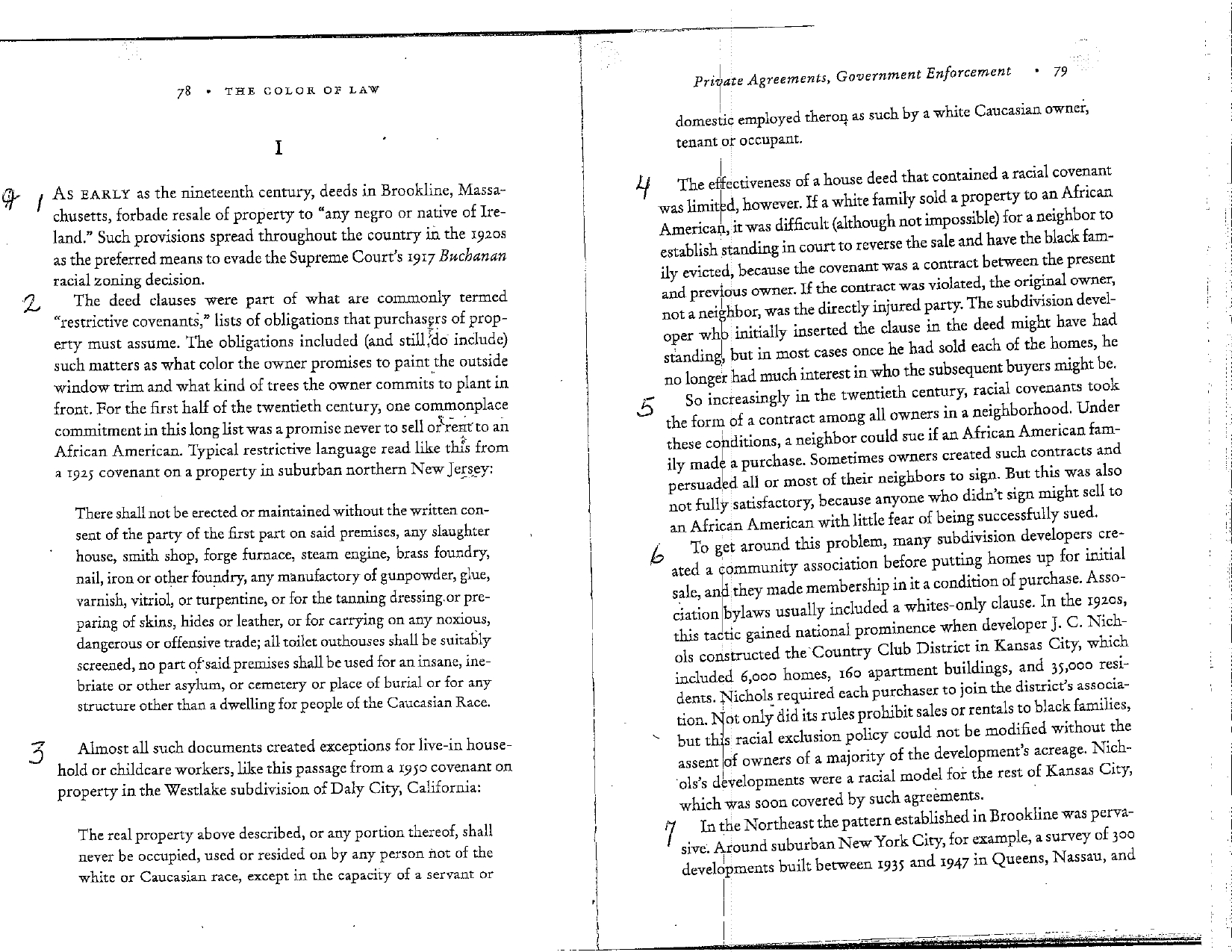
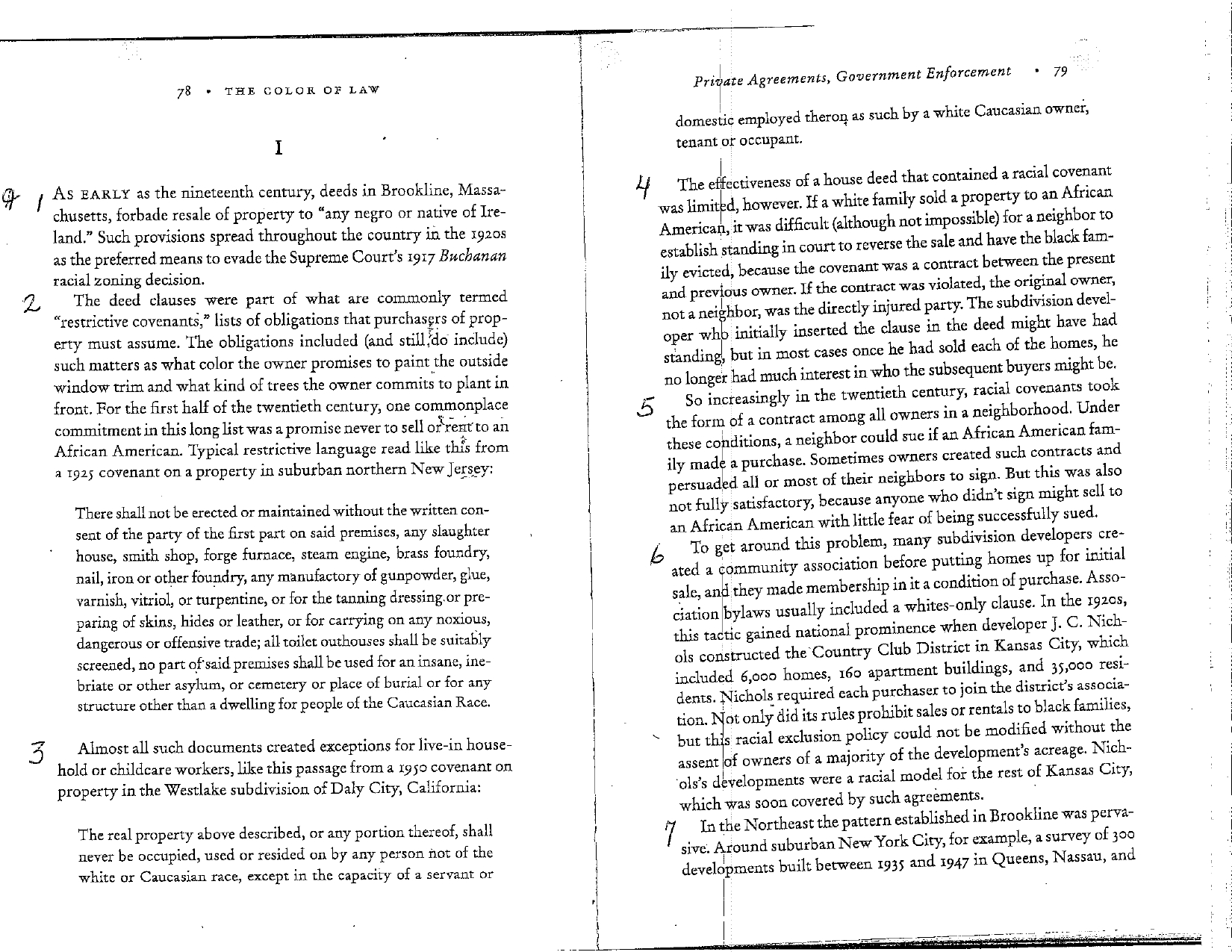
- Topic sentence paragraph 2 = "The deed covenants were part of what is termed "restrictive covenants," lists of obligations that purchasers of property must assume."
- According to the paragraph, what is one example of an obligation the owners had to assume?
- "Covenant" is another word for a solemn promise. Where would you find the actual written words of these covenants?
- In the obligations discussed in this paragraph, what is an example of a reasonable restriction that a regular person would think is a good idea?
- Topic sentence paragraph 4 = "The effectiveness of a house deed that contained a restrictive covenant was limited, however."
According to this paragraph, how was it limited? In other words, why didn't it work as well as it was intended?
- Topic sentence paragraph 5: "So increasingly in the 20th century, restrictive covenants took the form of a contract among all owners of a neighborhood."
What was the difference between the restrictive covenants discussed in this paragraph (5) and those in paragraph 4?
- Topic sentence paragraph 6 = "To get around this problem, many subdivision developers created a community association before putting homes up for initial sale and made membership in it a condition of purchase."
- What is the problem referred to in the topic sentence?
- Why did these restrictive covenants work "better" than the others?
- Topic sentence paragraph 7 = "In the Northeast, the pattern established in Brookline, Massachusetts, was pervasive."
In this paragraph, what is an example of this pattern?
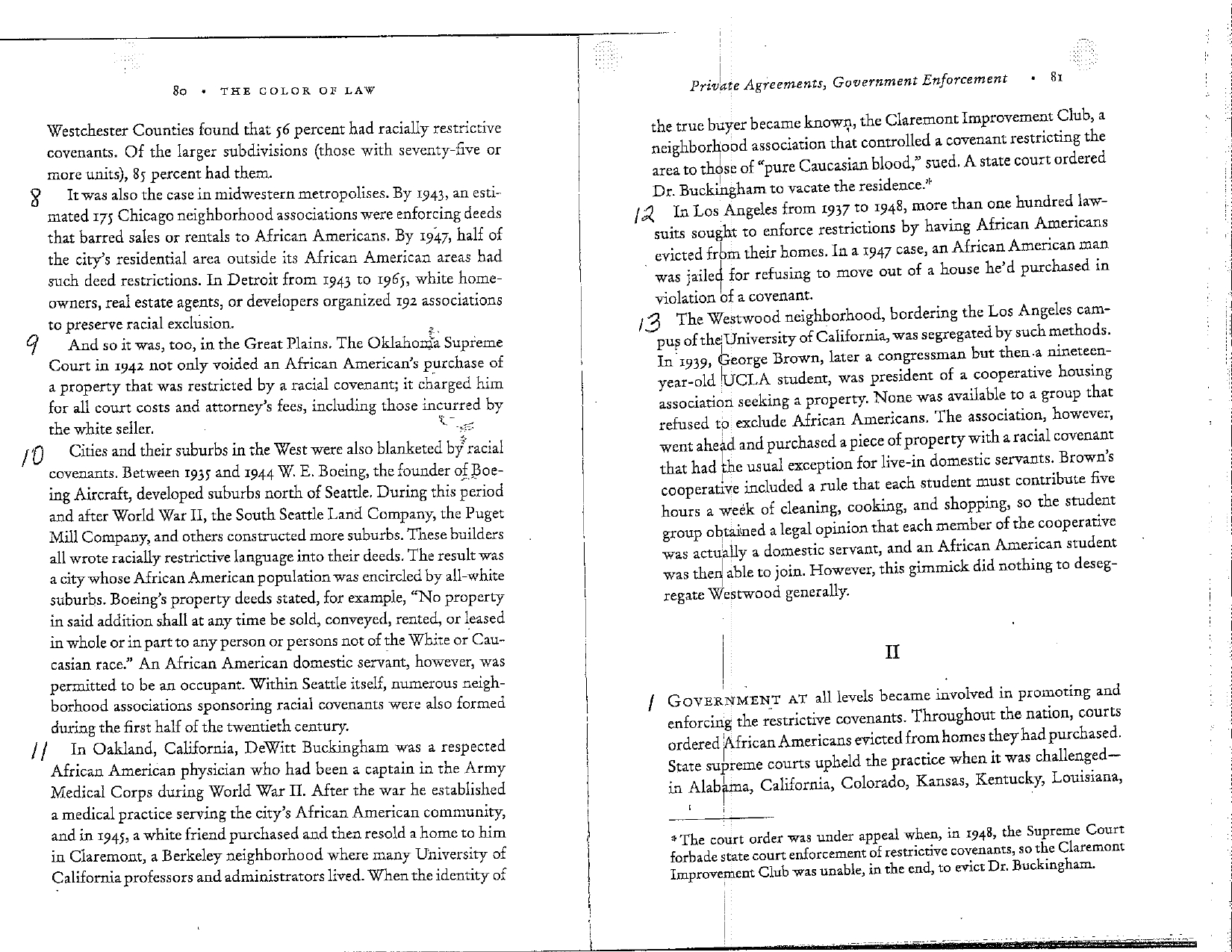
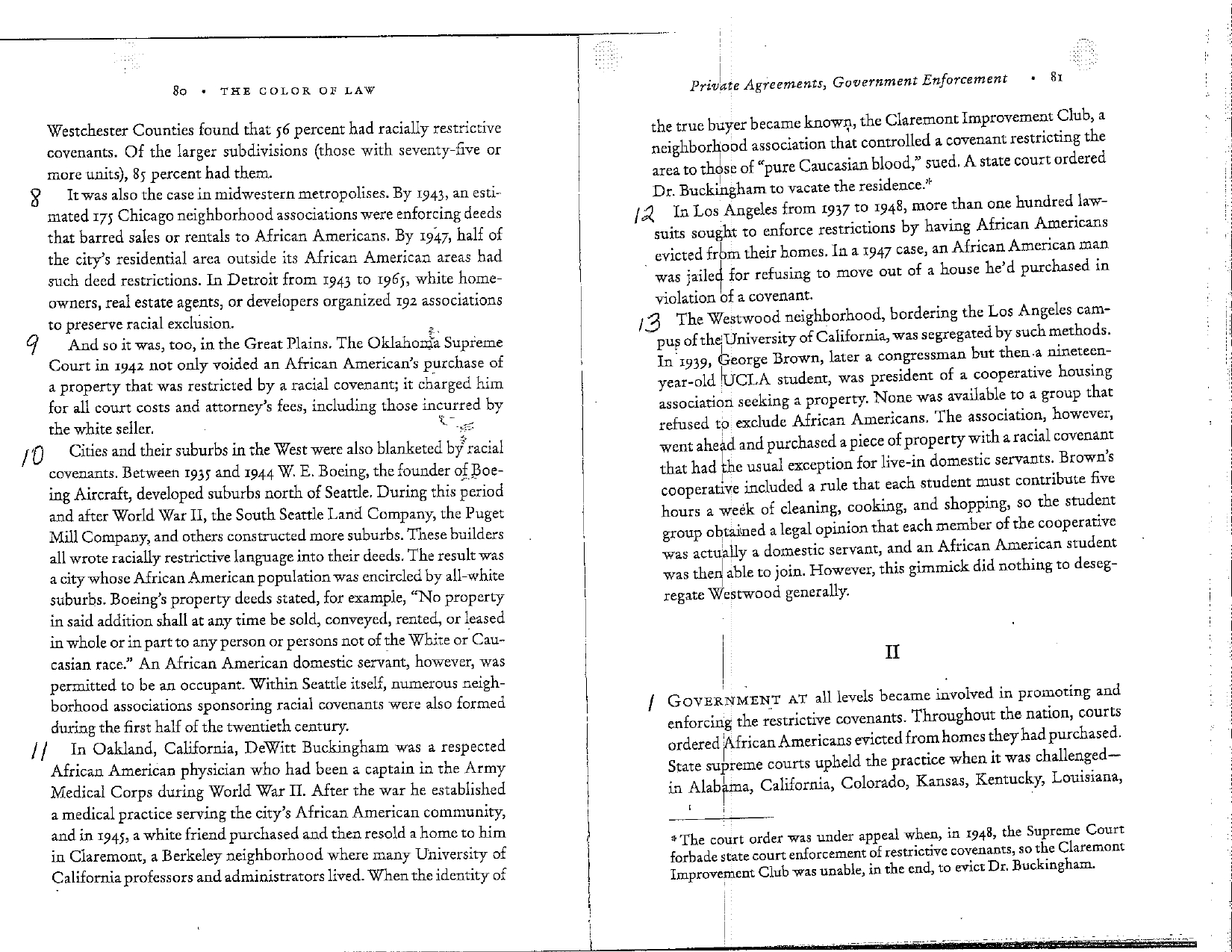
- Topic sentence paragraph 8 = "It was also the case in Midwestern metropolises."
What example is given in this paragraph?
- Topic sentence paragraph 9 = "And so it was, too, in the Great Plains."
What is an example from the Great Plains states?
- Topic sentence paragraph 10 = "Cities and their suburbs in the West were also blanketed by racial covenants."
What is an example from this paragraph?
- Topic sentence paragraph 11 = "In Oakland, California, DeWitt Buckingham was a respected African American physician who had been a captain in the Army Medical Corps in World War II."
Why do you think author of this book brings up Dr. DeWitt Buckingham?
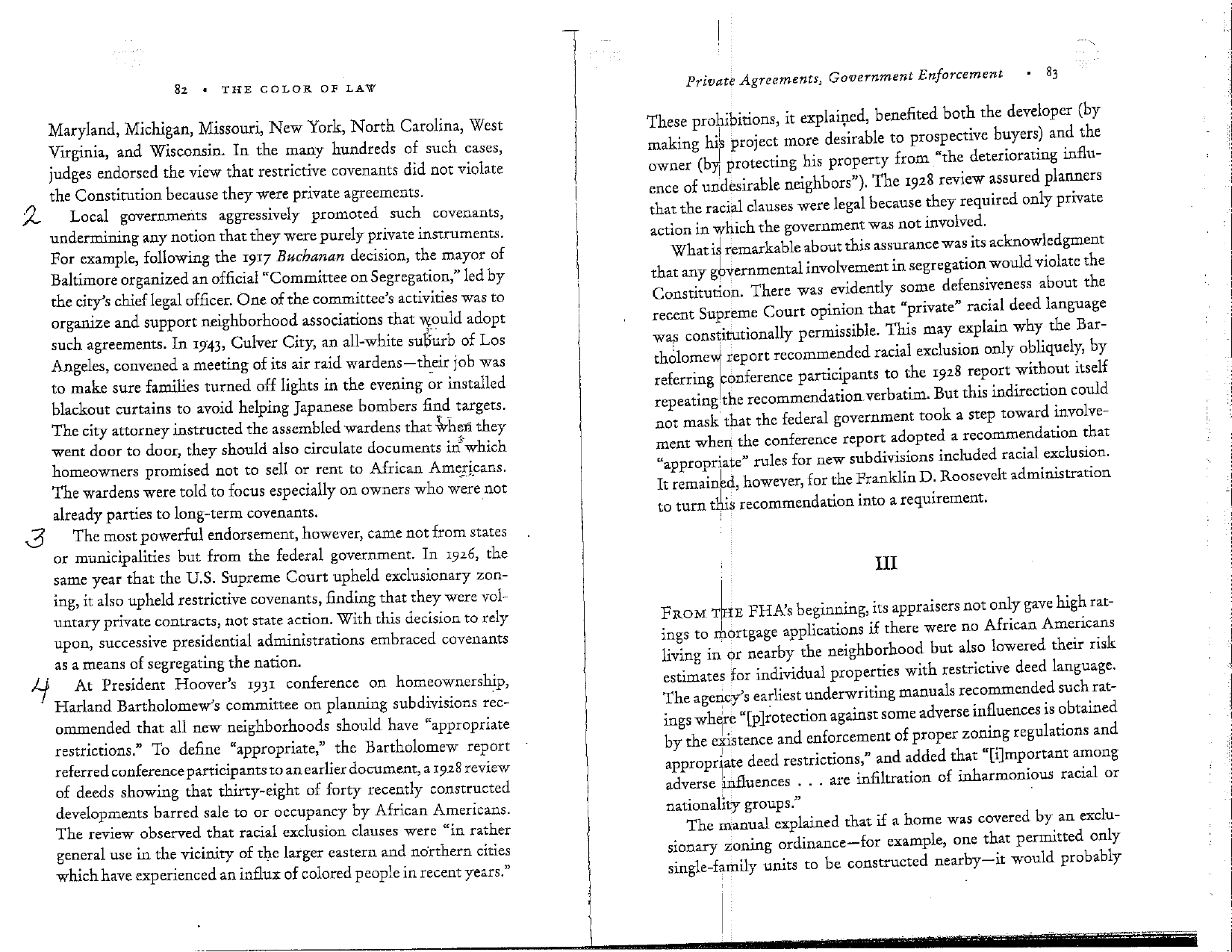
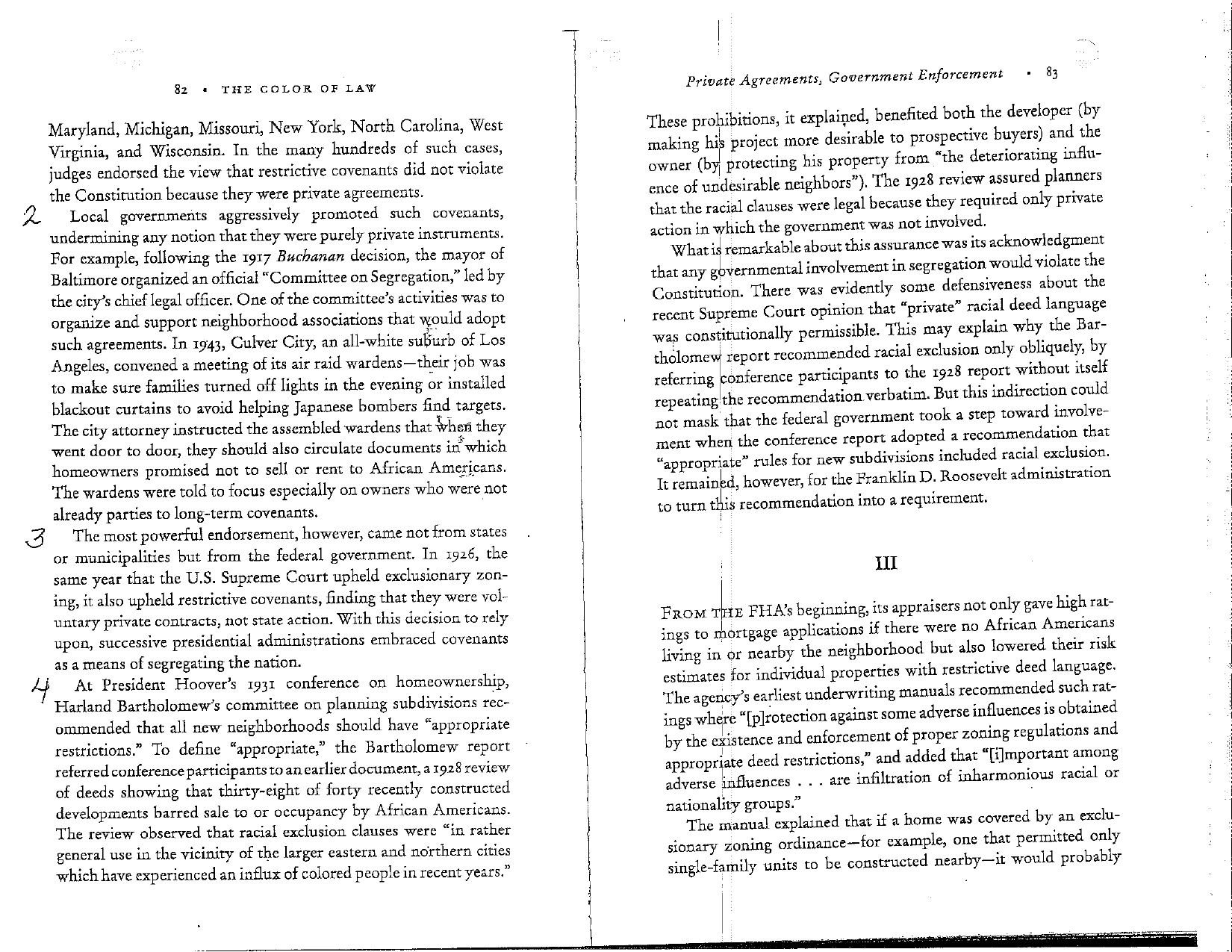
- Paragraph 1 Part II Topic sentence: "Government at all levels became involved in promoting and enforcing covenants."
What are the three levels of government discussed in this paragraph, paragraph 2, and paragraph 3 of this section?
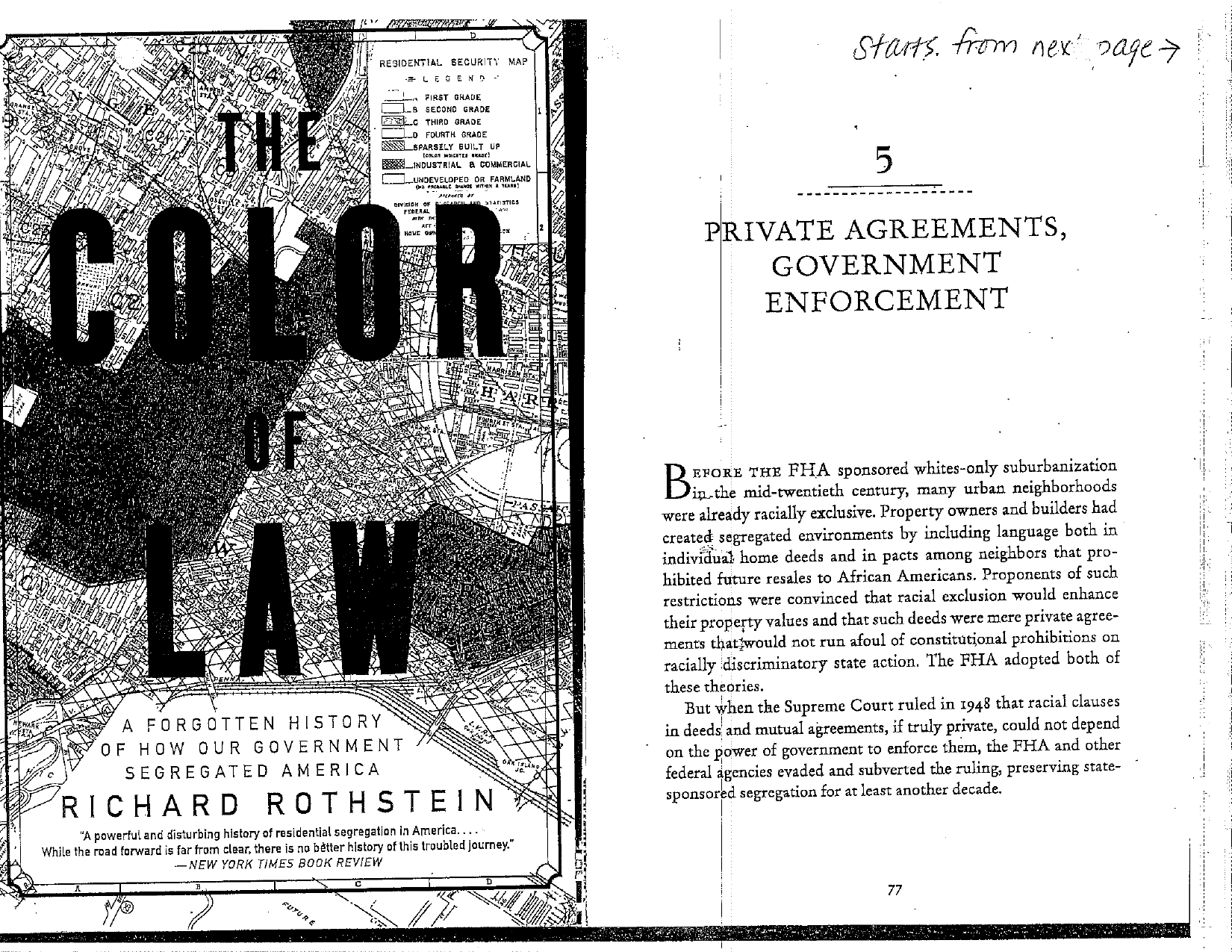
D RESIDENTIAL SECURITY MAP starts. from nex page ? ELEGEND FIRST GRADE THE J-B SECOND GRAD L.C THIRD GRADE -0 FOURTH GRADE ENSESPARSELY BUILT UP INDUSTRIAL A _ UNDEVELOPED OR FARMLAND COLOR PRIVATE AGREEMENTS, -: ... GOVERNMENT ENFORCEMENT OF BEFORE THE FHA sponsored whites-only suburbanization in the mid-twentieth century, many urban neighborhoods were already racially exclusive. Property owners and builders had created segregated environments by including language both in individual home deeds and in pacts among neighbors that pro- hibited future resales to African Americans. Proponents of such restrictions were convinced that racial exclusion would enhance their property values and that such deeds were mere private agree- ments that would not run afoul of constitutional prohibitions on racially discriminatory state action. The FHA adopted both of these theories. A FORGOTTEN HISTORY But when the Supreme Court ruled in 1948 that racial clauses OF HOW OUR GOVERNMENT in deeds and mutual agreements, if truly private, could not depend SEGREGATED AMERICA on the power of government to enforce them, the FHA and other federal agencies evaded and subverted the ruling, preserving state- RICHARD ROTHSTEIN sponsored segregation for at least another decade. "A powerful and disturbing history of residential segregation in America. . . . While the road forward is far from clear, there is no better history of this troubled journey." - NEW YORK TIMES BOOK REVIEW 77 FUTUR78 . THE COLOR OF LAW Private Agreements, Government Enforcement 79 I domestic employed theron as such by a white Caucasian owner, tenant or occupant. AS EARLY as the nineteenth century, deeds in Brookline, Massa- 4 The effectiveness of a house deed that contained a racial covenant chusetts, forbade resale of property to "any negro or native of Ire- was limited, however. If a white family sold a property to an African land." Such provisions spread throughout the country in the 1920s American, it was difficult (although not impossible) for a neighbor to as the preferred means to evade the Supreme Court's 1917 Buchanan racial zoning decision. establish standing in court to reverse the sale and have the black fam- 2 ly evicted, because the covenant was a contract between the present The deed clauses were part of what are commonly termed and previous owner. If the contract was violated, the original owner, restrictive covenants," lists of obligations that purchasers of prop- not a neighbor, was the directly injured party. The subdivision devel- erty must assume. The obligations included (and still do include) oper who initially inserted the clause in the deed might have had such matters as what color the owner promises to paint the outside standing, but in most cases once he had sold each of the homes, he window trim and what kind of trees the owner commits to plant in no longer had much interest in who the subsequent buyers might be. front. For the first half of the twentieth century, one commonplace commitment in this long list was a promise never to sell or rent to an 5 So increasingly in the twentieth century, racial covenants took the form of a contract among all owners in a neighborhood. Under African American. Typical restrictive language read like this from these conditions, a neighbor could sue if an African American fam- a 1925 covenant on a property in suburban northern New Jersey: ly made a purchase. Sometimes owners created such contracts and persuaded all or most of their neighbors to sign. But this was also There shall not be erected or maintained without the written con- not fully satisfactory, because anyone who didn't sign might sell to sent of the party of the first part on said premises, any slaughter an African American with little fear of being successfully sued house, smith shop, forge furnace, steam engine, brass foundry, To get around this problem, many subdivision developers cre- nail, iron or other foundry, any manufactory of gunpowder, glue, ated a community association before putting homes up for initial varnish, vitriol, or turpentine, or for the tanning dressing or pre- sale, and they made membership in it a condition of purchase. Asso- paring of skins, hides or leather, or for carrying on any noxious, ciation bylaws usually included a whites-only clause. In the 1920s, dangerous or offensive trade; all toilet outhouses shall be suitably this tactic gained national prominence when developer J. C. Nich- screened, no part of said premises shall be used for an insane, ine- ols constructed the Country Club District in Kansas City, which briate or other asylum, or cemetery or place of burial or for any included 6,000 homes, 160 apartment buildings, and 35,000 resi- structure other than a dwelling for people of the Caucasian Race. dents. Nichols required each purchaser to join the district's associa- 3 tion. Not only did its rules prohibit sales or rentals to black families, Almost all such documents created exceptions for live-in house- but this racial exclusion policy could not be modified without the hold or childcare workers, like this passage from a 1950 covenant on assent of owners of a majority of the development's acreage. Nich- property in the Westlake subdivision of Daly City, California: ols's developments were a racial model for the rest of Kansas City, which was soon covered by such agreements. The real property above described, or any portion thereof, shall never be occupied, used or resided on by any person not of the 7 In the Northeast the pattern established in Brookline was perva- sive. Around suburban New York City, for example, a survey of 300 white or Caucasian race, except in the capacity of a servant or developments built between 1935 and 1947 in Queens, Nassau, and. THE COLOR OF LAW Private Agreements, Government Enforcement . 81 Westchester Counties found that 56 percent had racially restrictive the true buyer became known, the Claremont Improvement Club, a covenants. Of the larger subdivisions (those with seventy-five or neighborhood association that controlled a covenant restricting the more units), 85 percent had them. area to those of "pure Caucasian blood," sued. A state court ordered It was also the case in midwestern metropolises. By 1943, an esti- Dr. Buckingham to vacate the residence." mated 175 Chicago neighborhood associations were enforcing deeds In Los Angeles from 1937 to 1948, more than one hundred law- that barred sales or rentals to African Americans. By 1947, half of suits sought to enforce restrictions by having African Americans the city's residential area outside its African American areas had evicted from their homes. In a 1947 case, an African American man such deed restrictions. In Detroit from 1943 to 1965, white home was jailed for refusing to move out of a house he'd purchased in owners, real estate agents, or developers organized 192 associations violation of a covenant to preserve racial exclusion. 3 The Westwood neighborhood, bordering the Los Angeles cam- And so it was, too, in the Great Plains. The Oklahoma Supreme pus of the University of California, was segregated by such methods. Court in 1942 not only voided an African American's purchase of In 1939, George Brown, later a congressman but then a nineteen- a property that was restricted by a racial covenant; it charged him year-old UCLA student, was president of a cooperative housing for all court costs and attorney's fees, including those incurred by association seeking a property. None was available to a group that the white seller. refused to exclude African Americans. The association, however, 0 Cities and their suburbs in the West were also blanketed by racial went ahead and purchased a piece of property with a racial covenant covenants. Between 1935 and 1944 W. E. Boeing, the founder of Boe- that had the usual exception for live-in domestic servants. Brown's ing Aircraft, developed suburbs north of Seattle. During this period cooperative included a rule that each student must contribute five and after World War II, the South Seattle Land Company, the Puget hours a week of cleaning, cooking, and shopping, so the student Mill Company, and others constructed more suburbs. These builders group obtained a legal opinion that each member of the cooperative all wrote racially restrictive language into their deeds. The result was was actually a domestic servant, and an African American student a city whose African American population was encircled by all-white was then able to join. However, this gimmick did nothing to deseg- suburbs. Boeing's property deeds stated, for example, "No property regate Westwood generally in said addition shall at any time be sold, conveyed, rented, or leased in whole or in part to any person or persons not of the White or Cau- casian race." An African American domestic servant, however, was II permitted to be an occupant. Within Seattle itself, numerous neigh- borhood associations sponsoring racial covenants were also formed / GOVERNMENT AT all levels became involved in promoting and during the first half of the twentieth century. enforcing the restrictive covenants. Throughout the nation, courts In Oakland, California, DeWitt Buckingham was a respected ordered African Americans evicted from homes they had purchased. African American physician who had been a captain in the Army State supreme courts upheld the practice when it was challenged- Medical Corps during World War II. After the war he established in Alabama, California, Colorado, Kansas, Kentucky, Louisiana, a medical practice serving the city's African American community, and in 1945, a white friend purchased and then resold a home to him *The court order was under appeal when, in 1948, the Supreme Court in Claremont, a Berkeley neighborhood where many University of forbade state court enforcement of restrictive covenants, so the Claremont California professors and administrators lived. When the identity of Improvement Club was unable, in the end, to evict Dr. Buckingham.82 . THE COLOR OF LAW Private Agreements, Government Enforcement 83 Maryland, Michigan, Missouri, New York, North Carolina, West These prohibitions, it explained, benefited both the developer (by Virginia, and Wisconsin. In the many hundreds of such cases, making his project more desirable to prospective buyers) and the judges endorsed the view that restrictive covenants did not violate owner (by protecting his property from "the deteriorating influ- the Constitution because they were private agreements. ence of undesirable neighbors"). The 1928 review assured planners 2 Local governments aggressively promoted such covenants, that the racial clauses were legal because they required only private undermining any notion that they were purely private instruments. action in which the government was not involved. For example, following the 1917 Buchanan decision, the mayor of What is remarkable about this assurance was its acknowledgment Baltimore organized an official "Committee on Segregation," led by that any governmental involvement in segregation would violate the the city's chief legal officer. One of the committee's activities was to Constitution. There was evidently some defensiveness about the organize and support neighborhood associations that would adopt recent Supreme Court opinion that "private" racial deed language such agreements. In 1943, Culver City, an all-white suburb of Los was constitutionally permissible. This may explain why the Bar- Angeles, convened a meeting of its air raid wardens-their job was cholomew report recommended racial exclusion only obliquely, by to make sure families turned off lights in the evening or installed referring conference participants to the 1928 report without itself blackout curtains to avoid helping Japanese bombers find targets. repeating the recommendation verbatim. But this indirection could The city attorney instructed the assembled wardens that when they not mask that the federal government took a step toward involve- went door to door, they should also circulate documents in which ment when the conference report adopted a recommendation that homeowners promised not to sell or rent to African Americans. "appropriate" rules for new subdivisions included racial exclusion. The wardens were told to focus especially on owners who were not It remained, however, for the Franklin D. Roosevelt administration already parties to long-term covenants. to turn this recommendation into a requirement. 3 The most powerful endorsement, however, came not from states or municipalities but from the federal government. In 1926, the same year that the U.S. Supreme Court upheld exclusionary zon- III ing, it also upheld restrictive covenants, finding that they were vol- untary private contracts, not state action. With this decision to rely FROM THE FHA's beginning, its appraisers not only gave high rat- upon, successive presidential administrations embraced covenants ings to mortgage applications if there were no African Americans as a means of segregating the nation. living in or nearby the neighborhood but also lowered their risk At President Hoover's 1931 conference on homeownership, estimates for individual properties with restrictive deed language. Harland Bartholomew's committee on planning subdivisions rec- The agency's earliest underwriting manuals recommended such rat- ummended that all new neighborhoods should have "appropriate ings where "[plrotection against some adverse influences is obtained restrictions." To define "appropriate," the Bartholomew report by the existence and enforcement of proper zoning regulations and referred conference participants to an earlier document, a 1928 review appropriate deed restrictions," and added that "[important among of deeds showing that thirty-eight of forty recently constructed adverse influences . . . are infiltration of inharmonious racial or developments barred sale to or occupancy by African Americans. nationality groups." The review observed that racial exclusion clauses were "in rather The manual explained that if a home was covered by an exclu general use in the vicinity of the larger eastern and northern cities sionary zoning ordinance-for example, one that permitted only .. . " which have experienced an influx of colored people in recent years." single-family units to be constructed nearby-it would probably
Step by Step Solution
There are 3 Steps involved in it

Get step-by-step solutions from verified subject matter experts
 Study Help