Can you please help me with this project
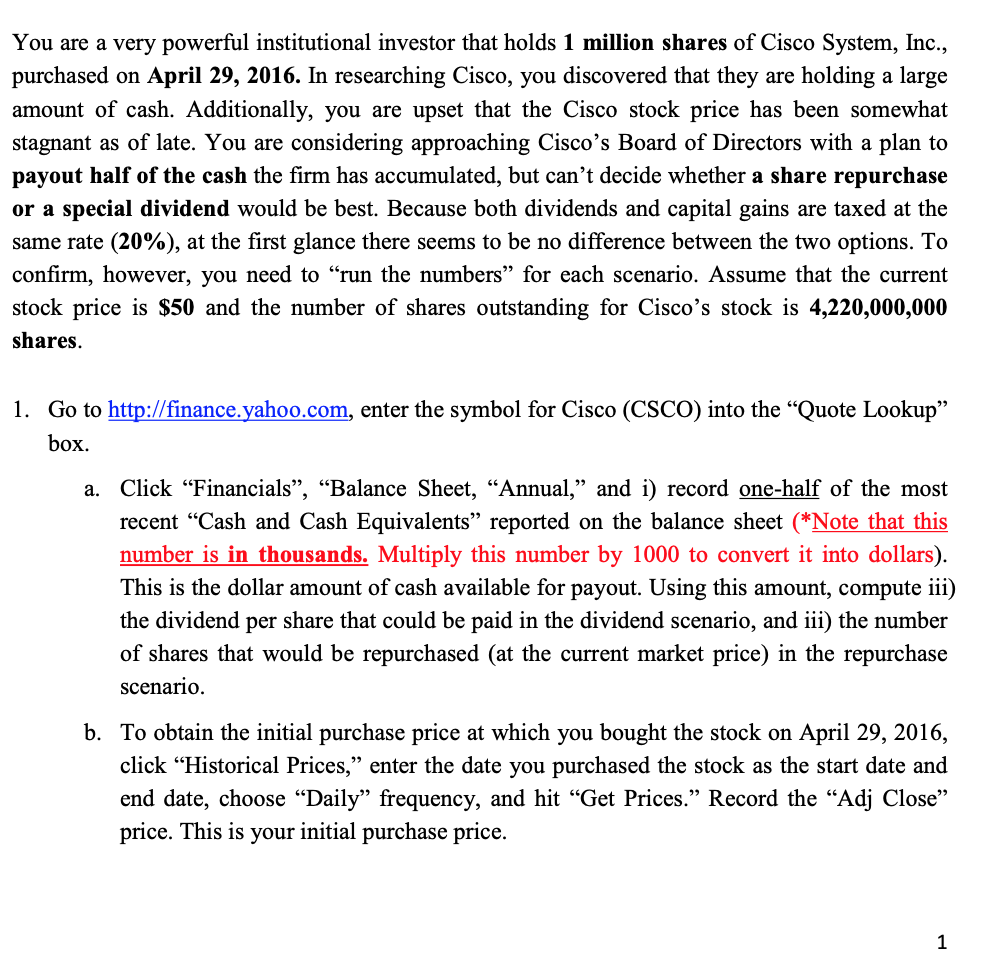
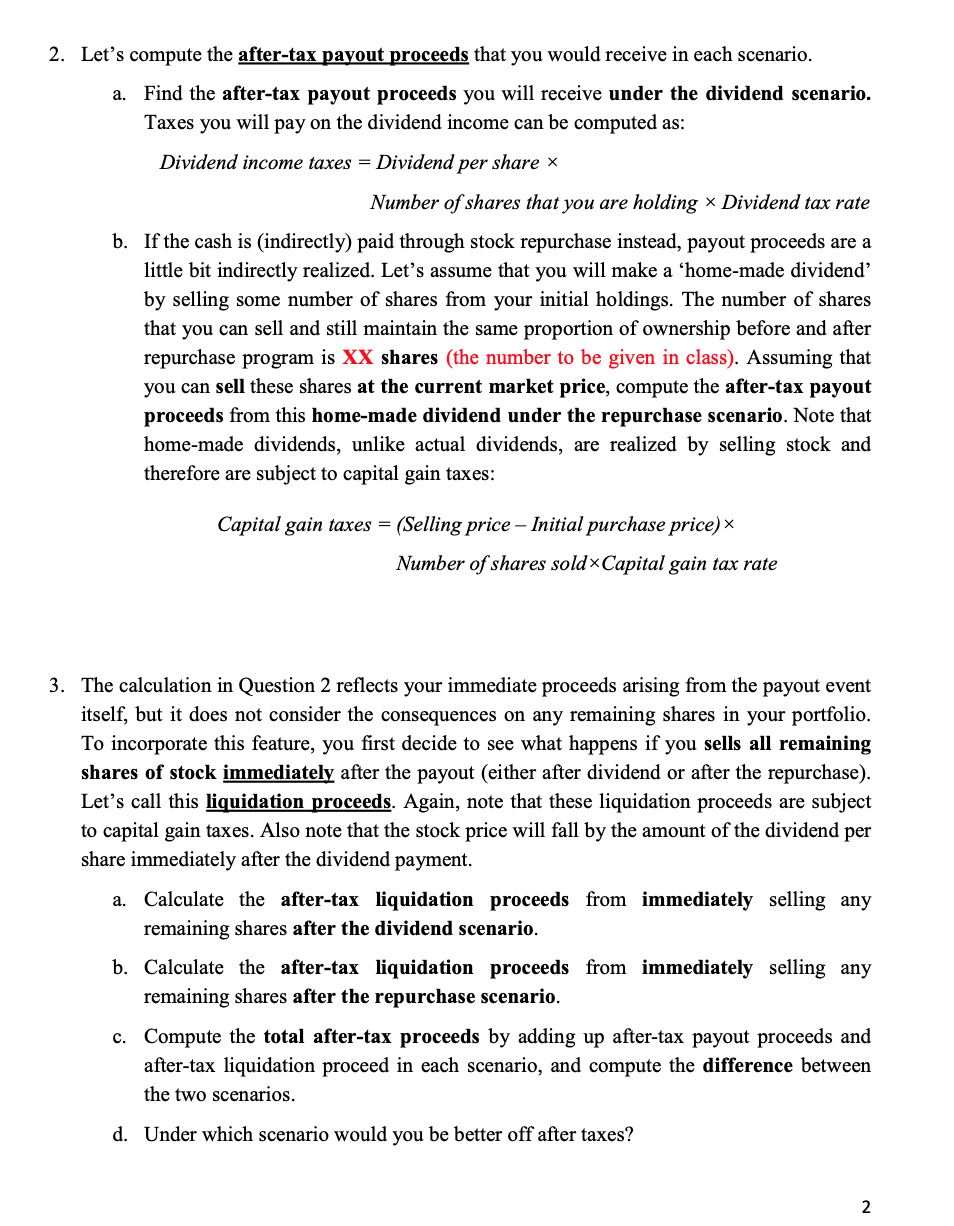
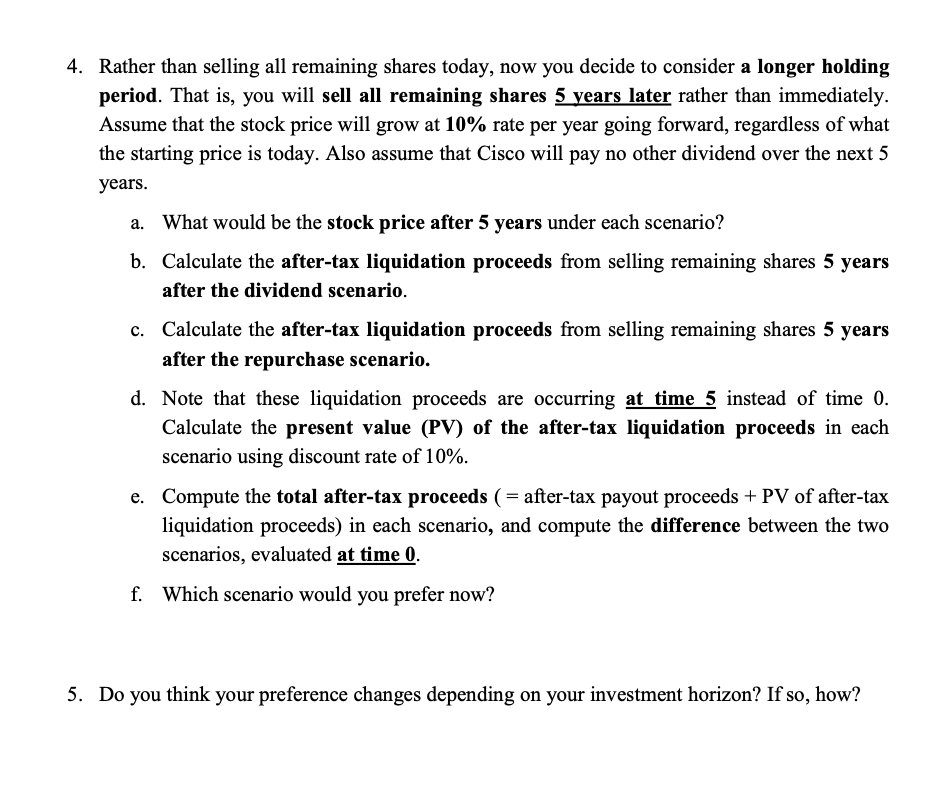
You are a very powerful institutional investor that holds 1 million shares of Cisco System, Inc., purchased on April 29, 2016. In researching Cisco, you discovered that they are holding a large amount of cash. Additionally, you are upset that the Cisco stock price has been somewhat stagnant as of late. You are considering approaching Cisco's Board of Directors with a plan to payout half of the cash the rm has accumulated, but can't decide whether a share repurchase or a special dividend would be best. Because both dividends and capital gains are taxed at the same rate (20%), at the rst glance there seems to be no difference between the two options. To conrm, however, you need to \"run the numbers\" for each scenario. Assume that the current stock price is $50 and the number of shares outstanding for Cisco's stock is 4,220,000,000 shares. 1. Go to ht_tp:f/fmance.ygl_mo.com, enter the symbol for Cisco (CSCO) into the \"Quote Lookup\" box. a. Click \"Financials\2. Let's compute the afgr-tax gamut prs that you would receive in each scenario. a. b. Find the after-tax payout proceeds you will receive under the dividend scenario. Taxes you will pay on the dividend income can be computed as: Dividend income taxes = Dividend per share X Number ofslt ares that you are holding X Dividend tax rate If the cash is (indirectly) paid through stock repurchase instead, payout proceeds are a little bit indirectly realized. Let's assume that you will make a 'home-made dividend' by selling some number of shares from your initial holdings. The number of shares that you can sell and still maintain the same proportion of ownership before and after repurchase program is XX shares (the number to be given in class). Assuming that you can sell these shares at the current market price, compute the after-tax payout proceeds from this home-made dividend under the repurchase scenario. Note that home-made dividends, unlike actual dividends, are realized by selling stock and therefore are subject to capital gain taxes: Capital gain taxes = (Selling price Initial purchase price) X Number of shares sold X Capital gain tax rate 3. The calculation in Question 2 reects your immediate proceeds arising from the payout event itself, but it does not consider the consequences on any remaining shares in your portfolio. To incorporate this feature, you rst decide to see what happens if you sells all remaining shares of stock immiatgly after the payout (either after dividend or after the repurchase). Let's call this W. Again, note that these liquidation proceeds are subject to capital gain taxes. Also note that the stock price will fall by the amount of the dividend per share inmiediately after the dividend payment. a. Calculate the alter-tax liquidation proceeds from immediately selling any remaining shares aer the dividend scenario. Calculate the alter-tax liquidation proceeds from immediately selling any remaining shares alter the repurchase scenario. Compute the total after-tax proceeds by adding up after-tax payout proceeds and after-tax liquidation proceed in each scenario, and compute the difference between the two scenarios. Under which scenario would you be better off after taxes? 4. Rather than selling all remaining shares today, now you decide to consider a longer holding period. That is, you will sell all remaining shares 5 Ears latgr rather than immediately. Assume that the stock price will grow at 10% rate per year going forward, regardless of what the starting price is today. Also assume that Cisco will pay no other dividend over the next 5 years. a. What would be the stock price after 5 years under each scenario? b. Calculate the after-tax liquidation proceeds from selling remaining shares 5 years after the dividend scenario. c. Calculate the after-tax liquidation proceeds from selling remaining shares 5 years after the repurchase scenario. d. Note that these liquidation proceeds are occurring at time 5 instead of time 0. Calculate the present value (PV) of the aertax liquidation proceeds in each scenario using discount rate of 10%. e. Compute the total alter-tax proceeds ( = after-tax payout proceeds + PV of after-tax liquidation proceeds) in each scenario, and compute the difference between the two scenarios, evaluated at time 0. f. Which scenario would you prefer now'? 5. Do you think your preference changes depending on your investment horizon? If so, how