







Question: can you write a conclusion for this case study conclusion for this case study Simply Divine Do you know where chocolate comes from? It comes
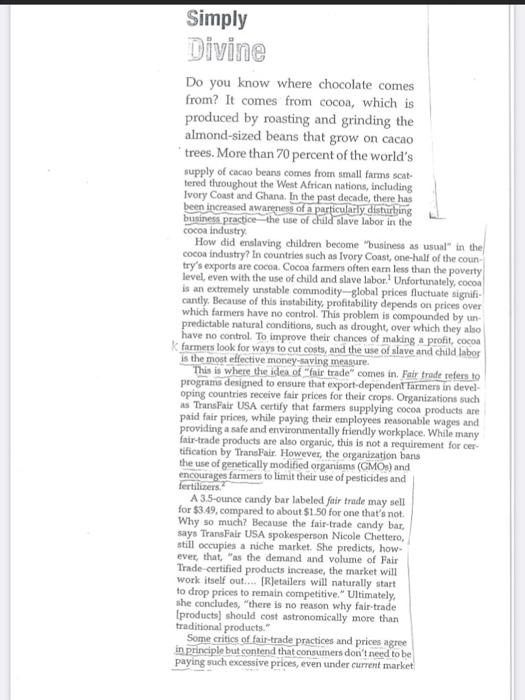
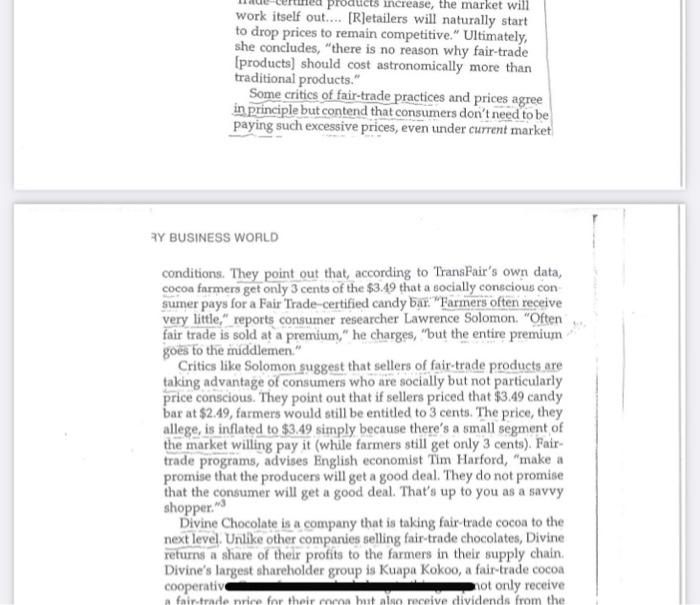
Simply Divine Do you know where chocolate comes from? It comes from cocoa, which is produced by roasting and grinding the almond-sized beans that grow on cacao trees. More than 70 percent of the world's erhout West Adding Ivy Cound Chanded the ber - walavera Cindy Tow diding dinyahe type of Incom.wheef child and what which come fare desprende The comme pred who hael Toledo foto or to the wat podesigned to ping content for pris for They that menco = = = progude and really was then by The a como the worly made CM) 5:48, compared to 1.50 for the Why do the decandy but yer App Nude pantam 1 Trade certified product that will work it out will ally art to detective de desembre andaal theatre then traditional product Software innen het be paying their priederumi W BUSINESS WORLD cond Typoint out thing that's ww menyata Fredy wery importa them Cortes de Solemm. honeffende deur taking why che They point that is what candy point the act pay it will be only for indeed 10 5.40 mortecedores trade inglish Hunte prettho will wood. They do not it the will get a good deal. That's up to you De Cheve that the come to the mwiling an is Twilia's Laureateralalay he Simply Divine Do you know where chocolate comes from? It comes from cocoa, which is produced by roasting and grinding the almond-sized beans that grow on cacao trees. More than 70 percent of the world's supply of cacao beans comes from small farms scat- tered throughout the West African nations, including Ivory Coast and Ghana. In the past decade, there has been increased awareness of a particularly disturbing business practice the use of child slave labor in the cocoa industry How did enslaving children become "business as usual" in the cocoa industry? In countries such as Ivory Coast, one-half of the coun try's exports are cocoa Cocoa farmers often earn less than the poverty level, even with the use of child and slave labor. Unfortunately, cocoa is an extremely unstable commodity-global prices fluctuate signifi- cantly. Because of this instability, profitability depends on prices over which farmers have no control. This problem is compounded by un predictable natural conditions, such as drought, over which they also have no control. To improve their chances of making a profit, cocoa farmers look for ways to cut costs, and the use of slave and child labor is the most effective money-saving measure This is where the idea of "fair trade" comes in. Fair trade refers to programs designed to ensure that export-dependent Farmers in devel oping countries receive fair prices for their crops. Organizations such As TransFair USA certify that farmers supplying cocoa products are paid fair prices, while paying their employees reasonable wages and providing a safe and environmentally friendly workplace. While many fair-trade products are also organic, this is not a requirement for cer- tification by TransFair. However, the organization bans the use of genetically modified organisms (GMOs) and encourages farmers to limit their use of pesticides and fertilizers? A 3.5-ounce candy bar labeled fair trade may sell for $349, compared to about $1.50 for one that's not Why so much? Because the fair trade candy bar, says TransFair USA spokesperson Nicole Chettero, still occupies a niche market. She predicts, how ever, that, as the demand and volume of Fair Trade-certified products increase, the market will work itself out... [Retailers will naturally start to drop prices to remain competitive." Ultimately, she concludes, there is no reason why fair trade (products) should cost astronomically more than traditional products." Some critics of fair trade practices and prices agree in principle but contend that consumers don't need to be paying such excessive prices, even under current market products increase, the market will work itself out... [Retailers will naturally start to drop prices to remain competitive." Ultimately, she concludes, there is no reason why fair-trade {products) should cost astronomically more than traditional products." Some critics of fair trade practices and prices agree in principle but contend that consumers don't need to be paying such excessive prices, even under current market AY BUSINESS WORLD conditions. They point out that, according to TransFair's own data, cocoa farmers get only 3 cents of the $3.49 that a socially conscious con sumer pays for a Fair Trade-certified candy bar. "Farmers often receive very little," reports consumer researcher Lawrence Solomon, "Often fair trade is sold at a premium," he charges, "but the entire premium goes to the muddlemen. Critics like Solomon suggest that sellers of fair-trade products are taking advantage of consumers who are socially but not particularly price conscious. They point out that if sellers priced that $3.49 candy bar at $2.49, farmers would still be entitled to 3 cents. The price, they allege, is inflated to $3.49 simply because there's a small segment of the market willing pay it (while farmers still get only 3 cents). Fair- trade programs, advises English economist Tim Harford, "make a promise that the producers will get a good deal. They do not promise that the consumer will get a good deal. That's up to you as a savvy Divine Chocolate is a company that is taking fair trade cocon to the next level. Unlike other companies selling fair trade chocolates, Divine returns a share of their profits to the farmers in their supply chain Divine's largest shareholder group is Kuapa Kokoo, a fair trade cocoa cooperative not only receive fair trade price for their cocoa but also receive dividends from the shopper. Simply Divine Do you know where chocolate comes from? It comes from cocoa, which is produced by roasting and grinding the almond-sized beans that grow on cacao trees. More than 70 percent of the world's erhout West Adding Ivy Cound Chanded the ber - walavera Cindy Tow diding dinyahe type of Incom.wheef child and what which come fare desprende The comme pred who hael Toledo foto or to the wat podesigned to ping content for pris for They that menco = = = progude and really was then by The a como the worly made CM) 5:48, compared to 1.50 for the Why do the decandy but yer App Nude pantam 1 Trade certified product that will work it out will ally art to detective de desembre andaal theatre then traditional product Software innen het be paying their priederumi W BUSINESS WORLD cond Typoint out thing that's ww menyata Fredy wery importa them Cortes de Solemm. honeffende deur taking why che They point that is what candy point the act pay it will be only for indeed 10 5.40 mortecedores trade inglish Hunte prettho will wood. They do not it the will get a good deal. That's up to you De Cheve that the come to the mwiling an is Twilia's Laureateralalay he Simply Divine Do you know where chocolate comes from? It comes from cocoa, which is produced by roasting and grinding the almond-sized beans that grow on cacao trees. More than 70 percent of the world's supply of cacao beans comes from small farms scat- tered throughout the West African nations, including Ivory Coast and Ghana. In the past decade, there has been increased awareness of a particularly disturbing business practice the use of child slave labor in the cocoa industry How did enslaving children become "business as usual" in the cocoa industry? In countries such as Ivory Coast, one-half of the coun try's exports are cocoa Cocoa farmers often earn less than the poverty level, even with the use of child and slave labor. Unfortunately, cocoa is an extremely unstable commodity-global prices fluctuate signifi- cantly. Because of this instability, profitability depends on prices over which farmers have no control. This problem is compounded by un predictable natural conditions, such as drought, over which they also have no control. To improve their chances of making a profit, cocoa farmers look for ways to cut costs, and the use of slave and child labor is the most effective money-saving measure This is where the idea of "fair trade" comes in. Fair trade refers to programs designed to ensure that export-dependent Farmers in devel oping countries receive fair prices for their crops. Organizations such As TransFair USA certify that farmers supplying cocoa products are paid fair prices, while paying their employees reasonable wages and providing a safe and environmentally friendly workplace. While many fair-trade products are also organic, this is not a requirement for cer- tification by TransFair. However, the organization bans the use of genetically modified organisms (GMOs) and encourages farmers to limit their use of pesticides and fertilizers? A 3.5-ounce candy bar labeled fair trade may sell for $349, compared to about $1.50 for one that's not Why so much? Because the fair trade candy bar, says TransFair USA spokesperson Nicole Chettero, still occupies a niche market. She predicts, how ever, that, as the demand and volume of Fair Trade-certified products increase, the market will work itself out... [Retailers will naturally start to drop prices to remain competitive." Ultimately, she concludes, there is no reason why fair trade (products) should cost astronomically more than traditional products." Some critics of fair trade practices and prices agree in principle but contend that consumers don't need to be paying such excessive prices, even under current market products increase, the market will work itself out... [Retailers will naturally start to drop prices to remain competitive." Ultimately, she concludes, there is no reason why fair-trade {products) should cost astronomically more than traditional products." Some critics of fair trade practices and prices agree in principle but contend that consumers don't need to be paying such excessive prices, even under current market AY BUSINESS WORLD conditions. They point out that, according to TransFair's own data, cocoa farmers get only 3 cents of the $3.49 that a socially conscious con sumer pays for a Fair Trade-certified candy bar. "Farmers often receive very little," reports consumer researcher Lawrence Solomon, "Often fair trade is sold at a premium," he charges, "but the entire premium goes to the muddlemen. Critics like Solomon suggest that sellers of fair-trade products are taking advantage of consumers who are socially but not particularly price conscious. They point out that if sellers priced that $3.49 candy bar at $2.49, farmers would still be entitled to 3 cents. The price, they allege, is inflated to $3.49 simply because there's a small segment of the market willing pay it (while farmers still get only 3 cents). Fair- trade programs, advises English economist Tim Harford, "make a promise that the producers will get a good deal. They do not promise that the consumer will get a good deal. That's up to you as a savvy Divine Chocolate is a company that is taking fair trade cocon to the next level. Unlike other companies selling fair trade chocolates, Divine returns a share of their profits to the farmers in their supply chain Divine's largest shareholder group is Kuapa Kokoo, a fair trade cocoa cooperative not only receive fair trade price for their cocoa but also receive dividends from the shopper
Step by Step Solution
There are 3 Steps involved in it

Get step-by-step solutions from verified subject matter experts
 Study Help