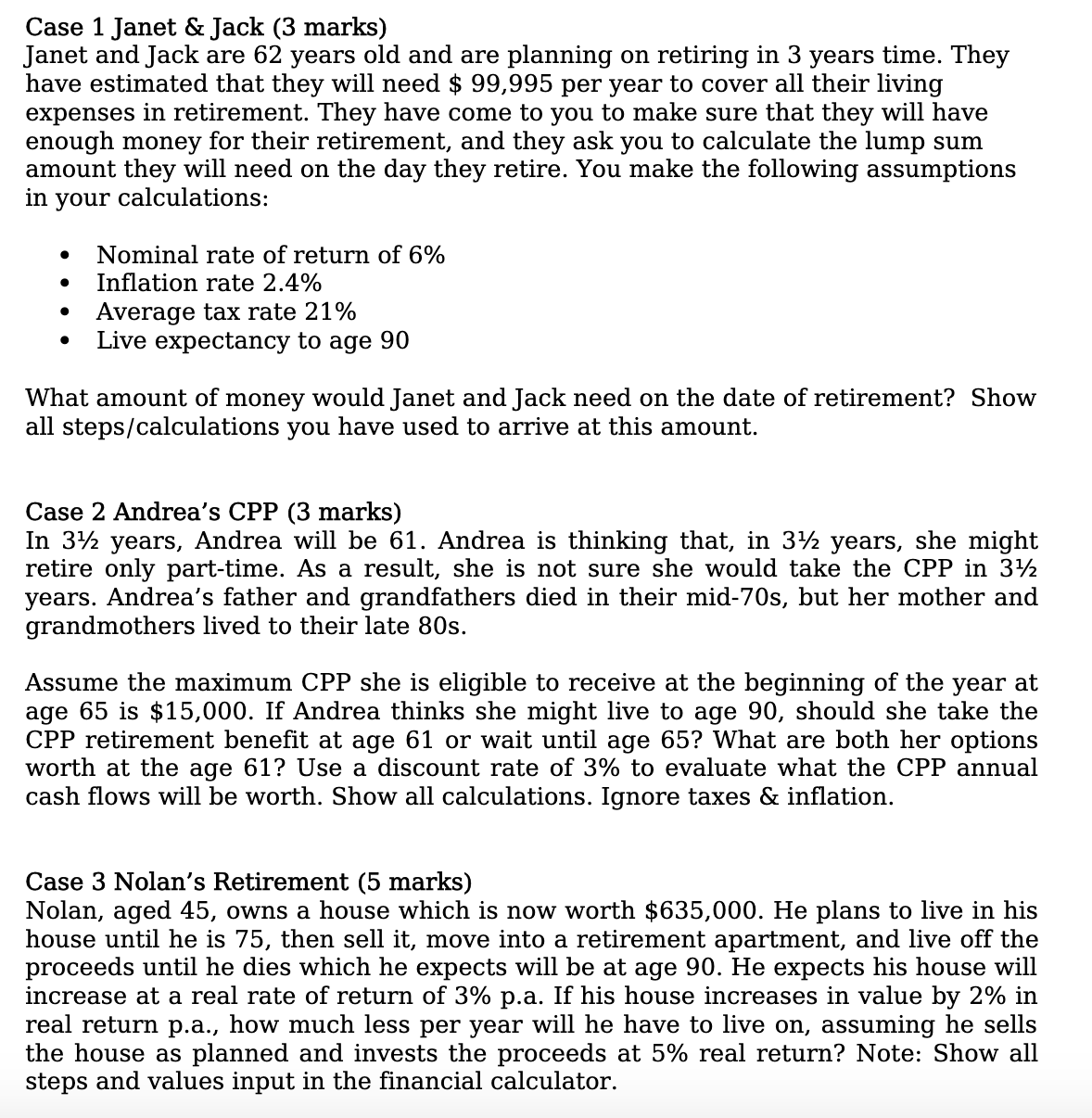
Question: Case 1 Janet & Jack (3 marks) Janet and Jack are 62 years old and are planning on retiring in 3 years time. They have
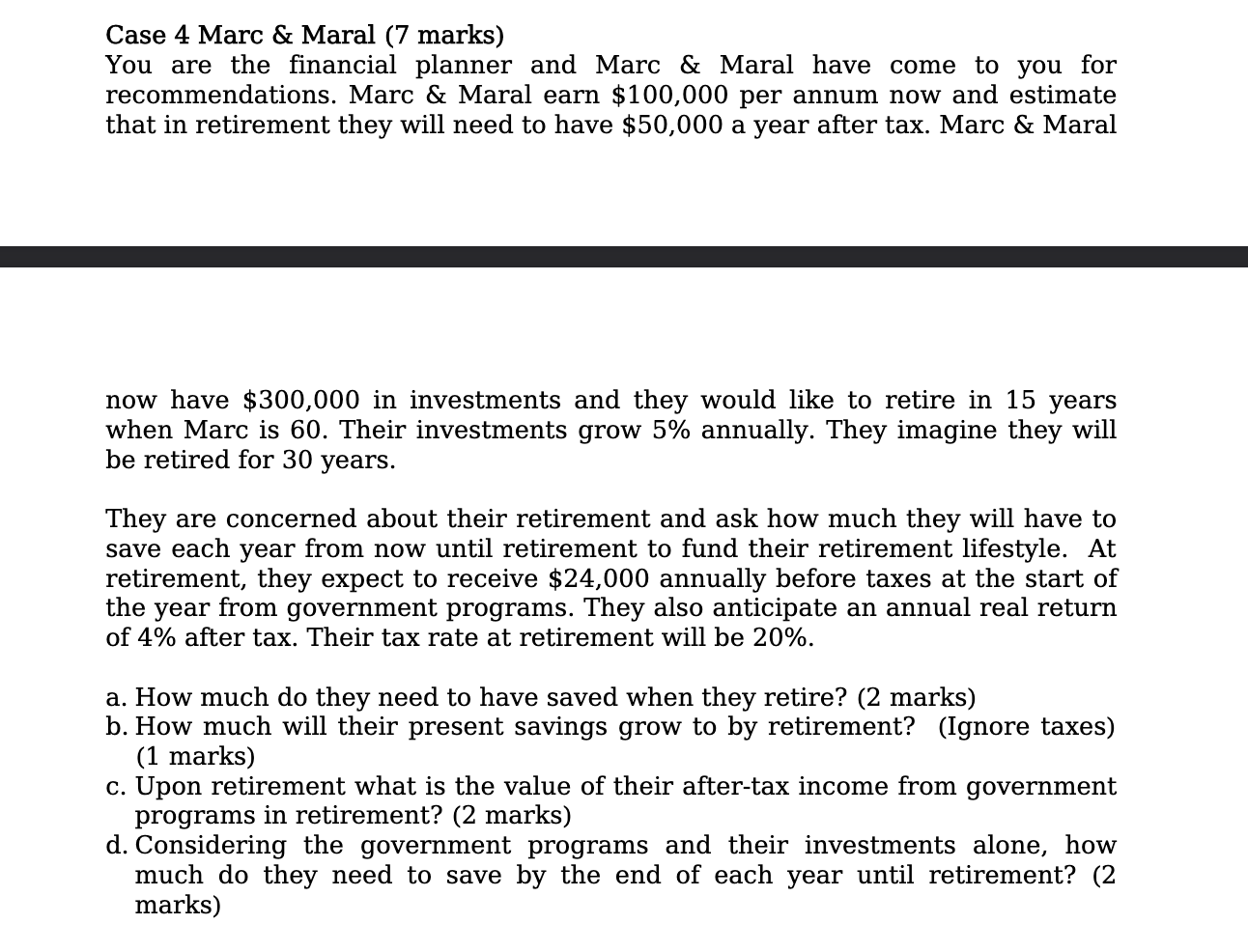
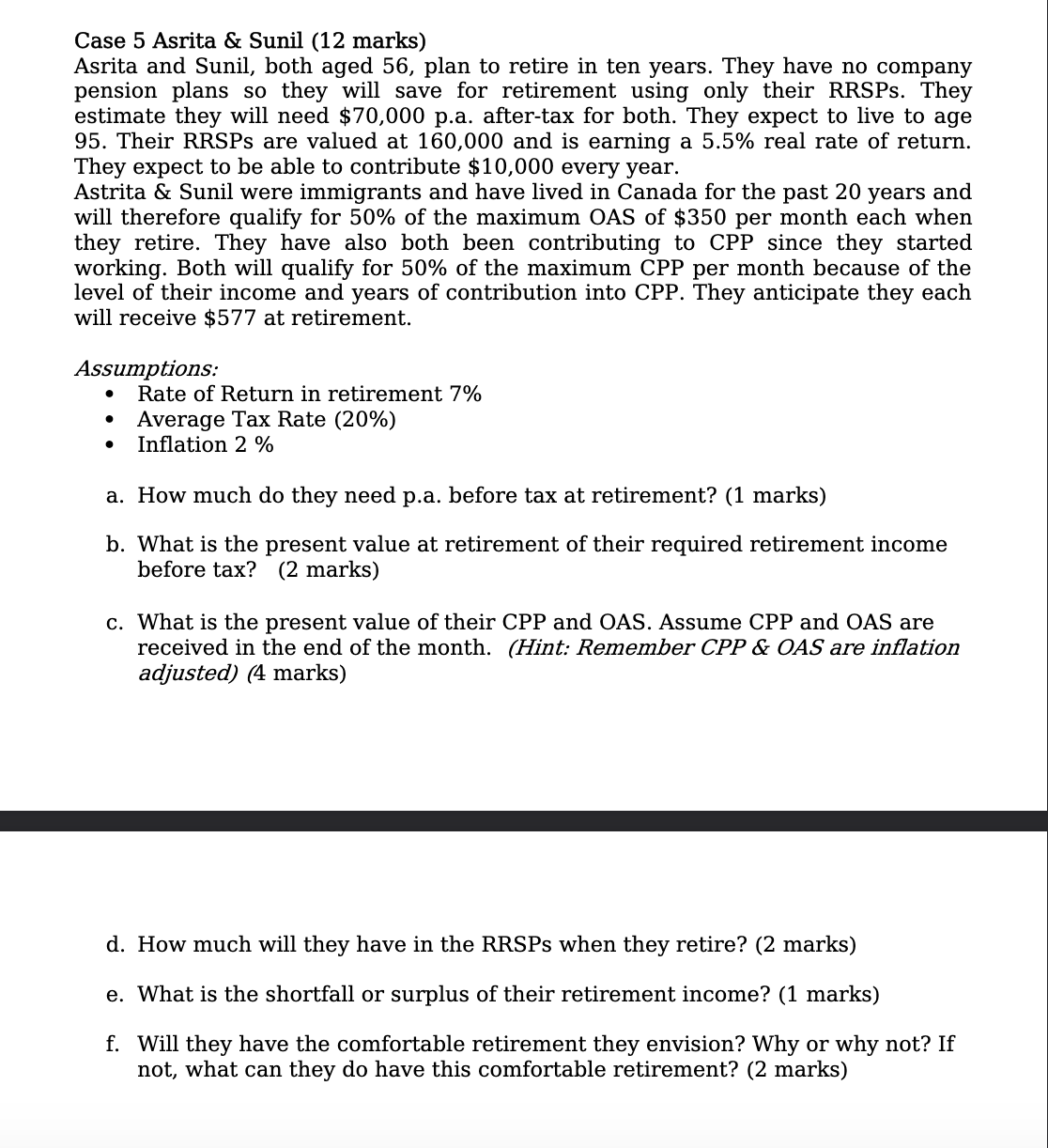
Case 1 Janet & Jack (3 marks) Janet and Jack are 62 years old and are planning on retiring in 3 years time. They have estimated that they will need $ 99,995 per year to cover all their living expenses in retirement. They have come to you to make sure that they will have enough money for their retirement, and they ask you to calculate the lump sum amount they will need on the day they retire. You make the following assumptions in your calculations: Nominal rate of return of 6% Inflation rate 2.4% Average tax rate 21% Live expectancy to age 90 What amount of money would Janet and Jack need on the date of retirement? Show all steps/calculations you have used to arrive at this amount. Case 2 Andrea's CPP (3 marks) In 3% years, Andrea will be 61. Andrea is thinking that, in 3% years, she might retire only part-time. As a result, she is not sure she would take the CPP in 3% years. Andrea's father and grandfathers died in their mid-70s, but her mother and grandmothers lived to their late 80s. Assume the maximum CPP she is eligible to receive at the beginning of the year at age 65 is $15,000. If Andrea thinks she might live to age 90, should she take the CPP retirement benefit at age 61 or wait until age 65? What are both her options worth at the age 61? Use a discount rate of 3% to evaluate what the CPP annual cash flows will be worth. Show all calculations. Ignore taxes & inflation. Case 3 Nolan's Retirement (5 marks) Nolan, aged 45, owns a house which is now worth $635,000. He plans to live in his house until he is 75, then sell it, move into a retirement apartment, and live off the proceeds until he dies which he expects will be at age 90. He expects his house will increase at a real rate of return of 3% p.a. If his house increases in value by 2% in real return p.a., how much less per year will he have to live on, assuming he sells the house as planned and invests the proceeds at 5% real return? Note: Show all steps and values input in the financial calculator. Case 4 Marc & Maral (7 marks) You are the financial planner and Marc & Maral have come to you for recommendations. Marc & Maral earn $100,000 per annum now and estimate that in retirement they will need to have $50,000 a year after tax. Marc & Maral now have $300,000 in investments and they would like to retire in 15 years when Marc is 60. Their investments grow 5% annually. They imagine they will be retired for 30 years. They are concerned about their retirement and ask how much they will have to save each year from now until retirement to fund their retirement lifestyle. At retirement, they expect to receive $24,000 annually before taxes at the start of the year from government programs. They also anticipate an annual real return of 4% after tax. Their tax rate at retirement will be 20%. a. How much do they need to have saved when they retire? (2 marks) b. How much will their present savings grow to by retirement? (Ignore taxes) (1 marks) c. Upon retirement what is the value of their after-tax income from government programs in retirement? (2 marks) d. Considering the government programs and their investments alone, how much do they need to save by the end of each year until retirement? (2 marks) Case 5 Asrita & Sunil (12 marks) Asrita and Sunil, both aged 56, plan to retire in ten years. They have no company pension plans so they will save for retirement using only their RRSPs. They estimate they will need $70,000 p.a. after-tax for both. They expect to live to age 95. Their RRSPs are valued at 160,000 and is earning a 5.5% real rate of return. They expect to be able to contribute $10,000 every year. Astrita & Sunil were immigrants and have lived in Canada for the past 20 years and will therefore qualify for 50% of the maximum OAS of $350 per month each when they retire. They have also both been contributing to CPP since they started working. Both will qualify for 50% of the maximum CPP per month because of the level of their income and years of contribution into CPP. They anticipate they each will receive $577 at retirement. Assumptions: e Rate of Return in retirement 7% e Average Tax Rate (20%) o Inflation 2 % a. How much do they need p.a. before tax at retirement? (1 marks) b. What is the present value at retirement of their required retirement income before tax? (2 marks) c. What is the present value of their CPP and OAS. Assume CPP and OAS are received in the end of the month. (Hinit: Remember CPP & OAS are inflation adjusted) (4 marks) d. How much will they have in the RRSPs when they retire? (2 marks) e. What is the shortfall or surplus of their retirement income? (1 marks) f. Will they have the comfortable retirement they envision? Why or why not? If not, what can they do have this comfortable retirement? (2 marks)
Step by Step Solution
There are 3 Steps involved in it
1 Expert Approved Answer
Step: 1 Unlock
Question Has Been Solved by an Expert!
Get step-by-step solutions from verified subject matter experts
Step: 2 Unlock
Step: 3 Unlock
Students Have Also Explored These Related Finance Questions!









 Study Help