Question: CASE ANALYSIS MODEL The following represent the steps that you should take in working through your case. Use each of the headings as headings in
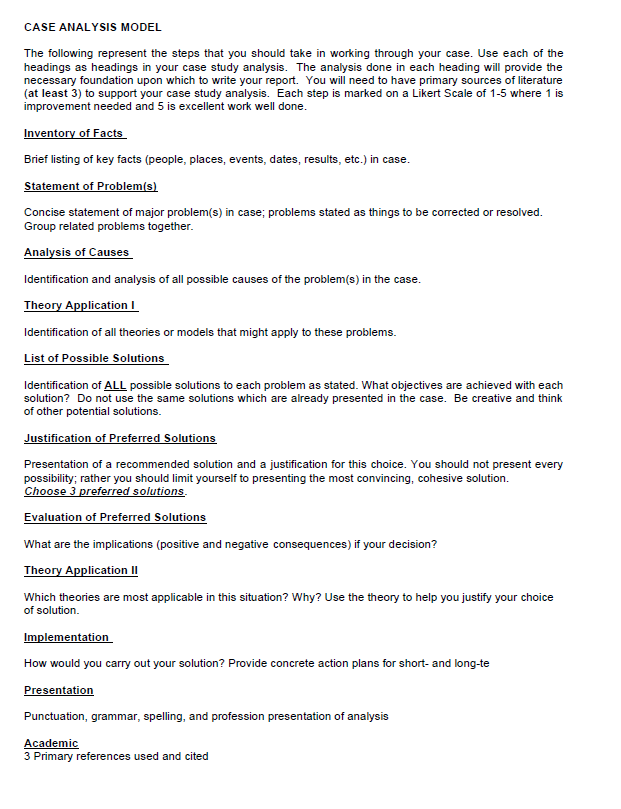
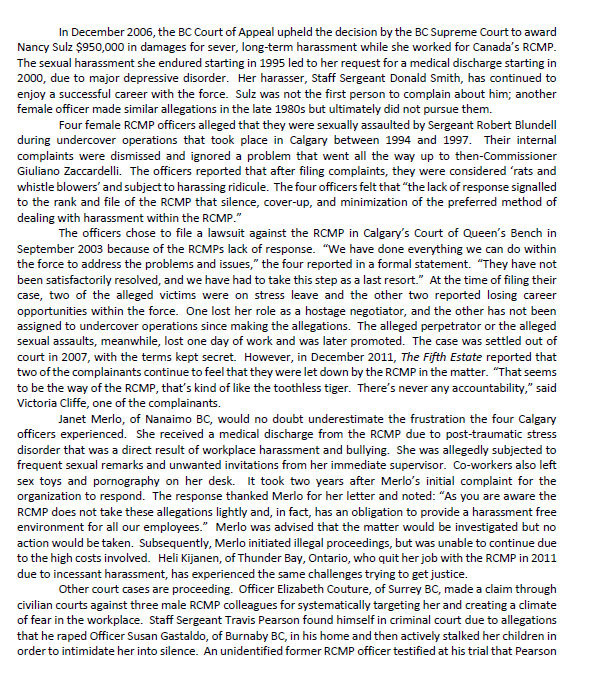
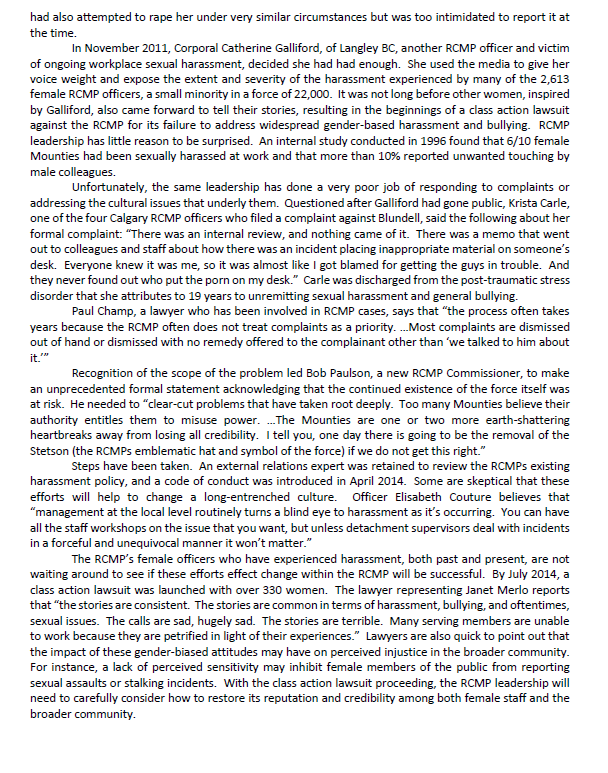

CASE ANALYSIS MODEL The following represent the steps that you should take in working through your case. Use each of the headings as headings in your case study analysis. The analysis done in each heading will provide the necessary foundation upon which to write your report. You will need to have primary sources of literature (at least 3) to support your case study analysis. Each step is marked on a Likert scale of 1-5 where 1 is improvement needed and 5 is excellent work well done. Inventory of Facts Brief listing of key facts (people, places, events, dates, results, etc.) in case. Statement of Problem(s) Concise statement of major problem(s) in case; problems stated as things to be corrected or resolved. Group related problems together. Analysis of Causes Identification and analysis of all possible causes of the problem(s) in the case. Theory Application 1 Identification of all theories or models that might apply to these problems. List of Possible Solutions Identification of ALL possible solutions to each problem as stated. What objectives are achieved with each solution? Do not use the same solutions which are already presented in the case. Be creative and think of other potential solutions. Justification of Preferred Solutions Presentation of a recommended solution and a justification for this choice. You should not present every possibility; rather you should limit yourself to presenting the most convincing, cohesive solution. Choose 3 preferred solutions. Evaluation of Preferred Solutions What are the implications (positive and negative consequences) if your decision? Theory Application II Which theories are most applicable in this situation? Why? Use the theory to help you justify your choice of solution. Implementation How would you carry out your solution? Provide concrete action plans for short- and long-te Presentation Punctuation, grammar, spelling, and profession presentation of analysis Academic 3 Primary references used and cited In December 2006, the BC Court of Appeal upheld the decision by the BC Supreme Court to award Nancy Sulz $950,000 in damages for sever, long-term harassment while she worked for Canada's RCMP. The sexual harassment she endured starting in 1995 led to her request for a medical discharge starting in 2000, due to major depressive disorder. Her harasser, Staff Sergeant Donald Smith, has continued to enjoy a successful career with the force. Sulz was not the first person to complain about him; another female officer made similar allegations in the late 1980s but ultimately did not pursue them. Four female RCMP officers alleged that they were sexually assaulted by Sergeant Robert Blundell during undercover operations that took place in Calgary between 1994 and 1997. Their internal complaints were dismissed and ignored a problem that went all the way up to then-Commissioner Giuliano Zaccardelli. The officers reported that after filing complaints, they were considered 'rats and whistle blowers' and subject to harassing ridicule. The four officers felt that "the lack of response signalled to the rank and file of the RCMP that silence, cover-up, and minimization of the preferred method of dealing with harassment within the RCMP." The officers chose to file a lawsuit against the RCMP in Calgary's Court of Queen's Bench in September 2003 because of the RCMPs lack of response. "We have done everything we can do within the force to address the problems and issues," the four reported in a formal statement. "They have not been satisfactorily resolved, and we have had to take this step as a last resort." At the time of filing their case, two of the alleged victims were on stress leave and the other two reported losing career opportunities within the force. One lost her role as a hostage negotiator, and the other has not been assigned to undercover operations since making the allegations. The alleged perpetrator or the alleged sexual assaults, meanwhile, lost one day of work and was later promoted. The case was settled out of court in 2007, with the terms kept secret. However, in December 2011, The Fifth Estate reported that two of the complainants continue to feel that they were let down by the RCMP in the matter. "That seems to be the way of the RCMP, that's kind of like the toothless tiger. There's never any accountability," said Victoria Cliffe, one of the complainants. Janet Merlo, of Nanaimo BC, would no doubt underestimate the frustration the four Calgary officers experienced. She received a medical discharge from the RCMP due to post-traumatic stress disorder that was a direct result of workplace harassment and bullying. She was allegedly subjected to frequent sexual remarks and unwanted invitations from her immediate supervisor. Co-workers also left sex toys and pornography on her desk. It took two years after Merlo's initial complaint for the organization to respond. The response thanked Merlo for her letter and noted: "As you are aware the RCMP does not take these allegations lightly and, in fact, has an obligation to provide a harassment free environment for all our employees." Merlo was advised that the matter would be investigated but no action would be taken. Subsequently, Merlo initiated illegal proceedings, but was unable to continue due to the high costs involved. Heli Kijanen, of Thunder Bay, Ontario, who quit her job with the RCMP in 2011 due to incessant harassment, has experienced the same challenges trying to get justice. Other court cases are proceeding. Officer Elizabeth Couture, of Surrey BC, made a claim through civilian courts against three male RCMP colleagues for systematically targeting her and creating a climate of fear in the workplace. Staff Sergeant Travis Pearson found himself in criminal court due to allegations that he raped Officer Susan Gastaldo, of Burnaby BC, in his home and then actively stalked her children in order to intimidate her into silence. An unidentified former RCMP officer testified at his trial that Pearson had also attempted to rape her under very similar circumstances but was too intimidated to report it at the time. In November 2011, Corporal Catherine Galliford, of Langley BC, another RCMP officer and victim of ongoing workplace sexual harassment, decided she had had enough. She used the media to give her voice weight and expose the extent and severity of the harassment experienced by many of the 2,613 female RCMP officers, a small minority in a force of 22,000. It was not long before other women, inspired by Galliford, also came forward to tell their stories, resulting in the beginnings of a class action lawsuit against the RCMP for its failure to address widespread gender-based harassment and bullying. RCMP leadership has little reason to be surprised. An internal study conducted in 1996 found that 6/10 female Mounties had been sexually harassed at work and that more than 10% reported unwanted touching by male colleagues. Unfortunately, the same leadership has done a very poor job of responding to complaints or addressing the cultural issues that underly them. Questioned after Galliford had gone public, Krista Carle, one of the four Calgary RCMP officers who filed a complaint against Blundell, said the following about her formal complaint: "There was an internal review, and nothing came of it. There was a memo that went out to colleagues and staff about how there was an incident placing inappropriate material on someone's desk. Everyone knew it was me, so it was almost like I got blamed for getting the guys in trouble. And they never found out who put the porn on my desk." Carle was discharged from the post-traumatic stress disorder that she attributes to 19 years to unremitting sexual harassment and general bullying. Paul Champ, a lawyer who has been involved in RCMP cases, says that "the process often takes years because the RCMP often does not treat complaints as a priority. ...Most complaints are dismissed out of hand or dismissed with no remedy offered to the complainant other than we talked to him about Recognition of the scope of the problem led Bob Paulson, a new RCMP Commissioner, to make an unprecedented formal statement acknowledging that the continued existence of the force itself was at risk. He needed to "clear-cut problems that have taken root deeply. Too many Mounties believe their authority entitles them to misuse power. ...The Mounties are one or two more earth-shattering heartbreaks away from losing all credibility. I tell you, one day there is going to be the removal of the Stetson (the RCMPs emblematic hat and symbol of the force) if we do not get this right." Steps have been taken. An external relations expert was retained to review the RCMPs existing harassment policy, and a code of conduct was introduced in April 2014. Some are skeptical that these efforts will help to change a long-entrenched culture. Officer Elisabeth Couture believes that "management at the local level routinely turns a blind eye to harassment as it's occurring. You can have all the staff workshops on the issue that you want, but unless detachment supervisors deal with incidents in a forceful and unequivocal manner it won't matter." The RCMP's female officers who have experienced harassment, both past and present, are not waiting around to see if these efforts effect change within the RCMP will be successful. By July 2014, a class action lawsuit was launched with over 330 women. The lawyer representing Janet Merlo reports that "the stories are consistent. The stories are common in terms of harassment, bullying, and oftentimes, sexual issues. The calls are sad, hugely sad. The stories are terrible. Many serving members are unable to work because they are petrified in light of their experiences. Lawyers are also quick to point out that the impact of these gender-biased attitudes may have on perceived injustice in the broader community. For instance, a lack of perceived sensitivity may inhibit female members of the public from reporting sexual assaults or stalking incidents. With the class action lawsuit proceeding, the RCMP leadership will need to carefully consider how to restore its reputation and credibility among both female staff and the broader community. Bonus question (worth 5 marks each) 1. What are the biggest challenges in your team? 2. What are the strategies you are implementing to help overcome these team challenges? CASE ANALYSIS MODEL The following represent the steps that you should take in working through your case. Use each of the headings as headings in your case study analysis. The analysis done in each heading will provide the necessary foundation upon which to write your report. You will need to have primary sources of literature (at least 3) to support your case study analysis. Each step is marked on a Likert scale of 1-5 where 1 is improvement needed and 5 is excellent work well done. Inventory of Facts Brief listing of key facts (people, places, events, dates, results, etc.) in case. Statement of Problem(s) Concise statement of major problem(s) in case; problems stated as things to be corrected or resolved. Group related problems together. Analysis of Causes Identification and analysis of all possible causes of the problem(s) in the case. Theory Application 1 Identification of all theories or models that might apply to these problems. List of Possible Solutions Identification of ALL possible solutions to each problem as stated. What objectives are achieved with each solution? Do not use the same solutions which are already presented in the case. Be creative and think of other potential solutions. Justification of Preferred Solutions Presentation of a recommended solution and a justification for this choice. You should not present every possibility; rather you should limit yourself to presenting the most convincing, cohesive solution. Choose 3 preferred solutions. Evaluation of Preferred Solutions What are the implications (positive and negative consequences) if your decision? Theory Application II Which theories are most applicable in this situation? Why? Use the theory to help you justify your choice of solution. Implementation How would you carry out your solution? Provide concrete action plans for short- and long-te Presentation Punctuation, grammar, spelling, and profession presentation of analysis Academic 3 Primary references used and cited In December 2006, the BC Court of Appeal upheld the decision by the BC Supreme Court to award Nancy Sulz $950,000 in damages for sever, long-term harassment while she worked for Canada's RCMP. The sexual harassment she endured starting in 1995 led to her request for a medical discharge starting in 2000, due to major depressive disorder. Her harasser, Staff Sergeant Donald Smith, has continued to enjoy a successful career with the force. Sulz was not the first person to complain about him; another female officer made similar allegations in the late 1980s but ultimately did not pursue them. Four female RCMP officers alleged that they were sexually assaulted by Sergeant Robert Blundell during undercover operations that took place in Calgary between 1994 and 1997. Their internal complaints were dismissed and ignored a problem that went all the way up to then-Commissioner Giuliano Zaccardelli. The officers reported that after filing complaints, they were considered 'rats and whistle blowers' and subject to harassing ridicule. The four officers felt that "the lack of response signalled to the rank and file of the RCMP that silence, cover-up, and minimization of the preferred method of dealing with harassment within the RCMP." The officers chose to file a lawsuit against the RCMP in Calgary's Court of Queen's Bench in September 2003 because of the RCMPs lack of response. "We have done everything we can do within the force to address the problems and issues," the four reported in a formal statement. "They have not been satisfactorily resolved, and we have had to take this step as a last resort." At the time of filing their case, two of the alleged victims were on stress leave and the other two reported losing career opportunities within the force. One lost her role as a hostage negotiator, and the other has not been assigned to undercover operations since making the allegations. The alleged perpetrator or the alleged sexual assaults, meanwhile, lost one day of work and was later promoted. The case was settled out of court in 2007, with the terms kept secret. However, in December 2011, The Fifth Estate reported that two of the complainants continue to feel that they were let down by the RCMP in the matter. "That seems to be the way of the RCMP, that's kind of like the toothless tiger. There's never any accountability," said Victoria Cliffe, one of the complainants. Janet Merlo, of Nanaimo BC, would no doubt underestimate the frustration the four Calgary officers experienced. She received a medical discharge from the RCMP due to post-traumatic stress disorder that was a direct result of workplace harassment and bullying. She was allegedly subjected to frequent sexual remarks and unwanted invitations from her immediate supervisor. Co-workers also left sex toys and pornography on her desk. It took two years after Merlo's initial complaint for the organization to respond. The response thanked Merlo for her letter and noted: "As you are aware the RCMP does not take these allegations lightly and, in fact, has an obligation to provide a harassment free environment for all our employees." Merlo was advised that the matter would be investigated but no action would be taken. Subsequently, Merlo initiated illegal proceedings, but was unable to continue due to the high costs involved. Heli Kijanen, of Thunder Bay, Ontario, who quit her job with the RCMP in 2011 due to incessant harassment, has experienced the same challenges trying to get justice. Other court cases are proceeding. Officer Elizabeth Couture, of Surrey BC, made a claim through civilian courts against three male RCMP colleagues for systematically targeting her and creating a climate of fear in the workplace. Staff Sergeant Travis Pearson found himself in criminal court due to allegations that he raped Officer Susan Gastaldo, of Burnaby BC, in his home and then actively stalked her children in order to intimidate her into silence. An unidentified former RCMP officer testified at his trial that Pearson had also attempted to rape her under very similar circumstances but was too intimidated to report it at the time. In November 2011, Corporal Catherine Galliford, of Langley BC, another RCMP officer and victim of ongoing workplace sexual harassment, decided she had had enough. She used the media to give her voice weight and expose the extent and severity of the harassment experienced by many of the 2,613 female RCMP officers, a small minority in a force of 22,000. It was not long before other women, inspired by Galliford, also came forward to tell their stories, resulting in the beginnings of a class action lawsuit against the RCMP for its failure to address widespread gender-based harassment and bullying. RCMP leadership has little reason to be surprised. An internal study conducted in 1996 found that 6/10 female Mounties had been sexually harassed at work and that more than 10% reported unwanted touching by male colleagues. Unfortunately, the same leadership has done a very poor job of responding to complaints or addressing the cultural issues that underly them. Questioned after Galliford had gone public, Krista Carle, one of the four Calgary RCMP officers who filed a complaint against Blundell, said the following about her formal complaint: "There was an internal review, and nothing came of it. There was a memo that went out to colleagues and staff about how there was an incident placing inappropriate material on someone's desk. Everyone knew it was me, so it was almost like I got blamed for getting the guys in trouble. And they never found out who put the porn on my desk." Carle was discharged from the post-traumatic stress disorder that she attributes to 19 years to unremitting sexual harassment and general bullying. Paul Champ, a lawyer who has been involved in RCMP cases, says that "the process often takes years because the RCMP often does not treat complaints as a priority. ...Most complaints are dismissed out of hand or dismissed with no remedy offered to the complainant other than we talked to him about Recognition of the scope of the problem led Bob Paulson, a new RCMP Commissioner, to make an unprecedented formal statement acknowledging that the continued existence of the force itself was at risk. He needed to "clear-cut problems that have taken root deeply. Too many Mounties believe their authority entitles them to misuse power. ...The Mounties are one or two more earth-shattering heartbreaks away from losing all credibility. I tell you, one day there is going to be the removal of the Stetson (the RCMPs emblematic hat and symbol of the force) if we do not get this right." Steps have been taken. An external relations expert was retained to review the RCMPs existing harassment policy, and a code of conduct was introduced in April 2014. Some are skeptical that these efforts will help to change a long-entrenched culture. Officer Elisabeth Couture believes that "management at the local level routinely turns a blind eye to harassment as it's occurring. You can have all the staff workshops on the issue that you want, but unless detachment supervisors deal with incidents in a forceful and unequivocal manner it won't matter." The RCMP's female officers who have experienced harassment, both past and present, are not waiting around to see if these efforts effect change within the RCMP will be successful. By July 2014, a class action lawsuit was launched with over 330 women. The lawyer representing Janet Merlo reports that "the stories are consistent. The stories are common in terms of harassment, bullying, and oftentimes, sexual issues. The calls are sad, hugely sad. The stories are terrible. Many serving members are unable to work because they are petrified in light of their experiences. Lawyers are also quick to point out that the impact of these gender-biased attitudes may have on perceived injustice in the broader community. For instance, a lack of perceived sensitivity may inhibit female members of the public from reporting sexual assaults or stalking incidents. With the class action lawsuit proceeding, the RCMP leadership will need to carefully consider how to restore its reputation and credibility among both female staff and the broader community. Bonus question (worth 5 marks each) 1. What are the biggest challenges in your team? 2. What are the strategies you are implementing to help overcome these team challenges









 Study Help