Question: Case: MATTEL from Chapter 15 Organizational Structure Page: - 505 given in your textbook Organizational behaviour: Improving performance and commitment in the workplace (7th ed)
Case: MATTEL
from Chapter 15 Organizational Structure Page: - 505 given in your textbook Organizational behaviour: Improving performance and commitment in the workplace (7th ed). by Colquitt, J. A., LePine, J. A., & Wesson, M. J. (2021)
Question(s):
1. If you were a Mattel employee, would you be encouraged by what CEO Ynon Kriez said about how he is following up on restructuring? Is there a way he could have said it better?.(03 Marks) (Min words 150-250)
Support the submission with course material concepts, principles, and theories from the textbook and at least two scholarly, peer-reviewed journal articles.
Please provide references. Use APA style for writing references.
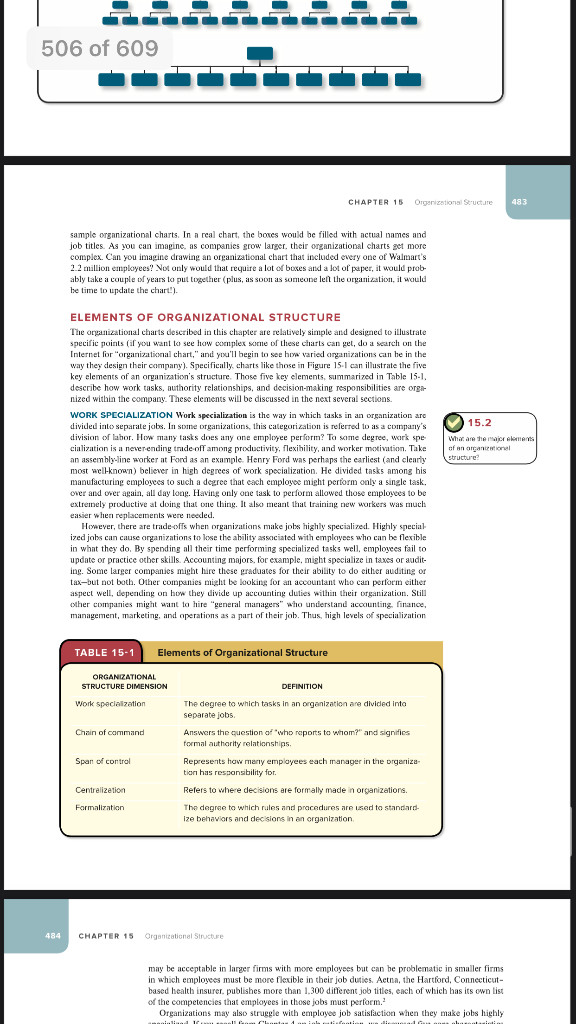
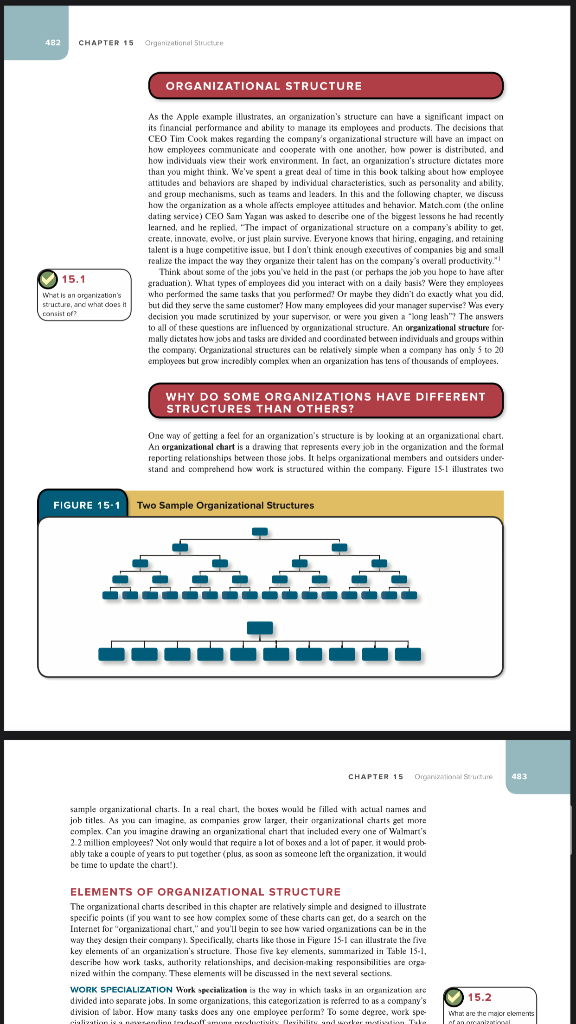
sample orgnnizationst charts, In a real chart, the bowes would oe filled with netual bames and job titles. As you can imagine, as companies grow' larger, their organizational charts get more complex. Can you imagine drawing an organizational chart that included every one of Walmart's 2.2 tuillion employees? Not only would that require a lot of boxes and a lot of paper, it would probably take a couple of years to put together (plus, as soon as someone left the organization, it would he time to update the chart'). ELEMENTS OF ORGANIZATIONAL STRUCTURE The organizational charts described in this chapter are relatively simple and designed to illustrate specilic points (if you want to see haw conplex sorne of these charts can get, do a search on the Internet for "organizational chart," and yrod'll begin to see hose varied arganizations can he in the way they design their company). Sjecifically, charts like those in Figure 15.1 can illustrate the five key elements of an organization's structure. Those five key elements, summarized in Table 15-1. describe how work tasks, nuthority relationships, and decision-making responsibilities are orginized within the company. These elements will be discussed in the next several sections. WORK SPCCIALIZATION Work specialization is the way in which tasks in an organization aro divided into separate jobs. In some organizations, this categorication is referred to as a company's division of lahor. How many tasks does any one employee perform? To some degree, work specialization is a neverending tradeoff among productivity, flexihility, and worker moxivation. Take an assembly-line worker at Ford as an example. Henry Ford was perhaps the earliest (and clearly most well-known) believer in high degrees of work specialization. He divided tasks among his manufacturing employees to such a degree that each employse might perform only a single task, over and oret again, all day long. Having only one task to perform allowed those emplogees to be extremely productive at doing that one thing. It also meant that training new workers was much easier when replacements were needed. However, there are tradesoffs when organizations make jobs highly specialized. Highly special ized jobs can cause organizations to lose the ability associated with employees who can be flexible in what they do. By spending all their time performing specialized tasks well, employees fail to update or practice orher skills. Accounting majors, for example, might specialize in taxes or auditing. Some targer compsanies might hire these graduates for their ability to do either audating of tax-but not both. Other companies might be looking for an accountant who can perform either aspect well, Lopending on how they Llivide up accounting duties within their organization. Stil] oaher companies might mant to hive "general managers" aho unterstand accounting. finance, management, marketing, and operations as a part of their job. Thus, high levels of specialization CHAPTER 15 Grganizational Siructore may be acceptable in larger firms with more employees but ean be problematic in smaller firms in which employess must be more flexible in their job dutie5. Actna, the Hartford, Connecticutbased health insurer, publishes more than 1,300 different job titles, ench of which has its own list of the competencies that employees in those jobs must perform. 2 Organizations may also struggle with employeo job satisfaction when they make jobs highly 482 CHAPTER 15 Grgenicational 5inucture WHY DO SOME ORGANIZATIONS HAVE DIFFERENT STRUCTURES THAN OTHERS? One way of getting a feel for an organization's structure is by looking at an organizational chart. An organizational chart is a drawing that represents every job in the organization and the formal reparting relationships between thase jobs. It helps organizational members and outsiders understand and comprehend how wark is structured within the company. Figure 15-1 illustrates two FIGURE 15-1 Two Sample Organizational Structures sample organizational charks. In a real chart, the boces would he filled with actual names and job titles. As you can imagine, as companies grow larger, their organizational charts get more complex. Can you imagine drawing an organizational chart that included every one of Walmart's 2.2 million employees? Not only would that require a lot of boxes and a lot of paper, it would probably take a couple of years to put together (plus, as soon as someone left the organization, it would be time to update the chart?'). ELEMENTS OF ORGANIZATIONAL STRUCTURE The organizational charts described in this chapter are relatively simple and designed to illustrate specific points (if you want to see how complex some of these charts can pet, do a search on the Internet for "organizational claar," and you'll begin to see how waried onganizations can be in the way they design their company '. Specifically, charts like those in Figure 15-1 can illustrate the five key elements of an organization's structure. Those five key elements, summarized in Table 15-1, describe haw work tasks, athority relationships, and decision-making responsibilities are orgar nized within the company. These elements will he discussed in the nett severai sections. WORK SPECIALIZATION Work secialization is the way is which tasks in an organization are divided into separate jobs. In some organizations, this categorization is referred to as a company's division of kabor. Hon many tasks does any one employee perdorm? to some degree, work spe




