



Question: CASE QUESTIONS : Please provide references for the answers 1) How could OPM3 have helped to identify the problems with implementing the demand planning system?
CASE QUESTIONS : Please provide references for the answers
1) How could OPM3 have helped to identify the problems with implementing the demand planning system?
2) What were the three primary reasons Nike was successful with the ongoing ERP implementation?
3) Why was a phased rollout the correct decision for Nike?
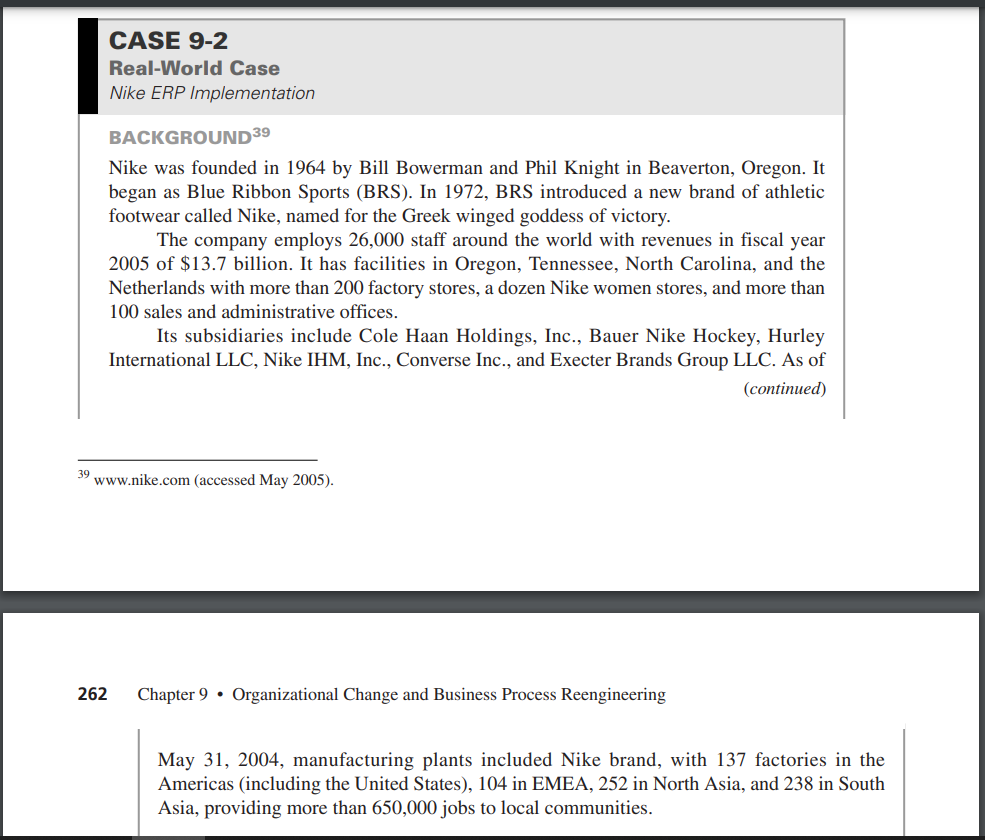
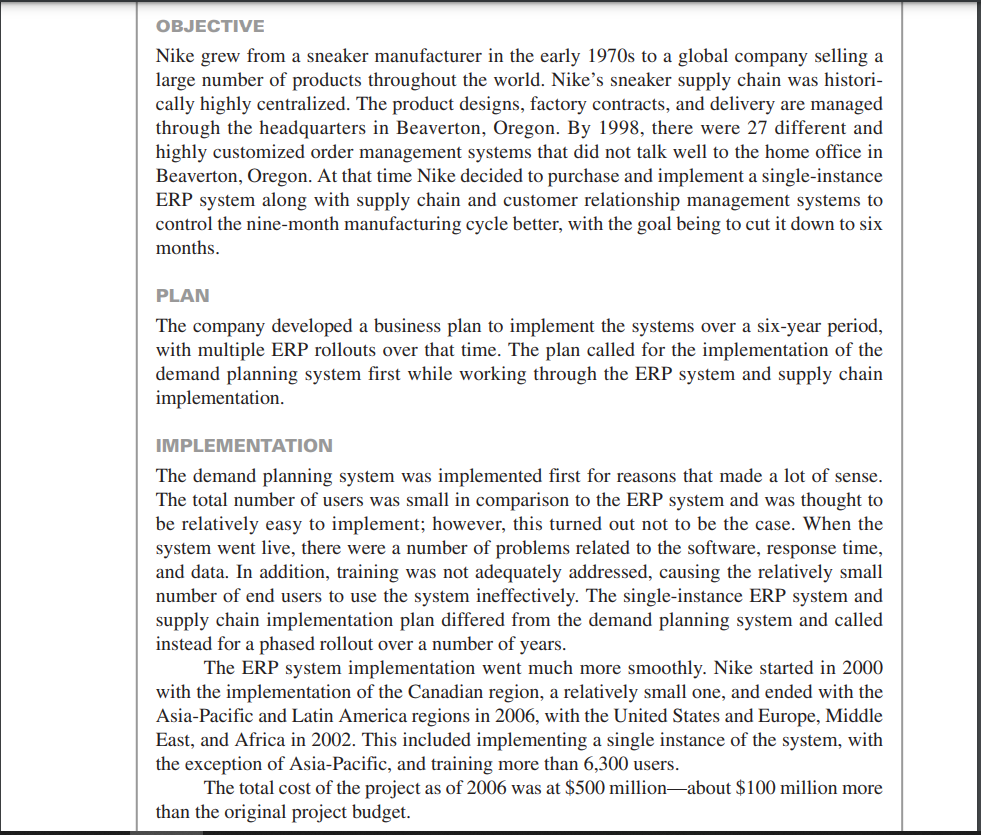
39 CASE 9-2 Real-World Case Nike ERP Implementation BACKGROUND 39 Nike was founded in 1964 by Bill Bowerman and Phil Knight in Beaverton, Oregon. It began as Blue Ribbon Sports (BRS). In 1972, BRS introduced a new brand of athletic footwear called Nike, named for the Greek winged goddess of victory. The company employs 26,000 staff around the world with revenues in fiscal year 2005 of $13.7 billion. It has facilities in Oregon, Tennessee, North Carolina, and the Netherlands with more than 200 factory stores, a dozen Nike women stores, and more than 100 sales and administrative offices. Its subsidiaries include Cole Haan Holdings, Inc., Bauer Nike Hockey, Hurley International LLC, Nike IHM, Inc., Converse Inc., and Execter Brands Group LLC. As of (continued) www.nike.com (accessed May 2005). 262 Chapter 9 Organizational Change and Business Process Reengineering May 31, 2004, manufacturing plants included Nike brand, with 137 factories in the Americas (including the United States), 104 in EMEA, 252 in North Asia, and 238 in South Asia, providing more than 650,000 jobs to local communities.
Step by Step Solution
3.42 Rating (146 Votes )
There are 3 Steps involved in it
Answer 1 OPM3 Organizational Project Management Maturity Model could have helped identify problems with implementing the demand planning system by providing a framework to assess the organizations pro... View full answer

Get step-by-step solutions from verified subject matter experts