







Question: CASE STUDY 1 - MANAGING DEPRESSION IN AGED CARE RESIDENTS of older people living in the community.' (http://theconversation.com/reducing-depression-in- 'More than half (52%) of aged
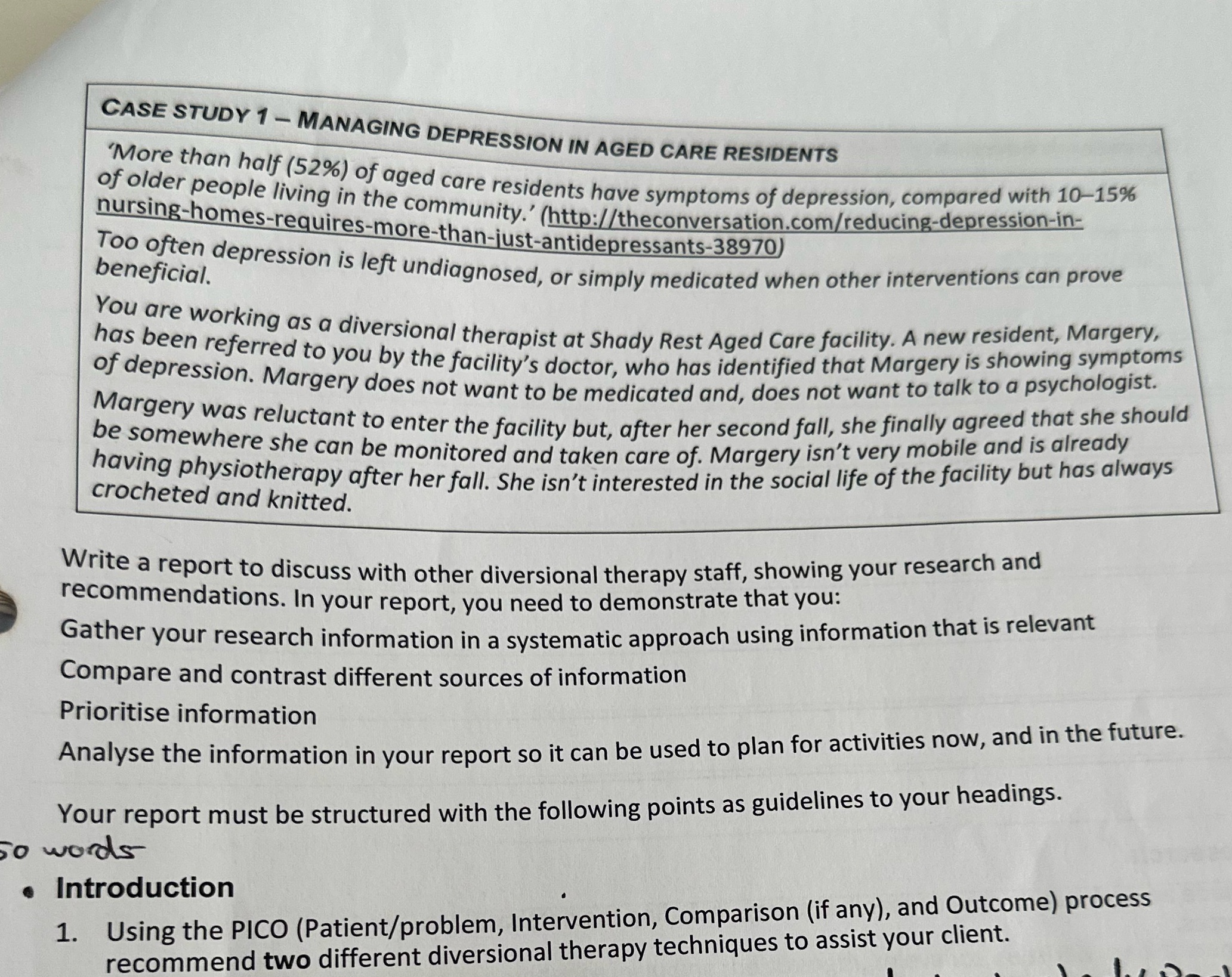
CASE STUDY 1 - MANAGING DEPRESSION IN AGED CARE RESIDENTS of older people living in the community.' (http://theconversation.com/reducing-depression-in- 'More than half (52%) of aged care residents have symptoms of depression, compared with 10-15% nursing-homes-requires-more-than-just-antidepressants-38970) Too often depression is left undiagnosed, or simply medicated when other interventions can prove beneficial. You are working as a diversional therapist at Shady Rest Aged Care facility. A new resident, Margery, has been referred to you by the facility's doctor, who has identified that Margery is showing symptoms of depression. Margery does not want to be medicated and, does not want to talk to a psychologist. Margery was reluctant to enter the facility but, after her second fall, she finally agreed that she should be somewhere she can be monitored and taken care of. Margery isn't very mobile and is already having crocheted and knitted. Write a report to discuss with other diversional therapy staff, showing your research and recommendations. In your report, you need to demonstrate that you: Gather your research information in a systematic approach using information that is relevant Compare and contrast different sources of information Prioritise information Analyse the information in your report so it can be used to plan for activities now, and in the future. Your report must be structured with the following points as guidelines to your headings. 50 words Introduction 1. Using the PICO (Patient/problem, Intervention, Comparison (if any), and Outcome) process recommend two different diversional therapy techniques to assist your client.
Step by Step Solution
There are 3 Steps involved in it

Get step-by-step solutions from verified subject matter experts
 Study Help